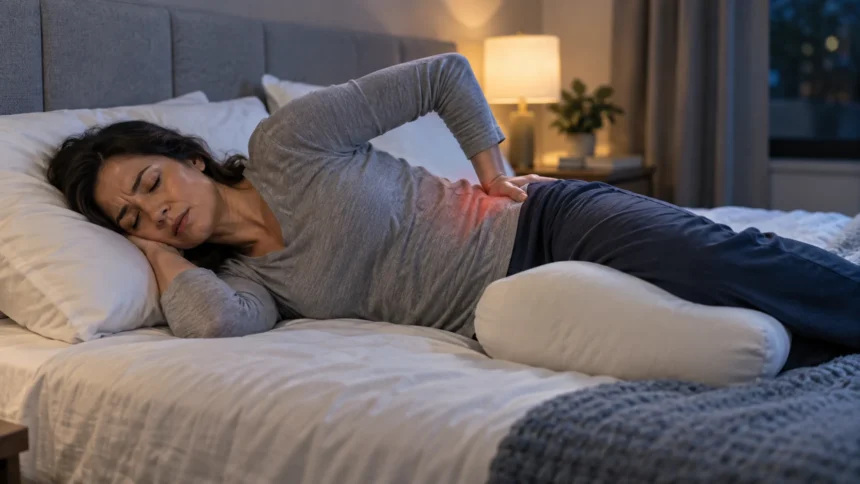
Sacroiliac joint pain can make getting comfortable in bed surprisingly difficult. The discomfort often develops around one side of the lower back, buttock, or pelvis and may become more noticeable when you roll over, lie on one side, or remain in the same position for too long. Choosing a supportive sleeping position may reduce unnecessary pressure and make nighttime rest easier.
No single sleeping position works for everyone with SI joint pain. Your comfort can depend on which side hurts, your mattress, hip position, pregnancy history, activity level, and the underlying reason for the irritation. Small adjustments with pillows and body positioning can often make a meaningful difference without forcing your spine or pelvis into an uncomfortable posture.
What Is Sacroiliac Joint Pain?
The sacroiliac joints, often called SI joints, connect the sacrum at the bottom of your spine to the pelvis. You have one joint on each side, and they help transfer forces between your upper body and legs. These joints normally move only a small amount, but irritation or altered movement can sometimes cause pain around the lower back and buttocks.
SI joint discomfort is often felt more strongly on one side, although both sides can occasionally be affected. Pain may spread into the hip, groin, or upper thigh, making it easy to confuse with other lower-back problems. Activities such as climbing stairs, standing from a chair, walking, or turning in bed may make symptoms more noticeable.
Several issues may contribute to SI joint pain, including pregnancy-related changes, injury, repetitive stress, differences in movement, or inflammatory conditions. Because many back and hip problems create similar symptoms, persistent pain should be properly assessed. A healthcare professional can help determine whether the sacroiliac joint is actually responsible for your discomfort.
Why Sleeping Position Can Affect SI Joint Pain
Your pelvis remains under pressure for several hours while you sleep, so positioning can influence how comfortable the SI region feels. If the hips rotate excessively or one side of the pelvis drops forward, tissues around the joint may become irritated. A supportive position can help keep your hips, pelvis, and lower spine in a more neutral alignment.
Nighttime pain may also become more noticeable because you stay relatively still for long periods. Muscles can stiffen, and small areas of pressure may feel increasingly uncomfortable as the night continues. This is why a position that feels fine when you first lie down may become irritating several hours later.
The goal is not to create a perfectly rigid sleeping posture. Instead, aim for a comfortable position that minimizes twisting, excessive arching, or direct pressure on the painful area. Pillows can be especially useful because they allow you to adjust hip and leg position without buying special equipment.
Best Side-Sleeping Position for SI Joint Pain
Side sleeping can be comfortable for many people with sacroiliac joint pain, especially when the painful side is positioned carefully. If lying directly on the sore side increases pressure, try sleeping on the opposite side. Keep your hips and knees slightly bent rather than curling tightly into an extreme fetal position.
Place a pillow between your knees to prevent the upper leg from dropping forward and rotating the pelvis. A pillow that also supports the ankles may provide even better alignment because it keeps the entire upper leg from twisting. Adjust the pillow thickness until your hips feel level and your lower back remains relaxed.
Some people prefer sleeping on the painful side because the pressure feels stabilizing rather than irritating. There is no universal rule that the painful side must always face upward. Use whichever side allows you to relax without increasing pain, numbness, tingling, or uncomfortable pressure around the hip and pelvis.
How to Sleep on Your Back With SI Joint Pain
Back sleeping can help distribute body weight more evenly across the mattress. However, lying completely flat may increase the arch in your lower back or place tension through the pelvis for some people. Adding support underneath your knees can reduce this strain and make the position more comfortable.
Place one or two pillows beneath your knees so they remain slightly bent. This position can relax the hip flexors and reduce some of the pull on the lower back and pelvic region. The pillow should support your legs comfortably rather than lifting them so high that your hips feel compressed.
Your head pillow also matters because excessive elevation can change spinal alignment throughout the body. Choose a pillow that keeps your neck comfortable while allowing the rest of your spine to remain relaxed. If back sleeping consistently increases SI joint symptoms despite adjustments, another position may simply suit your body better.
Is Stomach Sleeping Good for Sacroiliac Joint Pain?
Stomach sleeping is often less comfortable for people with SI joint irritation because it can increase rotation or arching through the lower back. Turning your head to one side also creates rotation through the spine. However, some people naturally sleep this way and may struggle to change positions immediately.
If you sleep on your stomach, placing a thin pillow under your lower abdomen or pelvis may reduce excessive arching. You may also feel better using a thinner head pillow so your neck is not forced into an awkward angle. Experiment carefully rather than forcing yourself to remain in a position that increases discomfort.
Changing a lifelong sleeping habit can take time, so you do not necessarily need to make the transition overnight. You might begin on your side or back and return to your usual position during sleep. The most important factor is whether your chosen posture allows you to wake with manageable rather than worsening pain.
How Pillows Can Help Reduce SI Joint Pressure
Pillows can support areas that would otherwise rotate, drop, or remain unsupported during sleep. For side sleepers, a pillow between the knees is often the most useful starting point. It can help keep the top hip from falling forward and reduce twisting through the pelvis and lower spine.
Back sleepers commonly benefit from support beneath the knees. Some people may also find a very small towel roll or thin support near the waist comfortable, although too much support can increase pressure. The goal is to fill natural gaps rather than forcing your body into a dramatically altered position.
Body pillows can be especially helpful if you move frequently during the night. Hugging a long pillow while keeping part of it between your legs may stabilize the trunk and hips at the same time. Use enough support to feel relaxed, but avoid creating a rigid sleeping setup that makes normal movement difficult.
Does Your Mattress Matter for SI Joint Pain?
Your mattress can influence how your hips and pelvis are supported overnight. A mattress that is extremely soft may allow the pelvis to sink unevenly, while an excessively firm surface may create uncomfortable pressure around the hips and sacrum. Many people prefer a surface that feels supportive while still allowing some cushioning.
There is no single mattress firmness proven to work best for every person with SI joint discomfort. Body weight, preferred sleeping position, mattress materials, and personal comfort all matter. Before replacing a mattress, try simple changes such as adjusting pillows or using a supportive topper if the surface feels unusually hard.
A mattress may be contributing to discomfort if you consistently wake with more stiffness than you had before bed and feel noticeably better when sleeping elsewhere. Still, pain is rarely caused by the mattress alone. Persistent SI region pain deserves evaluation rather than assuming a new bed will completely solve the problem.
How to Get In and Out of Bed With Less Pain
Getting out of bed quickly can twist the pelvis and trigger discomfort, particularly when your body feels stiff in the morning. Instead of sitting straight up from your back, roll onto your side first. Keep your knees relatively together so your shoulders and hips move as one unit.
From the side-lying position, slide your legs toward the edge of the bed while using your arms to push your upper body upright. This technique reduces the amount of twisting through the lower spine and pelvis. Move slowly during the first few attempts until the sequence starts to feel natural.
Use the same approach in reverse when getting into bed. Sit near the edge, lower yourself onto your side using your arms, then bring your legs onto the mattress together. Small changes in everyday transitions can sometimes reduce irritation more effectively than repeatedly stretching an already sensitive joint.
Gentle Movement Before Bed May Help
Remaining completely still throughout the evening may leave your hips and lower back feeling stiff when you finally go to bed. A few minutes of easy walking or gentle mobility can help your body transition into rest. The movements should feel comfortable and should not reproduce sharp or spreading pain.
Gentle pelvic tilts or controlled knee movements may feel useful for some people. Avoid aggressive twisting, deep stretching, or repeatedly pushing into the painful side simply because the area feels tight. Mobility work should leave you feeling looser and calmer rather than more irritated before sleep.
Consistent movement throughout the day can also matter. Walking, appropriate strength training, and gradual activity may help support the muscles surrounding the hips and pelvis. If exercise repeatedly worsens symptoms, a physical therapist can help identify which movements are appropriate for your specific condition.
Daily Habits That May Support Better Sleep
Pain relief is rarely about sleeping position alone. Long periods of sitting, suddenly increasing exercise, carrying weight unevenly, or repeatedly standing on one leg can aggravate the pelvic region in some people. Paying attention to daytime habits may reduce how irritated the area feels when bedtime arrives.
General health habits also influence recovery and sleep quality. Adequate hydration, regular activity, sufficient sleep, and balanced nutrition can support overall wellbeing while you manage musculoskeletal discomfort. Starting the day with a balanced healthy breakfast can be one simple part of maintaining consistent nutrition and energy for daily movement.
Try to avoid becoming completely inactive because you are afraid of provoking pain. Prolonged rest can sometimes increase stiffness and reduce strength. Instead, balance comfortable activity with appropriate recovery, and adjust movements that repeatedly trigger symptoms until you understand the underlying cause more clearly.
Pregnancy and SI Joint Pain at Night
Pregnancy can place additional stress on the pelvis as body weight, posture, and hormone levels change. The sacroiliac region may become uncomfortable during walking, standing, turning in bed, or lying on one side. Symptoms can vary throughout pregnancy and may become more noticeable as the abdomen grows.
Side sleeping is commonly used during later pregnancy, and pillows can make this position more comfortable. Place a pillow between the knees and consider supporting the abdomen with another small pillow if needed. A pregnancy or body pillow may help support several areas at once and reduce the effort required to stay comfortably positioned.
Pregnant individuals experiencing persistent pelvic or SI joint pain should discuss symptoms with their healthcare provider. A physical therapist with pregnancy or pelvic health experience may also offer individualized guidance. Seek prompt medical attention for severe pain or symptoms accompanied by bleeding, fever, contractions, weakness, or other concerning changes.
When SI Joint Pain Needs Medical Attention
Occasional mild lower-back or pelvic discomfort may improve with position changes, activity modification, and time. However, pain that continues for several weeks, frequently wakes you at night, or limits normal movement should be professionally assessed. Many conditions involving the spine, hip, nerves, and muscles can resemble sacroiliac joint pain.
Seek more urgent medical evaluation if pain follows a significant fall or accident, or if you develop major weakness or difficulty walking. Numbness around the groin, loss of bladder or bowel control, or rapidly worsening neurological symptoms require immediate medical attention because they may indicate a serious spinal problem.
Fever, unexplained weight loss, severe night pain that does not change with position, or a history of serious medical conditions also deserves evaluation. Sleeping adjustments can improve comfort, but they should not replace appropriate diagnosis when symptoms are persistent, severe, or accompanied by warning signs.
Conclusion
The best sleeping position for sacroiliac joint pain is the one that keeps your pelvis supported while reducing painful pressure or twisting. Side sleeping with a pillow between the knees and back sleeping with support beneath the knees are two practical options. Stomach sleeping may require additional adjustments if it increases lower-back arching.
Pillows, mattress support, gentle evening movement, and careful techniques for getting in and out of bed can all influence nighttime comfort. Small changes are often easier to maintain than trying to force yourself into one supposedly perfect posture. Pay attention to how your symptoms respond from night to night.
Sleeping positions can help manage discomfort, but persistent SI joint pain still deserves proper assessment. Seek medical advice if pain keeps returning, significantly limits activity, or develops alongside neurological symptoms, fever, trauma, or other warning signs. Identifying the actual cause gives you the best chance of finding lasting relief.
FAQs
What is the best sleeping position for SI joint pain?
Side sleeping with a pillow between the knees or back sleeping with a pillow under the knees may reduce pelvic twisting. The most comfortable position depends on which movements aggravate your symptoms.
Should I sleep on the painful side with SI joint pain?
You can if it feels comfortable, but many people prefer keeping the painful side facing upward. Avoid direct pressure on the sore side when it clearly increases discomfort.
Can a pillow between the knees help SI joint pain?
Yes. A pillow between the knees can help keep the hips more level and reduce pelvic rotation during side sleeping, which may make nighttime SI joint discomfort easier to manage.
Can a bad mattress make SI joint pain worse?
An unsupportive mattress may contribute to uncomfortable pelvic positioning or pressure. However, mattress changes alone may not solve persistent pain if an underlying joint, muscle, hip, or spinal problem is present.
Why is my SI joint pain worse at night?
Long periods in one position, pressure on the painful side, pelvic rotation, or daytime irritation may make symptoms more noticeable at night. Persistent night pain should be medically evaluated.