Wireless earbuds have become useful for music, phone calls, exercise, travel, study, and office work. A good pair should sound clear, remain comfortable, connect reliably, and last through a normal day. It should also make calls easier instead of forcing you to repeat every sentence. The best wireless earbuds balance these needs rather than focusing on only one impressive feature.
Choosing earbuds can be confusing because companies use terms such as adaptive audio, spatial sound, high-resolution audio, and active noise cancellation. These features can be useful, but they don’t matter equally to every person. An office worker may care more about call quality, while a traveler may need stronger noise cancellation. A runner may place comfort, water resistance, and stable fit above everything else.
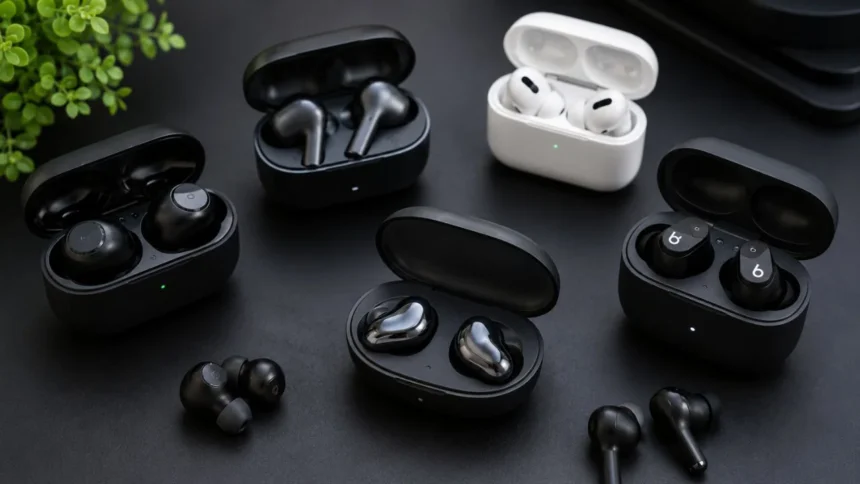
This guide compares five of the best wireless earbuds for daily use: Apple AirPods Pro 3, Sony WF-1000XM5, Bose QuietComfort Ultra Earbuds (2nd Gen), Samsung Galaxy Buds3 Pro, and Nothing Ear. Each model has clear strengths and weaknesses. The best choice depends on your phone, budget, listening habits, ear shape, and daily routine.
Manufacturer battery figures are useful for comparison, but real results can be lower. Volume, calls, audio format, noise cancellation, signal strength, and battery age all affect listening time. Prices and availability also change by country and retailer. Check the current local price and return policy before placing an order.
Quick Answer: Which Wireless Earbuds Are Best?
Apple AirPods Pro 3 are the best everyday wireless earbuds for most iPhone users. They connect closely with Apple devices and provide active noise cancellation, Transparency mode, spatial audio, touch controls, hearing features, and workout heart-rate sensing. Apple rates them for up to eight hours of listening with noise cancellation enabled. They also carry an IP57 dust, sweat, and water-resistance rating.
Sony WF-1000XM5 are the strongest all-round option for people who value sound quality, noise cancellation, battery life, and support for both Android and iPhone. Sony lists up to eight hours of music playback with noise cancellation on and up to twelve hours with it off. The earbuds support SBC, AAC, LDAC, and LC3 audio formats. They also have an IPX4 water-resistance rating.
Bose QuietComfort Ultra Earbuds (2nd Gen) are the best choice when blocking background noise is the main priority. They include adjustable noise cancellation, Immersive Audio, multipoint connectivity, a wireless charging case, and stability bands for a more secure fit. Bose rates them for up to six hours of playback, or four hours when Immersive Audio is active. The case holds up to three additional charges.
Samsung Galaxy Buds3 Pro are the most suitable option for many Samsung Galaxy phone users, while Nothing Ear provides strong value for people who want useful features without paying the highest premium price. Galaxy Buds3 Pro include adaptive noise control, ambient sound, 360 Audio, IP57 resistance, and up to six hours from the earbuds with ANC on. Nothing Ear offers dual-device connection, wireless charging, LDAC, and up to 8.5 hours with ANC off.
How We Chose the Best Earbuds for Daily Use
Sound quality was important, but it wasn’t the only factor. Daily earbuds should make voices, instruments, podcasts, and videos easy to hear without uncomfortable sharpness or overpowering bass. We also considered whether users can adjust the sound through an app. Personal sound preference matters, so a flexible equalizer can be more valuable than one fixed sound style.
Comfort and fit received equal attention because even excellent earbuds are useless when they hurt after an hour. Ear shape differs greatly from one person to another, which means no model can fit everyone perfectly. Ear-tip choices, stability bands, weight, and pressure inside the ear all affect comfort. A good return policy is therefore important when buying earbuds online.
We also compared active noise cancellation, transparency or ambient modes, microphone support, battery claims, charging choices, water resistance, and multipoint connectivity. These features affect normal daily use more than unusual technical specifications. A commuter may need noise cancellation, while an office user may care more about switching between a laptop and phone. Gym users need a stable fit and protection from sweat.
Finally, we considered software and phone compatibility. Some earbuds work with almost any Bluetooth device but save their best features for one phone brand. AirPods are closely tied to Apple devices, while Galaxy Buds provide their fullest experience with supported Samsung phones. Sony, Bose, and Nothing generally offer a more similar experience across Android and iPhone, although some features may still differ.
1. Apple AirPods Pro 3: Best for iPhone Users
AirPods Pro 3 are the most complete choice for people who regularly use an iPhone, iPad, Mac, or Apple Watch. They are designed to connect closely with Apple’s devices and services. Users get simple pairing, device switching, Find My support, Siri access, spatial audio, and controls that feel consistent across the Apple system. This convenience is their greatest advantage.
The earbuds provide active noise cancellation for reducing steady sounds such as engines, fans, and traffic. Transparency mode allows outside sound to enter when you need to hear people or announcements. Adaptive features can change the amount of outside sound based on the situation. These modes make AirPods Pro useful for commuting, office work, exercise, and travel.
Apple rates AirPods Pro 3 for up to eight hours of listening with active noise cancellation enabled. They can provide up to 6.5 hours when heart-rate sensing is used during workouts and up to ten hours in Transparency mode with the Hearing Aid feature. The MagSafe charging case supports USB-C, MagSafe, Apple Watch chargers, and Qi-certified wireless chargers.
Their biggest weakness is value for people outside the Apple system. They will connect to other Bluetooth devices, but some of their most useful controls and connected features are designed around Apple products. Their in-ear shape may also feel uncomfortable for some users. Android users can usually find a better experience from Sony, Bose, Samsung, or Nothing.
Everyday Performance of AirPods Pro 3
For music and podcasts, AirPods Pro 3 aim for a balanced sound that works across many types of content. Voices remain easy to understand, while bass has enough weight for pop, hip-hop, and movies. Spatial Audio can create a wider presentation with supported content. Some users will enjoy the effect, while others may prefer ordinary stereo sound.
The earbuds are also useful for calls and online meetings because of their close connection with Apple devices. You can move between an iPhone, iPad, and Mac more easily than with many general Bluetooth earbuds. This can help people who answer calls on one device and join meetings on another. Performance still depends on background noise, network quality, and microphone position.
AirPods Pro 3 have an IP57 rating for dust, sweat, and water resistance. Apple presents them as suitable for demanding workouts and sudden rain, but resistance isn’t the same as waterproofing. They shouldn’t be used for swimming or placed under running water. Resistance may also decrease as the earbuds age.
They are best for iPhone users who want an easy and complete everyday experience. They may not produce the most adjustable sound or the longest battery life in this list, but their software connection is difficult to match within Apple’s system. Choose them when convenience, device switching, and Apple features matter more than finding the lowest price.
AirPods Pro 3 Pros and Cons
The strongest benefit is simple integration with Apple products. Pairing is quick, battery information appears clearly, and the earbuds can move between supported devices with less effort. Find My features can also help locate the earbuds or case. These small conveniences can matter more in daily use than a long technical feature list.
Noise cancellation, Transparency mode, spatial audio, hearing support, and workout heart-rate sensing make them useful for several different needs. Their improved battery claim also makes them more practical for longer days. The IP57 rating provides stronger dust and water protection than many ordinary earbuds.
Their main disadvantage is that the full experience is tied to Apple devices. They also sit in a premium price range, so they may not offer enough value to users who only need basic music and calls. Some people find silicone in-ear tips uncomfortable. No amount of software can solve a shape that doesn’t suit your ears.
AirPods Pro 3 are the best choice for an iPhone owner who uses earbuds throughout the day. Android users should usually consider Sony or Nothing instead. People who need the strongest possible noise blocking may prefer Bose. Buyers focused mainly on low price should look below the premium category.
2. Sony WF-1000XM5: Best All-Round Earbuds
Sony WF-1000XM5 are a strong choice for users who want one pair of earbuds for music, calls, commuting, travel, and work. They support both Android and iPhone and provide a detailed companion app. Sony combines noise cancellation, adjustable sound, high-quality audio support, and useful battery life. This balance makes them suitable for many different users.
The earbuds support SBC and AAC for standard listening, along with LDAC for higher-quality wireless audio on compatible devices. LC3 support also gives them a more modern Bluetooth audio option. Audio format alone doesn’t guarantee better sound, but it gives users more choices. Sony’s app also allows equalizer changes for people who want to adjust bass, vocals, or brightness.
Sony lists up to eight hours of continuous music playback with noise cancellation on and up to twelve hours with it off. The charging case supports both USB charging and wireless charging. Sony rates the earbuds as IPX4 water resistant, meaning they can handle normal sweat and light splashes. They shouldn’t be treated as waterproof.
The main concern is fit. Some users find Sony’s ear tips secure and isolating, while others experience pressure or difficulty getting a proper seal. A poor seal weakens both bass and noise cancellation. Buyers should test all included tip sizes and purchase from a seller that accepts returns if the fit is unsuitable.
Everyday Performance of Sony WF-1000XM5
The WF-1000XM5 are especially suitable for listeners who care about musical detail. Their sound can be adjusted through Sony’s app instead of forcing every user to accept one sound profile. This makes them useful across podcasts, acoustic music, electronic music, movies, and calls. Listeners who prefer strong bass can increase it without changing earbuds.
Noise cancellation is useful for buses, planes, offices, and rooms with steady background sound. Ambient sound mode lets users hear the environment without removing the earbuds. The quality of both modes depends heavily on getting a proper seal. Even an advanced noise-cancelling system performs poorly when outside air passes around the ear tip.
Their battery rating is one of the model’s practical strengths. Eight hours with noise cancellation can cover a normal workday for many people, while the case provides additional charging away from a socket. Actual results will change with volume, calls, LDAC, noise settings, and battery condition. High-quality audio formats may use more power.
Sony’s wider phone compatibility makes these earbuds easier to recommend than products designed mainly for one brand. They are a good choice for someone who may change phone brands later. They also suit users who regularly listen through a laptop, tablet, and phone. Check current multipoint and software support for your devices before buying.
Sony WF-1000XM5 Pros and Cons
The biggest advantages are strong sound, flexible controls, useful noise cancellation, and good battery life. Support for several audio formats gives Android users more listening choices. Wireless case charging is convenient for desks and bedside tables. The earbuds also work without requiring the user to own a Sony phone.
Their app provides more sound adjustment than many simple earbuds. Users can change the equalizer, manage noise controls, and update the software. This is helpful when the default sound doesn’t suit a person’s taste. Beginners may need some time to understand the large number of settings.
Fit remains the main possible weakness. The shape and ear tips may work extremely well for one person and poorly for another. Some users may also find the app crowded compared with simpler products. Premium pricing can be difficult to justify when a person only listens casually for short periods.
Sony WF-1000XM5 are best for people who want an all-round premium option without being locked into Apple or Samsung. They are particularly suitable for music lovers and commuters. Bose may be better for users focused almost entirely on noise cancellation. Nothing Ear may provide better value for people with a smaller budget.
3. Bose QuietComfort Ultra Earbuds (2nd Gen): Best Noise Cancellation
Bose QuietComfort Ultra Earbuds (2nd Gen) are built for listeners who want to reduce outside noise as much as possible. They are designed for flights, crowded transport, busy offices, and noisy homes. Bose also includes adjustable noise control, an aware mode, and Immersive Audio. These features make the earbuds useful when concentration is the main goal.
The second-generation model comes with multiple ear tips and stability bands. The ear tip forms the seal, while the band helps the earbud remain stable. This two-part fitting system may be helpful for people whose earbuds normally become loose. However, the larger body may feel heavier than smaller options from Apple or Samsung.
Bose rates the earbuds for up to six hours of playback on one charge and up to four hours with Immersive Audio active. The wireless charging case holds up to three additional full charges. Multipoint connectivity allows pairing with more than one device and switching between them. This is useful for people who work on a laptop while keeping a phone connected.
The earbuds have an IPX4 water-resistance rating, which is suitable for sweat and light splashes but not swimming. Their shorter single-charge battery life is a weakness compared with Sony and some cheaper models. Immersive Audio reduces that time further. Buyers should decide whether maximum noise reduction matters more than longer listening between charges.
Everyday Performance of Bose QuietComfort Ultra Earbuds
The strongest reason to choose Bose is the listening experience in noisy places. Active noise cancellation can reduce low and steady sounds, helping music and speech remain clear at lower volume. No earbud can remove every voice or sudden noise completely. Still, strong noise cancellation can make travel and focused work less tiring.
Bose’s aware mode helps when users need to hear announcements, traffic, or nearby people. Adjustable modes can be useful during a normal day because noise needs change from one location to another. A traveler may use maximum cancellation on a flight and aware mode while walking through an airport. Switching modes is more useful than leaving cancellation at one level.
Multipoint support improves their value for work. Users can remain connected to a computer and phone instead of disconnecting and pairing again each time. This helps with online meetings, phone calls, and music during work. Bluetooth switching can still behave differently across operating systems and apps, so no multipoint system is perfect.
The earbuds are best for frequent travelers, commuters, remote workers, and people who struggle to focus around background noise. They may be less suitable for buyers who want the smallest possible earbuds or the longest battery life. Comfort should be tested carefully because their fitting system feels different from a simple earbud.
Bose QuietComfort Ultra Earbuds Pros and Cons
The leading benefit is powerful and adjustable noise cancellation. Bose has designed the complete product around quiet listening rather than treating ANC as a minor extra. The stability bands can also help create a secure fit. Wireless charging and multipoint support make the second-generation model more convenient for daily use.
The sound is designed to remain full and enjoyable during travel and general listening. Immersive Audio can make supported content feel wider, although it uses more battery. Some users enjoy this effect for movies and music, while others may leave it off. Ordinary stereo remains the better choice when battery life matters.
The disadvantages are price, size, and shorter battery life than some competitors. Six hours may be enough for commuting or office sessions, but long travelers may need to return the earbuds to the case during the day. Their case also occupies more pocket space than some smaller alternatives. IPX4 protection is adequate but not class-leading.
Choose Bose when noise cancellation is your top concern and you are willing to accept the trade-offs. Sony offers a more balanced mix of sound, battery, and compatibility. AirPods provide better integration for Apple users. Budget-conscious buyers should consider Nothing Ear before paying the Bose premium.
4. Samsung Galaxy Buds3 Pro: Best for Samsung Phones
Galaxy Buds3 Pro are designed to work closely with Samsung Galaxy devices. They combine a stem-style design with active noise cancellation, adaptive sound, ambient sound, 360 Audio, touch and pinch controls, and Galaxy AI-related functions. They are a natural option for users who already own a recent Samsung phone. Some advanced features require a compatible Galaxy device.
Samsung uses a two-way speaker and dual-amplifier design in the Buds3 Pro. The earbuds can adjust noise control based on the surrounding environment and supported software settings. Their stem controls support touching, swiping, and pinching. This may be easier than pushing directly against the ear when changing volume or pausing music.
Samsung lists up to six hours of play time from the earbuds with ANC on. Depending on the noise-control setting, the case can extend total listening to around 26 or 30 hours. The earbuds carry an IP57 rating, offering stronger dust and water resistance than many IPX4 competitors. They still aren’t intended for swimming or underwater use.
Their biggest limitation is ecosystem dependence. They can connect to other Bluetooth devices, but some audio, AI, switching, and phone-connected features work best with Samsung Galaxy products. An iPhone user won’t receive the full experience. Sony or Bose is a safer choice when broad compatibility matters more than Samsung integration.
Everyday Performance of Galaxy Buds3 Pro
Galaxy phone users can manage the earbuds through Samsung’s software and see settings inside the wider Galaxy system. This makes controls, battery information, sound modes, and supported device switching easier to manage. Users who already own a Galaxy phone, tablet, and watch may find this convenience valuable. Brand integration is one of their main selling points.
Adaptive noise control can be useful when moving between a quiet room, street, office, and public transport. Ambient mode allows outside sound to pass through when needed. The actual performance depends on fit and software settings. Users should test different ear tips because weak sealing reduces bass and makes noise cancellation less effective.
The IP57 rating makes the earbuds appealing for exercise and outdoor daily use. They can handle sweat and accidental exposure better than models with lower ratings. However, the charging case may have a different protection level, so it should remain dry. Water resistance can also decline after normal wear or damage.
Galaxy Buds3 Pro are best for Samsung users who want a complete brand-connected experience with strong fitness and daily-use protection. They may also appeal to people who prefer stem controls instead of tapping a rounded earbud. Buyers using other Android brands should compare their available features carefully before choosing them over Sony or Nothing.
Galaxy Buds3 Pro Pros and Cons
Their major strengths include Samsung integration, adaptive noise features, clear stem controls, a two-way audio system, and an IP57 rating. The design is suitable for calls, commuting, exercise, and general music use. The case provides enough extra power for normal daily charging.
Samsung’s connected features can add value for Galaxy users. Supported AI tools include interpreter-related functions and quick voice features, although availability depends on the device, language, region, and software. Buyers should check these requirements rather than assuming every feature shown in advertising will work on their phone.
Their main weakness is reduced value outside Samsung’s ecosystem. Six hours with ANC is acceptable but doesn’t lead the category. Some users may also dislike the bright design details or stem shape. As with all in-ear products, comfort can’t be judged from specifications alone.
Choose Galaxy Buds3 Pro when you own a compatible Samsung phone and want the best connected experience from that brand. Don’t buy them only because of one AI feature that may have device or language limits. Sony remains the better platform-neutral option. Nothing Ear can offer similar daily flexibility at a lower price in many markets.
5. Nothing Ear: Best Value Premium Earbuds
Nothing Ear offers a useful middle ground between cheap wireless earbuds and the most expensive premium products. The earbuds include active noise cancellation, LDAC support, dual-device connection, wireless charging, customizable sound, and a distinctive transparent design. These features make them suitable for users who want more control without paying the highest flagship price.
Nothing rates the earbuds for up to 8.5 hours of continuous music with ANC off and up to 5.2 hours with ANC or Transparency mode active. With the charging case, the total reaches up to 40.5 hours with ANC off or 24 hours with it on. Actual battery life will depend on calls, volume, codec, connection, and surrounding conditions.
The earbuds support wireless charging and dual-device connection through the Nothing X app. Multipoint is useful for switching between a laptop and phone during the day. A ten-minute fast charge can provide up to 2.6 hours from the earbuds with ANC off, according to Nothing. This helps when the battery is low before leaving home.
Nothing Ear may not cancel noise as strongly as Bose or offer the same phone integration as Apple and Samsung. However, it covers the main daily features at a more approachable price in many markets. It is a strong option for Android users, students, office workers, and buyers who want flexible sound settings.
Everyday Performance of Nothing Ear
Nothing Ear is designed for listeners who enjoy adjusting sound. LDAC support can provide higher-quality Bluetooth audio with compatible Android devices and source files. The Nothing X app also allows users to change sound settings and manage features. iPhone users can still use the earbuds, but LDAC isn’t part of the normal iPhone Bluetooth experience.
Dual connection is valuable for work and study. The earbuds can remain linked with two devices, making it easier to move from laptop audio to a phone call. This feature can reduce repeated pairing during the day. Switching behavior may still depend on which device starts playing audio or receives a call.
Battery life with ANC off is competitive, and the case provides several extra charges. Wireless charging is a useful feature that some mid-priced models remove to cut costs. Fast charging also helps users who forget to charge overnight. Listening at high volume or using more demanding codecs may reduce the published battery figures.
Nothing Ear is best for someone who wants a broad feature set and doesn’t need the strongest brand ecosystem. It can work well with different phones, tablets, and computers. Users focused mainly on maximum noise cancellation should choose Bose. iPhone users who value convenience above price will probably prefer AirPods Pro 3.
Nothing Ear Pros and Cons
The strongest advantage is value. Nothing includes active noise cancellation, dual connection, wireless charging, a useful app, sound adjustment, and LDAC support in one product. These are features often associated with more expensive earbuds. The design is also different from the plain appearance of many competitors.
Battery life is another benefit when noise cancellation is turned off. Up to 8.5 hours from the earbuds and 40.5 hours with the case can support normal daily listening. ANC reduces those numbers, but the case and fast charging help.
The main disadvantages are weaker ecosystem features and less proven noise cancellation than top Bose, Sony, or Apple models. The transparent design may not suit users who want a more traditional appearance. Microphone performance can also change depending on wind and background noise. Buyers should listen to current call samples when calls are a major priority.
Nothing Ear is the best choice on this list for buyers seeking premium-style features at a lower cost. It offers more flexibility than brand-locked alternatives. However, local pricing matters because discounts can place an older premium model in the same range. Always compare the final price rather than judging value from the launch price.
Best Earbuds for Music and Sound Quality
Sony WF-1000XM5 are the strongest choice for listeners who enjoy adjusting their audio. Their app, equalizer, and support for several Bluetooth formats provide more control than many simple earbuds. This doesn’t mean every person will prefer their default sound. The ability to change the sound is what makes them easier to recommend to different listeners.
Nothing Ear is another good choice for users who want adjustable sound and LDAC support at a lower price. It may not provide the same complete premium experience as Sony, but it gives Android users useful control. The quality of the music source, recording, phone, and ear seal all affect the final result.
AirPods Pro 3 are suitable for users who want balanced everyday sound without spending much time changing settings. Spatial Audio adds a wider effect to supported music and video. The strongest benefit remains the complete Apple experience rather than support for specialist Bluetooth formats. Many ordinary listeners will value convenience more than codec names.
Bose focuses heavily on noise-controlled listening, while Samsung combines sound with Galaxy features. Neither should be rejected for music, but their main strengths lie elsewhere. The safest approach is to test earbuds with songs you know well. Sound preference is personal, and no specification can fully predict what you will enjoy.
Best Earbuds for Calls and Online Meetings
Call quality depends on microphones, software, wind, room noise, phone connection, and how the earbuds fit. A model that sounds clear indoors may struggle beside traffic or in strong wind. Buyers who take important calls should look beyond marketing terms such as “AI microphone.” Real-world call recordings are more useful than the number of microphones alone.
AirPods Pro 3 are convenient for calls when used across Apple devices. Their automatic connection and device switching can reduce setup problems before a meeting. Galaxy Buds3 Pro provide similar ecosystem benefits for Samsung users. These advantages are useful for people who move between a phone, tablet, and computer.
Bose’s multipoint connection is practical for workers who remain connected to a laptop and phone. Sony and Nothing also suit multi-device routines, depending on current settings and software. Multipoint doesn’t guarantee better microphone quality, but it makes the complete work experience easier. Users should update firmware after buying because connection fixes may arrive through software.
For frequent calls, comfort is as important as microphone quality. Earbuds that create pressure become tiring during long meetings. Consider whether one earbud can be used alone while the other charges. A lightweight headset with a boom microphone may still be better than true wireless earbuds for hours of professional calls.
Best Earbuds for Travel and Commuting
Bose QuietComfort Ultra Earbuds (2nd Gen) are the strongest choice when reducing plane, train, bus, and office noise is the main goal. Their adjustable cancellation and stability bands are designed for controlled listening in changing environments. The shorter battery life means travelers should use the case during breaks.
Sony WF-1000XM5 offer a more balanced travel package. They combine useful noise cancellation with longer single-charge battery life and wider device support. This makes them suitable for people who want one pair for travel and ordinary daily use. Wireless case charging may also help in hotels or at a desk.
AirPods Pro 3 are excellent travel companions for iPhone users because of their noise modes, device integration, and Find My support. Their eight-hour battery claim with ANC is enough for many trips. Bose may block noise more strongly, but AirPods may be easier for someone already carrying several Apple devices.
Travelers should remember that strong noise cancellation doesn’t create silence. It works best against steady low sounds and may reduce voices less completely. Transparency or aware mode should be used when hearing announcements or traffic is important. Never use strong isolation in a situation where outside awareness is needed for safety.
Best Earbuds for Exercise
Galaxy Buds3 Pro and AirPods Pro 3 both carry IP57 ratings, making them strong choices for sweat and daily outdoor exposure. This rating is better than the IPX4 protection offered by Sony and Bose. However, water resistance doesn’t mean the earbuds are designed for swimming. Always dry them before returning them to the charging case.
Fit matters more than the rating during exercise. An earbud that slowly loosens during running will become annoying even if it survives sweat. Bose includes stability bands, which may help some users achieve a more secure hold. Others may find the larger Bose body too heavy during fast movement.
AirPods Pro 3 include workout heart-rate sensing that works with supported Apple features. This may appeal to users who want music and workout information from the same earbuds. It shouldn’t be purchased as a replacement for medical monitoring. Apple rates listening time at up to 6.5 hours when heart-rate sensing is active.
Before exercising, test the earbuds at home by walking, jumping, and moving your jaw. Use the correct ear-tip size in each ear because the two ears may need different sizes. Don’t increase the volume too much to cover gym noise. Strong noise cancellation can help protect listening comfort by reducing the need for excessive volume.
How to Choose Wireless Earbuds for Daily Use
Start with your phone. iPhone owners receive the smoothest experience from AirPods, while Samsung users gain the most from Galaxy Buds. Sony, Bose, and Nothing are better choices when you want wider platform support. Check the companion app because some earbuds require it for updates, equalizers, and control changes.
Next, decide which two features matter most. These might be comfort, noise cancellation, calls, music quality, water resistance, battery life, or multipoint connection. Don’t pay for every available feature when you only need a few. A cheaper model may be a better daily product when it matches your actual routine.
Consider your normal listening time. Six hours may be enough for commuting and exercise but less suitable for a long journey without breaks. The case extends total battery life, but the earbuds must be removed while charging. Manufacturer claims are usually measured under controlled conditions, so expect real use to vary.
Finally, buy from a retailer with a clear return and warranty policy. Earbuds are personal products, and fit can’t be judged from photographs or reviews. Check whether opened in-ear products can be returned in your country. Avoid suspiciously cheap listings because counterfeit earbuds may copy the appearance without matching the sound, battery, safety, or software.
Final Verdict: Which Wireless Earbuds Should You Buy?
Buy AirPods Pro 3 when you use an iPhone and want the most convenient complete experience. Their Apple integration, noise controls, battery claim, water resistance, hearing features, and workout support make them a strong everyday choice. Their value becomes weaker when used mainly with Android or Windows devices.
Choose Sony WF-1000XM5 when you want the best balance of music quality, noise cancellation, battery life, app controls, and broad compatibility. They are the safest all-round recommendation for someone who doesn’t want to stay inside one phone brand. Make sure the ear-tip fit works before keeping them.
Choose Bose QuietComfort Ultra Earbuds (2nd Gen) when noise cancellation is the leading priority. Choose Galaxy Buds3 Pro when you own a compatible Samsung phone and want close Galaxy integration. Both are premium choices, but each makes the most sense for a specific type of user.
Choose Nothing Ear when you want strong everyday features at a lower price. It provides ANC, LDAC, dual connection, wireless charging, and useful battery life without depending heavily on one phone brand. The final decision should be based on comfort, phone compatibility, and real local pricing rather than one technical number.
Frequently Asked Questions
Which wireless earbuds are best overall?
Sony WF-1000XM5 provide the best balance for different phones, while AirPods Pro 3 are better for dedicated iPhone users.
Which earbuds have the best noise cancellation?
Bose QuietComfort Ultra Earbuds (2nd Gen) are the strongest choice when noise reduction is the main priority.
Which earbuds are best for iPhone?
AirPods Pro 3 offer the closest connection with iPhone, iPad, Mac, Apple Watch, Siri, and Find My.
Which earbuds are best for Samsung phones?
Galaxy Buds3 Pro provide the most complete experience with supported Samsung Galaxy devices.
Which wireless earbuds offer the best value?
Nothing Ear offers ANC, LDAC, multipoint, wireless charging, and strong battery life at a lower price than many premium rivals.
Are wireless earbuds good for phone calls?
Yes, but microphone performance can change greatly in wind, traffic, and crowded rooms.
How long should wireless earbuds last per charge?
Most quality models provide around five to eight hours, depending on ANC, volume, calls, and audio settings.
Are wireless earbuds waterproof?
Most are only water resistant. Check the IP rating and don’t use them for swimming unless the manufacturer clearly allows it.
Is active noise cancellation worth paying for?
It is useful for flights, public transport, offices, and other places with steady background noise.
Can wireless earbuds damage hearing?
Any earbuds can harm hearing when used too loudly for long periods. Keep the volume moderate and take listening breaks.