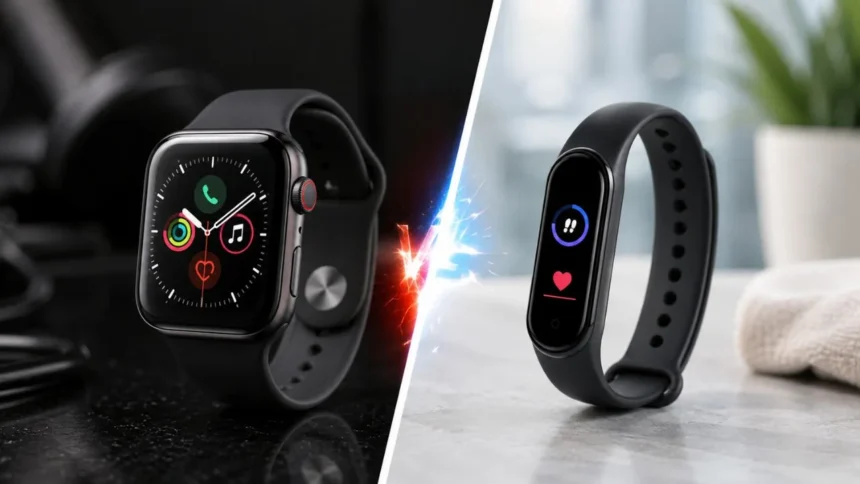
Smartwatches and fitness trackers can both record activity, monitor workouts, and help people understand their daily habits. At first, the two devices may look almost the same because both are worn on the wrist. However, they are designed for different types of users. A fitness tracker focuses mainly on health and activity, while a smartwatch works more like a small phone on your wrist.
A fitness tracker is usually lighter, simpler, and less expensive than a smartwatch. It commonly records steps, distance, calories, heart rate, sleep, and exercise sessions. Some models also include GPS, blood oxygen estimates, stress tracking, and workout guidance. These devices are often made for people who want useful fitness information without many extra apps or phone features.
A smartwatch usually offers fitness tracking along with notifications, calls, messages, music, apps, voice assistants, contactless payments, and calendar tools. Current smartwatches from Apple, Samsung, and Garmin can also provide detailed health and workout features. Apple Watch models, for example, combine activity tracking with apps, communication, safety tools, and health information.
The better choice depends on what you expect from a wearable device. A fitness tracker may be better for simple activity monitoring, long battery life, comfort, and a lower price. A smartwatch may be better if you want fitness features and useful phone functions together. This guide compares both options so you can decide which device fits your needs.
Quick Answer: Smartwatch or Fitness Tracker?
Choose a fitness tracker when your main goals are counting steps, recording exercise, tracking sleep, and monitoring basic health trends. Fitness trackers usually have smaller screens and fewer apps, which makes them easier to use. Their simple design can also help the battery last longer. They are a practical choice for beginners who mainly want motivation to move more.
Choose a smartwatch when you want a device that can handle both health tracking and everyday digital tasks. A smartwatch can show notifications, answer calls, control music, display maps, run apps, and sometimes connect to mobile service without a nearby phone. Many models also include advanced workout and health features. Samsung’s Galaxy Watch range, for example, combines smart features with heart, sleep, stress, exercise, and body-composition tools.
A fitness tracker isn’t automatically more accurate just because it focuses on exercise. Accuracy depends on the sensors, software, fit, activity, and individual user. In the same way, a smartwatch isn’t automatically better because it offers more features. Extra tools can be unnecessary when a person only wants simple fitness information.
For most casual users, a fitness tracker offers enough information at a lower cost. For users who want a wearable extension of their phone, a smartwatch provides greater value. Serious runners and athletes may choose advanced sports watches that combine both categories. Garmin, for example, offers wearable devices focused on running, multisport training, wellness, outdoor activity, and everyday smart features.
What Is a Fitness Tracker?
A fitness tracker is a wearable device designed mainly to record movement, exercise, and health-related information. It is usually worn like a thin watch or wristband. Common features include step counting, distance estimates, calories burned, heart-rate tracking, active minutes, and sleep records. The information is normally sent to a phone app where users can view trends.
Most fitness trackers are built around simplicity. They may display the time, daily step total, current heart rate, and basic notifications, but they usually don’t offer a large collection of apps. This makes them suitable for people who don’t want another complicated screen. A simple device may also create fewer distractions during work, exercise, or sleep.
A typical fitness tracker can automatically notice certain activities, remind the user to move, and record exercise sessions. Fitbit devices, for example, have offered daily steps, Active Zone Minutes, calories, distance, real-time heart rate, hourly movement, and sleep duration. The exact features differ between models and may require a connected phone or subscription for deeper information.
Fitness trackers are often marketed to beginners, walkers, casual gym users, and people trying to build healthier habits. Their smaller size can make them more comfortable for continuous use. However, the narrow screen may make messages, maps, and detailed workout data harder to read. Users who expect phone-like features may find a basic tracker too limited.
What Is a Smartwatch?
A smartwatch is a wrist-worn computer that combines timekeeping, health tracking, communication, apps, and phone-connected features. Most smartwatches have larger touchscreens than fitness trackers. They can display detailed notifications, weather, calendars, maps, messages, and music controls. Some models allow calls, replies, downloads, and payments directly from the wrist.
Smartwatches also include many of the features found in fitness trackers. They commonly record steps, heart rate, exercise, sleep, calories, and movement goals. Higher-end models may provide ECG features, irregular heart-rhythm notifications, training guidance, recovery information, GPS, blood oxygen estimates, or other health-related tools. Availability can depend on the country, age, phone, and model.
Apple currently describes Apple Watch as a device for health, activity, communication, and everyday use. Its models include workout tools, sleep information, heart-related features, apps, notifications, and safety functions. Some current models also support cellular connections, allowing selected features to work when the paired iPhone isn’t nearby.
A smartwatch is best understood as a wider digital device rather than only an exercise monitor. The larger feature set can be useful, but it also brings a higher price and greater battery use. Users may need to charge it daily or every few days, depending on the model. The device can also become distracting when too many phone notifications appear on the wrist.
Smartwatch vs Fitness Tracker: Main Differences
The biggest difference is purpose. A fitness tracker is mainly built to record activity, exercise, and basic health trends. A smartwatch is built to perform those tasks while also handling communication, apps, payments, music, calendars, and other digital features. This broader purpose usually affects the screen, size, price, battery, and software.
Fitness trackers generally have smaller and simpler displays. They may show a few lines of text, basic icons, and workout numbers. Smartwatches usually have larger color screens that can display full notifications, maps, photos, apps, and detailed charts. A larger display is easier to read but requires more power and takes up more space on the wrist.
The controls and software are also different. Fitness trackers usually provide a small menu with health, activity, alarms, and a few phone-connected tools. Smartwatches often have app stores, downloadable watch faces, voice assistants, and deeper phone connections. Garmin devices show how the categories can overlap, with certain models offering fitness metrics, notifications, calendars, weather, music controls, and downloadable apps.
Price is another major difference. Basic fitness trackers are usually more affordable because they use smaller screens, simpler hardware, and fewer advanced functions. Smartwatches can cost more because they include faster processors, larger displays, storage, wireless connections, and additional sensors. Premium sports watches can be expensive even when their main focus remains fitness.
Which Device Is Better for Fitness Tracking?
Both devices can handle basic fitness tracking. A simple smartwatch and a fitness tracker can usually count steps, estimate distance, record heart rate, and track common workouts. For casual walking, gym sessions, or general activity goals, either type may provide enough information. The important question is whether you need simple totals or detailed training data.
Fitness trackers are often easier for beginners because they place activity information at the center of the experience. The home screen may show steps, active minutes, and heart rate without extra menus. Their lightweight design also makes them comfortable during long walks or everyday movement. This simplicity can encourage people to wear the device consistently.
Smartwatches may provide more detailed workout screens, route maps, exercise apps, and training options. Samsung Galaxy Watch models can record workouts, heart rate, sleep, stress, and other wellness information through Samsung Health. Garmin sports watches can include running plans, training metrics, multisport profiles, and suggested workouts for more serious users.
The best device for fitness is therefore based on the depth of information you need. Choose a tracker for everyday movement and simple workout recording. Choose a smartwatch or sports watch for GPS routes, structured training, advanced exercise screens, and a wider range of sports. Remember that wearing the device properly is important for useful sensor readings.
Which Is Better for Runners and Athletes?
A basic fitness tracker may suit new runners who want distance, pace, heart rate, and workout time. It can record progress without overwhelming the user with too many measurements. Some trackers rely on a connected phone for GPS, while others contain built-in GPS. Check this feature carefully if you want to run without carrying a phone.
A smartwatch can be more useful for runners who want maps, music, live pace, training plans, and detailed workout screens. Some devices can store songs, provide navigation, and send emergency messages. Larger screens make it easier to view information during exercise. However, a heavier device may feel less comfortable during long training sessions.
Dedicated sports smartwatches are usually the stronger choice for serious athletes. Garmin’s running and multisport watches can include long battery life, heart-rate information, training status, suggested workouts, multisport profiles, and recovery-related measurements. Some Garmin running models list smartwatch battery life of around 10 to 15 days, although GPS use reduces that time.
Beginners shouldn’t assume they need the most advanced watch. Large amounts of data can become confusing when the user doesn’t know how to apply it. A simpler tracker may encourage regular activity more effectively than an expensive watch. Upgrade when your training requires features your current device genuinely lacks.
Which Device Is Better for Health Monitoring?
Fitness trackers commonly monitor resting heart rate, daily heart rate, sleep length, activity levels, and estimated calories. Some can also estimate blood oxygen, stress, breathing patterns, and changes in heart-rate variability. These measurements are useful for following general trends. They shouldn’t be treated as a medical diagnosis.
Smartwatches often include a wider range of health sensors and safety tools. Certain Apple Watch models support ECG readings, heart-rate notifications, sleep information, medication logging, and other health functions. Current Apple documentation also notes that feature availability can vary by country or region.
Samsung smartwatches can provide activity, heart-rate, sleep, stress, body-composition, cycle, and other health-related measurements through supported models and the Samsung Health app. Samsung also notes that some Galaxy Watch features depend on compatible phones, software, location, and user eligibility. These differences should be checked before buying a device for one specific feature.
A smartwatch may offer more health tools, but more measurements don’t always create better health decisions. Wearable readings can be affected by movement, skin contact, device position, and other factors. Speak with a qualified healthcare professional about symptoms or unusual results. Don’t delay medical care because a watch displays a normal number.
Which Is Better for Sleep Tracking?
Fitness trackers are often a strong choice for sleep tracking because they are small and light. A thin band may feel more comfortable than a large watch while sleeping. Their longer battery life also reduces the chance that the device needs charging at night. Consistent overnight use can provide more complete sleep records.
Many trackers estimate when the user falls asleep, wakes up, and moves during the night. Some also estimate sleep stages and provide a daily sleep score. These results are based on sensor data and software calculations rather than direct measurement of brain activity. They can help identify patterns, but they aren’t equal to a medical sleep study.
Smartwatches can also provide detailed sleep information. Samsung Health supports sleep analysis through compatible Galaxy Watch devices, while Apple Watch includes sleep-related tools and current models can provide a sleep score. Some watches combine sleep with heart rate, activity, temperature, or overnight wellness information.
The better sleep device is the one you can wear comfortably every night. A powerful smartwatch provides no sleep information when it spends the night on a charger. Consider weight, strap comfort, battery timing, and screen settings before buying. People with ongoing sleep problems should discuss them with a healthcare professional rather than relying only on wearable scores.
Battery Life: Which One Lasts Longer?
Fitness trackers usually have better battery life than full smartwatches. Their smaller screens, simpler software, and fewer wireless features use less power. Many trackers can run for several days before charging, although the exact time depends on screen brightness, heart-rate tracking, GPS, notifications, and battery age. Continuous GPS use can reduce battery life quickly.
Mainstream smartwatches may require more frequent charging because they power large displays, apps, calls, voice assistants, and other functions. Apple lists up to 24 hours of normal use for Apple Watch Series 11 and up to 38 hours in Low Power Mode. Actual battery life changes based on settings and usage.
Some sports smartwatches provide much longer battery life. Garmin comparison pages show certain running watches offering roughly 10 to 15 days in smartwatch mode. These products are designed differently from phone-like smartwatches and may use power-saving displays or software. GPS sessions, music, maps, and continuous sensor use still shorten the battery period.
Choose a fitness tracker when charging as little as possible is a major priority. Choose a smartwatch when you are willing to charge more often in exchange for apps and communication tools. Before buying, read the manufacturer’s battery conditions carefully. A battery claim based on light use may not match your normal routine.
Comfort and Design: Which Is Easier to Wear?
Fitness trackers are commonly thinner and lighter than smartwatches. Their narrow bands don’t cover as much of the wrist and may be less noticeable during sleep or exercise. This is useful for people with small wrists or anyone who dislikes heavy accessories. A comfortable device is more likely to be worn consistently.
Smartwatches offer larger displays and more design choices. Users may choose different case sizes, materials, watch faces, and straps. The larger screen can improve readability and make touch controls easier. However, the watch may catch on clothing, feel heavy during sleep, or move during high-intensity workouts.
Comfort also depends on the strap and fit. A band that is too loose may reduce the quality of heart-rate measurements, while one that is too tight can irritate the skin. Sweat, soap, and trapped moisture may also cause discomfort. Cleaning the device and changing the strap can improve long-term wear.
Try the device in person when possible. Product photos don’t show how a watch will feel on your wrist for an entire day. Check the case width, thickness, weight, strap size, and button position. Comfort may be more important than one extra feature because an uncomfortable wearable often ends up unused.
Smart Features and Phone Functions
Smartwatches clearly offer more phone-related functions than fitness trackers. Most can display full notifications and allow users to control which apps appear on the wrist. Depending on the model, users may reply to messages, answer calls, view calendars, check weather, use maps, control music, and make payments. Some features work only with a nearby phone.
Certain smartwatches have Wi-Fi, mobile service, or storage, allowing them to work more independently. A cellular watch may receive calls or messages when the phone is left at home. This can be useful during exercise or short trips. It usually requires a compatible phone, mobile carrier, and separate service plan.
Fitness trackers normally provide simpler smart tools. They may show call alerts, message previews, alarms, timers, weather, and basic music controls. Replies, apps, detailed maps, and calls may be unavailable. This limited experience is enough for users who only want important alerts and don’t want to interact with every notification.
More smart features can also create more distractions. A watch that vibrates for every email, message, and app alert may interrupt work, exercise, and sleep. Users should disable unnecessary notifications and keep only important ones. The ability to receive more information isn’t useful when it reduces attention throughout the day.
Price and Long-Term Cost
Fitness trackers are usually cheaper than smartwatches, making them easier for beginners to try. Entry-level models cover basic activity, heart-rate, and sleep tracking without charging for a large screen or advanced processor. However, very cheap unknown devices may have weak apps, poor sensors, limited updates, and unclear privacy practices.
Smartwatch prices vary widely. Budget models may provide basic notifications and fitness features, while premium models add cellular service, advanced materials, detailed maps, stronger sensors, and more storage. Sports watches can also cost more because of durable construction, GPS features, battery life, and specialized training tools.
The purchase price isn’t the only cost. Some features may require a subscription, mobile service, paid app, or premium health platform. Replacement straps, chargers, screen protectors, and battery wear can add further costs. Read the full feature details to see which information remains free after buying the device.
A more expensive device isn’t automatically the better value. Value comes from features you use regularly. Paying extra for cellular calls, advanced running measurements, or detailed maps makes little sense when you only want steps and sleep. Choose the least expensive reliable device that meets your real needs.
Phone Compatibility and App Support
Compatibility should be checked before comparing design or price. Some smartwatches work best only with a particular phone platform. Apple Watch is designed for iPhone users, while current Galaxy Watch models require compatible Android phones for full use. Certain health or messaging features may also be limited by country or phone brand.
Fitness trackers often support both Android phones and iPhones, but not every function works equally on both. Message replies, quick responses, music controls, and app connections may vary. The device may also require a minimum operating-system version. Check the official compatibility page rather than assuming Bluetooth means full support.
The mobile app is an important part of the experience. It stores history, displays trends, changes settings, and sometimes manages updates. A well-designed app can make a simple tracker more useful than a device with better hardware but confusing software. Read about data export and connections with services you already use.
Software support also affects how long the device remains useful. Wearables depend on updates for security, phone compatibility, and feature improvements. A product from an established company may receive better long-term support than a very cheap unbranded tracker. However, update periods differ, so review the manufacturer’s current policy where available.
Accuracy: Can You Trust the Results?
Smartwatches and fitness trackers estimate many measurements rather than measuring them perfectly. Step counts can change based on arm movement, walking style, and activity type. Calorie totals are estimates based on personal information and sensor data. Sleep stages are also calculated through software models.
Heart-rate readings may be affected by loose fit, tattoos, skin contact, cold weather, rapid movement, and the type of exercise. Wrist sensors often perform better during steady activity than during exercises involving strong wrist motion. Chest straps may be preferred by athletes who need more dependable heart-rate information during training.
GPS accuracy can change near tall buildings, trees, mountains, or poor satellite conditions. Devices with connected GPS use the phone’s location, while built-in GPS can record routes without the phone. Built-in GPS is convenient but uses more battery. Recording the same route more than once can help you understand your device’s normal variation.
Wearable data is most useful for following trends rather than trusting one reading. A steady change over several weeks may be more meaningful than a single high or low result. Don’t use a consumer wearable to diagnose a medical condition. Discuss concerning symptoms or measurements with a healthcare professional.
Privacy and Personal Health Data
Wearable devices can collect sensitive information about movement, sleep, heart rate, location, routines, and health habits. This information is often stored in a phone app or cloud account. Before using a device, review which data it records and whether cloud storage is required. Use a strong password and available account security tools.
Check whether the app shares information with advertising services, third-party apps, employers, insurers, or research programs. Some sharing may be optional, while other processing is required for the service to work. Don’t connect every fitness, diet, and social app without understanding what information will move between them.
Location history deserves special attention. GPS workout routes may show where you live, work, or exercise regularly. Public activity profiles can expose these patterns to other users. Review privacy settings before sharing routes, challenges, or workout maps. Keep sensitive locations private whenever possible.
Privacy shouldn’t be ignored because a device is inexpensive or popular. Compare privacy controls along with sensors, battery life, and design. Delete old data you no longer need and remove device access before selling or giving it away. A wearable holds information about your real daily life, not only exercise totals.
Who Should Buy a Fitness Tracker?
A fitness tracker is a good choice for someone beginning a healthier routine. It can provide simple goals such as daily steps, active minutes, movement reminders, and sleep duration. These measurements are easy to understand and can help users notice habits. A basic tracker avoids the cost and complexity of a full smartwatch.
It also suits people who want long battery life and a smaller device. Wearing a light band for several days may be easier than charging a smartwatch every night. This is especially helpful for sleep tracking and travel. The user can collect continuous data with fewer gaps caused by charging.
A tracker may be better for people who want fewer distractions. Basic call and message alerts can be enabled, while unnecessary apps remain absent. This allows the device to support activity without becoming another screen that demands attention. It may also suit workplaces where phone-like devices aren’t practical.
Don’t choose a basic tracker when you need detailed maps, calls, apps, stored music, advanced navigation, or complex sports data. Check whether the model has built-in GPS if you exercise without a phone. Also confirm whether useful reports require a subscription. The cheapest tracker isn’t a good value when it lacks a feature you truly need.
Who Should Buy a Smartwatch?
A smartwatch is a good choice for users who want fitness tracking and phone functions in one device. It can reduce how often they take their phone out for short tasks. Notifications, calls, calendars, weather, timers, payments, and music controls are easy to reach. This can be convenient during work, travel, or exercise.
It also suits users who want detailed workout information on a larger display. Runners, cyclists, hikers, and gym users may benefit from live measurements, maps, structured workouts, and training tools. The exact sports features vary greatly, so choose a model built for your main activities rather than one with the longest feature list.
A smartwatch may also suit people interested in supported health and safety tools. Current devices can offer heart-related information, sleep analysis, emergency features, fall detection, and other alerts. These functions differ by model and region and aren’t replacements for professional medical care. Verify that the exact feature works in your country before paying for it.
Avoid a smartwatch when frequent charging, a large screen, or constant notifications will bother you. A cheaper tracker may provide the fitness information you actually use. Smartwatches also work best when matched with a compatible phone and digital system. Choosing the wrong platform can limit valuable features.
How to Choose the Right Wearable
Begin by listing the three features you will use most. These might be step tracking, sleep records, built-in GPS, calls, music, maps, workout plans, or long battery life. Place necessary features above interesting extras. This prevents marketing claims from pushing you toward an expensive device you don’t need.
Next, consider when you plan to wear it. A sleep tracker should feel comfortable overnight and last long enough between charges. A running watch should have readable workout screens and dependable GPS. An office smartwatch may need a suitable design, useful notifications, and quick controls.
Check phone support, app quality, subscription costs, and regional feature availability. A health function shown in an advertisement may not work with your phone or in your country. Read the official product page and support documents for the exact model. Avoid depending only on retailer descriptions or short social media reviews.
Finally, compare the total experience rather than one measurement. Battery life, comfort, software, privacy, updates, and ease of use matter every day. A wearable with fewer features may be the better device when it is easier to wear and understand. The best tracker is the one that becomes part of your routine.
Final Verdict: Smartwatch or Fitness Tracker?
A fitness tracker is better for users who want basic activity monitoring, simple health trends, long battery life, a light design, and a lower price. It provides the most important fitness information without turning the wrist into another phone screen. Beginners and casual users will often find that this is enough.
A smartwatch is better for users who want fitness tracking together with calls, messages, apps, maps, music, payments, and other phone-related features. It can provide a richer experience and more detailed workout tools. The trade-offs are usually a higher price, larger size, and more frequent charging.
Athletes may prefer a sports smartwatch that combines long battery life with advanced training data. Users focused mainly on steps and sleep may be happier with a slim fitness band. Neither category is automatically better. The right choice depends on your activities, phone, budget, and charging habits.
Before buying, decide what problem the device should solve. Don’t pay for advanced health sensors, cellular service, or training measurements simply because they sound impressive. Choose a comfortable and compatible device that provides information you can understand and use. Consistent habits matter more than owning the most expensive wearable.
Frequently Asked Questions
Is a smartwatch better than a fitness tracker?
A smartwatch offers more features, but a fitness tracker may be better for simple activity tracking, comfort, battery life, and price.
Can a fitness tracker make calls?
Most basic trackers can only show call alerts. Some advanced models may support limited call controls, but full calling is usually a smartwatch feature.
Which is better for counting steps?
Both can count steps. Accuracy depends more on the device, fit, and movement than on whether it is called a tracker or smartwatch.
Which is better for sleep tracking?
Fitness trackers are often more comfortable and last longer between charges, making them a practical choice for overnight tracking.
Do smartwatches track fitness?
Yes. Most smartwatches track steps, heart rate, workouts, calories, sleep, and other activity information.
Do I need GPS in a fitness tracker?
Built-in GPS is useful when you want to record outdoor routes without carrying your phone.
Can wearable devices measure calories accurately?
They estimate calories using sensor data and personal details. The result shouldn’t be treated as an exact measurement.
Are smartwatch health readings medically accurate?
They can provide helpful trends, but they don’t replace medical tests, diagnosis, or professional advice.
Which device has better battery life?
Fitness trackers usually last longer, although some sports smartwatches can also run for many days.
Is an expensive smartwatch worth buying?
It is worth buying only when you will regularly use its advanced fitness, communication, navigation, or safety features.