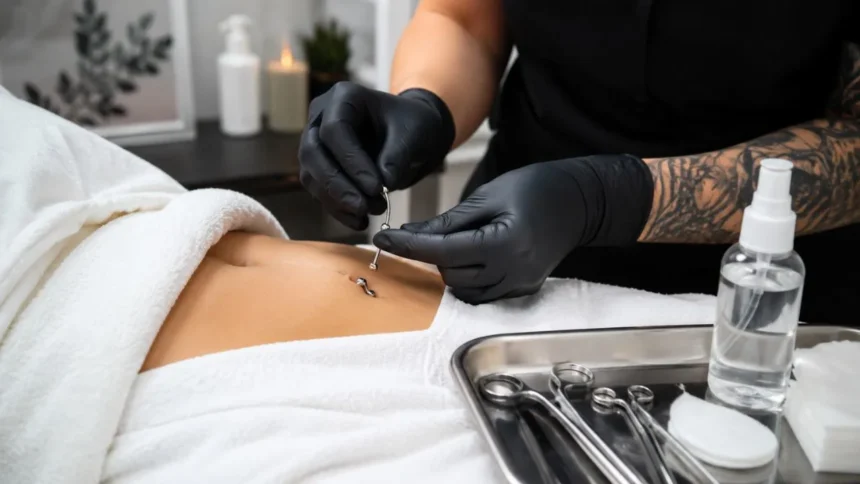
A VCH piercing is one of the most commonly requested types of vulva piercing. VCH stands for vertical clitoral hood, describing jewelry placed vertically through the thin tissue covering the clitoris. Despite its informal reputation as a “clitoral piercing,” a correctly performed VCH does not pass through the clitoris itself.
People choose this intimate piercing for different reasons, including personal style, body confidence, sexual expression, or the possibility of increased stimulation. However, results vary from person to person. Some wearers notice more sensation, while others experience little change or occasional overstimulation depending on their anatomy and jewelry.
A successful piercing depends heavily on correct placement. Not everyone has enough clitoral hood tissue to safely support the jewelry, so an experienced genital piercer must perform an in-person anatomy assessment. Piercing unsuitable tissue can increase the risk of rejection, tearing, pressure, poor healing, or disappointing results.
This guide explains the VCH piercing procedure, pain level, healing time, jewelry choices, aftercare, benefits, risks, and warning signs. It will help you prepare realistic questions before booking rather than treating a sensitive body modification as a spontaneous cosmetic decision.
What Is a VCH Piercing?
A vertical clitoral hood piercing passes through the clitoral hood from top to bottom. The clitoral hood is the fold of tissue that partially or fully covers the external part of the clitoris and helps protect it from continuous friction and irritation.
With correct placement, the lower end of the jewelry may rest near or against the clitoris beneath the hood. This contact is one reason some wearers report added stimulation during movement, sexual activity, or pressure from clothing.
The procedure pierces a relatively small amount of hood tissue. It should not travel directly through the clitoral glans, which contains concentrated nerve endings and requires very different anatomical considerations. Confusing these placements can create unrealistic expectations and serious safety concerns.
A curved barbell is commonly used for a VCH because its shape can follow the natural direction of the hood. Jewelry style, length, gauge, and end size must be selected according to the individual rather than copied from another person’s piercing.
VCH Piercing vs. a Clitoral Piercing
The terms VCH piercing and clitoral piercing are often used interchangeably online, but they do not describe the same procedure. A VCH passes through the protective hood tissue, whereas a true clitoral glans piercing passes through part of the clitoris itself.
Direct clitoral piercings are much less common because relatively few people have anatomy suited to them. The clitoris must be sufficiently exposed and developed for safe placement, and the procedure requires a piercer with advanced genital-piercing experience.
A hood piercing generally involves less nerve-dense tissue than a direct clitoral piercing. It may still affect sensation because the jewelry can rest against the clitoris, but the needle should not pass through the main sensitive structure.
Ask the piercer to explain the exact entry and exit points before agreeing to the procedure. A responsible professional should use clear anatomical language and should never misrepresent a surface or hood piercing as a direct clitoral piercing.
VCH Piercing vs. HCH Piercing
An HCH is a horizontal clitoral hood piercing that travels from one side of the hood to the other. A VCH follows the natural vertical direction of the vulva, while an HCH is positioned across the hood.
The VCH is suitable for a wider range of anatomies because the vertical orientation often fits naturally within the hood. An HCH generally requires enough pinchable hood tissue and sufficient exposure for the jewelry to sit comfortably without pressing into surrounding structures.
An HCH is commonly worn with a ring, while a VCH is usually fitted with a curved barbell. The jewelry in a properly placed HCH may provide stimulation when its bead rests against the clitoris, but this result is not guaranteed.
One placement is not automatically better than the other. Your anatomy, sensory preferences, lifestyle, clothing, and desired appearance should guide the choice after consultation with an experienced professional.
Are You Anatomically Suitable for a VCH Piercing?
VCH piercing anatomy requires enough depth beneath the clitoral hood to accommodate the jewelry comfortably. The hood must also contain sufficient tissue for a stable channel without placing the clitoris, nearby nerves, or surrounding structures at unnecessary risk.
Piercers sometimes use a sterile cotton swab during an anatomy assessment to check hood depth and available space. However, a home test cannot confirm precise placement, tissue quality, blood-vessel location, jewelry size, or the piercer’s ability to perform the procedure safely.
Natural differences in vulva shape, hood size, asymmetry, body weight, hormonal changes, and previous surgery can affect suitability. Having a smaller or larger vulva does not automatically determine whether the piercing will work.
A professional should be willing to decline the procedure when the anatomy is unsuitable. Refusal is not criticism of your body; it is a sign that the piercer is prioritizing tissue health over earning money from an unsafe placement.
How Is a VCH Piercing Done?
The appointment usually begins with a private consultation and anatomy assessment. The piercer should discuss your goals, health history, previous reactions to jewelry, healing expectations, and any activities that may affect recovery.
After confirming suitability, the piercer cleans the area, marks the intended placement, and allows you to review it. The studio should use a new sterile single-use needle, sterile tools, fresh gloves, and jewelry suitable for an initial piercing.
The needle passes through the selected section of clitoral hood tissue before the jewelry is inserted. The actual piercing normally happens quickly, although preparation, marking, jewelry fitting, and aftercare instructions make the complete appointment longer.
A piercing gun should never be used for a VCH. Guns cannot provide the precision, sterility, tissue control, or jewelry selection required for genital piercing and may cause unnecessary trauma.
How Painful Is a VCH Piercing?
VCH piercing pain is highly individual, so no universal pain score can predict your experience. The area is sensitive, but only a small amount of tissue is usually pierced, making the sharp part of the procedure relatively brief.
Many people describe a strong pinch, pressure, heat, or momentary intense sensation. Others find the anxiety before the procedure more difficult than the piercing itself, especially when the piercer communicates clearly and works efficiently.
Tenderness, mild swelling, sensitivity, or light bleeding may occur afterward. The jewelry may also feel unusually noticeable during the first few days as your body adjusts to its presence.
Severe or steadily worsening pain is not a normal part of routine healing. It may indicate excessive pressure, poor placement, embedded jewelry, injury, or infection and should be assessed promptly.
What Jewelry Is Best for a VCH Piercing?
A curved barbell is the most common initial VCH jewelry because it follows the vertical placement and can position the lower end beneath the hood. Straight barbells or rings may work for selected anatomies, but they are not universally appropriate.
Implant-grade titanium is a popular initial material because it is lightweight, durable, and suitable for many people with metal sensitivities. Properly manufactured niobium or solid biocompatible gold may also be options.
Gold-plated, gold-filled, vermeil, mystery metal, acrylic, and inexpensive fashion jewelry are poor choices for a fresh piercing. Surface coatings can wear away, while rough finishes and unsuitable alloys may irritate healing tissue.
The bar must allow room for initial swelling without being so long that it repeatedly snags or twists. Once swelling settles, a piercer may recommend downsizing to better-fitting jewelry, but the timing should be based on healing progress.
How Long Does a VCH Piercing Take to Heal?
Initial VCH healing often takes approximately four to eight weeks, although individual recovery may be shorter or longer. Tissue condition, placement, jewelry quality, friction, health, and aftercare can all affect the timeline.
A piercing may look settled on the outside before the internal channel has fully strengthened. Changing jewelry too early can damage delicate tissue, restart swelling, introduce bacteria, or make reinsertion difficult.
During healing, you may notice mild tenderness, temporary swelling, slight discoloration, and a small amount of pale fluid that dries into crust. These changes should gradually decrease rather than become increasingly painful.
Healing is not complete simply because the piercing no longer hurts. Have your piercer check it before changing jewelry, resuming rough activity, or assuming that the channel can remain open without jewelry.
VCH Piercing Aftercare
Wash your hands before touching the piercing and leave the jewelry alone outside necessary cleaning. Twisting, sliding, or rotating it can tear healing tissue and transfer bacteria from your hands.
Rinse the area with a sterile saline wound wash containing 0.9% sodium chloride and no unnecessary additives. Clean water in the shower can also remove normal discharge without aggressive scrubbing.
Gently dry the area using clean disposable gauze or allow it to air-dry. Reusable towels may catch on the jewelry or carry bacteria, fragrance, detergent residue, and fabric fibers.
Do not overclean the piercing. Frequent washing, harsh soap, antiseptic solutions, hydrogen peroxide, alcohol, iodine, ointments, essential oils, and homemade chemical mixtures may irritate tissue and delay healing.
Showering, Clothing and Daily Hygiene
Normal external washing is usually enough during VCH healing. Avoid douching, fragranced feminine washes, deodorizing sprays, scented wipes, and products intended to make the vulva smell different.
Choose breathable underwear and clothing that does not press, pull, or rub against the jewelry. Tight seams, shapewear, rough fabrics, and certain exercise clothing may increase irritation during the first stage of healing.
Change out of wet or sweaty clothing reasonably soon after swimming or exercise. Sweat itself does not automatically infect a piercing, but prolonged dampness and repeated rubbing can make the area uncomfortable.
Avoid soaking in swimming pools, hot tubs, lakes, and other shared bodies of water while the wound is fresh. Showering is generally easier to keep controlled and reduces prolonged exposure to potentially contaminated water.
Sex and Intimacy During VCH Healing
Sexual activity can place pressure, friction, bacteria, and bodily fluids around a healing genital piercing. Taking a temporary break is the simplest way to reduce irritation during the earliest and most tender stage.
When sexual contact resumes, move slowly and stop if the piercing becomes painful. Activities that pull, twist, press, or repeatedly strike the jewelry can cause bleeding, swelling, tearing, or migration.
Keep contact fluid-safe during healing by using appropriate barriers for oral, vaginal, or anal activity. Use clean sex toys, cover shared toys when appropriate, and change barriers when moving between different body areas.
A VCH piercing should never make you feel obligated to continue uncomfortable sexual activity. Healing speed varies, and waiting longer is preferable to repeatedly reopening the channel before it has stabilized.
Possible VCH Piercing Benefits
Some people choose a VCH for its appearance and view the jewelry as a private form of self-expression. It may increase body confidence or help a wearer feel more connected to their sexuality.
Because the lower bead can rest near the clitoris, movement or pressure may produce additional stimulation. The effect depends on anatomy, jewelry position, end size, clothing, activities, and individual sensitivity.
Some wearers notice increased pleasure during partnered sex or masturbation, while others primarily appreciate the piercing aesthetically. A VCH is not a medical treatment for low libido, difficulty reaching orgasm, or sexual pain.
Benefits cannot be guaranteed before the procedure. A skilled piercer can discuss likely jewelry contact, but no ethical professional should promise stronger orgasms or a specific sexual result.
Can a VCH Piercing Reduce Sensation?
Many wearers experience no harmful change in sensation, and some report increased stimulation. However, pressure, swelling, poor placement, injury, or unsuitable jewelry may temporarily make the area feel numb, painful, or overly sensitive.
Continuous contact can become distracting or uncomfortable for some people. Downsizing the bar, selecting smaller ends, or changing jewelry style after complete healing may help when overstimulation is the problem.
A misplaced needle or direct injury to highly sensitive tissue could create more serious complications. This is one reason experience with genital anatomy matters more than choosing a studio based only on price or social media popularity.
Seek medical assessment for persistent numbness, burning, electric-shock sensations, severe sensitivity, or reduced function. Do not assume that a significant sensory change will automatically resolve without evaluation.
VCH Piercing Risks and Complications
Every piercing breaks the skin and carries a risk of infection, bleeding, swelling, scarring, allergic reaction, and delayed healing. Genital placement also exposes jewelry to friction, moisture, bodily fluids, and movement.
Poorly fitted jewelry may become embedded, press against the clitoris, catch on clothing, or create a channel that gradually becomes thinner. Jewelry that is too short can restrict swelling, while jewelry that is too long may snag repeatedly.
Migration occurs when the jewelry shifts from its original placement. Rejection happens when the body pushes the jewelry toward the surface, leaving increasingly thin tissue that may eventually split.
Tearing can occur during sex, exercise, dressing, shaving, or accidental snagging. Immediate professional assessment is important when there is heavy bleeding, a visible tear, rapidly changing placement, or jewelry trapped beneath swollen tissue.
Normal Healing vs. Infection
Mild swelling, tenderness, light spotting, and a small amount of whitish or pale-yellow fluid can occur during normal healing. The fluid may dry into a thin crust around the jewelry.
An infection becomes more concerning when pain, heat, swelling, or redness continues to worsen rather than improve. On darker skin, inflammation may appear deep red, purple, gray, or noticeably darker than the surrounding area.
Thick pus, a strong unpleasant odor, fever, chills, swollen lymph nodes, or feeling generally unwell also require medical attention. Spreading discoloration or red streaks should be treated as urgent warning signs.
Do not remove the jewelry on your own when infection is suspected unless a healthcare professional instructs you to do so. Premature removal may allow the surface to close while infected material remains trapped inside.
Irritation, Migration and Rejection
Not every piercing problem is an infection. Irritation can cause tenderness, redness, swelling, discharge, or a small bump and may result from pressure, overcleaning, rough activity, unsuitable jewelry, or an allergic reaction.
Migration may make the piercing holes appear to move or cause more of the bar to become visible. The tissue between the openings may gradually narrow, and the jewelry may sit differently than it did initially.
Rejection is more likely when placement is too shallow, anatomy is unsuitable, jewelry creates constant pressure, or the piercing repeatedly experiences trauma. Once substantial rejection begins, it usually cannot be reversed by cleaning more frequently.
Consult a qualified piercer promptly when the placement changes. Removing the jewelry before it tears through the remaining tissue may reduce the eventual scar, but the decision should be made with professional guidance.
How to Choose a Safe VCH Piercer
Look for someone with documented training and substantial experience performing genital piercings. Being skilled at ear or nose piercing does not automatically mean a person understands clitoral hood anatomy.
The piercer should conduct a private in-person assessment, explain placement clearly, answer questions without pressure, and respect your right to pause or stop the appointment. Consent must continue throughout the procedure.
Ask whether the studio uses sterile single-use needles, an autoclave for reusable tools, appropriate surface disinfection, fresh gloves, and traceable implant-quality jewelry. The working area should appear organized and professionally maintained.
Review healed portfolio examples rather than looking only at freshly completed piercings. A responsible piercer should also provide written aftercare, discuss risks honestly, and refer you to medical care when a problem is outside their professional scope.
Questions to Ask Before Booking
Ask how frequently the piercer performs VCH piercings and whether they will assess your anatomy before accepting payment. Avoid anyone who guarantees suitability based only on a written description or edited photograph.
Discuss which jewelry material, shape, gauge, and length they recommend for your anatomy. Ask whether downsizing may be necessary and whether follow-up checks are included in the service.
Find out how the studio sterilizes tools and verifies its autoclave performance. The piercer should be able to explain infection-control procedures clearly rather than becoming defensive or dismissing safety questions.
Ask what symptoms should prompt a return to the studio and what symptoms require a doctor. A professional should understand the boundary between jewelry-related troubleshooting and medical diagnosis.
Who Should Delay Getting a VCH Piercing?
Postpone the appointment if you currently have genital sores, unexplained discharge, a rash, active infection, significant irritation, or broken skin around the intended placement. Piercing inflamed tissue may worsen symptoms and complicate diagnosis.
People with bleeding disorders, impaired wound healing, poorly controlled diabetes, immune-system conditions, metal allergies, or medications that affect bleeding should speak with a healthcare professional before booking.
Tell the piercer about previous keloids, hypertrophic scars, fainting during procedures, or serious jewelry reactions. This information helps them discuss realistic risks and decide whether additional precautions are needed.
Avoid scheduling the piercing immediately before travel, swimming, major exercise events, or periods when aftercare will be difficult. Choose a time when you can monitor healing and return to the studio if the jewelry needs adjustment.
Changing or Removing VCH Jewelry
Do not change the initial jewelry simply because the piercing looks calm. The internal channel may still be fragile, and removal can cause swelling or rapid narrowing that makes reinsertion difficult.
Have a professional perform the first jewelry change whenever possible. They can confirm healing, select an appropriate size, and insert the new piece without unnecessary trauma.
Even a healed VCH piercing may begin closing quickly after jewelry removal. The speed varies according to how long the piercing has existed, individual tissue, gauge, and previous irritation.
Removing the jewelry may leave two tiny marks or a small scar, although appearance varies. A medical professional should assess persistent pain, a growing lump, unusual discoloration, or a wound that does not close normally.
Common VCH Piercing Mistakes to Avoid
Choosing an inexperienced piercer is the most serious avoidable mistake. Incorrect placement can lead to poor stimulation, pressure, rejection, tearing, nerve-related symptoms, or accidental piercing of inappropriate tissue.
Do not buy low-quality jewelry simply because it looks attractive or costs less. Poor polish, incorrect dimensions, plated surfaces, and unknown metal alloys can make a sensitive piercing difficult to heal.
Avoid rotating the jewelry, using strong disinfectants, or cleaning the area repeatedly. These habits disturb new tissue and can create irritation that resembles infection.
Do not ignore changing placement, embedded ends, heavy bleeding, severe pain, fever, or spreading redness. Early professional help is safer than waiting until a small concern becomes a serious complication.
Final Thoughts
A VCH piercing is a vertical piercing through the clitoral hood rather than the clitoris itself. When anatomy, placement, jewelry, and aftercare are appropriate, it often heals more quickly than many other body piercings.
The piercing may offer aesthetic satisfaction, greater body confidence, or additional stimulation, but sexual benefits are not guaranteed. Every person’s anatomy and sensory response are different.
Choose a piercer with genuine genital-piercing experience, insist on implant-quality jewelry, and follow simple aftercare based on sterile saline and minimal handling. Avoid harsh products, unnecessary friction, and premature jewelry changes.
Seek medical help for fever, pus, spreading inflammation, severe pain, heavy bleeding, embedded jewelry, or unusual sensory changes. Careful preparation and early attention to problems provide the best chance of a comfortable, stable result.
Frequently Asked Questions
What does VCH piercing stand for?
VCH stands for vertical clitoral hood piercing. It passes vertically through the hood tissue covering the clitoris, not through the clitoris itself.
How long does a VCH piercing take to heal?
Initial healing commonly takes around four to eight weeks, although some people need longer. Placement, friction, jewelry quality, health, and aftercare affect recovery.
Does a VCH piercing increase pleasure?
It may increase stimulation when the jewelry rests against the clitoris, but results vary. Some people notice stronger sensation, while others experience little change or overstimulation.
Can everyone get a VCH piercing?
No. The clitoral hood must have enough depth and suitable tissue to support the jewelry. An experienced genital piercer must assess your anatomy in person.
What are the signs of an infected VCH piercing?
Warning signs include worsening pain, heat, swelling, spreading redness or discoloration, thick pus, fever, chills, or feeling unwell. Seek medical care rather than removing the jewelry yourself.