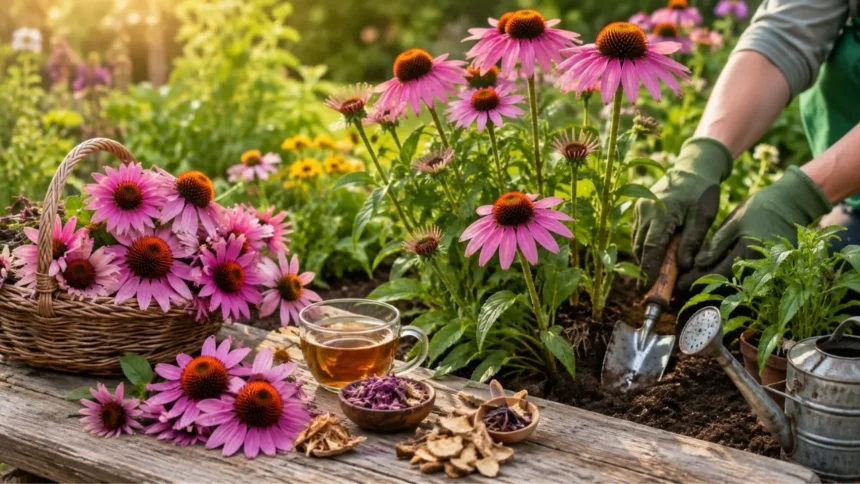
Echinacea: Benefits, Uses, Growing and Care Guide
Echinacea is one of the most recognizable flowering plants in herbal gardens, cottage borders, and pollinator-friendly landscapes. Often called purple coneflower, it produces colorful daisy-like blooms around a raised, spiky center. Gardeners value it for its long flowering season, while many people recognize echinacea as an ingredient in teas, tinctures, capsules, and cold-season supplements.
The plant has a long history of traditional use, particularly among Indigenous communities in North America. Today, echinacea products are commonly promoted for immune support and relief during the common cold. However, modern research does not support every marketing claim, and results can differ according to the species, plant part, preparation, and amount used.
As a garden plant, echinacea is generally easier to understand. It is a hardy flowering perennial that prefers sunshine, well-drained soil, and enough room for air to move around its leaves. Once established, many varieties tolerate periods of dry weather and return each year with relatively little maintenance.
This complete guide explains echinacea benefits, traditional and modern uses, possible side effects, and important safety considerations. It also covers how to grow echinacea from plants or seeds, where to position it, how to water and prune it, and how to manage common coneflower pests and diseases.
What Is Echinacea?
Echinacea is a genus of perennial flowering plants belonging to the Asteraceae family, which also includes daisies, sunflowers, and ragweed. The plants are native mainly to central and eastern areas of North America. They grow naturally in prairies, open woodlands, meadows, and other sunny environments with reasonably well-drained soil.
The name echinacea is connected to the plant’s distinctive central cone, which feels firm and prickly when mature. This raised cone is surrounded by ray-shaped petals that may point outward or curve downward. Traditional purple varieties remain popular, but modern garden cultivars also produce white, yellow, orange, red, pink, and green flowers.
Echinacea plants form clumps of upright stems above rough, usually dark-green foliage. Depending on the species and cultivar, plants may remain compact or grow approximately three to four feet tall. Flowers generally appear during summer and may continue into early or mid-fall when conditions are suitable.
Purple coneflower is both an ornamental perennial and an herb used in dietary supplements. The roots, leaves, stems, and flowers may be processed, but different commercial products contain different plant parts. This variation is one reason echinacea teas, extracts, capsules, and tinctures may not produce identical effects.
Popular Types of Echinacea
Echinacea purpurea, commonly called purple coneflower, is the type most gardeners are likely to find at nurseries. It usually produces strong upright stems, rough leaves, pinkish-purple petals, and a dark central cone. It adapts to several soil types and is commonly used in perennial borders, meadow gardens, and pollinator plantings.
Echinacea angustifolia is often called narrow-leaved purple coneflower because its leaves are generally slimmer than those of Echinacea purpurea. It develops a substantial root system and is one of the species frequently used in herbal preparations. In a garden, it prefers open sunshine and soil that drains efficiently.
Echinacea pallida, or pale purple coneflower, produces delicate pale-pink petals that often hang noticeably downward from its central cone. It typically develops a long taproot, helping established plants tolerate dry conditions. Its graceful appearance works particularly well in prairie-style gardens and naturalized planting schemes.
Garden hybrids and named cultivars expand the available range of flower shapes, heights, and colors. Some produce compact plants suitable for containers, while others offer double flowers or unusually bright shades. When choosing a cultivar, consider its mature size, local climate suitability, disease resistance, and value to pollinating insects.
What Are the Potential Benefits of Echinacea?
Echinacea is most widely associated with immune support and the common cold. Current research suggests that taking certain echinacea preparations may slightly reduce the chance of developing a cold. However, the evidence is not strong enough to guarantee that a person using echinacea will avoid respiratory infections.
Researchers have also investigated whether echinacea can shorten a cold or reduce symptom severity. Results have been inconsistent, partly because studies use different species, plant parts, extraction methods, and dosages. At present, it remains unclear whether echinacea reliably shortens the length of a cold once symptoms have started.
Echinacea contains several naturally occurring substances, including alkamides, caffeic acid derivatives, polysaccharides, and other plant compounds. Laboratory studies have examined their effects on immune activity and inflammation. Laboratory findings, however, do not automatically prove that an echinacea product will produce a meaningful health benefit in people.
The most accurate way to discuss echinacea benefits is with realistic expectations. It may provide limited support in certain situations, but it is not a proven cure for infections, chronic disease, or immune disorders. It should complement appropriate rest, nutrition, hydration, vaccination, and medical treatment rather than replace them.
Does Echinacea Help with Colds?
Many people start using echinacea when they feel throat irritation, nasal congestion, tiredness, or other early cold symptoms. Some products are intended for regular short-term use during cold season, while others are marketed for use after symptoms begin. The ideal timing remains uncertain because commercial preparations vary considerably.
Evidence suggests echinacea may have a small preventive effect against the common cold, but this does not mean it creates complete immunity. A person may still develop a respiratory infection while taking it. Individual responses can also vary according to health status, exposure, product quality, species, and formulation.
Whether echinacea reduces the duration or severity of an existing cold is less clear. Some studies report a benefit, while others find little or no meaningful difference. These inconsistent results make it difficult to recommend echinacea as a dependable treatment for shortening every cold.
Echinacea should not be used to delay medical assessment when symptoms are serious or unusual. Breathing difficulty, chest pain, dehydration, confusion, a persistent high fever, or symptoms that improve and then become worse require professional attention. People with a higher risk of complications should seek advice earlier.
Common Echinacea Uses and Products
Echinacea tea is usually made from dried roots, leaves, flowers, or a combination of plant parts. It has an earthy, herbal flavor that may be slightly bitter or tingling. Many people combine it with honey, lemon, ginger, peppermint, or other herbs to create a more enjoyable cold-season drink.
Echinacea tinctures and liquid extracts contain concentrated plant material in alcohol, glycerin, or another extracting liquid. They are commonly measured in drops or small liquid servings. Because concentration varies between manufacturers, directions for one tincture should not be applied automatically to another product.
Capsules and tablets provide a more convenient option for people who dislike herbal flavors. These products may contain powdered plant material, dry extracts, or combinations of several echinacea species. The amount printed on the label does not always make products directly comparable because extraction strength and preparation methods may differ.
Topical echinacea creams and skin products are also available, although evidence supporting echinacea for skin conditions remains limited. Applying a natural product to the skin can still cause irritation or an allergic reaction. Test new topical products carefully and stop using them if redness, itching, burning, or swelling develops.
How to Use Echinacea Safely
Begin by reading the complete product label rather than assuming all echinacea supplements are the same. Check the botanical species, plant part, extract concentration, suggested use, additional ingredients, and expiration date. Avoid exceeding the manufacturer’s instructions unless a qualified healthcare professional gives you different guidance.
There is no single standard echinacea dosage that applies to every tea, capsule, tincture, or extract. Products contain different species and concentrations, making a universal measurement unreliable. Follow product-specific directions and ask a pharmacist or healthcare provider when the label is unclear or when several herbal ingredients are combined.
Echinacea is commonly used for relatively short periods rather than continuously throughout the year. Long-term safety information is less complete than short-term safety data. Regular or repeated use should be discussed with a healthcare professional, particularly when you have a diagnosed condition or take ongoing medication.
Do not use echinacea as a substitute for antibiotics, antiviral medication, asthma treatment, vaccination, or emergency medical care. Supplements are not tested and regulated in exactly the same way as prescription drugs. A product described as natural can still cause side effects, interact with medication, or be unsuitable for certain people.
Echinacea Side Effects and Precautions
The most commonly reported echinacea side effects involve the digestive system. Some users experience nausea, stomach discomfort, abdominal pain, diarrhea, or vomiting. These symptoms may depend on the product, concentration, serving amount, or individual sensitivity and should not be ignored when they persist.
Allergic reactions are another important concern because echinacea belongs to the daisy family. People who react to ragweed, chrysanthemums, marigolds, or daisies may have a higher risk of sensitivity. Possible signs include rash, itching, facial swelling, wheezing, throat tightness, or difficulty breathing.
Echinacea may interact with medicines processed by the liver, although the clinical importance of every possible interaction is not fully established. There are also theoretical concerns involving immunosuppressant medicines and caffeine. Anyone taking prescription medication should discuss echinacea with a doctor or pharmacist before starting it.
Stop using the product and seek urgent help if you experience breathing difficulty, widespread hives, swelling of the mouth or throat, faintness, or another severe reaction. Mild stomach upset may improve after discontinuation, but ongoing symptoms deserve medical advice. Keep the product packaging available so a professional can review its ingredients.
Who Should Speak to a Doctor Before Using Echinacea?
Pregnant people should consult a healthcare professional before taking echinacea. Although limited research has examined short-term exposure during early pregnancy, available information is not sufficient to declare every preparation safe. Products may also contain alcohol, sweeteners, preservatives, or additional herbs that create separate considerations.
Little is known about the safety of echinacea while breastfeeding. Compounds from herbs may pass into breast milk, and concentrated supplements can differ from ordinary foods. A doctor, pharmacist, or qualified maternity professional can help assess the product, intended purpose, and possible alternatives.
Parents should seek professional advice before giving an echinacea supplement to a child. Some children have developed rashes during clinical research, and an allergic response can occasionally become severe. Child-specific evidence is limited, and an adult formulation should never be given simply by reducing the serving size.
People with autoimmune conditions, organ transplants, significant allergies, chronic liver disease, or immune-suppressing treatment require individual guidance. Anyone preparing for surgery should also disclose herbal supplements to the medical team. Sharing a complete list of medicines and supplements helps professionals identify potential interactions and avoid unnecessary risks.
How to Choose a Quality Echinacea Supplement
Look for a product that clearly identifies the echinacea species rather than listing only a vague herbal blend. Echinacea purpurea, Echinacea angustifolia, and Echinacea pallida are commonly used, but they are not interchangeable in every preparation. The label should also state whether the product contains root, aerial parts, or both.
Choose manufacturers that provide transparent ingredient information, clear serving instructions, lot numbers, and contact details. Independent quality testing can offer additional reassurance that a product contains the listed ingredients and has been screened for certain contaminants. Quality certification does not prove effectiveness, but it can improve confidence in manufacturing standards.
Avoid products that promise to cure influenza, prevent every infection, detoxify the body, or replace medical treatment. Reliable supplement companies generally use more measured language because research on echinacea remains mixed. Strong promises and dramatic testimonials should not be treated as scientific evidence.
Check the additional ingredients when choosing gummies, syrups, teas, or combination supplements. These products may contain large amounts of sugar, alcohol, caffeine, allergens, or several herbs with overlapping effects. A simpler formula can make it easier to understand what you are taking and identify the cause of a reaction.
How to Grow Echinacea Successfully
Learning how to grow echinacea begins with choosing an open, sunny location. Most coneflowers bloom best when they receive at least six hours of direct sunlight each day. They may tolerate light or partial shade, but plants growing in too little sun can become weak, produce fewer flowers, or lean toward brighter areas.
Good drainage is more important than highly fertile soil. Echinacea adapts to sandy, loamy, clay-based, or rocky ground when excess water can move away from the root system. Constantly wet soil, especially during winter, can encourage root and crown rot and shorten the life of the plant.
Spring is often the easiest time to plant echinacea because the roots have an entire growing season to become established. Early fall planting may work in mild climates when plants have enough time to root before freezing conditions. Avoid planting into waterlogged ground or during periods of extreme heat.
Check the mature width of the chosen species or cultivar before deciding on spacing. Many coneflowers need approximately 18 to 24 inches of room, while larger selections may require more. Adequate spacing improves air circulation, reduces competition, and allows each plant’s natural shape to develop.
Best Soil, Light and Watering Conditions
Echinacea performs particularly well in moderately fertile, well-drained soil. Excessive fertilizer or extremely rich soil can produce soft, floppy growth rather than stronger flowering stems. Before planting, loosen compacted ground and add a modest amount of compost when the soil lacks structure or organic material.
Full sun encourages sturdy growth and abundant flowers. In very hot regions, some afternoon shade may protect plants from the strongest heat, but excessive shade generally reduces flowering. Observe how sunlight moves across the garden before planting, particularly near buildings, fences, or fast-growing trees.
Newly planted echinacea needs consistent moisture while its root system develops. Water deeply when the upper layer of soil begins to dry, encouraging roots to grow downward. Frequent shallow watering can create a weaker root system and may leave the foliage damp, increasing the risk of disease.
Established purple coneflowers are reasonably drought tolerant, but they still benefit from water during prolonged hot and dry periods. Avoid maintaining constantly wet soil, which can be more damaging than occasional dryness. Water near the base of the plant instead of repeatedly soaking the leaves and flowers.
How to Plant Echinacea from Nursery Plants
Choose nursery plants with firm stems, healthy green leaves, and no obvious signs of insects, rot, or disease. Avoid plants with blackened crowns, severely circling roots, or distorted flower growth. A smaller healthy plant often establishes more successfully than a large specimen that has remained root-bound for too long.
Dig a planting hole slightly wider than the root ball but no deeper than the container. Position the crown at approximately the same soil level at which it was growing in the pot. Planting too deeply can keep the crown wet, while planting too high may expose the roots to drying.
Backfill the hole gently, firming the soil enough to remove large air pockets without heavily compacting it. Water thoroughly after planting so soil settles around the roots. Add a light layer of mulch while leaving a small gap around the crown to prevent moisture from collecting directly against it.
Continue checking moisture throughout the first growing season. New leaves may temporarily droop after transplanting, especially in warm weather, but they should recover with appropriate watering. Avoid applying strong fertilizer immediately because stressed roots need time to settle before supporting rapid top growth.
How to Grow Echinacea from Seed
Growing echinacea from seed is an affordable way to produce several plants, although seedlings may take time to reach flowering size. Species plants generally grow more predictably from collected seed than complex hybrids. Seeds saved from cultivated varieties may produce flowers that differ from the parent plant.
Many echinacea seeds germinate more successfully after a period of cool, moist conditions known as cold stratification. Gardeners can sow seeds outdoors during late fall or winter, allowing seasonal weather to provide this treatment. Seeds can also be chilled in a controlled indoor setup before spring sowing.
Sow seeds in a free-draining seed-starting mixture and cover them lightly according to the supplier’s directions. Keep the growing medium evenly moist but not saturated. Provide bright light after germination to prevent thin, weak seedlings from stretching toward the nearest window.
Transplant young coneflowers outdoors after they have developed a healthy root system and local frost risk has passed. Harden them gradually by exposing them to outdoor conditions over several days. Some seedlings may flower during their first year, while others need another growing season to become fully established.
Echinacea Care Throughout the Growing Season
Coneflower care is generally simple once the roots have become established. Check plants regularly for dry soil, leaning stems, insect damage, and unusual leaf discoloration. Identifying a problem early is easier than treating a large infestation or removing a plant affected by an advanced disease.
Echinacea rarely needs heavy feeding in ordinary garden soil. A light layer of compost in spring may provide sufficient nutrients for the growing season. Too much nitrogen can encourage tall, leafy stems that bend or fall, particularly after rain or in partially shaded locations.
Mulch can help reduce weeds and slow moisture loss, but it should not bury the crown. Use a relatively thin layer and keep the material away from the center of the plant. Thick, damp mulch around the crown may promote decay, especially in regions with wet winters.
Remove weeds carefully while echinacea plants are young because weeds compete for water, light, and nutrients. Once established, coneflowers create stronger clumps that shade portions of the surrounding ground. Even mature beds benefit from occasional weeding to preserve airflow and prevent aggressive plants from taking over.
Should You Deadhead Echinacea Flowers?
Deadheading means removing flowers after they begin to fade. Cutting spent blooms can keep the plant looking tidy and may encourage some varieties to continue producing buds. Make each cut above a healthy leaf or side shoot rather than leaving long, bare pieces of stem.
You do not need to remove every flower head. Leaving some mature cones allows seeds to develop for birds and gives the winter garden additional texture. Seed heads can look particularly attractive after frost, especially when planted among ornamental grasses and other sturdy perennials.
Gardeners who want to limit self-seeding should remove most flowers before the seeds mature and fall. Echinacea purpurea can produce volunteer seedlings around the parent plant under suitable conditions. These seedlings may be moved, removed, or allowed to create a more naturalized display.
A balanced approach is to deadhead early flowers for neatness and possible repeat blooming, then leave later seed heads in place. This method extends seasonal interest while providing food for wildlife. It also reduces the amount of cutting required during the busiest part of the gardening season.
Pruning and Winter Care
Echinacea naturally dies back after frost in colder climates. Gardeners can cut the stems near ground level in fall, but immediate removal is not always necessary. Standing seed heads provide winter structure and may continue feeding birds after other natural food sources become limited.
Leaving hollow or pithy stems can also support some stem-nesting insects. Instead of cutting everything to ground level, consider leaving sections of dead stems standing through winter. Garden cleanup can then be delayed until spring temperatures rise and beneficial insects have had an opportunity to emerge.
In regions with wet winters, good drainage remains the main protection against plant loss. Avoid covering the crown with thick, moisture-retaining mulch. A light protective layer may be useful in exposed climates, but soggy roots and crowns are often more dangerous than ordinary cold temperatures.
When new growth begins in spring, remove damaged or collapsed material with clean pruning tools. Watch for healthy shoots emerging from the crown before assuming a plant has died. Echinacea may begin growing later than some nearby perennials, particularly after a cold or unusually wet winter.
How to Divide and Propagate Echinacea
Established echinacea clumps may be divided when they become crowded, lose vigor in the center, or outgrow their allocated space. Division is not required every year and can disturb the root system, so it should be performed only when the plant would genuinely benefit.
Spring is often a suitable time to divide coneflowers because cool conditions reduce stress while new growth begins. Dig around the clump carefully and lift as much of the root system as possible. Separate it into healthy sections, ensuring each piece has roots and several active shoots.
Replant the divisions promptly at the same depth as the original crown. Water them thoroughly and maintain consistent moisture while they establish. Divided plants may produce fewer flowers during the first season because they are directing energy toward rebuilding their roots.
Echinacea can also be propagated from seed, basal cuttings, or root cuttings, depending on the species. Seed is usually the easiest method for home gardeners, while division preserves the characteristics of a named cultivar. Hybrid seed may not produce plants identical to the parent.
Common Echinacea Pests
Japanese beetles sometimes feed on echinacea flowers and leaves, leaving irregular holes or skeletonized tissue. Small numbers can be removed by hand and placed in soapy water. Regular inspection is more effective than waiting until a large group has damaged several plants.
Aphids may gather on tender shoots, buds, or the undersides of leaves. Their feeding can distort young growth and produce sticky honeydew. A strong stream of water may remove a light infestation, while natural predators often help control populations in a diverse garden.
Slugs and snails can damage young echinacea leaves, particularly during damp weather. Reduce hiding places, avoid unnecessary evening irrigation, and inspect around mulch and containers. Newly transplanted seedlings require closer attention because they can lose a large proportion of their foliage quickly.
Deer and rabbits may occasionally browse coneflowers despite the plant sometimes being described as resistant. Wildlife preferences vary according to location and available food. Physical barriers, suitable repellents, and planting among less appealing species may be necessary where browsing pressure is high.
Common Echinacea Diseases
Aster yellows is one of the most concerning coneflower diseases. It can cause green, distorted flower parts, unusual leafy growth inside the bloom, yellowing, and stunted development. The condition is caused by a phytoplasma spread by insects known as leafhoppers.
There is no practical cure for a plant infected with aster yellows. Remove the entire affected plant, including its roots, and dispose of it rather than placing it in ordinary compost. Early removal may reduce the chance of insects carrying the pathogen to healthy plants nearby.
Leaf spots and powdery mildew may appear when foliage remains damp or plants are crowded. Improve airflow, water at soil level, and remove heavily affected leaves. Avoid overhead watering late in the day because leaves that remain wet overnight may be more vulnerable to fungal problems.
Root and crown rot are commonly associated with poorly drained or constantly wet soil. Affected plants may wilt even though the ground is moist, and the crown may become soft or discolored. Prevention through suitable planting depth and drainage is generally more effective than attempting to rescue a badly rotted plant.
Growing Echinacea in Containers
Compact echinacea cultivars can grow successfully in containers when given adequate root space. Choose a sturdy pot with several drainage holes and enough weight to prevent a mature plant from tipping over. Small decorative pots may dry too quickly or restrict long-term root development.
Fill the container with a high-quality, free-draining potting mixture rather than dense garden soil. Position the plant at its original depth and water thoroughly. Place the container where it receives strong sunlight, keeping in mind that walls and paved surfaces can increase afternoon heat.
Container-grown echinacea usually needs more frequent watering than plants growing in the ground. Check the soil regularly during hot or windy weather, but do not leave the pot standing in water. Empty saucers after heavy rain if they prevent excess moisture from draining.
Roots in containers experience greater temperature changes during winter. In cold regions, move the pot to a sheltered location, insulate it, or place it in an unheated protected area. Choose a container that tolerates freezing conditions and avoid keeping dormant roots excessively wet.
Echinacea in Pollinator and Wildlife Gardens
Echinacea flowers provide nectar and pollen for several visiting insects, including bees and butterflies. Their long summer flowering period can help support pollinators when planted with other species that bloom earlier and later. A varied planting provides more consistent resources than one flower type alone.
The raised flower cones create useful landing areas for insects. Single-flowered varieties usually provide easier access to pollen and nectar than heavily doubled cultivars. Gardeners prioritizing wildlife value should include species plants or open-centered cultivars alongside more decorative selections.
After flowering, mature seed heads can attract finches and other seed-eating birds. Leaving some cones standing into fall and winter creates both food and shelter. The dark seed heads also add visual contrast when fresh flowers are no longer present in the garden.
Avoid spraying open flowers with broad-spectrum insecticides, especially when pollinators are active. Manage garden problems through plant health, observation, hand removal, barriers, and targeted treatments when necessary. A healthy ecosystem often includes some leaf damage without requiring immediate chemical control.
Companion Plants for Echinacea
Echinacea combines naturally with black-eyed Susan, bee balm, blazing star, coreopsis, yarrow, and ornamental grasses. These plants often share similar preferences for sunshine and reasonably well-drained soil. Their varied heights and flower shapes can create a layered, meadow-inspired appearance.
For extended seasonal color, pair coneflowers with spring bulbs and early-blooming perennials. Later in the year, asters, goldenrod, and sedums can continue providing flowers after many echinacea blooms fade. Selecting plants with overlapping bloom times supports both visual interest and pollinating insects.
Choose companions according to moisture requirements rather than appearance alone. Echinacea may struggle beside plants that demand constantly wet soil or heavy irrigation. Matching water needs reduces maintenance and prevents one species from receiving unsuitable growing conditions.
Allow enough space for each plant to reach its mature width. Crowding may look full during the first year but can lead to poor airflow and increased disease later. Fill temporary gaps with annual flowers or mulch instead of positioning permanent plants too closely together.
Harvesting Echinacea for Home Use
Gardeners sometimes harvest echinacea flowers, leaves, or roots for homemade tea and herbal preparations. Accurate plant identification is essential because ornamental gardens may contain similar-looking flowers. Only harvest plants that have not been treated with unsuitable pesticides or contaminated by pets, traffic, or polluted soil.
Leaves and flowers are usually gathered during active growth, while roots are commonly harvested from mature plants. Removing roots kills or seriously weakens the plant, so this practice should be planned carefully. Do not harvest wild echinacea from protected land or from populations where collection is restricted.
Wash harvested material carefully and follow a reliable preparation method. Homemade products are difficult to standardize because their concentration depends on the species, growing conditions, plant part, harvest timing, and preparation. A strong taste does not necessarily indicate a stronger or more useful product.
Anyone using homegrown echinacea medicinally should follow the same safety precautions applied to commercial supplements. Allergic reactions and medication interactions remain possible. Gardening successfully and producing a homemade preparation does not guarantee that the product is appropriate for every health condition or individual.
Common Echinacea Growing Mistakes
Planting echinacea in waterlogged soil is one of the most damaging mistakes. The plant may tolerate several soil textures, but its roots and crown need oxygen and effective drainage. Improve heavy soil before planting or choose a raised position where rainwater does not remain for long periods.
Too much shade can produce weak stems and disappointing flowers. While purple coneflower may tolerate partial shade, it usually performs best in direct sunlight. Move struggling plants during a suitable season when nearby trees, buildings, or shrubs block more light than expected.
Overwatering and excessive feeding can also reduce plant quality. Constant moisture encourages root problems, while high-nitrogen fertilizer produces lush foliage that may flop. Allow established plants to experience slight drying between deep waterings and use compost or fertilizer in moderation.
Removing every fading flower and dead stem may make a garden look tidy, but it reduces food and shelter for wildlife. Leave some seed heads and stem sections whenever practical. A less aggressive cleanup routine can support birds and beneficial insects without making the garden appear neglected.
Final Thoughts on Echinacea
Echinacea offers two different forms of value: it is an attractive, wildlife-friendly perennial and a widely used herbal product. Its garden benefits are well established, while many health claims remain uncertain. Understanding this difference helps people enjoy the plant without expecting results that current research cannot guarantee.
As a supplement, echinacea may slightly reduce the likelihood of catching a cold, but it has not been proven to cure respiratory infections. Product quality and formulation vary, and side effects or allergic reactions can occur. Professional guidance is important for children, pregnant people, and anyone taking medication.
As a garden plant, purple coneflower is generally dependable when given enough sun and effective drainage. Water it regularly while young, avoid excessive fertilizer, and allow mature seed heads to remain for birds. Proper spacing and routine observation can prevent many common coneflower care problems.
Whether you grow echinacea for colorful flowers, pollinator support, cut arrangements, or carefully considered herbal use, begin with accurate information. Realistic expectations, thoughtful plant care, and sensible health precautions allow you to appreciate echinacea as both a beautiful perennial and a culturally significant herb.
Frequently Asked Questions
What is echinacea mainly used for?
Echinacea is mainly used in supplements promoted for immune support and the common cold. It is also grown as a colorful perennial flower that attracts pollinators and provides seeds for birds.
Does echinacea come back every year?
Yes, echinacea is a perennial and can return for several years when suited to the local climate. Good drainage, adequate sunlight, and proper winter care improve its chances of returning reliably.
Where is the best place to plant echinacea?
Plant echinacea in a location receiving at least six hours of direct sunlight with soil that drains well. Avoid low areas where water collects around the crown after rain.
Can you grow echinacea in pots?
Yes, compact echinacea varieties grow well in large containers with drainage holes. Container plants need regular moisture checks and additional winter protection in colder climates.
Is it safe to take echinacea every day?
Long-term safety is less certain than short-term use, and products vary significantly. Speak with a healthcare professional before daily use, especially when taking medication or managing a health condition.