Sun Poisoning Rash: Recognize the Signs and Protect Your Skin
A sun poisoning rash can develop after intense ultraviolet exposure and may involve more than the redness and tenderness of an ordinary sunburn. The skin may become swollen, blistered, intensely itchy or covered with small bumps. Some people also experience headache, nausea, dizziness, chills or weakness.
Despite its name, sun poisoning does not mean that sunlight has placed poison inside the body. The phrase is commonly used to describe a severe sunburn or a strong reaction to ultraviolet radiation. It is not one precise medical diagnosis, so the appearance and severity of the rash can differ considerably.
Some rashes blamed on sun poisoning are actually caused by conditions such as polymorphous light eruption, medication-related photosensitivity or a reaction between sunlight and plant chemicals. Heat exhaustion can also occur at the same time, making it difficult to determine which problem is responsible for symptoms without a professional assessment.
Most mild sunburns can be managed with cooling, hydration and careful skin care. However, extensive blistering, confusion, fainting, breathing problems, severe dehydration or a very high temperature require urgent medical attention. Recognizing these differences helps you choose safe home care without delaying treatment for a serious condition.
What Is Sun Poisoning?
Sun poisoning is an informal expression rather than a clearly defined medical disorder. Healthcare professionals may use it when explaining a particularly severe sunburn or a sun-triggered reaction that causes skin symptoms along with general illness. The term therefore describes a group of possible reactions rather than one predictable rash.
A typical sunburn happens when ultraviolet radiation damages exposed skin. Mild burns may cause warmth, redness, tenderness or darker discoloration, depending on skin tone. A more serious reaction may produce pronounced swelling, painful blisters, widespread inflammation and symptoms extending beyond the skin.
The phrase is also sometimes used for polymorphous light eruption, commonly shortened to PMLE. This condition produces an itchy or burning rash after exposure to sunlight, often during spring or early summer when the skin has not recently experienced strong ultraviolet exposure.
Because several conditions can look similar, a person should not rely only on an online description or photographs. The pattern, timing, medicines used and presence of systemic symptoms all matter. A clinician or dermatologist can determine whether the problem is severe sunburn, sun allergy, photosensitivity or another skin disorder.
Sun Poisoning Rash Symptoms
A sun poisoning rash may appear red, pink, purple, brown or darker than the surrounding skin. Colour varies with skin tone and the type of reaction involved. The affected area may feel unusually hot, painful, tight or sensitive when touched by clothing, bedding or water.
Severe sunburn can produce swelling and fluid-filled blisters. Blistering indicates deeper skin damage than simple surface redness and should be handled carefully. The skin may later peel as damaged cells are removed, but peeling should not be pulled or scrubbed away deliberately.
A sun allergy rash may look different from a severe burn. It can include closely grouped bumps, raised patches, itching or burning on areas exposed to ultraviolet light. The chest, neck, arms and legs are common locations, although the exact pattern varies between individuals.
Symptoms such as headache, nausea, dizziness, fatigue, chills or dehydration suggest that the problem may extend beyond a minor skin reaction. Confusion, fainting, seizures or an altered mental state can indicate heat stroke or another emergency and require immediate medical assistance.
Sunburn or Sun Poisoning?
A mild sunburn usually affects the skin without making the person seriously unwell. It may cause soreness, warmth, redness, swelling or tenderness several hours after exposure. The discomfort can increase before it begins improving, and the damaged skin may eventually become dry or peel.
Sun poisoning is generally used when the reaction is more intense. Large blisters, major swelling and widespread pain may be accompanied by headache, nausea, feverish feelings, chills, dizziness or weakness. These additional symptoms are an important reason to consider contacting a healthcare professional.
The dividing line is not always clear because sun poisoning is not a formal diagnosis with one test or fixed definition. A painful burn covering a large area may require medical care even if no rash is present, while a smaller but unusual rash may require assessment if it appears after minimal sunlight.
Do not measure seriousness only by skin colour. Redness can be less obvious on darker skin, but tenderness, heat, swelling, blistering and systemic symptoms can still reveal significant damage. Pay attention to how the skin feels and whether the person’s overall condition is getting worse.
Sun Rash vs Sun Allergy
A sun allergy describes several conditions in which sunlight triggers an abnormal skin reaction. Symptoms commonly develop on areas exposed to ultraviolet radiation and may include itching, burning, bumps, patches or blisters. These reactions can occur even when the exposure was not long enough to cause an ordinary burn.
Polymorphous light eruption is one of the most common forms. The rash often occurs after the first significant sun exposures of spring or early summer. It may appear within hours or days and usually affects areas such as the upper chest, neck, arms or lower legs.
The reaction may improve after the person stays out of direct sunlight, although it can return with another exposure. Some people experience episodes every year. Repeated, uncomfortable or widespread rashes should be evaluated because other conditions, including autoimmune diseases, may also worsen after sun exposure.
A severe sunburn is caused by ultraviolet damage rather than a sun allergy, although the conditions may resemble each other. The timing and appearance provide useful clues, but self-diagnosis remains unreliable. A dermatologist may use the medical history, examination, blood tests or controlled light testing when necessary.
Common Causes and Triggers
The most direct cause of a severe sunburn is receiving more ultraviolet radiation than the skin can tolerate. Risk rises when someone spends long periods outdoors without enough shade, protective clothing or correctly applied sunscreen. Water, snow and sand may increase exposure by reflecting ultraviolet rays.
A person can burn on a cloudy or cool day because ultraviolet radiation is not the same as visible sunlight or outdoor temperature. Activities such as swimming, hiking, sightseeing or working outside may therefore lead to damage before the skin feels uncomfortably hot.
Some medicines and products can increase photosensitivity, causing a sunburn-like reaction or rash after a smaller amount of exposure. Photosensitivity may be triggered by medicines taken by mouth, injected medicines or products applied directly to the skin.
Plant juices can create another type of reaction. When certain plant chemicals remain on the skin and are exposed to ultraviolet light, they may cause redness, swelling, blisters or unusual streak-shaped discoloration. This condition is called phytophotodermatitis and can be confused with sun poisoning.
Medicines and Photosensitivity
Medication-related photosensitivity happens when a chemical interacts with ultraviolet radiation and causes skin inflammation. The reaction may resemble an exaggerated sunburn, an itchy rash or eczema. It can begin shortly after exposure or appear later, depending on the type of reaction.
The FDA explains that photosensitivity includes phototoxic and photoallergic reactions. A phototoxic response is a direct chemical reaction that can resemble severe sunburn, while a photoallergic response involves the immune system and may produce an itchy, spreading rash.
Not everyone taking a photosensitizing medicine will develop symptoms. The risk can depend on the medicine, dose, length of use, amount of ultraviolet exposure and individual sensitivity. A person should therefore read medication warnings and ask a pharmacist about sun precautions when beginning a new treatment.
Do not stop a prescribed medicine independently because a rash appeared. Move out of the sun, protect the affected skin and contact the prescriber or pharmacist promptly. Breathing difficulty, facial swelling, mouth sores or a rapidly worsening rash may indicate a serious reaction requiring urgent medical care.
Who Is More at Risk?
Anyone can develop sunburn, regardless of skin tone. People with lighter skin may burn more visibly and quickly, but darker skin can also sustain ultraviolet damage. Relying on whether the skin looks red may cause some people to underestimate a serious reaction.
Risk increases for people who spend long periods outside, especially around midday or in locations with intense ultraviolet radiation. Outdoor workers, athletes, travellers, swimmers and people at high elevations may receive more exposure than they realise.
Children and older adults may need closer monitoring because severe sunburn and dehydration can affect them more seriously. People with limited mobility or reduced awareness may also struggle to move into shade, drink fluids or recognise early warning signs.
A history of PMLE, another sun allergy, lupus or medication-related photosensitivity can increase the likelihood of a recurring rash. People with repeated reactions after minor exposure should discuss their symptoms with a clinician instead of repeatedly treating each episode as an ordinary sunburn.
Immediate Sun Rash Treatment
Move indoors or into deep shade as soon as the reaction is noticed. Continuing ultraviolet exposure can worsen damaged skin, even when sunscreen is applied afterwards. Cover the affected area loosely with soft, breathable clothing if the person must briefly remain outside.
Cool baths, gentle showers or clean damp cloths can reduce heat and discomfort. The water should be cool rather than painfully cold. Pat the skin gently after bathing and avoid vigorous rubbing, exfoliating products or harsh soap on the irritated area.
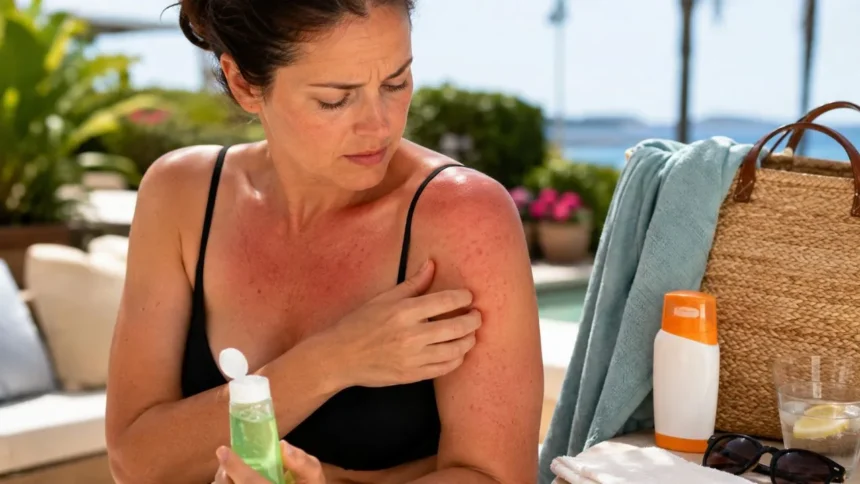
Apply a gentle, fragrance-free moisturizer while the skin remains slightly damp. The American Academy of Dermatology recommends products containing aloe vera or soy for soothing sunburned skin. Calamine lotion or a colloidal oatmeal bath may also reduce discomfort for some people.
Drink additional water because sunburn can draw fluid toward the skin and contribute to dehydration. Rest in a cool environment and avoid alcohol until hydration and general wellbeing improve. Medical care is appropriate when symptoms are severe, worsening or accompanied by significant illness.
Treat Pain and Itching Safely
A cool compress can provide temporary relief from burning, itching and swelling. Place a clean damp cloth over the skin for short periods and repeat when needed. Do not apply ice directly because extreme cold can further injure already damaged tissue.
An over-the-counter pain reliever may help some adults manage swelling or discomfort. Use only a medicine that is safe for your age, health conditions and other treatments, and follow its label. Ask a pharmacist when you are uncertain about interactions or suitability.
Avoid products containing ingredients that previously irritated your skin. The AAD cautions that some numbing products, including certain “-caine” ingredients, can irritate sunburn or cause an allergic reaction. Strongly fragranced creams and exfoliating acids may also increase discomfort.
If itching is severe, the rash repeatedly returns or over-the-counter care is not helping, contact a healthcare professional. Treatment depends on the cause, so medication suitable for PMLE or an allergic reaction may not be appropriate for a blistering burn or skin infection.
Care for Sun Poisoning Blisters
Blisters form when a burn damages deeper layers of skin. They protect the tissue underneath while healing begins. Do not deliberately pop, cut, drain or peel them, even when they feel tight or inconvenient.
Keep blistered skin clean and avoid friction from tight clothing. If a blister opens by itself, wash your hands before touching the area and protect it with appropriate wound care. A pharmacist or clinician can advise on suitable dressings for larger or awkwardly positioned blisters.
Watch for signs of infection, including increasing redness or discoloration around the wound, growing warmth, worsening swelling, pus, red streaks or pain that intensifies instead of improving. Fever or feeling generally unwell should also prompt medical advice.
Large, widespread or extremely painful blisters require professional evaluation. Urgent care may also be needed when blistering affects the face, hands, genitals, major joints or a large part of the body, or when the person is a baby, older adult or medically vulnerable.
What Not to Put on the Rash
Do not use ice directly on a sun poisoning rash. Although the skin feels hot, direct ice can damage the surface and worsen pain. Use cool water or a damp cloth instead, and stop any cooling method that causes numbness or additional discomfort.
Avoid scrubbing, peeling or exfoliating the affected skin. Damaged skin needs time to repair its protective barrier. Loofahs, body scrubs, retinoids and exfoliating acids can remove fragile tissue and increase irritation while the burn is healing.
Do not apply an unfamiliar essential oil, concentrated herbal remedy or heavily fragranced product. Natural ingredients can still cause contact dermatitis, photosensitivity or additional irritation. Apply only simple products known to be safe for your skin.
Never use tanning beds or intentional sunlight to “even out” the colour after a burn. Additional ultraviolet exposure creates more damage and delays recovery. Protect the area until tenderness, blistering and peeling have resolved completely.
How Long Does Sun Poisoning Last?
The recovery period depends on what caused the reaction and how deeply the skin was injured. A mild sunburn may begin feeling better within several days, while a blistering burn can remain painful and sensitive for longer. Peeling may continue after the main discomfort improves.
Polymorphous light eruption often settles after the person avoids further sunlight. Mayo Clinic notes that the rash frequently clears on its own within about 10 days, although repeated exposure can trigger another episode before the skin has fully recovered.
Medication-related or chemical photosensitivity may continue until the triggering substance is addressed and the skin heals. The timeline therefore varies. A prescriber may need to adjust treatment, but patients should not discontinue necessary medicine without professional guidance.
Seek medical advice when a rash is not improving, repeatedly returns, spreads to covered skin or lasts longer than expected. A persistent sun rash may have another cause, and accurate diagnosis is more useful than repeatedly applying treatments intended for ordinary sunburn.
When to Seek Medical Help
Contact a healthcare professional when the burn covers a large area, produces extensive blisters or causes severe pain. Medical advice is also appropriate for high fever, chills, nausea, worsening swelling, pus or other signs that the skin may be infected.
Urgent assessment is needed for breathing difficulty, facial or throat swelling, trouble swallowing, eye involvement or a rapidly spreading rash. These symptoms may indicate a significant allergic reaction or another condition rather than uncomplicated sunburn.
Signs of dehydration include intense thirst, dizziness, weakness and reduced urination. Vomiting can make dehydration worse because the person may be unable to replace lost fluid. Children, older adults and people with underlying health conditions may deteriorate more quickly.
Call local emergency services for confusion, slurred speech, seizures, loss of consciousness or very high body temperature. These are possible signs of heat stroke, which can cause permanent disability or death when emergency treatment and rapid cooling are delayed.
Heat Rash vs Sun Poisoning
Heat rash develops when sweat becomes trapped in the skin. It often appears as clusters of small red or darker bumps in sweaty areas such as the neck, upper chest, groin, under the breasts or inside skin creases.
A sun poisoning rash is more closely linked with ultraviolet exposure. It usually affects areas that received sunlight and may be accompanied by sunburn, swelling, blisters or general illness. However, both conditions can occur at the same time during hot weather.
Heat rash often improves when the person moves to a cooler, less humid environment and keeps the affected area dry. Heavy ointments can trap warmth and moisture, making some cases worse. Sunburned skin, by contrast, often benefits from a light soothing moisturizer.
Because symptoms can overlap, look at where the rash appears and what happened before it developed. Seek medical advice when the person is unwell, the rash is widespread, blisters are present or cooling and basic care do not produce improvement.
Prevent Another Sun Reaction
Check the ultraviolet forecast before spending extended time outdoors. Plan long activities for periods when ultraviolet intensity is lower, and use shade whenever possible. Remember that cooler temperatures and cloud cover do not guarantee protection.
Wear tightly woven clothing, a wide-brimmed hat and sunglasses that provide ultraviolet protection. Clothing offers more consistent coverage than sunscreen alone, especially on shoulders, the upper back and other areas where sunscreen is easily missed or rubbed away.
Apply a broad-spectrum, water-resistant sunscreen with an SPF of at least 30 to uncovered skin. Put it on before going outdoors and reapply regularly, especially after swimming, heavy sweating or towel drying. No sunscreen provides complete protection.
Check the warnings supplied with medicines and skincare products. When a treatment can increase photosensitivity, ask a pharmacist or prescriber whether you need stronger precautions. People with recurring sun allergy symptoms may benefit from a prevention plan created with a dermatologist.
FAQs About Sun Poisoning Rash
People often search for sun poisoning rash pictures, but photographs alone cannot provide a dependable diagnosis. Different burns, allergies, infections and medication reactions can produce similar-looking redness, bumps or blisters.
The timing of the reaction can provide useful information. A painful burn may develop after prolonged exposure, while an itchy PMLE rash can appear after a shorter exposure and may return during the same season.
The location also matters. Sun-triggered reactions usually affect exposed skin, although a photoallergic rash may spread beyond those areas. Heat rash commonly appears in sweaty folds and areas covered by tight clothing.
The following answers address common questions about symptoms, recovery and treatment. Anyone who is seriously unwell, confused, unconscious or having difficulty breathing needs immediate medical help rather than online self-care advice.
Is sun poisoning a real type of poisoning?
No. The term usually describes a severe sunburn or another intense reaction to ultraviolet radiation. It does not mean a toxic substance from the sun has entered the body.
What does a sun poisoning rash look like?
It may involve swollen or painful skin, blisters, itching, bumps or raised patches. Appearance varies by skin tone and cause, so photographs cannot confirm the diagnosis.
Can sun poisoning cause fever or chills?
A severe reaction may be accompanied by feverish feelings, chills, nausea, headache or dizziness. These symptoms deserve medical advice, particularly when extensive blistering or dehydration is present.
Does aloe vera treat sun poisoning?
A moisturizer containing aloe vera may soothe mild sunburn discomfort, but it does not reverse ultraviolet damage or treat every sun-triggered rash. Severe symptoms still require medical assessment.
Can a sun poisoning rash spread?
Some photosensitive or photoallergic rashes can extend beyond the most exposed area. A rapidly spreading rash, facial swelling, mouth involvement or breathing difficulty requires urgent medical care.
Conclusion: Heal the Rash and Prevent More Damage
A sun poisoning rash is a warning that the skin has experienced significant ultraviolet damage or an abnormal reaction to sunlight. It may appear as a painful burn, widespread swelling, blisters, itchy bumps or a combination of these symptoms.
Move out of the sun immediately, cool the skin gently, drink water and apply a simple soothing moisturizer. Avoid ice, harsh products, deliberate blister popping and further ultraviolet exposure while the skin is recovering.
Do not dismiss symptoms that affect the whole body. Extensive blistering, severe dehydration, high fever, confusion, fainting, seizures or breathing difficulties require prompt professional care. Heat stroke is an emergency and should never be treated as an ordinary sunburn.
Once the skin heals, reduce future risk through shade, protective clothing, broad-spectrum sunscreen and careful review of medication warnings. Repeated sun rashes should be assessed by a dermatologist so the underlying trigger can be identified and managed correctly.