What Is Brain Plasticity and How Does It Work?
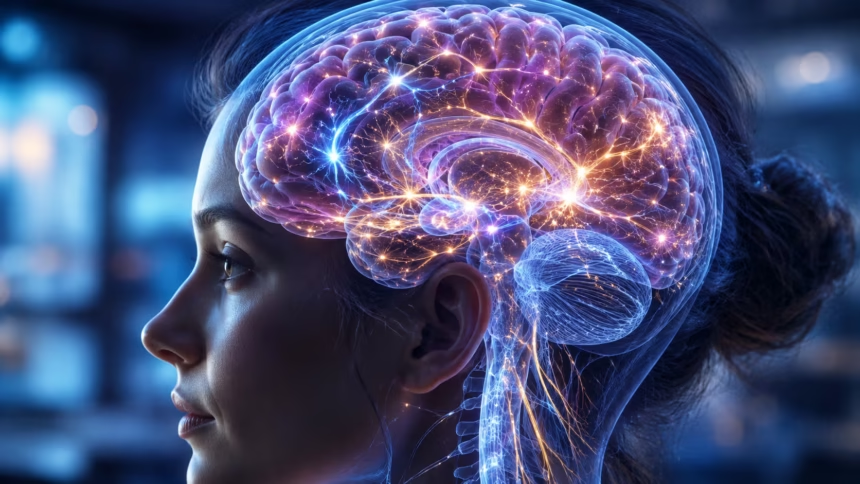
The human brain is not a fixed machine that stops changing after childhood. It is a living, adaptable organ that continuously responds to learning, experiences, emotions and changes in the surrounding environment. This ability to reorganize is called brain plasticity, or neuroplasticity, and it helps explain how people acquire new skills, form memories and adjust their behaviour.
Whenever you practise a musical instrument, learn a language or navigate an unfamiliar place, groups of brain cells communicate in new patterns. With repetition, some of these communication pathways become faster and more efficient. The brain is not completely rebuilding itself during this process, but it is adjusting the strength and organization of its existing neural connections.
Brain plasticity also plays an important role when the nervous system is affected by illness or injury. During rehabilitation, healthy parts of the brain may sometimes learn to support functions previously managed by damaged areas. Recovery varies widely between individuals, but neuroplasticity gives healthcare professionals a biological foundation for therapies based on movement, repetition and task-specific practice.
Understanding how neuroplasticity works can change the way people think about learning and personal development. It does not mean that anyone can instantly transform their abilities or overcome every neurological limitation. Instead, it shows that meaningful brain changes are possible when the right experiences are repeated consistently over an appropriate period of time.
What Is Brain Plasticity?
Brain plasticity is the nervous system’s ability to change its structure, activity or connections in response to internal and external experiences. These changes can happen at several levels, from adjustments between individual neurons to the reorganization of larger brain networks. Neuroplasticity supports normal development while helping the brain respond to learning, environmental demands and physical challenges.
Neurons communicate with one another across tiny junctions called synapses. When particular groups of neurons are activated repeatedly, communication between them may become stronger. Connections that are rarely used may become weaker or less influential. This ongoing adjustment allows the brain to prioritize information and actions that appear useful, relevant or frequently repeated.
The word “plasticity” can sometimes create the wrong impression because the brain is neither soft nor endlessly flexible. Biological limits, age, genetics, health and the nature of an experience all affect how much change can occur. Some brain systems adapt relatively quickly, while others require intensive practice or may have limited capacity to reorganize after significant damage.
Neural plasticity is therefore best understood as a natural process rather than a special mental technique. It happens whether a person is intentionally learning or simply responding to daily life. Beneficial routines can strengthen helpful neural pathways, while repeated stress, avoidance or harmful habits may reinforce patterns that make certain behaviours more difficult to change.
How Does Neuroplasticity Work?
Neuroplasticity begins when experience changes the activity of neurons. A new action, thought or sensation activates a particular combination of nerve cells. When the experience is repeated, the same network is activated again, giving the brain more opportunities to improve communication along that pathway. This process helps turn difficult, attention-demanding tasks into more familiar and efficient behaviours.
One important mechanism is synaptic plasticity, which changes how effectively signals travel between neurons. Frequently activated synapses may become more responsive through processes associated with learning and memory. Other connections may weaken when they are no longer useful. Together, strengthening and weakening help brain networks update themselves without storing every experience with equal importance.
The physical structure of neural networks can also change. Neurons may develop or reshape small branches that help them communicate with nearby cells, while existing circuits may alter how they share information. The brain can also change the way larger regions coordinate with one another, allowing skills to become more automatic or helping people adopt alternative strategies.
Chemical messengers and growth-related proteins influence these adjustments. Brain-derived neurotrophic factor, commonly called BDNF, is frequently discussed because it supports neuron health and processes involved in learning. Sleep, physical activity, stress, attention and general health can affect the biological environment in which plastic changes occur, although no single factor controls neuroplasticity by itself.
The Main Types of Brain Plasticity
Structural plasticity refers to measurable changes in the physical organization of the brain and its neural connections. These changes may include adjustments in synapses, nerve fibres or communication networks following repeated experience. Structural neuroplasticity usually develops gradually, reflecting how the brain responds to regular practice, environmental demands and long-term patterns of behaviour.
Functional plasticity occurs when brain activity is redistributed or reorganized. A brain region may become more involved in a task after training, or another network may help compensate when the usual system has been disrupted. This type of adaptation is especially important in neurorehabilitation, where therapy encourages the nervous system to find more effective ways of performing meaningful activities.
Synaptic plasticity focuses on changes in the strength of communication between neurons. It is one of the main biological foundations of learning and memory. When a person repeatedly retrieves information or performs an action, relevant synapses may become more efficient. This is one reason active practice generally produces stronger learning than simply rereading or passively observing information.
Developmental plasticity shapes the brain as children interact with the world. During early life, the nervous system forms many connections and then refines them according to experience. However, brain plasticity does not disappear in adulthood. Adults retain the ability to learn, adapt and modify neural pathways, although the speed and extent of change may differ from childhood.
Does Brain Plasticity Continue in Adults?
The adult brain remains capable of meaningful change throughout life. People can learn professional skills, improve coordination, build new routines and adapt to unfamiliar technologies well beyond childhood. These abilities depend partly on neuroplasticity, which allows existing neural networks to become more efficient and to cooperate in different ways when new challenges appear.
Age can influence how quickly some forms of learning occur. Younger brains often have greater flexibility during certain developmental periods, particularly for language, vision and sensory processing. Adults may require more deliberate practice, rest and repetition, but they can also use experience, reasoning and established knowledge to understand complex information more effectively.
Neuroplasticity may become less efficient when sleep, physical health, attention or emotional well-being is consistently poor. This does not mean the brain has lost its ability to adapt. Instead, it means that learning conditions matter. A well-designed routine that balances challenge with recovery can help adults maintain cognitive flexibility and develop useful neural pathways.
Claims that people use only a small percentage of their brains or can unlock unlimited abilities through simple exercises are misleading. Brain plasticity is powerful, but it operates within biological boundaries. Sustainable improvement usually requires specific practice over time rather than motivational thinking alone, and results vary according to the person, skill and circumstances.
How Learning Rewires the Brain
Learning changes the brain most effectively when a person actively works with information. Solving a problem, recalling a fact or performing a movement forces relevant neural networks to generate a response. Each successful attempt gives the nervous system feedback that can strengthen useful pathways and improve how efficiently the same task is handled in the future.
Repetition is important, but mindless repetition is not always productive. Practice works better when it is focused, gradually challenging and connected to a clear goal. Correct feedback also matters because the brain can reinforce mistakes when an inaccurate action is repeated frequently. Slow, accurate practice often builds a stronger foundation than repeatedly rushing through a task.
Spacing learning across several sessions is generally more effective than concentrating everything into one exhausting period. Breaks give the brain time to stabilize and integrate new information. Returning to the material later requires retrieval, which strengthens memory pathways and reveals what the learner genuinely understands rather than what merely feels familiar at that moment.
Novelty can also capture attention and encourage flexible learning. A new environment, example or practice format may prevent the brain from relying entirely on automatic responses. However, novelty alone does not guarantee lasting knowledge. The strongest results usually come from combining interest with repetition, feedback, emotional relevance and opportunities to apply the skill in different situations.
How Habits Shape Neural Pathways
Habits develop when the brain repeatedly connects a trigger with a particular response and outcome. At first, the action may require conscious effort, but it becomes easier as the neural pathway grows more familiar. This efficiency reduces mental workload, allowing routine behaviours such as driving a known route or preparing breakfast to occur with relatively little conscious planning.
The same process can strengthen unhelpful patterns. Repeatedly checking a phone when bored, avoiding difficult conversations or responding to stress in a particular way can become increasingly automatic. These behaviours are not permanently wired into the brain, but replacing them often feels uncomfortable because the established pathway is familiar and has been practised many times.
Changing a habit usually works better when the old response is replaced rather than simply suppressed. A person who reaches for social media during work might place the phone elsewhere and use a short walk as an alternative break. Repeating the new response in the same situation helps build a competing pathway that may gradually become easier to follow.
Occasional setbacks do not erase previous progress. Under stress or fatigue, the brain may return to the most established behaviour because it requires less effort. Consistent repetition of the healthier response remains important. Over time, the new behaviour can become more automatic, especially when the environment makes the desired action convenient and the unwanted action less accessible.
Brain Plasticity After Injury
Neuroplasticity is an important part of recovery following conditions such as stroke, traumatic brain injury or certain forms of nerve damage. When a brain region is injured, nearby or connected networks may sometimes adjust their activity. Rehabilitation attempts to guide this adaptation toward movements, communication skills and everyday tasks that improve a person’s independence.
Therapy commonly uses repeated, task-specific practice because the brain changes according to what it is asked to do. Practising standing may support standing ability, while practising speech may engage language-related networks. General activity can be valuable, but meaningful recovery often requires exercises that closely resemble the function the person is trying to regain.
Timing and intensity must be individualized. More practice is not always better when it causes pain, severe fatigue or unsafe movement. Rehabilitation professionals consider the location and severity of the injury, medical stability and the person’s goals. They may adjust exercises as ability improves, creating enough challenge to encourage adaptation without overwhelming the nervous system.
Brain plasticity does not guarantee a complete recovery, and it should never be presented as proof that effort alone determines the outcome. Some neurological damage creates lasting limitations despite excellent therapy and strong motivation. Neuroplasticity offers opportunities for improvement and compensation, but realistic goals, professional guidance and emotional support remain essential parts of rehabilitation.
Can Neuroplasticity Be Harmful?
Brain plasticity is neither automatically positive nor negative. It strengthens patterns that are repeated, regardless of whether those patterns improve health. This is known as maladaptive plasticity when brain changes contribute to unwanted symptoms or behaviours. Chronic pain, addiction, persistent fear responses and certain movement problems may involve neural networks becoming overly efficient at producing an unhelpful response.
In chronic pain, for example, the nervous system can become increasingly sensitive even after damaged tissues have healed. This does not mean the pain is imaginary. It means the brain and nervous system may have learned to interpret signals as threatening more easily. Treatment may therefore address movement, sleep, stress and nervous-system sensitivity alongside any remaining physical cause.
Repeated negative thinking can also make certain mental responses easier to activate. However, people should not be blamed for anxiety, depression or trauma-related symptoms. These conditions involve complex interactions between biology, experience and circumstances. Neuroplasticity helps explain why evidence-based therapy and healthy routines may support change, but it is not a substitute for professional mental healthcare.
Recognizing maladaptive plasticity provides a more balanced picture of how the brain works. The goal is not simply to increase neuroplasticity as much as possible. Healthy adaptation requires directing change toward useful functions while reducing reinforcement of harmful patterns. Attention, repetition and context determine which pathways receive the greatest opportunity to become established.
How Sleep and Exercise Support Brain Plasticity
Sleep gives the brain an opportunity to process experiences and stabilize newly learned information. During different stages of sleep, neural activity related to recent learning may be reorganized and integrated with existing knowledge. Poor sleep can make attention, memory retrieval and emotional control more difficult, reducing a person’s ability to practise new skills effectively.
A consistent sleep schedule is generally more useful than relying on occasional recovery sleep. Reducing bright screens before bedtime, limiting late caffeine and creating a quiet environment may improve sleep quality for some people. Persistent insomnia, loud snoring or extreme daytime sleepiness should be discussed with a healthcare professional because an untreated sleep disorder can affect wider health.
Physical activity supports blood flow, cardiovascular health and chemical processes associated with brain function. Aerobic exercise, strength training, balance work and coordinated movement may challenge the nervous system in different ways. The most helpful routine is usually one that is safe, sustainable and appropriate for the person’s current fitness level and medical needs.
Exercise does not instantly rewire the brain or prevent every form of cognitive decline. Its value comes from regular participation and its wider effects on physical health, mood, sleep and mental alertness. Combining movement with a learning activity, such as dance, a sport or a changing walking route, may provide both physical and cognitive stimulation.
Practical Ways to Encourage Healthy Neuroplasticity
Choose a skill that is challenging enough to require attention but not so difficult that every attempt ends in frustration. A manageable challenge gives the brain repeated opportunities to solve problems and correct errors. Learning a language, cooking unfamiliar recipes, practising music or improving a professional skill can all create useful cognitive demands when performed consistently.
Divide complicated goals into smaller components. Someone learning to play a song might practise the rhythm, hand position and difficult transitions separately before combining them. This approach reduces unnecessary overload and allows the brain to strengthen specific neural pathways. Progress can then be measured through improved accuracy, speed, confidence or independence.
Use active recall instead of relying entirely on passive review. Close the book and explain the idea from memory, answer practice questions or demonstrate the skill without following instructions. Errors reveal which pathways still need work. Correcting those errors soon afterward provides stronger feedback than repeatedly reading information that already feels familiar.
Finally, protect time for rest and recovery. Neuroplasticity depends on repeated stimulation, but excessive practice can reduce concentration and reinforce poor technique. Short, regular sessions are often easier to maintain than occasional marathon efforts. Consistency, useful feedback, healthy sleep and gradual difficulty provide a more realistic foundation for lasting brain change.
What Current Neuroplasticity Research Is Exploring
Researchers are studying how rehabilitation can be matched more precisely to individual patients. Brain imaging, movement tracking and neurological assessments may help identify which networks respond to therapy. The goal is to understand why similar treatments produce different results and how practice type, intensity and timing can be adjusted for better functional outcomes.
Non-invasive brain stimulation is another developing area. Techniques such as transcranial magnetic stimulation and transcranial direct-current stimulation aim to influence the activity of targeted networks. Some methods are already used clinically for particular conditions, while many proposed neuroplasticity applications remain experimental and require stronger evidence before becoming routine treatments.
Brain-computer interfaces are also being investigated in rehabilitation. These systems can detect patterns of brain activity and translate them into feedback or commands. In some research settings, a patient may imagine a movement while receiving visual, robotic or electrical feedback, creating a connection between intention and action that could support motor relearning.
These technologies are promising, but they do not replace the fundamentals of neuroplastic change. Meaningful tasks, repetition, attention, feedback and recovery remain central. New tools may eventually make training more precise or accessible, yet responsible claims must distinguish early research findings from treatments that have been thoroughly tested and shown to improve everyday function.
The Future of Brain Plasticity
The growing understanding of neuroplasticity is changing education, rehabilitation and mental healthcare. Instead of viewing ability as permanently fixed, professionals can examine how experiences and environments influence performance. This perspective supports personalized training while recognizing that people differ in their biology, resources, opportunities and response to intervention.
Future research may provide clearer ways to measure whether a therapy is producing useful brain changes. A change visible on a brain scan is not automatically meaningful if it does not improve communication, mobility or quality of life. Researchers are increasingly interested in connecting biological measurements with outcomes that matter in a person’s daily activities.
Ethical questions will become more important as brain stimulation, artificial intelligence and brain-computer interfaces develop. Access, privacy, long-term safety and exaggerated marketing claims all require careful attention. Technology that influences neural activity should be evaluated through reliable research rather than promoted as a shortcut to intelligence, productivity or personal transformation.
For most people, the practical lesson of brain plasticity remains simple. The brain responds to what it repeatedly experiences and practises. Small actions may not feel transformative in a single day, but focused repetition can gradually alter skills, habits and confidence. Sustainable progress comes from giving useful neural pathways enough time and opportunity to strengthen.
Final Thoughts on How Brain Plasticity Works
Brain plasticity is the nervous system’s ability to adjust its connections, structure and activity in response to experience. It supports learning, memory, habit formation and adaptation throughout life. Although younger brains may change more easily in certain areas, adults continue to possess meaningful neuroplastic potential that can be developed through deliberate practice.
The process depends on how frequently and accurately neural pathways are activated. Repetition can strengthen useful skills, but it can also reinforce unwanted responses. Understanding this balance helps explain why habits become automatic, why learning requires consistency and why changing established behaviour may initially demand considerable conscious effort.
Neuroplasticity also provides hope for neurological rehabilitation without promising impossible outcomes. The brain may reorganize after an injury, particularly when therapy is targeted and repeated. However, recovery depends on many factors, and people experiencing neurological symptoms should seek qualified medical care rather than relying on unproven brain-training claims.
Ultimately, brain plasticity shows that the brain is both stable and adaptable. It preserves the knowledge and skills people rely on while remaining responsive to new experiences. By combining focused learning, healthy movement, adequate sleep and realistic expectations, people can create better conditions for the brain to learn, adjust and grow.
Frequently Asked Questions
Can you rewire your brain at any age?
Yes, the brain remains capable of neuroplastic change throughout adulthood. However, the speed and extent of change depend on age, health, the skill being learned and the quality of practice.
How long does neuroplasticity take?
There is no universal timeline for brain rewiring. Small performance changes may appear quickly, while stable habits, complex skills or neurological recovery may require weeks, months or longer.
Does learning something new create new brain cells?
Learning mainly changes the strength and organization of connections between existing neurons. The extent of new neuron formation in the adult human brain remains an active area of scientific investigation.
What activities increase brain plasticity?
Focused learning, physical exercise, active recall, coordinated movement and practising unfamiliar skills can encourage adaptive brain changes. Consistency, feedback and adequate sleep make these activities more effective.
Can brain plasticity cure brain damage?
Neuroplasticity may help the nervous system recover or compensate after some injuries, but it cannot guarantee a cure. Outcomes vary, and rehabilitation should be designed by qualified healthcare professionals.