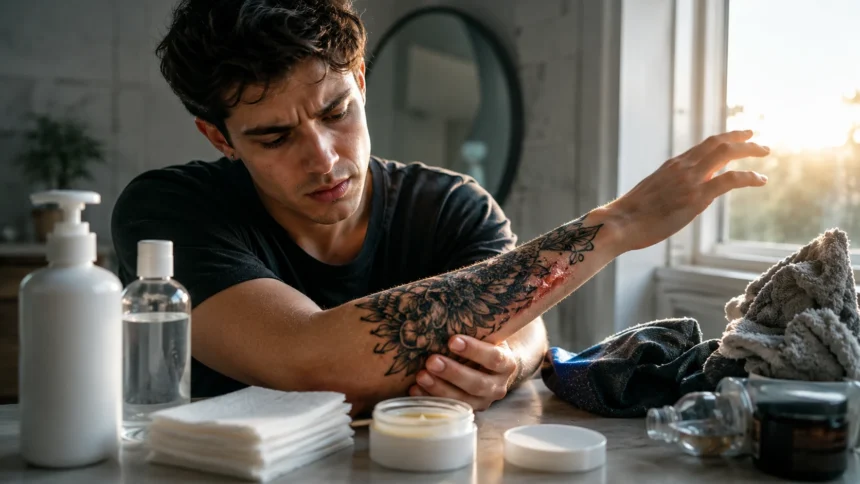
Tattoo Aftercare: 7 Mistakes That Can Ruin Your New Ink
Getting a new tattoo is exciting, but the work is not completely finished when you leave the studio. A tattoo is created by repeatedly inserting pigment into the skin, so the area needs time and proper care to recover. What you do during those first days and weeks can influence comfort, healing, and how your tattoo eventually looks.
Good tattoo aftercare does not require an overflowing cabinet of special products. In most cases, the priorities are straightforward: keep the area appropriately clean, avoid unnecessary irritation, follow your tattoo artist’s dressing instructions, and give the skin time to heal without constantly interfering with it.
Some redness, tenderness, mild swelling, clear fluid, itching, flaking, and light scabbing can occur as a fresh tattoo heals. Problems become more concerning when symptoms worsen instead of gradually improving, especially if there is increasing pain, heat, spreading redness, pus-like drainage, or fever.
The frustrating part is that many tattoo problems come from ordinary behaviors that seem harmless. Swimming too soon, peeling a scab, applying too much product, or exposing fresh ink to strong sunlight can interfere with recovery. Understanding the most common mistakes makes protecting your new tattoo considerably easier.
What Actually Happens to Your Skin After a Tattoo?
A tattoo does not simply sit on top of your skin like paint. Tattoo needles place pigment beneath the surface, creating thousands of tiny areas of controlled skin injury during the process. Your body responds immediately by beginning the normal repair processes used whenever the protective skin barrier has been disrupted.
During the first stage of tattoo healing, the area may look red, feel tender, and release a small amount of clear or blood-tinged fluid. This does not automatically mean something is wrong. The appearance should generally become calmer as healing progresses rather than becoming increasingly painful, swollen, or inflamed.
Over the following days, the surface can become dry, itchy, flaky, or lightly scabbed. Your tattoo might temporarily look duller than it did immediately after the session. This stage often worries first-time tattoo owners, but peeling and mild itching can be part of ordinary healing rather than evidence that the ink is disappearing.
The deeper layers continue recovering even after the surface begins looking normal. That is why tattoo aftercare should not end simply because visible peeling has stopped. Treating the area gently, limiting sun exposure, and avoiding unnecessary skin trauma continue to matter while the tattoo settles.
Mistake #1: Ignoring Your Tattoo Artist’s Bandage Instructions
One of the first decisions after getting tattooed involves the protective dressing. Depending on the tattoo, studio practices, skin condition, and dressing product, your artist may use traditional covering material or an adhesive film sometimes called a second-skin tattoo bandage. These products are not all designed to be handled in exactly the same way.
Removing a dressing much earlier than instructed can expose freshly tattooed skin to friction, dirty surfaces, and unnecessary touching. Keeping certain coverings on much longer than recommended can create other problems. Instead of following a random time you found online, use the instructions given for the specific dressing placed on your tattoo.
You may notice fluid collecting underneath some transparent adhesive dressings during the early healing period. The exact care depends on the product and your artist’s instructions. If a dressing leaks, rolls up, exposes part of the tattoo, causes significant irritation, or creates another concern, contact the tattoo professional who applied it for appropriate guidance.
Avoid repeatedly removing and replacing dressings just to look at the tattoo. Every unnecessary interaction creates another opportunity to irritate the area or introduce contamination. Good fresh tattoo care often involves doing less rather than constantly checking, touching, cleaning, and adjusting the skin.
Mistake #2: Scrubbing or Overwashing Your Fresh Tattoo
Keeping a tattoo clean is important, but aggressive cleaning is not better cleaning. Freshly tattooed skin is already irritated, so vigorous scrubbing, exfoliation, washcloth friction, or repeated washing can make the area more uncomfortable and disrupt the healing surface.
When your artist tells you that the tattoo can be washed, clean it gently with clean hands and follow the cleansing instructions they provided. Avoid treating the tattoo as though you need to scrub ink, plasma, or every visible trace of dryness away. The goal is hygienic skin without unnecessary mechanical irritation.
Very hot water can also feel harsh on newly tattooed skin. Long showers that repeatedly soak the area are different from brief, gentle cleaning. After washing, avoid vigorously rubbing the tattoo with a towel; gentle drying helps minimize friction while the surface is still sensitive.
More washing does not automatically mean a lower risk of infection. Excessive washing can leave the skin dry and irritated, particularly when combined with harsh or heavily fragranced products. A simple and consistent tattoo cleaning routine is usually easier on healing skin than constantly experimenting with new cleansers and techniques.
Mistake #3: Using Too Much Lotion or the Wrong Products
Fresh tattoos can become dry and uncomfortable, so moisturizer is commonly used during healing. The mistake is assuming that if a little product feels good, covering the tattoo in a thick layer must be even better. Overapplying products can leave the area unnecessarily sticky and uncomfortable.
Use the aftercare product and amount recommended by your tattoo artist or healthcare professional. When moisturizer is appropriate, you generally want the skin to feel comfortably moisturized rather than buried under a heavy coating. If a product causes substantial burning, rash, swelling, or worsening irritation, stop assuming the reaction is simply part of tattoo healing.
Fragrance-heavy skin products may also irritate sensitive skin. Likewise, do not start applying random antibiotic creams, essential oils, acne treatments, exfoliating acids, or home remedies simply because someone online says they helped a tattoo heal faster. A fresh tattoo is not the ideal place to experiment with unnecessary active ingredients.
Long after healing, moisturizing tattooed skin can help keep dry skin comfortable. The American Academy of Dermatology recommends a water-based lotion or cream when tattooed skin feels dry and notes that ongoing skin care and sun protection help maintain the appearance of tattoos.
Mistake #4: Picking Scabs or Peeling Flaking Skin
Few parts of tattoo healing test patience like peeling. When small flakes or scabs appear, pulling them off can be incredibly tempting. You may think you are simply removing skin that was going to fall away anyway, but manually peeling it can damage tissue that is not ready to detach.
Picking can reopen vulnerable areas and increase irritation. Removing a scab prematurely may also contribute to uneven healing and potentially affect the appearance of pigment beneath it. The safest approach is generally to allow flakes and ordinary scabs to separate naturally as the skin underneath recovers.
Itching creates a similar problem. Scratching with fingernails can injure the surface and introduce bacteria from your hands. If itching becomes intense, persistent, or accompanies an unusual rash, bumps, spreading redness, or other concerning symptoms, contact an appropriate healthcare professional rather than repeatedly scratching the tattoo.
Normal peeling can temporarily make a tattoo look less impressive than it did on the first day. That does not mean you need to “help” reveal the finished design underneath. Tattoo peeling is a phase where patience matters: keep following your care instructions and let the skin complete its own repair process.
Mistake #5: Swimming or Soaking the Tattoo Too Soon
A fresh tattoo and prolonged soaking are a poor combination. Pools, hot tubs, lakes, oceans, and baths keep healing skin wet for extended periods, and public or natural bodies of water can expose the area to microorganisms you do not want entering disrupted skin.
Swimming can also introduce other irritants. Pools contain treatment chemicals, while seawater, sand, heat, and friction can aggravate sensitive skin. NHS tattoo-related aftercare materials advise avoiding swimming during the healing period, although the exact duration can vary with the procedure and healing progress.
A shower is not the same as soaking. Normal gentle washing allows you to clean the area without leaving it submerged for a prolonged period. Baths, hot tubs, long pool sessions, and extended water exposure should wait until the tattoo has healed sufficiently according to your artist’s guidance.
If you have a holiday, beach trip, spa visit, or swimming event approaching, timing your tattoo intelligently is easier than trying to protect an open tattoo afterward. Planning ahead can prevent a situation where you must choose between participating in activities and giving your new tattoo appropriate healing conditions.
Mistake #6: Exposing a Fresh Tattoo to Too Much Sun
Sunlight is one of the most important long-term considerations for tattooed skin. Ultraviolet radiation can contribute to pigment fading, and newly tattooed skin is already recovering from injury. Spending hours exposing a fresh tattoo to strong sunlight is therefore unnecessary stress during the healing process.
While the tattoo is fresh, follow your artist’s advice about protecting it from direct sun. Loose, clean clothing can provide physical coverage when appropriate without requiring you to repeatedly manipulate the healing area. Avoid tanning beds as well; intentionally exposing recovering skin to intense ultraviolet radiation offers no healing advantage.
Once the tattooed skin has healed, make sunscreen part of long-term tattoo care. The American Academy of Dermatology recommends broad-spectrum, water-resistant SPF 30 or higher on exposed tattooed skin and advises reapplication during continued outdoor exposure.
This matters even after your tattoo is years old. Good tattoo sun protection supports the surrounding skin and can help slow visible fading from UV exposure. A tattoo may be permanent, but its appearance is still influenced by what happens to the skin carrying the pigment.
Mistake #7: Ignoring Signs of a Tattoo Infection or Reaction
Some redness, soreness, swelling, itching, flaking, and clear drainage can appear during normal early tattoo healing. The important question is how those symptoms behave over time. Healthy recovery should generally move toward improvement rather than becoming increasingly painful, hot, swollen, or inflamed.
Warning signs can include worsening pain, increasing warmth or swelling, spreading redness, pus-like drainage, concerning crusting, or fever. Significant symptoms should not be dismissed because a friend says their tattoo looked similar. Professional assessment matters when the healing pattern appears abnormal.
Tattoo complications are not limited to infections. Pigments and other materials can sometimes trigger skin reactions, and reactions may not always appear immediately. The FDA has also documented infections associated with contaminated tattoo inks, including contamination found in some sealed products.
Do not try to diagnose a serious-looking tattoo through social media photographs or cover worsening symptoms with random products. If redness is spreading, pain is escalating, the area is increasingly hot or swollen, there is pus-like drainage, or you develop fever or feel unwell, seek appropriate medical care promptly.
What Does Normal Tattoo Healing Look Like?
During the first few days, a new tattoo may resemble a superficial skin injury because that is effectively what the skin is recovering from. Mild redness, tenderness, limited swelling, and some clear fluid can occur. Larger or heavily worked tattoos may naturally feel more noticeable than very small designs.
As the initial irritation settles, dryness and itching may become more obvious. Light scabbing and flaking can develop as the upper skin renews itself. The colors may look temporarily cloudy or less vibrant while the outer layers continue healing.
Later, most visible peeling settles and the surface starts looking smoother. That does not necessarily mean every layer underneath has finished recovering. Avoid using appearance alone as permission to immediately resume every activity that might irritate the tattoo.
Healing time varies with tattoo size, placement, individual skin, technique, general health, and how the area is treated afterward. Instead of worrying because your tattoo does not match somebody else’s exact timeline, watch for steady improvement and follow the personalized aftercare instructions you received.
How Often Should You Wash a New Tattoo?
There is no reason to repeatedly wash a tattoo every time you notice a tiny change in its appearance. Cleaning should be gentle and purposeful. Your tattoo artist can give instructions based on the dressing used, tattoo location, and how the skin looked at the end of the session.
Before touching your tattoo during aftercare, wash your hands. This simple habit matters because your hands come into contact with phones, keyboards, door handles, gym equipment, and countless other surfaces throughout the day.
When washing is appropriate, avoid scrubbing. Clean the area gently, rinse as instructed, and avoid unnecessary friction when drying. A clean towel or other method recommended by your tattoo artist can help prevent the aggressive rubbing that often irritates fresh tattoos.
If the tattoo repeatedly becomes dirty because of your job, clothing, environment, or another activity, speak with your tattoo artist about how to manage that situation. Altering your routine for several days can sometimes be easier than repeatedly exposing the tattoo to contaminants and then overwashing it.
Should You Put Lotion on a New Tattoo?
Moisturizer can be useful when the tattoo begins feeling dry, but timing and product selection matter. Follow the specific instructions provided by your tattoo artist rather than automatically applying whatever body lotion happens to be available at home.
When moisturizer is recommended, apply an appropriate amount rather than repeatedly covering the skin with thick layers. The tattoo should not need to remain visibly coated in product throughout the day to heal successfully.
Avoid turning aftercare into a complicated skincare routine. Combining multiple oils, creams, antiseptics, fragrances, exfoliants, and home remedies can make it harder to identify what caused irritation if your skin reacts.
If you develop an itchy rash, widespread bumps, unusual swelling, blisters, or persistent irritation after applying a product, seek professional advice when appropriate. Tattoo reactions and infections can sometimes resemble one another, so guessing at the cause is not always helpful.
What Should You Wear Over a Healing Tattoo?
Clothing can either protect a healing tattoo or constantly irritate it. Tight garments that repeatedly rub across the area can create friction, trap sweat, and make already-sensitive skin uncomfortable.
Whenever practical, choose clean, breathable clothing that does not repeatedly scrape the tattoo. This is particularly useful for tattoos on the waist, thighs, ankles, shoulders, or other areas where seams and tight garments frequently move against the skin.
Exercise clothing deserves extra attention because it can combine sweat, pressure, and repetitive rubbing. If a particular workout causes equipment or clothing to repeatedly drag across your new tattoo, temporarily modifying that activity may give the area a calmer environment in which to heal.
Be thoughtful about bedding as well. Clean sheets can reduce the amount of dirt, sweat, pet hair, and other material coming into contact with exposed skin while you sleep. Simple environmental hygiene is often more helpful than buying large collections of specialized tattoo products.
Can You Work Out After Getting a Tattoo?
Exercise itself does not automatically destroy tattoo ink, but the environment surrounding exercise can create problems. Heavy sweating, friction, stretching, shared gym surfaces, tight clothing, and pressure against freshly tattooed skin may all make early healing less comfortable.
Location matters considerably. A small tattoo on the forearm may experience different mechanical stress from a large tattoo placed across a joint, waistline, foot, or other highly mobile area. Your artist can tell you whether your normal workout is likely to repeatedly stretch or rub the new tattoo.
If you return to activity, avoid allowing the healing area to repeatedly contact dirty equipment or shared surfaces. Also avoid using exercise as a reason to ignore restrictions on swimming, hot tubs, or other activities involving prolonged soaking.
A brief adjustment to your training schedule is easier to accept when you remember that the tattoo is intended to last for years. Giving freshly tattooed skin suitable conditions to recover is part of the investment you already made in the artwork.
How to Protect a Tattoo While You Sleep
Sleep can be awkward during the first few nights, especially with a large tattoo. Pressure from lying directly on the area may increase discomfort, while bedding can rub against sensitive skin as you move.
Follow your artist’s instructions concerning any dressing that should remain in place overnight. Do not improvise by repeatedly wrapping the tattoo in unsuitable materials simply because you are worried about staining your sheets.
Keeping bedding clean is a practical step, particularly if pets sleep in your bed. Freshly tattooed skin should not be repeatedly exposed to dirty surfaces, pet hair, or heavily soiled fabric during the early healing period.
If the location makes sleeping uncomfortable, temporarily adjusting your normal sleeping position may help. The goal is not to remain perfectly motionless all night; it is simply to reduce unnecessary pressure, friction, and contamination while the skin is sensitive.
How to Keep Your Tattoo Looking Good After It Heals
Tattoo aftercare does not completely end when the peeling stops. Once healing is complete, ordinary skin care becomes your long-term maintenance routine. Keeping the skin comfortable and protected can help the tattoo continue looking its best.
Moisturize if your tattooed skin becomes dry. Dryness can make the surface look dull even when the pigment underneath has not changed. A simple moisturizer may be sufficient without expensive products specifically marketed as tattoo enhancers.
Sun protection is particularly valuable. UV exposure can contribute to tattoo fading, so covering the area or using an appropriate broad-spectrum sunscreen on healed tattooed skin is worthwhile when you spend time outdoors.
Also pay attention to unexpected changes in old tattoos. A reaction involving persistent itching, bumps, swelling, or other new skin changes deserves attention, particularly when it does not resolve normally. Tattoos do not prevent ordinary skin conditions from developing in the same area.
When Should You See a Doctor About a Tattoo?
A little early redness and tenderness can occur after tattooing, so the presence of these symptoms alone does not necessarily mean infection. More important is whether the area is gradually calming down or instead becoming significantly worse.
Seek medical advice for symptoms such as worsening pain, increasing heat or swelling, expanding redness, pus-like drainage, or fever. These can be signs of an infection that should not be managed solely with internet aftercare tips.
You should also seek appropriate care for a significant allergic-type reaction, persistent rash, extensive swelling, or other symptoms that appear unusual for normal healing. Tattoo-associated skin problems can have different causes and may require different treatments.
If you feel seriously unwell or symptoms are progressing quickly, prioritize healthcare evaluation over protecting the appearance of the tattoo. Treating a medical complication appropriately is far more important than trying to preserve pigment through home treatment.
Tattoo Aftercare: The Bottom Line
The best tattoo aftercare routine is usually straightforward. Follow your artist’s dressing instructions, handle the area with clean hands, wash it gently when appropriate, moisturize as advised, and avoid unnecessary friction or manipulation while it heals.
The seven biggest mistakes are also surprisingly simple: mishandling the bandage, overwashing, overusing products, picking peeling skin, soaking too soon, exposing the tattoo to excessive sun, and ignoring possible infection or an unusual reaction.
Your tattoo does not need constant attention every minute of the day. In fact, excessive touching and experimenting can create more problems than leaving the healing process alone. Consistency, cleanliness, patience, and sensible skin protection matter more than complicated routines.
Most importantly, remember that advice from your tattoo artist should be specific to the tattoo and dressing you received, while concerning medical symptoms should be assessed by a qualified healthcare professional. Protect the healing skin first, and the artwork has the best opportunity to settle properly.
Frequently Asked Questions About Tattoo Aftercare
The first few weeks after getting tattooed tend to produce the most questions because the tattoo can look different from one day to the next. Redness may give way to dryness, followed by itching, peeling, and a temporarily dull appearance.
There is also a huge amount of contradictory tattoo advice online. One person may recommend heavy ointment while another recommends almost none, and bandage instructions can differ depending on the dressing system being used.
That is why the basic principles matter more than copying another person’s exact timeline. Keep the tattoo appropriately clean, avoid unnecessary irritation, follow product-specific dressing instructions, and pay attention to how the skin is progressing.
If something looks increasingly abnormal rather than gradually improving, do not rely only on FAQs or social media. A tattoo artist can clarify normal aftercare questions, while possible infections or significant skin reactions deserve medical evaluation.
How long does a tattoo take to heal?
The visible surface often improves over the first few weeks, but deeper skin recovery can continue after peeling stops. Healing time varies depending on tattoo size, location, skin, and individual recovery.
Can I shower after getting a tattoo?
Generally, brief gentle washing or showering is different from prolonged soaking, but follow your tattoo artist’s bandage instructions first. Avoid scrubbing the tattoo or keeping it submerged in water while it heals.
Should I moisturize my tattoo every day?
Moisturizer may help when healing skin feels dry, but more is not necessarily better. Follow your artist’s advice and avoid repeatedly smothering the tattoo in thick layers of product.
Is peeling normal after getting a tattoo?
Mild flaking, itching, and scabbing can occur during normal tattoo healing. Do not pull the peeling skin off; allow it to shed naturally rather than picking or scratching it.
How do I know if my tattoo is infected?
Increasing pain, warmth, swelling, spreading redness, pus-like drainage, or fever can be warning signs. If symptoms are worsening instead of improving, contact an appropriate healthcare professional promptly.