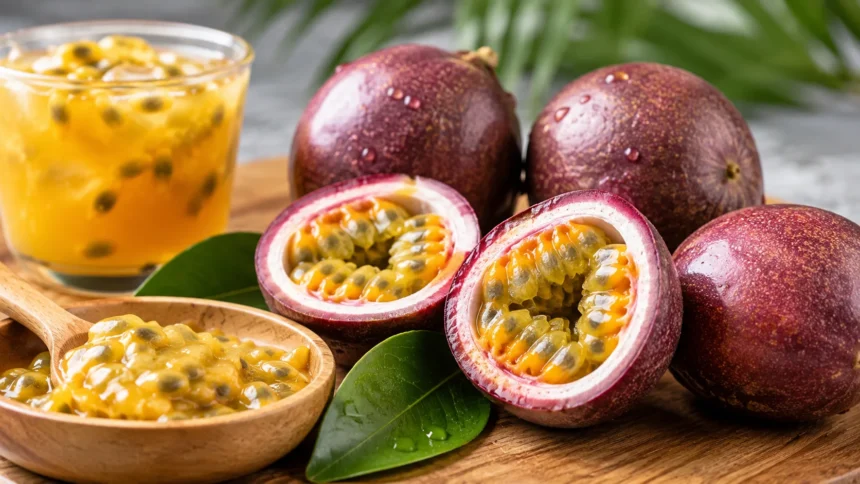
Passion Fruit Benefits, Nutrition and How to Eat It
Passion fruit is a small tropical fruit with an intense sweet-tart flavor, fragrant aroma, and juicy center filled with crunchy edible seeds. Although its wrinkled exterior may not look particularly impressive, cutting one open reveals brightly colored pulp that can transform smoothies, yogurt, desserts, salads, and drinks. Beyond its distinctive flavor, passion fruit provides fiber, vitamin C, vitamin A precursors, potassium, and beneficial plant compounds that can contribute to an overall nutritious diet.
The fruit comes from plants in the Passiflora genus and is grown in tropical and subtropical regions around the world. Purple and yellow varieties are among the most widely recognized, although several cultivars exist. The pulp and seeds are normally eaten together, while the tough outer rind is generally discarded. Because the edible portion is relatively small, people often use several fruits at a time when preparing recipes or drinks.
Interest in passion fruit benefits has grown alongside wider demand for colorful fruits rich in antioxidants and fiber. However, it is important to keep those benefits in perspective. Passion fruit is nutritious, but it is not a miracle food and cannot prevent or cure disease on its own. Its greatest value comes from adding variety and useful nutrients to a balanced eating pattern that includes many different fruits, vegetables, whole grains, protein foods, and healthy fats.
Whether you have spotted passion fruit at the grocery store for the first time or already enjoy its tropical flavor, understanding how to choose, store, and eat it can help you get more from the fruit. This guide explores passion fruit nutrition, potential health benefits, calories, fiber, vitamins, seeds, possible side effects, and practical ways to add it to everyday meals.
What Is Passion Fruit?
Passion fruit is the edible fruit of certain passionflower vines belonging to the Passiflora genus. The fruit is typically round or oval and develops a firm outer shell surrounding fragrant pulp and numerous small black seeds. Depending on the variety, the outside may appear purple, reddish-purple, yellow, or golden when mature, while the pulp inside generally has a yellow-to-orange appearance.
The flavor is one of the characteristics that makes passion fruit particularly memorable. It combines sweetness with a noticeable tartness that can become more intense in less-ripe fruits. Its aromatic quality also allows a relatively small amount of pulp to provide considerable flavor, which is why passion fruit is commonly used in juices, sauces, desserts, smoothies, yogurt, and tropical fruit combinations.
Purple passion fruit tends to be smaller and is commonly eaten fresh, while some yellow varieties can grow considerably larger and are frequently used for juice processing. Nutritional characteristics can vary somewhat by variety and serving size, but both types can contribute vitamins, minerals, plant compounds, and dietary fiber when included as part of a varied diet.
Passion fruit should not be confused with passionflower herbal products. Although they come from related plants, passionflower supplements and teas are marketed for purposes quite different from eating the fruit itself. Nutritional discussions about passion fruit generally refer to the edible pulp and seeds rather than concentrated herbal extracts made from other parts of passionflower plants.
Passion Fruit Nutrition: What Does It Contain?
Passion fruit provides several useful nutrients while remaining relatively modest in calories when eaten in typical portions. The juicy pulp contains carbohydrates and naturally occurring fruit sugars, while the edible seeds contribute a meaningful amount of dietary fiber. It also supplies vitamin C along with smaller amounts of several other vitamins and minerals.
Vitamin C is one of the nutrients commonly associated with passion fruit. Vitamin C functions as an antioxidant and is involved in collagen formation, wound healing, iron absorption, and normal immune function. Fruits and vegetables are important dietary sources of this essential nutrient, making colorful produce such as passion fruit a useful addition to a varied diet.
Passion fruit also contains carotenoid compounds that can contribute to vitamin A activity, alongside potassium and other micronutrients. Potassium is an essential mineral involved in normal nerve signaling, muscle function, and fluid balance. However, passion fruit should be viewed as one contributor within the diet rather than the only food relied upon for any particular vitamin or mineral.
One of its nutritional strengths is the combination of fiber and plant compounds found in the pulp and seeds. Eating the seeds along with the juicy center preserves more of the fruit’s natural fiber than simply straining the pulp into juice. This distinction is important because whole and minimally processed fruits generally provide greater fiber than clarified fruit drinks.
How Many Calories Are in Passion Fruit?
Passion fruit can fit comfortably into many eating patterns because the amount eaten at one time is usually fairly small. Individual fruits contain only a modest quantity of edible pulp, so even several fruits can be incorporated into breakfast, snacks, or desserts without necessarily contributing a large amount of energy.
Calories become more significant when passion fruit is consumed as part of sweetened juices, syrups, desserts, or commercial beverages. A small spoonful of fresh pulp and a large passion-fruit-flavored drink can have completely different nutritional profiles. Added sugar, cream, sweetened condensed milk, ice cream, and syrups can raise the calorie content considerably.
This is one reason it is useful to distinguish fresh passion fruit from products that merely use its flavor. Yogurts, sodas, desserts, cocktails, candies, and bottled juices may contain added sugars alongside relatively small amounts of actual fruit. Reading ingredient lists and nutrition labels can help determine what a packaged product actually provides.
For someone managing calorie intake, fresh passion fruit can be particularly useful as a flavor booster. A spoonful can make plain yogurt, oatmeal, chia pudding, or fruit salad more interesting without requiring large quantities of sugar. Its strong sweet-tart taste means a relatively small amount can noticeably change the flavor of an entire dish.
Passion Fruit Benefits for Overall Health
The health value of passion fruit begins with something simple: it is a whole fruit that contributes nutrients, fiber, and beneficial plant compounds. Diets containing a variety of fruits and vegetables are generally associated with better nutritional quality because different produce provides different combinations of vitamins, minerals, fiber, and phytochemicals.
Passion fruit’s vitamin C content contributes to its nutritional appeal. Vitamin C is required for normal collagen production and also improves the absorption of non-heme iron from plant foods. It additionally functions as an antioxidant that helps protect cells from oxidative damage produced during normal metabolism.
The fruit’s fiber can contribute to digestive health and make meals or snacks more satisfying. Foods containing fiber take longer to digest than many highly refined foods and can help support regular bowel movements. Including many fiber-rich plant foods throughout the day is generally more effective than expecting one particular fruit to meet all digestive needs.
Passion fruit also brings dietary variety. Eating a broader range of fruits can make nutritious eating more enjoyable while exposing the body to different nutrients and plant compounds. Rather than looking for a single “superfood,” a more realistic strategy is combining passion fruit with berries, citrus fruits, bananas, apples, vegetables, legumes, whole grains, nuts, and other nutrient-rich foods.
Passion Fruit Is a Source of Antioxidants
Antioxidants are compounds that help protect cells against oxidative damage caused by molecules known as free radicals. The human body produces its own antioxidant defenses, while foods—particularly fruits and vegetables—also provide antioxidant nutrients and plant compounds that contribute to the overall dietary pattern.
Passion fruit provides vitamin C, which functions as an antioxidant in the body. Vitamin C also participates in other essential biological processes, including the production of collagen and improved absorption of iron from plant-based foods. This makes it valuable well beyond the popular idea of simply “boosting immunity.”
The colorful pulp additionally contains various naturally occurring plant compounds. These compounds are one reason nutrition professionals generally encourage eating a wide variety of colorful fruits and vegetables rather than focusing exclusively on isolated supplements. Whole foods contain mixtures of nutrients that are consumed together within their natural food matrix.
However, antioxidant content should not be interpreted as proof that passion fruit prevents specific diseases. Laboratory measurements of antioxidant activity do not automatically translate into dramatic health effects in humans. Enjoying passion fruit as part of a balanced diet is sensible; treating it as a cure or medical treatment would overstate what food alone can realistically accomplish.
Passion Fruit Benefits for Digestion
Dietary fiber is one of the most practical reasons to include passion fruit in a balanced diet. Much of the fruit’s fiber comes from the pulp and edible seeds, which means eating the whole center rather than drinking strained juice helps preserve this nutritional advantage. Fiber contributes bulk to stool and supports normal bowel function.
Fiber-rich foods can also support a diverse digestive system when they are consumed as part of a varied plant-rich diet. Fruits, vegetables, legumes, nuts, seeds, and whole grains provide different types of carbohydrates and fibers, making dietary diversity more important than relying heavily on one particular source.
Passion fruit can be combined easily with other high-fiber foods. Adding the pulp to oatmeal provides the fiber from both oats and fruit, while pairing it with chia seeds or yogurt and nuts creates a more substantial breakfast. Fruit salads containing berries, kiwi, pears, or oranges can provide an even wider range of plant foods.
If someone currently eats very little fiber, dramatically increasing fiber intake overnight can occasionally produce bloating or digestive discomfort. Increasing fiber-rich foods gradually while drinking adequate fluids is often more comfortable. Persistent constipation, abdominal pain, blood in the stool, or major changes in bowel habits should be discussed with a healthcare professional rather than managed solely through fruit intake.
Can Passion Fruit Support Heart Health?
Passion fruit contains components that can fit naturally into a heart-conscious eating pattern, particularly fiber and potassium. Cardiovascular health, however, depends on the overall diet and lifestyle rather than one fruit. Blood pressure, cholesterol levels, physical activity, smoking, genetics, sleep, body composition, and medical conditions all influence cardiovascular risk.
Increasing fruit and vegetable variety is one practical way to improve the nutritional quality of meals. Passion fruit can replace or reduce the need for heavily sweetened toppings when used over yogurt, oatmeal, or desserts. Choosing fresh fruit more frequently instead of highly processed sweets can therefore indirectly support healthier everyday eating habits.
The edible seeds also distinguish fresh passion fruit from many sweetened fruit drinks. Whole fruit provides fiber, whereas juices generally contain less fiber per serving and can be consumed more quickly. Someone focused on heart health does not necessarily need to avoid juice completely, but whole fruit is often a more satisfying choice.
Passion fruit should not be marketed as a substitute for blood-pressure or cholesterol medication. Anyone receiving treatment for cardiovascular disease should continue following professional medical advice. Fruit can support an overall nutritious lifestyle, but its role is complementary rather than medicinal.
Passion Fruit and Immune Function
Passion fruit is sometimes promoted online as an “immune-boosting” food because it provides vitamin C. A more accurate way to describe the benefit is that vitamin C contributes to the normal functioning of the immune system. The body requires this nutrient for numerous biological processes, and fruits and vegetables are important dietary sources.
Immune health depends on far more than a single nutrient. Adequate protein, several vitamins and minerals, sufficient sleep, regular physical activity, vaccination when appropriate, stress management, and management of underlying medical conditions all contribute to the body’s ability to respond to infections and other challenges.
Eating passion fruit can nevertheless help increase dietary variety and vitamin C intake. Combining it with other produce such as strawberries, kiwi, citrus fruits, peppers, tomatoes, broccoli, and leafy vegetables creates a broader nutritional profile rather than concentrating attention on one particular source.
It is therefore better to think of passion fruit as an immune-supportive food rather than an immune-system shortcut. Eating a bowl of passion fruit cannot prevent every cold, flu, or infection, and consuming large quantities offers no guaranteed advantage. Regularly eating a variety of nutritious foods is a much more sustainable strategy.
Passion Fruit Benefits for Skin
Passion fruit is sometimes associated with skin health because it provides vitamin C and antioxidant compounds. Vitamin C is required for normal collagen synthesis, and collagen is an important structural protein found in the skin and other connective tissues. Getting enough vitamin C through a varied diet therefore contributes to normal tissue maintenance.
That does not mean eating passion fruit will instantly remove wrinkles, acne, pigmentation, or other skin concerns. Skin appearance is influenced by genetics, age, hormones, sun exposure, hydration, sleep, smoking, skincare practices, medical conditions, and overall diet. Individual foods generally play a supporting rather than transformative role.
Adding passion fruit to meals can contribute nutritional variety that supports overall health, including the nutrients used by skin tissues. Pairing fruit with protein-rich foods, healthy fats, vegetables, and adequate fluids creates a more balanced nutritional foundation than focusing on fruit alone.
Commercial skincare products containing passion fruit extracts should also be evaluated separately from eating the fruit. A cosmetic ingredient applied to the skin is not equivalent to consuming fresh fruit, and product claims can vary considerably. People with ongoing skin problems should rely on appropriate skincare and dermatological guidance rather than expecting dietary changes alone to provide treatment.
Does Passion Fruit Help With Weight Management?
Fresh passion fruit can fit well into an eating pattern designed for weight management because it provides flavor, fiber, and relatively modest calories in typical portions. The fiber in whole fruit may also make it more satisfying than sweetened beverages or desserts that provide substantial calories without comparable fiber.
Its intense flavor can be particularly useful when making healthier foods more enjoyable. Adding passion fruit to plain Greek yogurt, oatmeal, cottage cheese, chia pudding, or fresh fruit can provide natural sweetness and tartness. These combinations may feel more satisfying than eating highly restrictive meals that are difficult to maintain.
Weight loss still depends primarily on overall energy balance and long-term dietary habits rather than whether someone eats passion fruit. Adding passion fruit to an already calorie-heavy diet will not automatically cause weight loss. Similarly, removing one particular fruit is unnecessary simply because it contains naturally occurring sugar.
Watch the preparation method when weight management is the goal. Passion fruit combined with large quantities of sugar, cream, syrup, sweetened condensed milk, or ice cream can become a very different food nutritionally. Fresh pulp used as a topping usually offers a lighter option while still providing the characteristic tropical flavor.
Passion Fruit and Blood Sugar
Passion fruit naturally contains carbohydrates and sugars, as other fruits do, but it also provides fiber when the pulp and seeds are eaten together. Fiber can slow digestion compared with consuming sugars in a highly refined form, which is one reason whole fruit and fruit-flavored sugary drinks should not be treated as nutritionally equivalent.
People managing blood glucose generally do not need to assume that all fruit must be avoided. Portion size, overall carbohydrate intake, medications, activity level, and individual glucose responses all matter. Pairing fruit with protein or healthy fat can also create a more balanced snack.
Passion fruit juice deserves separate consideration because processing can reduce fiber and make it much easier to consume a larger amount of fruit-derived sugar quickly. Sweetened bottled passion fruit drinks may contain additional sugars, making their nutritional impact quite different from fresh fruit.
People with diabetes or other conditions affecting blood sugar should follow their individualized nutritional plan. Blood glucose responses can vary between individuals, so personalized advice from a physician or registered dietitian is more appropriate than treating passion fruit as either a guaranteed blood-sugar remedy or a forbidden food.
Can You Eat Passion Fruit Seeds?
Yes, passion fruit seeds are edible, and most people consume them together with the surrounding pulp. Trying to separate every seed would be unnecessary and would also remove part of the fruit’s natural texture and fiber. The seeds provide the characteristic crunch that contrasts with the soft, juicy pulp.
The easiest way to eat passion fruit is therefore to cut the fruit in half and scoop the center directly with a spoon. The pulp and seeds can be swallowed together normally. There is generally no need to chew each seed extensively, although people may naturally crunch some of them while eating.
Seeds are also included when passion fruit is added to yogurt, oatmeal, desserts, salads, and smoothies. Leaving them intact creates the familiar appearance associated with passion-fruit dishes. For smooth sauces, drinks, or certain desserts, however, cooks sometimes press the pulp through a sieve to remove part or all of the seeds.
People with specific digestive or medical restrictions should follow guidance appropriate to their condition. Someone who has been instructed to follow a low-fiber or low-residue diet, for example, may need different advice regarding seeds and high-fiber foods. For most people eating a normal diet, the seeds are simply part of the fruit.
How to Eat Passion Fruit
Eating fresh passion fruit requires very little preparation. Begin by washing the outside, particularly if you will handle the rind while cutting the fruit. Slice it across the middle with a sharp knife, revealing the fragrant pulp and black seeds. The interior can then be scooped directly from the shell with a spoon.
The pulp has a naturally tart flavor, especially in some varieties. People accustomed to very sweet fruit may initially find passion fruit surprisingly acidic. Combining it with sweeter fruits such as banana, mango, pineapple, or ripe berries can balance the flavor without requiring large amounts of added sugar.
You can also spoon passion fruit directly over plain or Greek yogurt. The contrast between creamy yogurt and tart, crunchy passion fruit works particularly well at breakfast or as a snack. Adding oats, nuts, seeds, or granola can make the combination more substantial depending on your nutritional needs.
The outer rind itself is generally not eaten in the same way as the pulp. Simply scoop out the center and discard or compost the empty shell. When following recipes involving passion fruit rind or extracts, use recipes specifically designed for that purpose rather than assuming every part of the raw fruit is prepared identically.
How to Tell If Passion Fruit Is Ripe
Appearance is one of the easiest ways to judge ripeness. Depending on the variety, passion fruit develops its characteristic purple or yellow color as it matures. A ripe fruit may also develop slightly wrinkled skin, which can surprise people who normally associate wrinkling with spoiled produce.
A completely smooth fruit can still be edible, but it may be somewhat less mature and more tart. Leaving it at room temperature for a short period can allow further ripening. As the rind becomes slightly wrinkled and the fruit develops a stronger aroma, the pulp often becomes sweeter and more flavorful.
Weight is another useful clue. A passion fruit that feels relatively heavy for its size is more likely to contain a generous amount of juicy pulp. Extremely lightweight fruit may have dried out internally, particularly if the outer shell is heavily shriveled and hard.
Avoid fruit showing obvious mold, leaking liquid, extensive soft decay, or an unpleasant fermented odor unless you specifically know the fruit is still sound. Natural wrinkles are normal, but spoilage is different. Once you become familiar with passion fruit, distinguishing normal ripeness from deterioration becomes considerably easier.
How to Store Passion Fruit
Passion fruit can generally be kept at room temperature while it finishes ripening. If the fruit is still smooth and firm, allowing it to sit on the counter can encourage further development of flavor. Once it reaches the ripeness you prefer, refrigeration can help slow further deterioration.
Keeping ripe passion fruit in the refrigerator is particularly useful when you have purchased several fruits and cannot eat them immediately. Store them clean and dry, and check periodically for excessive softening or spoilage. The exact storage life depends on how ripe the fruit was when purchased.
The pulp can also be removed and stored separately for convenience. Scoop it into a clean airtight container and refrigerate it if you intend to use it soon. This can make morning breakfasts and smoothies quicker because the fruit is already prepared.
Freezing is another useful option when passion fruit is abundant or on sale. The pulp can be portioned into freezer-safe containers or ice cube trays and frozen for later use in smoothies, sauces, and drinks. Freezing may change the texture somewhat after thawing, but the distinctive flavor can still work very well in recipes.
Best Ways to Add Passion Fruit to Breakfast
Breakfast provides one of the easiest opportunities to use fresh passion fruit. Spoon the pulp over oatmeal along with banana, berries, or nuts. The acidity of passion fruit can brighten the mild flavor of oats, while the crunchy seeds create texture without requiring complicated preparation.
Yogurt is another natural pairing. Plain Greek yogurt provides protein and creaminess that balance the fruit’s tartness. Adding passion fruit, chia seeds, and a small amount of granola can create a balanced breakfast or snack containing protein, carbohydrates, fat, and fiber.
Smoothie bowls can also benefit from passion fruit. Blend banana, berries, mango, yogurt, or milk to create the base and then spoon passion fruit over the top rather than blending everything completely. Leaving the pulp visible preserves more of its distinctive texture and makes the meal visually appealing.
Toast is a less obvious option. Ricotta, cottage cheese, or nut butter topped with passion fruit can provide a combination of creamy, rich, sweet, and tart flavors. Experimenting with combinations like these can make healthy breakfasts feel more varied and reduce the temptation to rely on the same meal every morning.
How to Use Passion Fruit in Smoothies and Drinks
Passion fruit works particularly well in smoothies because its concentrated flavor complements sweeter tropical fruits. Mango and banana can soften its acidity, while pineapple and citrus intensify the tropical profile. Milk, yogurt, coconut water, or unsweetened plant beverages can be used depending on the desired texture.
For more fiber, blend the pulp and seeds rather than straining the fruit into juice. A high-powered blender may partially break down the seeds, although some texture usually remains. If you prefer a completely smooth drink, the pulp can be strained, but doing so removes some fiber.
Passion fruit also works well in unsweetened sparkling water. Adding a spoonful of pulp creates a refreshing drink with considerably more character than plain water. Mint, lime, cucumber, or slices of citrus can be included without requiring sugary syrups.
Commercial passion fruit drinks should be evaluated by reading their labels. Some are primarily water, flavorings, and added sugar rather than substantial amounts of fruit. If you enjoy sweetened drinks occasionally, they can still fit into many diets, but they should not automatically be considered nutritionally equivalent to fresh passion fruit.
Passion Fruit vs Passion Fruit Juice
Fresh passion fruit and passion fruit juice can both be enjoyable, but they do not have identical nutritional characteristics. Eating the pulp and seeds provides natural fiber that may be reduced when the fruit is strained. Whole fruit also tends to take longer to eat and can feel more satisfying.
Juice makes it easier to consume the equivalent of several fruits quickly. This can be useful when preparing recipes or beverages, but it also means natural sugars become easier to consume in larger quantities. Sweetened juice can increase sugar intake even further if manufacturers add sugar or syrup.
Another consideration is portion size. A spoonful of fresh passion fruit may be used as a topping, whereas a bottle of juice can contain several servings. Paying attention to serving size can help someone understand how a beverage fits into their overall eating pattern.
Neither option needs to be labeled universally good or bad. Fresh fruit is generally preferable when fiber and satiety are priorities, while juice may be useful for flavoring or occasional beverages. Choosing unsweetened versions and keeping portions reasonable can help preserve the nutritional benefits without turning passion fruit into primarily a source of added sugar.
Are There Any Passion Fruit Side Effects?
Most people can eat passion fruit as part of a normal diet without difficulty. As with any food, however, individual tolerance varies. Eating unusually large amounts of fiber-rich fruit at once may cause bloating, gas, or digestive discomfort in someone who is not accustomed to a high-fiber diet.
Food allergy is another possible concern, although it is not something most consumers will experience. Allergic reactions to passion fruit have been reported, and cross-reactivity has been described among some people with latex allergy. People who already know they react to particular fruits or latex may want to be especially attentive when trying passion fruit.
Possible food-allergy symptoms can include itching or tingling around the mouth, hives, swelling, digestive symptoms, or respiratory problems. A mild reaction should still be discussed with an appropriate healthcare professional before eating the suspected food again. Breathing difficulty, throat swelling, faintness, or a rapidly progressing severe reaction requires urgent medical attention.
Passion fruit should also be distinguished from concentrated supplements and passionflower herbal preparations. Eating ordinary amounts of fruit is not the same as taking concentrated extracts. People using herbal supplements, particularly alongside medications or during pregnancy, should evaluate those products separately rather than assuming their safety profile is identical to fresh fruit.
Who Should Be Careful With Passion Fruit?
Anyone with a known allergy to passion fruit should avoid it unless a qualified allergy specialist has advised otherwise. People who have experienced unexplained itching, swelling, hives, wheezing, or other symptoms after eating it should not repeatedly expose themselves merely to determine whether the reaction happens again.
Individuals with latex allergy may also wish to be cautious because cross-reactivity between latex and certain plant foods has been reported, including passion fruit. Having a latex allergy does not guarantee that someone will react to passion fruit, but discussing previous food reactions with an allergist can help clarify individual risk.
People following medically prescribed diets may also need to consider how passion fruit fits their specific restrictions. Low-residue diets, certain gastrointestinal conditions, kidney-related dietary restrictions, or individualized diabetes meal plans can sometimes change which fruits, seeds, or portion sizes are most appropriate.
For most healthy people, these cautions should not create unnecessary concern. Passion fruit is simply another food, and ordinary dietary portions can be enjoyed by many people without problems. The key is responding appropriately to personal medical conditions rather than treating generalized online warnings as if they apply equally to everyone.
Is Passion Fruit Good to Eat Every Day?
Passion fruit can be eaten regularly as part of a varied diet if you enjoy it and tolerate it well. There is no need to reserve it for special occasions simply because it is considered an exotic fruit in some countries. Adding it to breakfast or snacks can provide variety while contributing fiber and micronutrients.
Eating it every day is not necessary to receive its nutritional benefits, however. Many other fruits provide vitamin C, fiber, potassium, carotenoids, and beneficial plant compounds. Oranges, berries, kiwi, apples, pears, mangoes, guava, papaya, and numerous other fruits can all contribute valuable nutrients.
Rotating between different fruits may actually make dietary habits easier to sustain. Seasonal variation can improve flavor, reduce costs, and expose you to a broader range of foods. Passion fruit can therefore be one part of a colorful fruit rotation rather than the single fruit you feel obligated to consume daily.
The best diet is generally one that is nutritious enough to support health while also being enjoyable, affordable, and realistic. If you love passion fruit, regular consumption can fit naturally into that pattern. If you dislike it or cannot find it locally, there is no unique nutrient in passion fruit that requires you to eat it.
Common Myths About Passion Fruit
One common myth is that passion fruit can “detox” the body. The human body already has organs, including the liver and kidneys, responsible for processing and eliminating many waste products. Eating nutritious fruit supports overall health, but no single fruit performs a special cleansing process that replaces normal physiology.
Another claim is that passion fruit automatically causes weight loss. While fresh passion fruit can fit into a calorie-conscious diet, fat loss depends on overall energy balance and sustained habits. Adding fruit without changing an excessive calorie intake will not independently produce significant weight loss.
Passion fruit is also sometimes promoted as a cure for high blood pressure, diabetes, insomnia, anxiety, or other health conditions. Food can influence long-term health, but claims that one fruit treats a medical condition should be viewed cautiously. People with diagnosed health problems should continue evidence-based treatment rather than replacing it with dietary trends.
Finally, wrinkled passion fruit is not necessarily spoiled. A slightly wrinkled exterior can actually indicate ripeness, depending on the variety and condition of the fruit. Learning what ripe passion fruit looks, feels, and smells like prevents perfectly edible fruit from being discarded simply because its skin is no longer completely smooth.
How to Choose the Best Passion Fruit
Start with color. Purple varieties should generally have developed a deep purple shade, while yellow varieties become yellow or golden as they mature. Significant areas of green can indicate that the fruit is not completely ripe, although ripening may continue after purchase.
Next, pick up the fruit. A good passion fruit should feel surprisingly substantial relative to its small size because the interior contains juicy pulp. Fruit that feels extremely light may have lost moisture and become dry inside.
Do not automatically reject fruit because the skin has begun to wrinkle. Slight wrinkling is often associated with ripeness and can indicate that the flavor has developed further. Deeply collapsed, leaking, moldy, or unpleasant-smelling fruit, however, should be avoided.
If only smooth fruit is available, buying it is still perfectly reasonable. Leave it at room temperature and allow it to ripen further before eating. This simple approach can be particularly useful in places where passion fruit travels long distances before reaching grocery stores and may therefore be sold slightly underripe.
Final Thoughts on Passion Fruit Benefits and Nutrition
Passion fruit combines bold tropical flavor with useful nutritional qualities, including dietary fiber, vitamin C, plant compounds, and several micronutrients. Its edible seeds provide crunch and additional fiber, while its naturally intense flavor makes it easy to use relatively small amounts in breakfasts, snacks, drinks, and desserts.
Many of the potential passion fruit benefits come from the same characteristics that make fruits and vegetables valuable generally. Fiber supports digestive function, vitamin C contributes to antioxidant protection and collagen formation, and plant diversity helps improve overall dietary quality. These are meaningful benefits without needing to portray passion fruit as a miracle food.
The easiest way to enjoy it is simply to cut a ripe fruit in half and scoop out the pulp and seeds. From there, it can be added to yogurt, oatmeal, smoothies, fruit salads, chia pudding, sparkling water, sauces, or desserts. Choosing fresh fruit more often than heavily sweetened passion-fruit products can help preserve its nutritional advantages.
Ultimately, passion fruit is worth eating because it is nutritious, flavorful, versatile, and enjoyable—not because it promises extraordinary medical results. Include it alongside many other fruits, vegetables, whole grains, protein foods, and healthy fats, and it can become a delicious part of a balanced eating pattern.
Frequently Asked Questions About Passion Fruit
What Are the Main Benefits of Passion Fruit?
Passion fruit provides dietary fiber, vitamin C, plant compounds, and several micronutrients. These nutrients can support digestion, normal immune function, collagen formation, and overall nutritional quality as part of a balanced diet.
Can You Eat the Seeds in Passion Fruit?
Yes. Passion fruit seeds are edible and are normally eaten together with the juicy pulp. They provide the fruit’s characteristic crunch and contribute to its natural fiber content.
How Do You Know When Passion Fruit Is Ripe?
Ripe passion fruit usually has developed its full purple or yellow color, feels relatively heavy for its size, and may have slightly wrinkled skin. A fragrant aroma can also indicate good ripeness.
Is Passion Fruit Good for Weight Loss?
Passion fruit can fit into a weight-loss diet because fresh fruit provides fiber and relatively modest calories in normal portions. However, weight loss depends on total calorie intake and long-term eating and activity habits.
Can You Eat Passion Fruit Every Day?
Yes, most people can include passion fruit regularly if they enjoy and tolerate it. It is still beneficial to eat a variety of fruits so your diet provides a broader range of nutrients and flavors.