Who Is the Most Famous Fashion Designer? Meet Fashion’s Most Influential Icons
If one name has to be chosen as the most famous fashion designer in history, Coco Chanel is arguably the strongest answer. Gabrielle “Coco” Chanel transformed women’s fashion by promoting comfort, simplicity, elegance, and freedom of movement at a time when restrictive clothing still influenced how women dressed. Her influence extended far beyond individual collections. The Chanel suit, little black dress, costume jewelry, quilted handbags, and minimalist approach became recognizable elements of modern style that continue influencing designers and consumers generations later.
There is no official global ranking that can scientifically determine one designer as the most famous. Fame can mean worldwide name recognition, commercial success, cultural influence, innovative design, celebrity association, or long-term impact on how people dress. Someone may consider Giorgio Armani the most recognizable name in elegant tailoring, Christian Dior the defining figure of postwar couture, or Gianni Versace the ultimate symbol of glamorous fashion. Nevertheless, Chanel’s combination of historical influence, brand recognition, and enduring design codes gives her an exceptional place in fashion history.
Coco Chanel is especially significant because she influenced everyday clothing rather than creating memorable runway pieces alone. She helped popularize jersey fabrics, relaxed silhouettes, menswear-inspired styling, practical elegance, and black clothing as a sophisticated fashion statement. Many elements that feel completely normal in a modern woman’s wardrobe were radical when Chanel promoted them. Her philosophy helped fashion move toward clothes that allowed women to live more actively while still appearing polished and luxurious.
The conversation about famous fashion designers extends far beyond Chanel. Christian Dior, Yves Saint Laurent, Giorgio Armani, Ralph Lauren, Karl Lagerfeld, Gianni Versace, Alexander McQueen, Miuccia Prada, Valentino Garavani, and many other designers changed fashion in distinctive ways. Some reinvented tailoring, some transformed luxury branding, and others turned runway presentations into cultural spectacles. Their influence can still be recognized in contemporary clothing, advertising, celebrity style, film costumes, and global luxury culture.
Understanding who the most famous fashion designer is therefore requires more than counting social-media followers or comparing fashion-house revenues. The most important designers changed what people believed clothing could represent. They introduced silhouettes, attitudes, business models, and visual identities that survived beyond individual seasons. Coco Chanel stands out because her influence reaches from twentieth-century couture to wardrobes today, making her not merely a famous designer but one of the architects of modern fashion itself.
Why Is Coco Chanel Considered the Most Famous Fashion Designer?
Coco Chanel was born Gabrielle Bonheur Chanel in France in 1883 and eventually built one of the world’s most recognizable fashion names. Her rise was remarkable because she entered an industry dominated by established traditions and developed a completely different interpretation of feminine elegance. Instead of emphasizing heavy decoration and restrictive silhouettes, Chanel favored simple shapes, comfortable fabrics, practical construction, and confident styling. Her designs helped create a new image of the modern woman.
One of Chanel’s greatest contributions was making comfort compatible with luxury. She incorporated jersey, a fabric previously associated more closely with practical garments, into stylish women’s clothing. Loose cardigans, simple dresses, trousers, knitwear, and sportswear-inspired designs offered greater movement than many formal fashions of the era. This combination of practicality and sophistication became central to the Chanel fashion style and eventually influenced clothing far beyond luxury couture.
The little black dress became perhaps the clearest example of Chanel’s ability to turn simplicity into an enduring fashion statement. Black clothing had long existed, but Chanel helped establish the idea of a straightforward black dress as versatile, elegant, and modern. Instead of relying on elaborate decoration, the wearer could change its personality with jewelry, shoes, bags, or other accessories. The concept became so influential that the little black dress remains a standard wardrobe recommendation nearly a century later.
The Chanel suit became another lasting design language. Its recognizable combination of a comfortable jacket and coordinated skirt represented elegance without excessive rigidity. Later interpretations frequently featured textured fabrics, contrasting trims, distinctive buttons, and carefully constructed proportions. The look became associated with polished confidence and has repeatedly been reinterpreted by designers both inside and outside the House of Chanel.
Chanel’s fame also comes from creating an entire lifestyle identity rather than relying solely on clothing. Fashion, accessories, jewelry, handbags, and fragrance became interconnected parts of the Chanel image. This approach anticipated the modern luxury-fashion model, where a designer’s name can represent an entire world of style. Chanel’s initials remain globally recognizable, showing how strongly her identity became connected with the concept of timeless luxury.
How Coco Chanel Changed Women’s Fashion
Before Chanel’s rise, fashionable women’s clothing could involve tightly structured silhouettes and elaborate construction that placed appearance above comfort. Chanel challenged that mindset. Her clothing suggested that a woman could appear sophisticated without being physically restricted by her outfit. She borrowed elements from sportswear and menswear, helping create a wardrobe suited to changing lifestyles and greater independence. This shift contributed to the development of modern women’s fashion.
Her use of menswear-inspired pieces was particularly influential. Jackets, trousers, knitwear, sailor details, and simple shirts became part of her vocabulary. Today, women wearing tailored trousers or relaxed jackets does not seem revolutionary, but earlier fashion expectations were considerably more restrictive. Chanel helped normalize the idea that elements associated with men’s clothing could become sophisticated components of feminine style rather than symbols of inappropriate dress.
Chanel also challenged conventional ideas about luxury. Traditional luxury was often associated with visible ornamentation, elaborate fabrics, and decorative excess. Chanel instead showed that simplicity could feel equally luxurious when supported by strong proportions, good materials, careful construction, and confident styling. Her approach helped establish the concept of quiet elegance, where sophistication comes from how a garment is designed and worn rather than from obvious decoration.
Accessories played a major role in this transformation. Chanel famously embraced costume jewelry and encouraged women to combine decorative pieces creatively rather than treating expensive gemstones as the only legitimate form of luxury. Pearls, chains, brooches, and layered necklaces became central to the Chanel look. This allowed styling itself to become an important form of self-expression and helped blur traditional distinctions between precious and decorative fashion jewelry.
Perhaps Chanel’s greatest achievement was making her ideas feel permanent rather than seasonal. Fashion normally changes rapidly, yet many Chanel-associated concepts have survived repeated trend cycles. Black dresses, quilted bags, two-tone shoes, tweed jackets, pearl necklaces, relaxed trousers, and simple knitwear still appear in modern wardrobes. Few designers have influenced such a broad collection of pieces that remain relevant decades after their introduction.
Christian Dior: The Designer Who Reinvented Postwar Elegance
If Chanel represents relaxed modernity, Christian Dior represents dramatic elegance. Dior became one of fashion’s most influential designers after introducing his first major collection in 1947. Its defining silhouette emphasized rounded shoulders, narrow waists, and long, full skirts. The style became known as the “New Look” and offered a dramatic departure from the practical, fabric-conscious clothing associated with the wartime years.
The New Look restored theatrical femininity to high fashion. Dior used generous amounts of fabric to create luxurious skirts and carefully constructed jackets that emphasized the waist. The silhouette quickly became internationally recognizable and helped Paris reinforce its position at the center of global fashion. It also demonstrated how one designer could change the fashionable ideal almost overnight, influencing both couture customers and mass-market clothing manufacturers.
Dior understood fashion as fantasy as well as clothing. His collections presented carefully controlled visions of femininity, elegance, flowers, architecture, and refinement. This romantic approach distinguished his work from Chanel’s more practical philosophy. The contrast between the two designers remains one of the most interesting relationships in fashion history because both created powerful but very different definitions of how modern women could dress.
The House of Dior continued long after Christian Dior’s death, led by a succession of major creative figures who interpreted its heritage differently. This continuity helped transform Dior from the identity of one designer into an international luxury institution. Haute couture, ready-to-wear, handbags, accessories, cosmetics, and fragrance all contributed to making the Dior name recognizable even among people who do not closely follow runway fashion.
Dior therefore belongs near the top of any list of the world’s most famous fashion designers. Chanel may have transformed practical modern dressing, but Dior demonstrated the enduring power of silhouette and spectacle. The phrase “New Look” remains part of fashion vocabulary, proving how deeply his relatively brief career shaped twentieth-century style.
Yves Saint Laurent: The Designer Who Made Fashion More Modern
Yves Saint Laurent became another defining figure in twentieth-century fashion because he understood how rapidly women’s roles and lifestyles were changing. After working at Dior, Saint Laurent established his own fashion house and developed designs that mixed couture sophistication with youth culture, art, street influence, and changing ideas about gender. His work helped move high fashion away from an exclusively formal environment toward the modern wardrobe.
One of his most famous creations was Le Smoking, a tuxedo-inspired suit for women. Today, women wearing tuxedos on red carpets or tailored suits in professional settings seems completely normal. At the time, however, presenting formal menswear as glamorous women’s evening clothing challenged traditional expectations. Saint Laurent transformed the tuxedo into a symbol of sophistication, confidence, and changing gender conventions.
Saint Laurent was also skilled at connecting fashion with art and culture. His collections drew inspiration from painting, travel, history, music, and global visual traditions. The famous Mondrian-inspired dresses demonstrated how recognizable elements of modern art could be translated into clothing without simply becoming decoration. This ability to combine cultural references with wearable fashion helped make his work intellectually interesting as well as visually distinctive.
Another major contribution was his role in the development of designer ready-to-wear. Couture had traditionally represented the highest level of luxury, but younger customers wanted fashionable clothing that reflected contemporary life. Saint Laurent helped demonstrate that ready-to-wear could carry a designer’s creative identity while reaching a broader audience. This model became enormously important throughout the modern luxury industry.
Saint Laurent’s influence remains visible in contemporary fashion through tailored suits, safari jackets, sheer clothing, gender-fluid styling, strong eveningwear, and art-inspired design. His work sits between Chanel’s liberation of women’s bodies and later designers’ exploration of identity and sexuality. For that reason, he remains one of the most famous and influential names in fashion history.
Giorgio Armani and the Rise of Effortless Tailoring
Giorgio Armani became internationally famous by changing how tailoring could look and feel. Traditional suits could appear highly structured, stiff, and formal, while Armani developed softer construction that followed the body more naturally. His jackets often emphasized relaxed shoulders, fluid fabrics, muted colors, and understated elegance. The result created a new interpretation of professional and luxury clothing that became enormously influential from the late twentieth century onward.
Armani’s approach affected both men’s and women’s fashion. For men, he made tailoring appear less rigid without sacrificing sophistication. For women, he helped popularize elegant power dressing built around jackets and trousers. His clothes became particularly associated with professionals who wanted authority without excessive formality. This combination helped define a visual language for a changing corporate culture.
Hollywood played an important role in expanding Armani’s fame. Film wardrobes and celebrity relationships exposed his tailoring to international audiences far beyond fashion magazines. Once actors began wearing Armani on red carpets, the brand became closely linked with sophisticated celebrity style. The relationship between luxury fashion and Hollywood that feels standard today was significantly strengthened by designers such as Armani.
Unlike designers known for dramatic prints or highly recognizable decorative motifs, Armani became famous partly through restraint. Neutral colors, fine fabrics, careful proportions, and subtle tailoring communicated luxury quietly. This approach influenced generations of designers and contributed to what is now described as minimalist or understated luxury.
Armani demonstrates that a fashion designer does not need constant spectacle to become globally famous. His greatest innovation was often removing rather than adding—less structure, less unnecessary decoration, and fewer barriers between formal clothing and comfortable movement. That philosophy helped make Armani tailoring one of the most recognizable ideas in international fashion.
Gianni Versace: The Designer Who Made Fashion Bold and Sexy
Gianni Versace brought a completely different energy to high fashion. Where Armani often represented restraint, Versace fashion celebrated glamour, color, sexuality, celebrity, bold prints, metallic materials, and dramatic body-conscious silhouettes. His clothing was designed to attract attention rather than disappear quietly into the background, helping create one of luxury fashion’s most recognizable visual identities.
Versace drew inspiration from classical art, Italian culture, pop music, architecture, mythology, and contemporary nightlife. The Medusa symbol became strongly connected with the fashion house, while ornate prints, gold details, vivid colors, and daring cuts made collections instantly recognizable. This combination allowed Versace to turn historical and artistic references into fashion that felt energetic and modern rather than academic.
The designer also understood the power of celebrity culture before many fashion houses fully embraced it. Musicians, models, actors, and public figures became central to the Versace image. His relationship with the supermodels of the 1990s helped turn runway models into global celebrities and fashion shows into major cultural events. Fashion became entertainment as well as design.
Versace’s red-carpet influence was equally important. Dramatic dresses could generate newspaper headlines and become cultural moments rather than simply outfits. This relationship between celebrity, media coverage, and luxury fashion anticipated the modern environment where a single awards-show dress can dominate social media around the world.
Gianni Versace’s career ended tragically in 1997, but the visual language he created remained powerful. Bold glamour, unapologetic sensuality, recognizable prints, and celebrity-driven fashion continue influencing designers today. He remains one of the most famous Italian fashion designers and one of the clearest examples of fashion as cultural spectacle.
Ralph Lauren: The Designer Who Created a Complete Lifestyle
Ralph Lauren became famous not because of one revolutionary garment but because he created an extraordinarily complete vision of lifestyle. His designs drew inspiration from American sportswear, Ivy League style, Western clothing, equestrian culture, sailing, luxury resorts, and classic tailoring. Together, these references produced an idealized interpretation of American elegance that could be communicated through clothing, interiors, advertising, and branding.
The Polo Ralph Lauren identity became particularly recognizable. Polo shirts featuring the small embroidered rider developed into global wardrobe staples, but the brand extended far beyond one shirt. Cable-knit sweaters, blazers, Oxford shirts, denim, eveningwear, sportswear, and accessories allowed customers to participate in different parts of the Ralph Lauren world.
Lauren’s strength as a designer and businessman was understanding aspiration. His advertising did not simply show clothes against plain backgrounds. It presented homes, landscapes, families, horses, cars, and social environments that communicated a particular lifestyle. Consumers were invited to imagine not only wearing a jacket but belonging to the world represented around it.
This approach influenced modern fashion marketing significantly. Luxury and premium brands increasingly sell complete identities rather than individual products. Fashion, fragrance, interiors, restaurants, hospitality, and digital content can all reinforce the same aesthetic universe. Ralph Lauren demonstrated how strongly lifestyle storytelling could extend a fashion brand beyond clothing.
His influence also proves that American fashion has its own distinctive identity. While Paris became famous for couture and Milan for Italian luxury, Ralph Lauren built international recognition around an idealized American wardrobe. His name remains one of the most recognizable in global fashion and makes him a strong contender whenever discussing famous American fashion designers.
Karl Lagerfeld: The Designer Who Reinvented Fashion Houses
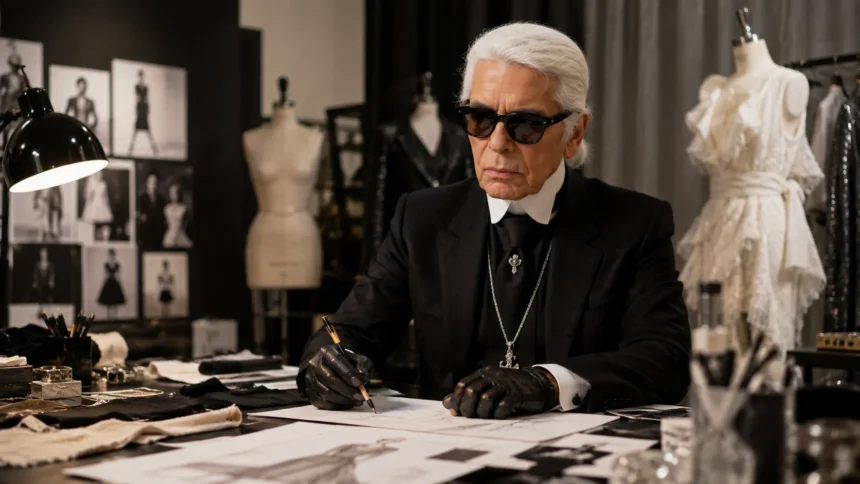
Karl Lagerfeld became one of fashion’s most recognizable personalities through both his design work and his carefully constructed personal image. His white hair, dark sunglasses, high collars, gloves, and sharp appearance made him instantly recognizable. Yet his fame was not based on personality alone. Lagerfeld demonstrated an extraordinary ability to reinterpret established fashion houses while keeping their heritage recognizable.
His work at Chanel became particularly significant. When he took creative leadership of the house in the early 1980s, Chanel already had an extraordinary legacy, but maintaining a historic fashion brand requires making its visual codes relevant to new generations. Lagerfeld repeatedly transformed tweed jackets, chains, pearls, camellias, quilting, black-and-white combinations, and the interlocking logo into new collections.
Rather than treating fashion history as something untouchable, Lagerfeld approached heritage playfully. A classic Chanel jacket might become oversized, cropped, brightly colored, embroidered, or combined with unexpected streetwear references. This method allowed the house to remain connected with its founder while participating in contemporary culture. Modern fashion houses regularly use this strategy when appointing designers to reinterpret established archives.
Lagerfeld was also famous for his enormous creative output. Alongside Chanel, he worked extensively with Fendi and maintained his own label. Photography, publishing, advertising, interiors, and cultural projects expanded his creative identity even further. Few modern designers operated across so many collections and creative areas simultaneously.
His career helped redefine the role of the fashion creative director. Designers were no longer expected only to sketch clothing; they increasingly became image-makers responsible for runway concepts, advertising, visual identity, celebrity relationships, and cultural relevance. Lagerfeld mastered this expanded role and influenced how major fashion houses operate today.
Alexander McQueen: Fashion as Art, Drama and Emotion
Alexander McQueen became famous for treating fashion shows as emotionally powerful forms of storytelling. His designs demonstrated remarkable tailoring skills, but his runway presentations extended far beyond conventional clothing displays. They could involve dramatic staging, technology, historical references, beauty, danger, nature, violence, romance, and social commentary. Audiences often left feeling they had witnessed performance art rather than simply a seasonal collection.
McQueen trained in traditional tailoring, and that technical foundation remained visible even within his most experimental work. Jackets, dresses, and coats could be constructed with extraordinary precision while simultaneously distorting familiar ideas about the human body. His silhouettes sometimes appeared romantic and delicate and at other times aggressive or almost otherworldly.
Nature was one of McQueen’s recurring inspirations. Birds, flowers, oceans, animals, evolution, and environmental transformation appeared throughout his work. He combined organic imagery with advanced materials and theatrical construction, creating designs that seemed to exist between the natural world and science fiction. This tension helped make Alexander McQueen designs immediately distinctive.
His runway shows also demonstrated how fashion could provoke uncomfortable questions. Instead of presenting uncomplicated beauty, McQueen explored fear, vulnerability, power, sexuality, history, and death. This made his work controversial at times, but it also expanded expectations about what a fashion designer could communicate through clothing.
McQueen’s influence remains especially strong among designers who view fashion as artistic expression rather than product creation alone. His most memorable collections continue appearing in museum exhibitions, fashion education, photography, and popular culture. He may not have the same universal consumer recognition as Chanel, but within creative fashion culture he remains one of the most admired designers of the modern era.
Miuccia Prada: The Designer Who Made Intellectual Fashion Cool
Miuccia Prada became one of fashion’s most influential modern designers by challenging conventional definitions of beauty and luxury. Rather than always producing obviously glamorous clothing, she often explored awkward proportions, unusual colors, utilitarian materials, vintage references, and combinations that initially seemed intentionally unattractive. This approach became known by phrases such as ugly chic, although her work is considerably more complex than the label suggests.
Prada demonstrated that fashion could be intellectually provocative. A collection could ask why people consider one fabric luxurious and another cheap, why certain colors are considered attractive, or why familiar proportions feel correct. By intentionally challenging these assumptions, she encouraged consumers and critics to reconsider their own ideas about taste.
Her use of nylon became one of the clearest examples. Luxury handbags had traditionally been associated with leather and obvious craftsmanship, yet Prada helped transform utilitarian nylon into a prestigious fashion material. The decision challenged conventional luxury codes while simultaneously creating highly recognizable products.
Miuccia Prada also balances experimentation with commercial understanding. Prada collections can be conceptually challenging while handbags, shoes, accessories, and ready-to-wear remain globally desirable. This ability to connect intellectual design with successful luxury business helped establish Prada as one of the most important fashion houses of the modern era.
Her influence can be seen throughout contemporary fashion, where unexpected combinations, intentionally awkward silhouettes, minimalist styling, uniforms, and unconventional beauty have become common creative tools. Prada proves that influential fashion does not always need immediate beauty; sometimes the most memorable design changes how people define beauty itself.
Valentino Garavani and the Meaning of Romantic Luxury
Valentino Garavani became internationally famous for an elegant, romantic vision of fashion strongly associated with evening gowns and sophisticated femininity. His work emphasized beautiful fabrics, refined construction, carefully controlled silhouettes, embroidery, lace, and dramatic color. Unlike designers who frequently pursued radical disruption, Valentino often focused on perfecting glamour and elegance.
Perhaps the most recognizable part of his legacy is Valentino red, a vivid shade that became closely associated with the fashion house. Repeated use transformed the color into a visual signature, showing how a designer can build recognition not only through logos but through consistent aesthetic choices. A dramatic red evening dress could immediately evoke the Valentino identity.
Valentino dressed prominent women from cinema, politics, royalty, and international society, helping establish his reputation as a master of formal dressing. His gowns became natural choices for important ceremonies and red carpets because they combined visual impact with classical elegance. Celebrity exposure helped extend the Valentino name far beyond traditional couture clients.
Craftsmanship also remained central to the brand’s reputation. Detailed embroidery, flowing fabrics, carefully placed embellishment, and elegant proportions demonstrated the technical labor behind couture fashion. Valentino’s work showed that traditional beauty could remain relevant even as fashion moved through periods of minimalism, streetwear, deconstruction, and experimentation.
His legacy helps explain why romantic couture never completely disappears. Trends may shift, but weddings, ceremonies, premieres, and celebrations continue creating demand for clothing that feels exceptional. Valentino’s ability to create that sense of occasion makes him one of the most famous luxury fashion designers of the twentieth century.
What Makes a Fashion Designer Truly Famous?
Fame in fashion begins with recognition, but recognition alone does not create lasting importance. A designer may become highly visible for several seasons without fundamentally influencing how people dress. The most famous designers usually produce ideas that survive beyond their immediate careers. Chanel’s little black dress, Dior’s New Look, Saint Laurent’s tuxedo, and Armani’s relaxed tailoring all became broader fashion concepts rather than isolated garments.
Innovation is another major factor. Influential designers often identify something that traditional fashion is missing. Sometimes the innovation is technical, while other times it concerns lifestyle, identity, marketing, or cultural representation. Chanel recognized changing expectations around women’s movement, while Saint Laurent responded to changing ideas about gender and youth. Ralph Lauren understood lifestyle branding, while McQueen expanded runway storytelling.
Commercial impact also contributes to fame. A brilliant designer whose clothing reaches only a tiny specialist audience may remain highly respected without becoming a household name. Designers connected with successful global fashion houses reach consumers through handbags, fragrances, cosmetics, eyewear, accessories, boutiques, advertisements, and digital media. These products introduce the designer’s name to people who may never purchase couture.
Celebrity relationships can accelerate recognition dramatically. Red carpets, films, music videos, royal appearances, magazine covers, and social media can turn clothing into cultural moments. Versace understood this relationship exceptionally well, while designers throughout modern fashion continue competing to dress celebrities during highly photographed events.
Ultimately, the greatest fashion designers of all time combine creativity, cultural understanding, recognizable design codes, technical knowledge, storytelling, and business influence. The exact balance differs from one designer to another. This is why ranking them precisely is difficult: Chanel changed everyday dressing, Dior reshaped silhouettes, Versace transformed glamour, and McQueen transformed the fashion show itself.
Why Coco Chanel Still Has the Strongest Claim to No. 1
Coco Chanel’s strongest advantage in the fame debate is the breadth of her cultural reach. Even people with limited knowledge of fashion often recognize the Chanel name, interlocking initials, fragrance heritage, black-and-white aesthetic, quilted handbags, or tweed suits. Few fashion designers achieved recognition across so many generations and product categories.
Her influence also extends into ordinary wardrobes. People do not need to own Chanel clothing to dress according to principles that Chanel helped popularize. Simple black dresses, comfortable knits, costume jewelry, relaxed trousers, practical jackets, and understated elegance have become everyday fashion language. This indirect influence makes her contribution unusually widespread.
Another reason is longevity. Fashion trends can disappear rapidly, yet Chanel’s core ideas survived enormous cultural changes. Different decades produced different interpretations, but the essential vocabulary remained useful. A design philosophy that continues influencing fashion approximately a century after its breakthrough carries a different historical weight from temporary popularity.
The continued importance of the House of Chanel also keeps Gabrielle Chanel’s legacy visible to new generations. Archives are repeatedly revisited and familiar design codes are constantly reimagined. Consumers may first encounter the Chanel name through handbags, cosmetics, perfume, celebrity fashion, vintage clothing, or contemporary collections before learning about the woman who created the original identity.
For those reasons, when the question is simply “Who is the most famous fashion designer?”, Coco Chanel remains the most defensible single answer. Christian Dior, Giorgio Armani, Yves Saint Laurent, Gianni Versace, Karl Lagerfeld, and others have equally compelling achievements in particular areas, but Chanel’s combination of historical impact, cultural recognition, and continuing relevance makes her exceptional.
Who Are the Most Famous Fashion Designers Today and Throughout History?
Fashion fame spans different generations, making it useful to separate historical importance from contemporary recognition. Coco Chanel and Christian Dior established design languages that became foundations of modern luxury. Yves Saint Laurent connected couture traditions with youth, ready-to-wear, and changing ideas about gender. Their importance comes from reshaping fashion at crucial moments in twentieth-century cultural change.
Giorgio Armani, Ralph Lauren, and Gianni Versace represent different forms of global expansion. Armani turned relaxed tailoring into international sophistication, Ralph Lauren created an American lifestyle empire, and Versace connected luxury with celebrity spectacle and bold glamour. Each designer built an identity instantly recognizable beyond the runway.
Karl Lagerfeld represented another type of designer: the modern creative director capable of taking an established heritage brand and continuously reinventing it. His influence shaped expectations for designers working within historic fashion houses. Today, managing a major luxury label often requires exactly this balance between respecting archives and generating contemporary relevance.
Miuccia Prada and Alexander McQueen demonstrate how intellectual and artistic experimentation can create fame. Prada challenges traditional definitions of taste, while McQueen showed that runway fashion can carry the emotional power of performance and art. Both influenced younger designers who see fashion as a cultural conversation rather than merely clothing production.
The list could continue with figures such as Hubert de Givenchy, Vivienne Westwood, Tom Ford, Marc Jacobs, Donatella Versace, Calvin Klein, Cristóbal Balenciaga and many others. Fashion history contains no shortage of transformative talent. Yet asking who is the most famous designer in the world requires choosing the person whose name and influence cross the greatest number of cultural boundaries—and Coco Chanel remains difficult to surpass.
Conclusion: So, Who Is the Most Famous Fashion Designer?
If only one person must be named, Coco Chanel is arguably the most famous fashion designer of all time. Her influence transformed women’s clothing, helped redefine luxury, popularized enduring wardrobe concepts, and created a visual identity that continues to be recognized around the world. She did more than produce successful collections; she changed ideas about how modern women could dress.
Chanel’s importance becomes even clearer when examining the pieces associated with her legacy. The little black dress, tweed suit, costume jewelry, relaxed knitwear, menswear-inspired clothing, quilted accessories, and understated black-and-white elegance continue appearing in fashion today. Very few designers have such a large collection of recognizable ideas that remained relevant across generations.
However, fashion history cannot be reduced to one person. Christian Dior reshaped postwar femininity, Yves Saint Laurent modernized women’s tailoring, Armani perfected relaxed sophistication, Versace turned glamour into spectacle, Ralph Lauren created lifestyle branding, and Alexander McQueen transformed runway presentations into emotionally charged art. Each changed fashion in ways Chanel did not.
What separates the greatest designers from temporary fashion celebrities is longevity. Their ideas remain recognizable after the original trend, collection, or designer has disappeared. Younger designers reinterpret them, museums preserve their work, celebrities continue wearing archival pieces, and everyday wardrobes quietly repeat concepts they introduced decades earlier.
The answer to “Who is the most famous fashion designer?” therefore depends somewhat on how fame is measured, but Coco Chanel provides the strongest overall answer when cultural recognition, historical importance, design influence, and longevity are considered together. Her greatest legacy is not simply that Chanel remains famous—it is that many ideas she helped establish became so normal that modern fashion would be difficult to imagine without them.
Frequently Asked Questions About Famous Fashion Designers
Who is the most famous fashion designer in the world?
Coco Chanel is widely regarded as one of the most famous and influential fashion designers in history. Her impact on modern women’s clothing, luxury fashion, the little black dress, and the Chanel suit helped make her name globally recognizable.
Who are the top 5 most famous fashion designers?
Coco Chanel, Christian Dior, Yves Saint Laurent, Giorgio Armani, and Gianni Versace are commonly included among the most famous designers. Rankings vary depending on whether historical influence, innovation, commercial success, or global recognition is emphasized.
Who is the most famous female fashion designer?
Coco Chanel is arguably the most famous female fashion designer in history. Miuccia Prada, Vivienne Westwood, Donatella Versace, Elsa Schiaparelli, and Diane von Furstenberg are also among the most influential women in fashion.
Why is Coco Chanel so famous?
Coco Chanel helped replace restrictive women’s clothing with simpler, more comfortable and practical elegance. Her little black dress, Chanel suit, costume jewelry, relaxed silhouettes, and broader luxury identity continue influencing fashion today.
Who is the most famous Italian fashion designer?
Several Italian designers have international fame, including Giorgio Armani, Gianni Versace, Miuccia Prada, Valentino Garavani, and others. Armani and Versace are particularly strong contenders based on worldwide name recognition and lasting fashion influence.