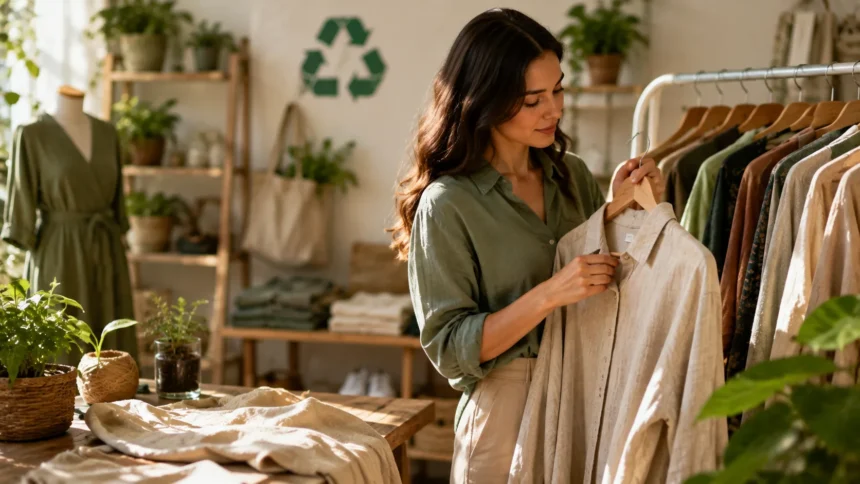
Sustainable Fashion Explained: How Better Clothing Choices Can Reduce Fashion’s Impact
Sustainable fashion is an approach to designing, producing, buying, wearing, and disposing of clothing in ways that reduce harm to people and the environment. It looks beyond whether a shirt or pair of jeans appears fashionable and considers everything that happens throughout the garment’s life. This includes where raw materials come from, how much energy and water manufacturing requires, which chemicals are used, how workers are treated, how long the garment remains wearable, and what happens after its owner no longer wants it. In simple terms, sustainable fashion aims to create clothing that delivers style and usefulness without depending on excessive consumption, waste, pollution, or harmful working practices.
The idea has become increasingly important because modern fashion operates on an enormous global scale. Cotton may be grown in one country, spun into yarn somewhere else, dyed and woven in another location, sewn into clothing somewhere different, and finally sold thousands of miles away. Every stage can have environmental and social consequences. Energy use, textile dyes, agricultural inputs, transportation, packaging, waste, and working conditions all influence the final footprint of a garment. Sustainable clothing attempts to improve this entire system rather than concentrating on only one environmental claim.
A sustainable fashion system also challenges the idea that clothing should be treated as disposable. Rapid trend cycles can encourage consumers to purchase garments frequently, wear them only a few times, and quickly replace them when another style becomes popular. Slow fashion and circular fashion offer different ways of thinking. They encourage longer-lasting clothing, thoughtful purchasing, repair, resale, reuse, responsible materials, and recycling where practical. The objective is to keep garments and materials valuable for longer instead of continuously turning resources into short-lived products and waste.
Social responsibility is equally important. A garment cannot be considered genuinely sustainable simply because it uses an organic or recycled material while the people producing it work under unsafe or exploitative conditions. Ethical sourcing, fair compensation, safe workplaces, worker rights, supply-chain transparency, and responsible purchasing practices all belong within a broader understanding of sustainable fashion. Environmental and social improvements need to progress together because the fashion industry depends on millions of workers across farms, factories, logistics networks, design studios, shops, and recycling systems.
Understanding what sustainable fashion is therefore requires moving beyond labels such as “green,” “eco,” or “conscious.” Sustainable fashion is not one fabric, certification, brand, or shopping rule. It is an ongoing effort to reduce negative impacts throughout the clothing lifecycle while improving durability, transparency, circularity, and fairness. Consumers can contribute through better buying and care habits, but brands, manufacturers, policymakers, designers, retailers, and waste-management systems also have major responsibilities. Real sustainability requires changes across the entire fashion ecosystem.
What Does Sustainable Fashion Really Mean?
Sustainable fashion begins with the idea of looking at clothing through its entire life cycle. A garment starts long before it reaches a clothing rack. Fibers must be grown, produced, or extracted; yarn must be spun; fabrics are woven or knitted; materials may be dyed, washed, printed, coated, cut, and sewn. After production, clothing must be transported, marketed, sold, worn, cleaned, repaired, reused, and eventually discarded or recycled. Sustainability considers environmental and social impacts across all of these stages rather than judging clothing based only on one feature.
The environmental side focuses on reducing resource use, pollution, greenhouse gas emissions, waste, toxic chemicals, and damage to ecosystems. This can involve choosing lower-impact materials, improving manufacturing efficiency, using safer chemistry, reducing unnecessary packaging, developing cleaner energy systems, and designing products that remain useful longer. A sustainable garment should ideally make responsible use of resources while offering enough quality and durability to justify the materials and energy used to produce it.
The social side involves the people who make fashion possible. Garment production is labor-intensive, and clothing supply chains can involve workers across many countries. Ethical fashion emphasizes safer workplaces, reasonable working hours, respect for labor rights, responsible wages, freedom from forced or child labor, and fairer relationships between fashion brands and suppliers. Sustainability loses much of its meaning when environmental improvements come at the expense of vulnerable workers.
Economic sustainability also matters. Manufacturers and brands need business models that can remain financially viable while improving environmental and social performance. Suppliers cannot simply absorb every sustainability cost while retailers continue demanding extremely low prices and very short production schedules. Long-term improvement requires purchasing practices that allow manufacturers to invest in cleaner technology, worker welfare, efficient production, traceability, and more durable materials without making the supply chain economically impossible to operate.
Ultimately, sustainable fashion means trying to create a clothing system that can function over the long term without continuously exhausting resources or creating avoidable harm. No garment has zero environmental impact, so sustainability is better understood as reducing impact and improving systems rather than achieving absolute perfection. The most sustainable choice is often not automatically purchasing a new “eco-friendly” item; sometimes it is wearing something already in your wardrobe for another year.
Why Is Sustainable Fashion Important?
Fashion requires enormous quantities of materials. Natural fibers need land, water, and agricultural inputs, while synthetic fibers are generally produced using fossil-based feedstocks unless alternative or recycled sources are used. Fabric manufacturing also involves energy, chemicals, water, machinery, and transportation. When clothing is produced in extremely high volumes and used for increasingly short periods, the amount of material flowing through the system grows rapidly. Sustainable fashion tries to reduce this pressure by improving production and encouraging longer product use.
Waste is another major concern. Clothing can become waste during manufacturing, at retail when products remain unsold, and after consumers stop wearing them. Some garments are donated or resold, but others are landfilled, incinerated, exported, or downcycled into lower-value applications. Recycling textiles into new high-quality clothing remains technically challenging for many blended or heavily processed fabrics. Circular fashion therefore emphasizes preventing unnecessary waste before relying on recycling as the final solution.
Pollution can occur at multiple stages. Textile processing may involve dyes, finishing treatments, detergents, solvents, and other chemicals. Poorly managed manufacturing can contaminate water and surrounding environments. Synthetic garments can also release tiny fibers during manufacturing and washing. Sustainable textile production seeks safer chemical management, better wastewater treatment, cleaner processes, responsible material selection, and improved product design to reduce these impacts.
Climate change provides another reason for transformation. Energy is used in fiber production, textile manufacturing, garment factories, transportation, stores, warehouses, washing, drying, and disposal. The exact footprint differs greatly depending on the garment, energy source, material, production location, and consumer behavior. Reducing fashion-related emissions therefore requires multiple approaches, including cleaner electricity, efficiency improvements, durable design, reduced overproduction, better logistics, and more thoughtful consumption.
Finally, sustainability matters because clothing connects environmental problems with human livelihoods. Millions of people depend on textile and apparel production for income, particularly in developing economies. A rapid transition that ignores workers can create new social problems, while maintaining harmful practices is equally unacceptable. A just transition in fashion aims to reduce environmental damage while protecting livelihoods, improving working conditions, strengthening skills, and giving producers a meaningful role in building a more responsible industry.
Sustainable Fashion vs. Fast Fashion: What Is the Difference?
Fast fashion generally refers to a business model built around producing and selling new styles quickly, frequently, and at relatively low prices. Fashion trends can move rapidly from social media, runways, or celebrities into stores, encouraging shoppers to return frequently for new products. The model makes fashionable clothing accessible to more people, but extremely high production volumes and rapid product turnover can create environmental and social pressures throughout the supply chain.
Sustainable fashion takes a different approach by asking whether clothing can be made and consumed more deliberately. Instead of treating speed and volume as the primary measures of success, sustainable brands may emphasize quality, durability, traceable sourcing, lower-impact materials, repairability, responsible production, and timeless design. This approach is closely related to slow fashion, which encourages people to value clothing over longer periods instead of constantly replacing it.
Price is another visible difference, although expensive clothing is not automatically sustainable. Sustainable garments can cost more because better materials, smaller production quantities, responsible manufacturing, certifications, durable construction, and fairer labor conditions may increase production costs. However, price alone tells consumers very little. Luxury fashion can still involve waste or poor transparency, while an affordable company can make meaningful improvements to materials and production practices.
Consumer behavior also differs between the two models. Fast fashion becomes particularly resource-intensive when low prices encourage frequent purchasing and short garment use. Sustainable fashion encourages shoppers to think about cost per wear rather than simply purchase price. A well-made jacket worn hundreds of times may provide more value than several cheaper jackets that quickly lose shape, become damaged, or fall out of favor.
The difference should not be reduced to a simple battle between “bad fast fashion” and “good sustainable brands.” Fashion supply chains are complicated, and many companies sit somewhere between these extremes. The more useful question is whether a brand is reducing overproduction, improving durability, supporting responsible labor, increasing transparency, reducing harmful materials, and helping garments remain in use longer. Sustainable progress can be measured through meaningful improvements rather than marketing labels alone.
What Is Slow Fashion?
Slow fashion is a movement that encourages a more thoughtful relationship with clothing. It emerged partly as a response to increasingly rapid fashion cycles and the idea that wardrobes constantly need updating. Instead of focusing on the newest trend, slow fashion values craftsmanship, quality, longevity, responsible production, and personal style. The basic idea is simple: buy fewer items, choose them carefully, take care of them, and keep them in use for as long as they remain useful.
This does not mean people must stop enjoying fashion. Sustainable and slow fashion can still involve color, creativity, experimentation, seasonal clothing, and personal expression. The difference lies in how quickly items are replaced and how much value is placed on individual garments. Someone can enjoy fashion while creating a wardrobe built around versatile pieces, meaningful purchases, second-hand finds, repairs, and occasional trend-driven items rather than treating every trend as a reason to replace existing clothing.
Quality plays an important role in slow fashion. Strong seams, durable fabrics, reliable fastenings, appropriate construction, and designs capable of surviving repeated wear can extend garment life. However, durability is useful only when the wearer actually continues using the product. A beautifully manufactured coat that remains untouched in a wardrobe provides little benefit compared with one worn regularly for years. Sustainable design and consumer attachment therefore work together.
Repair is another major part of the movement. Small holes, missing buttons, broken zippers, loose hems, and minor fit problems do not necessarily mean a garment has reached the end of its useful life. Learning basic repair skills or using a tailor can restore clothing and prevent unnecessary replacement. Some brands are also developing repair programs or creating products specifically designed to make component replacement easier.
Slow fashion ultimately encourages people to move away from viewing clothing as temporary entertainment. A garment can develop value through repeated use, memories, comfort, fit, and personal identity. This mindset reduces pressure to constantly purchase new clothing and encourages designers and businesses to create products worth keeping. In that sense, sustainable wardrobes depend as much on relationships with clothing as they do on environmentally preferred fibers.
What Is Circular Fashion?
Circular fashion applies the principles of the circular economy to clothing. Traditional fashion often follows a linear model: take resources, make products, sell them, use them, and eventually discard them. Circular fashion seeks to break this pattern by keeping clothing, fibers, and materials circulating at their highest possible value for longer. The goal is to reduce both the extraction of new resources and the amount of textile waste leaving the system.
The first step in circularity is usually designing garments for longer use. Products that quickly break cannot circulate effectively. Designers can select durable fabrics, avoid unnecessarily fragile construction, consider whether components can be replaced, and create styles capable of remaining relevant beyond one short trend cycle. Physical durability and emotional durability—the desire to keep wearing something—are both important.
Reuse extends garment life without requiring complete material processing. Second-hand fashion, rental, swapping, resale, repair, refurbishment, and hand-me-downs can keep existing clothing circulating between users. These models can reduce demand for new production when they genuinely extend product use rather than simply encouraging people to consume more because resale feels environmentally harmless.
Recycling becomes relevant when a garment can no longer be worn. In an ideal circular system, textile fibers would be recovered and turned into new high-quality textiles. In practice, this is difficult. Clothing often contains blends such as cotton and polyester, plus dyes, coatings, elastane, zippers, buttons, prints, and other components that complicate recycling. Designing products with recycling in mind can make future material recovery easier.
Circular fashion therefore involves far more than placing a recycling bin in a store. Businesses must rethink design, sourcing, production, logistics, resale, repair, collection, sorting, and recycling infrastructure. Consumers also need convenient ways to keep garments in circulation. A truly circular fashion industry attempts to preserve the value already embedded in clothing rather than continuously creating products that quickly become waste.
Which Materials Are More Sustainable for Clothing?
There is no single fabric that can always be described as the “most sustainable.” Every textile has different environmental advantages and disadvantages depending on how raw materials are produced, where manufacturing occurs, how the garment is designed, how long it lasts, and what happens at the end of its life. Sustainable fabrics should therefore be evaluated through their full lifecycle rather than through simple good-versus-bad labels.
Organic cotton is frequently discussed because its production restricts certain synthetic pesticides and fertilizers and follows specific agricultural standards. However, cotton cultivation still requires land and water, and performance can vary significantly by farming location. Conventional cotton can also improve through better agricultural practices. The sustainability question is not only whether cotton is labeled organic but how efficiently and responsibly the entire cotton supply chain operates.
Recycled fibers can reduce dependence on virgin raw materials. Recycled polyester, for example, commonly uses existing plastic feedstock rather than producing all polymer inputs from new fossil resources. Recycled cotton can help recover textile waste. However, recycling quality, collection systems, energy use, fiber degradation, contamination, and future recyclability still matter. Using recycled content is useful, but it does not automatically create a completely circular garment.
Natural fibers such as linen, hemp, wool, silk, and newer bio-based materials each have their own profiles. Linen and hemp are often valued for durability and certain agricultural advantages, while wool can remain useful for many years when cared for properly. Animal-derived fibers raise additional questions about land, emissions, biodiversity, and animal welfare. Newer cellulose-based materials can also vary substantially depending on forestry practices and chemical processing.
The best material choice ultimately depends on the product. Athletic clothing may require performance characteristics different from a summer shirt or winter coat. A fabric that performs poorly and causes a garment to be replaced quickly may not be sustainable simply because the raw material sounds environmentally attractive. Material sustainability should consider source, processing, durability, care, performance, recyclability, and how realistically the product will be used.
Is Second-Hand Fashion Sustainable?
Buying second-hand clothing can be one of the most practical ways to participate in sustainable fashion because it extends the useful life of products that already exist. The energy, fibers, water, labor, and manufacturing involved in producing the garment have already been invested. When another person wears the item instead of purchasing a comparable new product, the value embedded in that garment can continue serving a purpose rather than immediately becoming waste.
Second-hand shopping has expanded beyond traditional charity stores and vintage shops. Online resale platforms, specialist marketplaces, consignment businesses, social-media sellers, clothing swaps, and brand-operated resale programs have made pre-owned fashion easier to access. Shoppers can find everyday clothing, designer pieces, children’s apparel, sportswear, vintage products, and items that may no longer be available through ordinary retail.
Resale can also make higher-quality clothing more affordable. A durable coat or pair of shoes that originally carried a high retail price may become much more accessible after someone else has used it. This can allow shoppers to prioritize construction and quality without always paying the original price. In some cases, older garments may also offer craftsmanship or materials that remain highly wearable years later.
However, second-hand fashion is not automatically sustainable if it simply encourages more consumption. Someone buying dozens of inexpensive used garments every month and frequently discarding them may still develop a high-volume consumption pattern. Shipping, packaging, returns, cleaning, and unsold inventory also create impacts within resale systems. The greatest benefit comes when second-hand purchases genuinely replace the need for new clothing and remain in use.
The most sustainable wardrobe may therefore combine existing clothes, second-hand purchases, repairs, carefully chosen new garments, swaps, and borrowed items. Consumers do not need to adopt one method exclusively. The guiding principle is to maximize use and minimize unnecessary replacement. Buying less and wearing more remains one of the simplest ideas connecting almost every form of sustainable fashion.
How Can You Tell If a Fashion Brand Is Truly Sustainable?
Start with transparency. A responsible company should be able to explain where its products come from, what materials it uses, and what steps it is taking to improve environmental and social performance. Brands may disclose supplier lists, manufacturing locations, material information, environmental targets, labor policies, and progress reports. Perfect transparency does not guarantee perfect sustainability, but companies unwilling to provide meaningful information give consumers very little basis for evaluating their claims.
Look for specific language rather than vague statements. Phrases such as “planet friendly,” “green,” “conscious,” or “better for nature” can sound impressive without explaining anything measurable. Stronger claims usually identify the material, process, certification, percentage, factory practice, or environmental improvement involved. Sustainable fashion claims become more useful when consumers can understand exactly what has changed and compared with what baseline.
Independent certifications can provide additional information, although no single label covers every sustainability issue. Different standards may address organic agriculture, recycled content, chemical restrictions, forestry, labor practices, animal welfare, or production systems. Certifications should be understood according to what they actually verify rather than being treated as universal sustainability stamps. A certified fiber does not necessarily assess every stage of the final garment’s production.
Examine the company’s overall business model as well. A brand may launch a small sustainable collection while continuing to produce enormous quantities of short-lived products elsewhere. Ask whether sustainability improvements apply to a meaningful portion of its business. Consider durability, repair services, product volumes, resale, recycling efforts, and whether the company openly discusses areas where progress is still needed rather than presenting itself as environmentally perfect.
Consumers should also recognize that genuinely responsible companies can still have impacts. Every clothing business uses materials and energy. The goal is not to find a magical zero-impact fashion brand but to identify businesses demonstrating credible improvements, transparency, responsible production, and willingness to be held accountable. Sustainable fashion requires continuous progress rather than a perfect marketing image.
What Is Greenwashing in Fashion?
Greenwashing occurs when environmental marketing makes a product, brand, or practice appear more sustainable than the evidence justifies. Fashion is particularly vulnerable because sustainability involves complex supply chains that most consumers cannot personally inspect. Attractive green packaging, nature imagery, vague environmental language, and small “eco collections” can create a positive impression even when relatively little has changed within the underlying business.
One common greenwashing technique involves highlighting a single positive feature while ignoring the rest of the product’s lifecycle. A garment may contain some recycled material, for example, but that fact alone does not reveal how it was dyed, how workers were treated, how durable the product is, or whether the brand is producing far more inventory than consumers can realistically use. One improvement can be worthwhile without proving that the entire garment is sustainable.
Another warning sign is unclear terminology. If a brand calls something “eco-conscious” but does not explain what the claim means, shoppers cannot evaluate it. Better sustainability communication provides specific information: the percentage of certified or recycled material, the standard used, where production occurs, what environmental target is being addressed, and how progress is measured. Precision makes accountability easier.
Selective storytelling can also mislead consumers. A brand may heavily advertise one renewable-energy project or recycling initiative while the majority of its environmental impact remains unaddressed. Sustainable transformation usually requires changes across materials, manufacturing, energy, logistics, waste, product durability, and consumption models. Consumers should evaluate the overall direction of the business rather than one highly visible campaign.
Greenwashing concerns are encouraging governments and regulators in several markets to demand clearer environmental claims and better product information. Fashion transparency and traceability are likely to become increasingly important as companies face stronger expectations to prove sustainability statements. For shoppers, the best protection remains healthy skepticism: look past the headline and ask what measurable evidence supports the environmental claim.
How Does Sustainable Fashion Address Worker Rights?
Clothing has a human story long before it reaches the person wearing it. Farmers may grow cotton, workers may produce fibers, dye-house employees process textiles, garment workers sew clothing, and countless other people handle finishing, packaging, shipping, warehousing, and retail. Sustainable fashion recognizes that environmental progress cannot be separated from the conditions experienced by these workers throughout the fashion supply chain.
Fair compensation is a major issue. Legal minimum wages and living wages are not always the same thing. A living wage generally refers to income sufficient to support a reasonable standard of living within a particular location. Achieving better wages can be complicated because brands, suppliers, governments, buyers, and market prices all influence garment economics. Still, responsible companies can improve purchasing practices and support longer-term supplier relationships rather than demanding continually lower costs.
Worker safety is equally important. Garment factories need appropriate building safety, fire protection, ventilation, machinery safeguards, chemical management, emergency procedures, and reasonable working environments. Sustainable sourcing includes monitoring these conditions while also strengthening systems that allow workers to report problems and participate in decisions affecting their safety.
Purchasing practices deserve more attention than consumers often realize. When brands place orders late, demand extremely rapid production, suddenly cancel contracts, or pressure suppliers into unsustainably low prices, factories may pass that pressure onto workers. Ethical fashion therefore involves changing the commercial relationships behind clothing, not simply auditing factories after problems appear.
True sustainability places dignity alongside environmental performance. A shirt made from a lower-impact material cannot fully represent ethical and sustainable fashion if the people who made it faced exploitation. Consumers increasingly expect companies to understand their supply chains, identify labor risks, and demonstrate meaningful improvements rather than treating workers as invisible components of production.
How Can You Build a Sustainable Wardrobe?
The best starting point is your existing wardrobe. Before purchasing anything new, look at what you already own. Many people forget clothing because it becomes buried at the back of wardrobes or stored between seasons. Reorganizing garments can reveal combinations you have not tried, pieces that need small repairs, and items that can return to regular use. The most environmentally friendly garment is often one that has already been produced and can continue being worn.
When you do need something, consider how frequently you are likely to wear it. Ask whether the item works with clothing you already own, whether the fit is comfortable, whether the construction appears durable, and whether you can realistically care for it. Mindful fashion shopping does not mean every purchase must be expensive or minimalist. It simply involves slowing down long enough to decide whether the garment has a genuine role in your wardrobe.
Developing a personal style can also reduce dependence on fast-moving trends. People who understand the colors, fits, fabrics, and silhouettes they genuinely enjoy may feel less pressure to rebuild their wardrobe every season. Trends can still be fun, but they become optional additions rather than instructions requiring constant replacement. Clothing that feels personally meaningful is often easier to keep wearing.
Second-hand shopping and clothing swaps can fill wardrobe gaps without automatically requiring new production. Renting can make sense for occasional formalwear or highly specialized clothing that would otherwise be worn once. Repairing and tailoring can make existing items useful again, while selling or donating wearable garments can help them move to another user. These options create multiple alternatives to the simple buy-wear-discard pattern.
A sustainable wardrobe should also be practical for your lifestyle and budget. People do not need to replace everything with expensive “sustainable” alternatives. Throwing away functional clothing simply because it came from a fast-fashion retailer creates unnecessary waste. Wear what you have, care for it, replace items thoughtfully when necessary, and gradually improve purchasing habits. Sustainable fashion is a direction, not a wardrobe makeover deadline.
How Can You Make Clothes Last Longer?
Proper clothing care can significantly extend garment life. Always check care labels because different fibers respond differently to water temperature, agitation, drying, heat, and detergents. Washing every item after a single short wear is not always necessary, especially for outerwear, jeans, sweaters, and garments that remain clean. Reducing unnecessary washing can preserve fabrics while also lowering household energy and water use.
Washing clothes at appropriate lower temperatures can protect many fabrics and reduce energy use, although heavily soiled items may occasionally require different treatment. Turning printed or dark garments inside out, using suitable wash cycles, avoiding overloaded machines, and selecting the correct detergent can help prevent premature fading, stretching, and abrasion. Small adjustments repeated throughout a garment’s life can make a noticeable difference.
Drying practices matter too. Tumble drying is convenient but can expose clothing to heat and mechanical stress. Air drying where practical can reduce energy use and may help certain garments last longer. Delicate knits may need to dry flat to prevent stretching, while direct sunlight can fade some colors. Good care means adapting the method to the material rather than following one rule for everything.
Storage can also prevent damage. Clothes should generally be clean and dry before long-term storage. Heavy knitwear may stretch when hanging, while structured jackets often benefit from appropriate hangers. Shoes can retain their shape with basic care, and seasonal clothing should be protected from moisture and pests. These simple practices prevent avoidable damage that might otherwise encourage early replacement.
Finally, learn basic repairs. Sewing on a button, closing a small seam, patching a hole, removing pills, replacing a zipper, or taking clothing to a tailor can add months or years of use. A repair-first fashion mindset changes the question from “Is this item still perfect?” to “Can this item still be useful?” That shift is central to creating a longer-lasting wardrobe.
Is Sustainable Fashion Expensive?
Sustainable clothing sometimes carries a higher upfront price because producing garments responsibly can cost more. Better-quality fabrics, lower-volume manufacturing, fairer labor practices, responsible chemical management, traceability, and third-party certifications all require investment. A very low retail price can occasionally hide costs that have been transferred elsewhere in the supply chain—to workers, manufacturers, communities, or the environment.
However, sustainable fashion does not require purchasing premium ethical brands exclusively. Wearing existing clothes longer costs nothing. Second-hand shopping can be inexpensive. Clothing swaps may cost very little, and basic repairs can be much cheaper than replacement. A sustainable wardrobe can therefore be built around reducing unnecessary purchases rather than continually buying new products marketed as sustainable.
Cost per wear provides another useful perspective. Imagine one pair of shoes costs twice as much as another but lasts three times longer and is worn regularly. The more durable pair may ultimately provide better financial value. Of course, a higher price does not guarantee durability, so consumers still need to examine materials, construction, reviews, and realistic use before assuming an expensive product is a better investment.
Affordability also varies dramatically between households. Sustainable fashion conversations can become unhelpful when they shame consumers who depend on inexpensive clothing. People make purchasing decisions within real financial limitations, work requirements, body-size availability, climate conditions, childcare responsibilities, and local retail options. Responsibility for transforming fashion cannot be placed entirely on individual shoppers.
The most accessible sustainability strategy is often buy less, use longer, and waste less. Someone who purchases affordable clothing only when necessary and wears it for years may have a more sustainable consumption pattern than someone constantly buying expensive eco-labeled garments. Sustainability is influenced by how much we consume and how long we use products, not simply by the price or branding attached to them.
What Role Does Technology Play in Sustainable Fashion?
Technology is increasingly being used to make fashion supply chains more transparent. Clothing production can involve dozens of companies across multiple countries, making it difficult for brands and consumers to understand where materials originated. Digital traceability systems can help connect information about fibers, factories, processing stages, certifications, and product characteristics. Better data can make environmental claims easier to verify.
Digital product passports are becoming an important concept in the movement toward greater product transparency and circularity. These systems aim to connect products with standardized digital information about materials, manufacturing, repairability, or other lifecycle characteristics. Over time, better product data could help consumers, repair businesses, recyclers, regulators, and brands understand what a garment contains and how it can remain in circulation.
Artificial intelligence can also support certain sustainability improvements. Companies can use forecasting systems to predict demand more accurately, potentially reducing excessive inventory. AI-assisted design may help optimize patterns, identify production inefficiencies, analyze supply-chain data, or support automated sorting of used textiles. However, technology is only useful when it solves real problems rather than simply becoming another sustainability marketing claim.
Material innovation is another rapidly developing area. Researchers and companies are exploring fiber-to-fiber recycling, lower-impact dyes, alternative leather-like materials, agricultural-waste fibers, improved cellulose processing, biodegradable components, and other textile technologies. Not every new material ultimately performs better across its complete lifecycle, so innovations need proper testing rather than excitement based solely on novelty.
Technology can make sustainable fashion more measurable, traceable, and efficient, but it cannot solve overconsumption by itself. A perfectly traceable garment can still become waste after being worn twice. Sustainable transformation therefore requires combining innovation with better design, responsible production, improved business models, consumer behavior, policy, and infrastructure. Fashion technology is an important tool, not a substitute for broader systemic change.
What Does the Future of Sustainable Fashion Look Like?
The future of sustainable fashion is likely to involve much greater transparency. Brands are increasingly expected to understand where their materials originate, how products are manufactured, and what environmental impacts occur throughout the supply chain. Consumers, businesses, regulators, investors, and retailers are all demanding better information. Claims that once relied primarily on marketing language are gradually becoming more data-driven.
Circular business models are also expanding. Resale, rental, repair, refurbishment, take-back programs, remanufacturing, and fiber recycling are moving from niche ideas toward larger parts of the fashion economy. Companies are beginning to recognize that value does not necessarily end when the first customer stops wearing a garment. Keeping products circulating can create new revenue streams while reducing dependence on constant production of entirely new items.
Regulation is likely to play a larger role as well. Policymakers are increasingly focusing on product durability, waste reduction, environmental claims, textile collection, producer responsibility, transparency, and the destruction of unsold merchandise. These developments can push sustainability beyond voluntary corporate commitments and create more consistent expectations across the industry.
Design itself will need to change. Future garments may increasingly be created with durability, repair, disassembly, material identification, and recyclability in mind from the beginning. Designers will need to understand not only appearance and performance but also what happens after the first owner no longer wants the product. Circular design principles can help make waste prevention part of the garment’s original blueprint rather than an afterthought.
The biggest change, however, may be cultural. Sustainable fashion challenges the assumption that success must always mean selling more new clothing every year. The industry’s future may depend increasingly on delivering value through quality, services, resale, repair, personalization, longevity, and circularity. Fashion will remain creative and constantly evolving, but the definition of progress can move beyond simply producing and consuming more.
How Can Consumers Support Sustainable Fashion Without Being Perfect?
Start with realistic changes instead of trying to become a perfect sustainable shopper overnight. Sustainability can become overwhelming when every fabric, brand, detergent, shipping method, and purchasing decision feels like a moral test. No consumer can research every stage of every supply chain. Focus instead on a few habits that create meaningful improvements and can be maintained over time.
Wear your clothing more often. This simple action is frequently underestimated because it does not involve purchasing anything new. Repeating outfits, restyling garments, caring properly for favorite pieces, and resisting unnecessary replacement helps extend the value of existing products. A wardrobe does not become sustainable because every item has an eco-label; it becomes more sustainable when clothing is genuinely used.
Buy more intentionally when replacement is necessary. Consider second-hand options, compare quality, investigate brand transparency, and choose pieces that work across multiple outfits. Avoid buying an item simply because it is heavily discounted. A bargain that remains unworn is still a waste of money and resources, while a carefully selected item that becomes a wardrobe favorite can provide years of value.
Do not feel guilty about owning fast-fashion clothing already. Throwing functional garments away to replace them with supposedly ethical alternatives defeats the purpose of extending product life. Continue wearing the items, repair them where possible, and gradually make different choices as they genuinely need replacing. Sustainable fashion should reduce waste rather than create a new reason for wardrobe purges.
Finally, remember that individual behavior is only one part of the solution. Consumers can ask brands questions, support credible companies, repair clothing, shop second-hand, and vote with their spending. But fashion businesses and policymakers also need to improve production, worker conditions, transparency, infrastructure, and product design. Sustainable fashion requires shared responsibility, not perfection from individual shoppers.
Conclusion: Sustainable Fashion Is About Making Clothing Better for People and the Planet
So, what is sustainable fashion? It is an approach to clothing that considers environmental impact, worker welfare, material use, durability, consumption, waste, and what happens throughout the complete life of a garment. Sustainable fashion attempts to move the industry away from short-lived products and linear consumption toward clothing that is responsibly produced, valued for longer, reused where possible, and eventually recovered more effectively.
The movement includes ideas such as ethical fashion, slow fashion, circular fashion, responsible sourcing, recycled materials, sustainable fabrics, fair working conditions, second-hand clothing, repair, rental, traceability, and textile recycling. These concepts are connected by a common objective: creating more value from fewer resources while reducing unnecessary environmental and social harm.
Consumers have an important role, but the solution does not depend solely on shopping decisions. Fashion companies need to improve design and production, suppliers need support for cleaner technology, policymakers can establish clearer standards, recyclers need better infrastructure, and brands must become more transparent. A garment’s impact is created across an entire system, so meaningful improvements must occur throughout that system.
For individuals, sustainability can begin with surprisingly simple habits. Wear what you already own, purchase less impulsively, choose durable products, consider second-hand clothing, repair damaged items, care for garments properly, and investigate sustainability claims before believing them. These actions may seem small individually, but they help create demand for a fashion culture that values longevity rather than disposability.
Most importantly, sustainable fashion is not about achieving a perfect wardrobe. Every garment has an impact, and every person has different budgets, needs, and access to clothing. The goal is progress: buy thoughtfully, wear clothing longer, waste less, support fairer production, and expect greater accountability from the fashion industry. When clothing is designed and valued for a longer life, fashion can remain creative without treating people and resources as disposable.
Frequently Asked Questions About Sustainable Fashion
What is sustainable fashion in simple terms?
Sustainable fashion means producing and using clothing in ways that reduce environmental harm, waste, and unfair labor practices. It encourages durable garments, responsible materials, ethical production, reuse, repair, and longer clothing life.
What is the difference between sustainable fashion and fast fashion?
Fast fashion focuses on quickly producing large volumes of low-cost trend-driven clothing, while sustainable fashion prioritizes durability, responsible production, lower environmental impact, fairer working conditions, and longer garment use.
Is second-hand clothing considered sustainable fashion?
Yes. Buying second-hand can extend the life of existing garments and reduce demand for newly produced clothing. Its environmental benefit is greatest when second-hand purchases genuinely replace new purchases and remain in use for longer.
What are the most sustainable fabrics?
There is no universally perfect fabric. Organic, recycled, responsibly sourced, durable, and lower-impact fibers can offer advantages, but sustainability depends on sourcing, processing, garment quality, use, care, and end-of-life options.
How can I make my wardrobe more sustainable?
Start by wearing existing clothes longer, repairing damaged pieces, buying fewer but more useful items, considering second-hand options, caring for garments properly, and checking sustainability claims before purchasing new clothing.