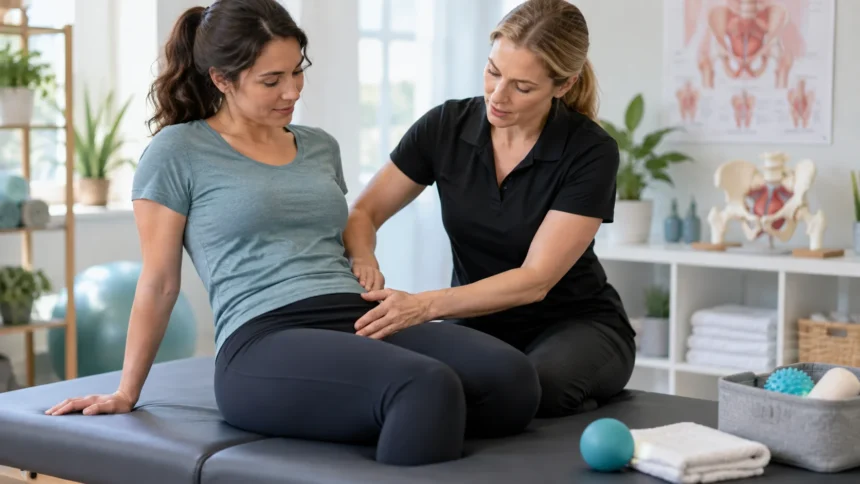
What Is Pelvic Floor Massage?
Pelvic floor massage is a hands-on technique used to help relax and improve awareness of the muscles that support the bladder, bowel, reproductive organs, and lower pelvis. These muscles can sometimes become tense, overactive, or difficult to relax. Gentle massage may help some people better recognize tension patterns and become more comfortable releasing those muscles.
The technique may involve external massage around the hips, inner thighs, lower abdomen, glutes, or perineal area. In some situations, a trained pelvic floor physical therapist may also use internal techniques when appropriate and with informed consent. The exact approach depends on a person’s symptoms, comfort level, medical history, and the specific muscles involved.
Pelvic floor massage is not the same as simply pressing hard on sore areas. Effective techniques usually focus on slow pressure, relaxation, breathing, and body awareness rather than force. The goal is generally to reduce unnecessary muscle guarding and improve comfort, not to aggressively stretch or manipulate sensitive tissues.
How Pelvic Floor Massage Works
The pelvic floor is a group of muscles that must both contract and relax properly. When these muscles remain tense for long periods, they may contribute to discomfort, pressure, difficulty relaxing during bowel movements, or pain with certain activities. Gentle massage may encourage the nervous system and muscles to reduce guarding and move toward a more relaxed state.
Massage can also increase awareness of where tension is being held. Many people tighten their pelvic floor without realizing it, especially during stress, prolonged sitting, heavy exercise, or pain. By combining gentle touch with slow breathing, a person may become better able to notice the difference between a contracted pelvic floor and a relaxed one.
Another possible benefit is improved tissue mobility around the pelvis and surrounding muscles. Tightness in the glutes, hips, inner thighs, and lower abdomen can sometimes occur alongside pelvic floor tension. Addressing these surrounding areas may help create a more comfortable environment for pelvic relaxation, although results can vary significantly from person to person.
Who May Benefit From Pelvic Floor Massage?
Pelvic floor massage may be considered by people who experience pelvic muscle tightness, discomfort, or difficulty relaxing the pelvic area. Some individuals with pelvic pain, pain during intercourse, constipation related to muscle tension, or a feeling of pelvic pressure may explore these techniques with professional guidance. However, symptoms can have many causes, so proper assessment is important.
People who spend long periods sitting or who frequently brace their abdominal and pelvic muscles may also notice tension in this region. Athletes, people recovering from certain pelvic conditions, and individuals experiencing stress-related muscle guarding may sometimes benefit from relaxation-focused pelvic floor exercises. Massage should be adapted carefully rather than treated as a universal solution.
Not everyone needs pelvic floor massage, and strengthening exercises are not always the answer either. Some people have weak pelvic muscles, while others have muscles that are already overactive and need help relaxing. A pelvic floor physical therapist can evaluate coordination, strength, tension, and movement patterns to determine which approach may be most appropriate.
External Pelvic Floor Massage Techniques
External pelvic floor massage usually begins with areas surrounding the pelvis rather than directly targeting deeper muscles. Gentle circular movements around the lower abdomen, hips, inner thighs, or gluteal muscles may help reduce general tension. Using slow, comfortable pressure allows the tissues time to relax without creating unnecessary pain or muscle guarding.
The gluteal area is often a useful place to begin because several muscles around the hips influence pelvic movement and stability. You can use your fingertips or palm to apply gentle pressure to tight areas while breathing slowly. Avoid pressing aggressively into painful spots, because excessive pressure can cause the muscles to tense rather than relax.
The inner thighs may also hold tension that is associated with pelvic muscle tightness. Gentle massage along the upper inner thigh can be performed while lying comfortably with the legs supported. Pressure should remain mild to moderate, and any movement that causes sharp pain, numbness, tingling, or increased pelvic symptoms should be stopped.
Understanding Internal Pelvic Floor Massage
Internal pelvic floor massage involves accessing certain pelvic muscles through the vaginal or rectal canal. Because these tissues are sensitive and symptoms may have different underlying causes, internal work is best learned from a qualified pelvic floor physical therapist. Professional assessment can help identify which muscles are tense and whether internal treatment is appropriate.
A therapist may use a gloved, lubricated finger to gently assess muscle tone, tenderness, coordination, and the ability to relax. Pressure is usually controlled and gradual rather than forceful. The therapist should explain what is happening, obtain consent, and stop whenever the person feels uncomfortable or no longer wishes to continue.
Some people may eventually be taught self-massage techniques or how to use an appropriate pelvic therapy tool at home. However, self-treatment should not begin simply because pelvic pain is present. Symptoms related to infection, inflammation, nerve irritation, endometriosis, urinary conditions, or other medical problems may require different evaluation and treatment.
Best Practices for Pelvic Floor Massage
Comfort should always come before intensity when practicing pelvic floor massage. Choose a private, relaxed environment where you are unlikely to feel rushed or distracted. Supporting your knees, hips, or lower back with pillows can reduce unnecessary muscle tension and make it easier to focus on slow breathing and relaxation.
Use gentle pressure and give the muscles time to respond. A common mistake is assuming stronger pressure will produce faster results, but pelvic floor muscles can become more guarded when treatment feels threatening or painful. Mild pressure held comfortably for a short period may be more useful than aggressive rubbing or repeated pressing.
Hygiene is especially important if internal techniques are being used. Hands should be clean, fingernails should be short and smooth, and appropriate lubrication may reduce friction and irritation. Any tools used for pelvic massage should be cleaned according to their instructions and should never be shared between people.
Combine Massage With Breathing and Relaxation
Breathing can play an important role in pelvic floor relaxation because the diaphragm and pelvic floor move together during normal respiration. As you inhale, the diaphragm moves downward and the pelvic floor can gently lengthen. During a relaxed exhale, the muscles return naturally without the need to forcefully squeeze or pull upward.
Try breathing slowly into the lower ribs and abdomen while performing gentle external massage. Allow the belly to soften rather than holding it tight, and notice whether the pelvic area feels less guarded during inhalation. This can make massage feel more comfortable while improving awareness of unconscious tension patterns.
Relaxation does not mean forcing the pelvic floor downward. Straining or pushing can create unnecessary pressure and may worsen some symptoms. Instead, imagine the muscles around the pelvis softening and widening naturally while your jaw, abdomen, glutes, and inner thighs remain relaxed during each slow breath.
How Often Should You Practice Pelvic Floor Massage?
There is no single schedule that works for everyone because pelvic floor symptoms, tissue sensitivity, and treatment goals vary. Some people may benefit from brief sessions a few times per week, while others may need less frequent work. A pelvic floor specialist can provide more individualized guidance based on the cause and severity of symptoms.
Sessions do not need to be long to be useful. Five to 10 minutes of gentle external massage combined with relaxed breathing may be enough for some people. Continuing for a long time after the tissues become irritated or uncomfortable is unlikely to provide additional benefit and may temporarily increase soreness.
Consistency can matter more than intensity when learning relaxation techniques. Building a routine sometimes requires patience, especially when results develop gradually rather than immediately. Understanding ideas such as willpower may also help when creating sustainable wellness habits, although pelvic floor care should always be guided by comfort rather than forcing yourself through pain.
Common Pelvic Floor Massage Mistakes to Avoid
One of the most common mistakes is treating every pelvic floor problem as muscle tightness. Pelvic pain, urinary symptoms, sexual discomfort, or bowel problems may have multiple causes that cannot be identified through self-massage alone. Assuming tight muscles are responsible for every symptom may delay appropriate evaluation when another issue needs attention.
Another mistake is using excessive pressure because a tender point feels as though it needs to be aggressively released. Strong pressure can irritate sensitive tissues and cause protective muscle tightening. Pelvic floor massage should generally feel gentle and manageable, and discomfort should decrease rather than steadily intensify during the session.
People may also focus only on the pelvic floor while ignoring surrounding areas and daily habits. Prolonged sitting, breath holding, stress, constipation, heavy straining, and constant abdominal bracing can all influence pelvic muscle tension. Combining massage with movement, breathing, posture awareness, and appropriate professional guidance may provide a more balanced approach.
Pelvic Floor Massage and Muscle Tightness
A tight pelvic floor is sometimes described as an overactive or hypertonic pelvic floor. This means the muscles may have difficulty fully relaxing when they are supposed to. People with increased pelvic muscle tone may notice aching, pressure, urinary urgency, bowel difficulty, or discomfort with penetration, although these symptoms can occur for many other reasons as well.
Massage may help by encouraging gentle lengthening and reducing protective muscle guarding. However, muscle tightness should not automatically be treated with stretching or pressure without understanding why it developed. Pain, stress, movement habits, previous injury, surgery, and other factors can all influence how the pelvic floor behaves.
It is also possible for pelvic floor muscles to be both tight and weak. A muscle that remains contracted for long periods may not produce strong, coordinated contractions when strength is actually needed. This is one reason assessment can be valuable before beginning large numbers of Kegel exercises or relying exclusively on massage.
What to Expect After Pelvic Floor Massage
After a gentle session, some people notice that the pelvic area feels warmer, looser, or less guarded. Others may not experience an immediate difference, especially when tension has been present for a long time. Pelvic floor rehabilitation often involves gradual changes in muscle awareness, breathing, coordination, and everyday movement rather than a dramatic response after one session.
Mild temporary tenderness may occur when muscles have been sensitive or tense, particularly during professionally guided treatment. However, massage should not leave you with severe pain, significant bleeding, worsening urinary symptoms, or prolonged irritation. These reactions are reasons to stop self-treatment and seek appropriate medical or pelvic health advice.
Tracking symptoms can help you understand how your body responds. Notice how you feel before the session, immediately afterward, and later that day rather than judging effectiveness only during massage. This information can also be useful when discussing your progress with a pelvic floor physical therapist or another qualified healthcare professional.
When to Stop and Seek Professional Advice
Stop pelvic floor massage if you experience sharp pain, burning, significant pressure, numbness, bleeding, or symptoms that become progressively worse. Pain is not a sign that a technique is working more effectively. Continuing to apply pressure through intense discomfort can increase muscle guarding and make it more difficult for the pelvic floor to relax.
Professional evaluation is particularly important for new or unexplained pelvic pain, persistent urinary problems, blood in urine or stool, unusual discharge, fever, significant pelvic pressure, or symptoms following surgery or childbirth. These concerns may require medical assessment rather than massage. Pelvic floor treatment should complement appropriate healthcare, not replace evaluation of concerning symptoms.
A pelvic floor physical therapist can also be helpful when symptoms continue despite gentle home techniques. They can assess muscle tone, breathing patterns, hip mobility, coordination, and movement habits that may be contributing to discomfort. Personalized treatment is often more effective than repeatedly trying random exercises or applying pressure without knowing which muscles need attention.
Conclusion
Pelvic floor massage can be a useful relaxation and body-awareness technique for some people with pelvic muscle tension. It may involve gentle work around the hips, glutes, inner thighs, abdomen, or pelvic muscles themselves. The most important principles are comfort, gradual pressure, relaxed breathing, and attention to how the body responds.
External massage is generally easier to explore at home, while internal pelvic floor massage is best learned with guidance from a qualified pelvic floor professional. More pressure is not necessarily better, and painful techniques can increase protective muscle tension. Consistent, gentle practice is usually more sensible than trying to force tight muscles to release.
Pelvic symptoms can have many possible causes, so massage should never be treated as a guaranteed solution for pain, urinary problems, or bowel difficulties. Stop if symptoms worsen and seek appropriate professional advice when pain is persistent, unexplained, or severe. A personalized approach can help determine whether relaxation, strengthening, movement, or another form of treatment is most suitable.
FAQs
Can you massage your pelvic floor yourself?
Some people can safely perform gentle external pelvic floor massage at home. Internal self-massage should ideally be learned from a pelvic floor physical therapist who can explain suitable techniques and identify when massage may not be appropriate.
How do you know if your pelvic floor is tight?
Possible signs include pelvic aching, difficulty relaxing during bowel movements, urinary urgency, or discomfort with penetration. However, these symptoms can have other causes, so a professional assessment is the most reliable way to evaluate muscle tension.
Should pelvic floor massage hurt?
Pelvic floor massage should not cause sharp or severe pain. Mild tenderness may sometimes occur, but pressure should remain comfortable and controlled. Stop if pain increases, becomes sharp, or causes symptoms that continue after the session.
How long should pelvic floor massage last?
A gentle home session may last around five to 10 minutes for some people, although there is no universal rule. Short, comfortable sessions are generally preferable to prolonged massage that leaves the tissues irritated or painful.
Is pelvic floor massage the same as Kegel exercises?
No. Pelvic floor massage usually focuses on relaxation and releasing unnecessary tension, while Kegel exercises involve contracting the pelvic floor muscles. People with overly tight muscles may need relaxation work before strengthening exercises are appropriate.