Seated leg raises are a simple strengthening exercise that can be performed almost anywhere with minimal equipment. They primarily target muscles around the hips, thighs, and core while helping you practice controlled lower-body movement. Because the exercise is performed while sitting, it can also be a convenient option for people who prefer low-impact exercises or have limited space for workouts.
Although seated leg raises appear easy, proper technique matters. Moving too quickly, leaning backward, or forcing the leg higher than your comfortable range can reduce the effectiveness of the exercise and place unnecessary stress on surrounding joints. Learning how to perform the movement correctly can help you get more benefit while keeping the exercise controlled and comfortable.
This guide explains how seated leg raises work, which muscles they target, how to perform them correctly, common mistakes to avoid, and practical ways to include them in your fitness routine.
What Are Seated Leg Raises?
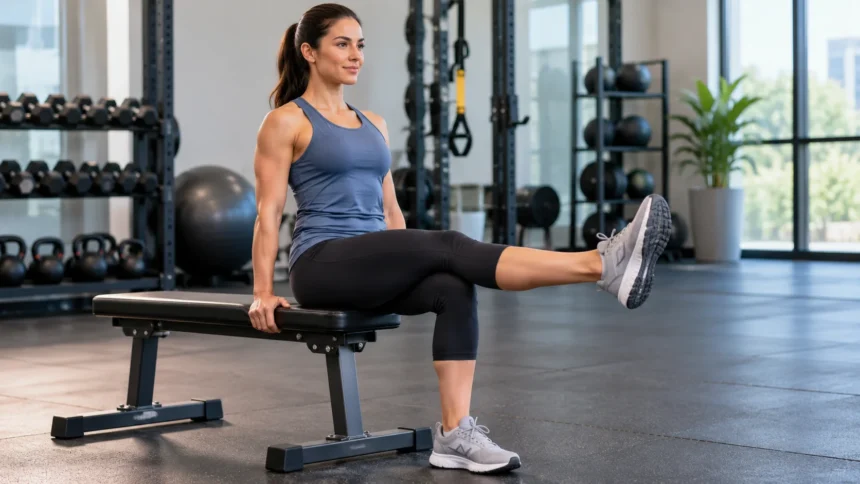
Seated leg raises are a lower-body exercise performed while sitting upright in a chair, on a bench, or sometimes on the floor. The basic movement involves extending or lifting one leg while maintaining a stable upper body. Depending on the variation, the exercise may focus more on the quadriceps, hip flexors, abdominal muscles, or overall leg control.
One of the biggest advantages of seated leg raises is their simplicity. You do not normally need heavy gym equipment, complicated machines, or a large workout space. A sturdy chair may be enough, making the exercise suitable for home workouts, office exercise breaks, rehabilitation-style programs, or warm-up routines.
The movement can also be adjusted according to your current fitness level. Beginners may perform slow single-leg repetitions, while more experienced exercisers can add ankle weights, longer holds, or additional repetitions. Regardless of the variation, controlled movement and proper posture should remain the main priorities.
Muscles Worked During Seated Leg Raises
The quadriceps are among the primary muscles used when performing seated leg raises, especially when you straighten the knee while lifting the leg. These muscles are located at the front of the thigh and help extend the knee. Strengthening them can support everyday movements such as standing up, climbing stairs, walking, and maintaining lower-body stability.
Your hip flexors also play an important role, particularly when the movement involves lifting the entire leg upward from the hip. These muscles connect the upper leg to the pelvis and help bring the thigh toward the torso. Maintaining controlled hip flexion can help improve movement awareness and strengthen muscles used during walking, running, and many daily activities.
The abdominal and core muscles also contribute by helping stabilize your torso. When seated leg raises are performed correctly, your core works to prevent excessive leaning or arching through the lower back. The exercise may also involve smaller stabilizing muscles surrounding the hips, knees, and pelvis depending on your position and the specific variation you perform.
How to Do Seated Leg Raises Correctly
Begin by sitting near the front of a sturdy chair with your feet flat on the floor. Keep your back comfortably upright, shoulders relaxed, and abdominal muscles gently engaged. Your knees should usually begin around a right angle, although your exact position may vary depending on your height and the chair being used.
Slowly straighten one knee until the leg extends comfortably in front of you. Avoid snapping or locking the knee aggressively at the top of the movement. Pause briefly while keeping your thigh and torso stable, then slowly lower your foot toward the starting position with control instead of allowing the leg to drop.
Complete the desired repetitions on one side before switching legs, or alternate between sides. A beginner might start with 8–12 controlled repetitions on each leg for one or two sets. Focus more on movement quality than repetition numbers, especially when you are learning the exercise or returning to physical activity after a break.
Proper Posture and Form During the Exercise
Your sitting position can significantly affect how well seated leg raises work. Sit tall without forcing your spine into an exaggerated position, and keep both hips evenly supported on the chair. Avoid sliding too far forward or allowing your pelvis to rotate as you lift your leg because these movements can reduce stability.
Keep your shoulders relaxed and your chest naturally lifted throughout each repetition. Many people lean backward to make the leg easier to raise, but doing so can shift effort away from the intended muscles. Keeping your torso relatively still encourages the quadriceps, hip flexors, and core muscles to perform the movement more effectively.
Your breathing should remain natural rather than holding your breath during difficult repetitions. Exhale gently as you raise or extend the leg and inhale as you return toward the starting position. Slow breathing often makes it easier to maintain control, especially when performing longer sets or adding an isometric hold at the top.
Common Seated Leg Raise Mistakes to Avoid
One common mistake is performing the movement too quickly. Swinging the lower leg upward may create momentum instead of requiring your muscles to control the movement. Slowing both the lifting and lowering phases usually makes the exercise more challenging while allowing you to pay closer attention to how your knee, hip, and lower back feel.
Another mistake is leaning backward or rounding the spine excessively while lifting the leg. This often happens when someone tries to raise the leg higher than their current strength or mobility comfortably allows. Keeping your torso stable and shortening the range of motion can often provide better form than forcing a larger movement.
Some people also lock the knee aggressively at the top of each repetition or add resistance too early. The goal is controlled knee extension rather than forcefully pushing the joint into its end range. Start with body weight and gradually increase resistance only after you can consistently perform the movement without compensation or discomfort.
Benefits of Adding Seated Leg Raises to Your Routine
Seated leg raises can help strengthen the quadriceps without requiring complicated equipment. Strong quadriceps support knee movement and contribute to common activities such as walking, standing from a chair, and using stairs. Because the exercise can be performed slowly and with a manageable range of motion, it provides an accessible way to train basic leg strength.
The exercise can also improve muscular control around the hips and knees. Controlled repetitions encourage you to coordinate movement while keeping your trunk stable. This type of body awareness may be useful when building a foundation for more demanding exercises such as squats, step-ups, lunges, or other lower-body strengthening movements.
Another advantage is convenience. Seated leg raises can fit into short home workouts, desk breaks, mobility routines, or structured exercise programs. Their accessibility makes them particularly useful when you need a lower-impact movement but still want to activate important lower-body muscles without lying on the floor or using large pieces of exercise equipment.
How Many Seated Leg Raises Should You Do?
The ideal number of seated leg raises depends on your fitness level, training goal, and comfort with the exercise. Beginners can often start with approximately 8–12 repetitions per leg. Completing one or two sets provides an opportunity to learn the movement before gradually increasing the overall training volume.
If the exercise becomes easy, you can increase the number of repetitions to around 12–20 or perform additional sets. However, adding repetitions should not come at the expense of technique. If you begin leaning backward, swinging the leg, or losing control during the lowering phase, it may be better to stop the set and rest.
For strength-focused training, additional resistance may eventually be more useful than performing extremely high repetition numbers. Light ankle weights or resistance equipment can increase difficulty, but progression should be gradual. Your muscles should feel challenged while your knee and hip joints remain comfortable throughout the movement.
Seated Leg Raise Variations for Different Fitness Levels
A basic single-leg extension is usually the easiest place to begin. Sit upright, extend one leg until it is nearly straight, pause briefly, and return it slowly to the floor. Keeping the movement simple allows you to focus on muscle engagement, posture, breathing, and control before experimenting with more demanding variations.
You can increase difficulty by holding the leg extended for several seconds before lowering it. Another option is adding a light ankle weight once body-weight repetitions feel comfortable. These variations increase the amount of time your muscles remain under tension without requiring major changes to the basic movement pattern.
Some exercisers perform seated straight-leg raises by starting with the knee already extended and lifting the entire leg slightly upward from the hip. This variation requires greater hip-flexor and core involvement. Choose a variation that matches your ability and stop if the movement causes sharp pain, joint irritation, or symptoms that continue after exercising.
Seated Leg Raises for Knee and Lower-Body Strength
Because the quadriceps help control the knee, seated leg raises are frequently included in basic lower-body strengthening routines. The exercise provides a controlled way to activate the front of the thigh while keeping the rest of the body relatively stable. This can make it useful when gradually building strength before progressing toward more demanding weight-bearing exercises.
However, knee discomfort can have many possible causes, and the same exercise will not suit every person. Avoid assuming that seated leg raises can treat an injury or medical condition on their own. If you have persistent pain, swelling, instability, recent surgery, or difficulty bearing weight, professional assessment may be appropriate before beginning or changing your exercise program.
Lower-leg and ankle problems may also influence which exercises feel comfortable. If you are exploring strengthening and mobility exercises for nearby structures, our guide to peroneal tendonitis exercises explains several movements and practical technique considerations. Exercise selection should always match your symptoms, mobility, and individual physical needs.
How to Make Seated Leg Raises More Effective
The easiest way to make seated leg raises more effective is to slow the movement down. Try taking two or three seconds to extend the leg, pausing briefly, and then taking another two or three seconds to lower it. This removes momentum and keeps the target muscles working through more of the repetition.
You can also focus on gently tightening the front of your thigh as your knee approaches a straight position. This mind-muscle connection can help you recognize whether your quadriceps are doing the work or whether you are compensating by moving your torso. Avoid forcing the contraction or pushing through discomfort just to create a stronger sensation.
Consistency matters more than making the exercise unnecessarily difficult. Performing well-controlled repetitions several times each week can be more useful than occasionally doing large numbers with poor form. Gradually increase sets, repetitions, hold times, or resistance as your strength improves rather than changing several variables at the same time.
When Should You Stop or Modify the Exercise?
Mild muscular effort or fatigue during seated leg raises is generally different from sharp or sudden pain. Stop the exercise if you experience intense knee pain, significant hip discomfort, unusual swelling, numbness, or other concerning symptoms. Continuing through pain can sometimes aggravate an existing problem rather than improving strength.
You can often modify the movement by reducing how far you straighten or lift the leg. A smaller comfortable range may allow you to practice muscle control without stressing sensitive areas. You can also reduce the number of repetitions, remove ankle weights, increase rest periods, or choose an easier variation while rebuilding strength.
People recovering from surgery, significant injuries, or diagnosed joint conditions should follow guidance provided by their healthcare professional or physical therapist. Seated leg raises are simple, but they are not automatically appropriate for every condition. Personalized recommendations are especially important when symptoms affect walking, balance, joint stability, or normal daily activities.
How to Include Seated Leg Raises in a Workout
Seated leg raises can be used near the beginning of a lower-body workout as a muscle activation exercise. Performing one or two light sets may help you become aware of your quadriceps before moving into exercises such as squats or step-ups. Keep the repetitions controlled rather than trying to create heavy fatigue during your warm-up.
They can also be included in a simple home strength routine alongside exercises such as calf raises, bridges, sit-to-stands, or supported balance exercises. Combining movements that train different lower-body muscles can create a more balanced routine. Choose exercises based on your current abilities and avoid adding too many new movements at once.
If your primary goal is improving strength, seated leg raises should usually be considered one part of a broader training program rather than the only leg exercise you perform. As your ability improves, gradually progressing toward functional weight-bearing exercises can challenge your muscles in different ways and prepare them for everyday movement demands.
Conclusion
Seated leg raises are a simple and accessible exercise for strengthening the quadriceps, hip flexors, and supporting core muscles. They require very little equipment and can easily fit into home workouts, beginner exercise programs, or short movement sessions throughout the day.
Proper technique makes the exercise more effective. Sit upright, keep your torso stable, extend your leg slowly, avoid forcefully locking the knee, and control the lowering phase. Progress gradually by increasing repetitions, holding the leg longer, or adding light resistance only when the basic movement feels comfortable.
Most importantly, exercise should feel appropriately challenging rather than painful. Adjust your range of motion when necessary and pay attention to how your knees, hips, and lower back respond. If you have persistent pain, a recent injury, or an existing medical condition affecting movement, seek individualized professional guidance before progressing your routine.
FAQs
Are seated leg raises good for strengthening the knees?
Seated leg raises primarily strengthen the quadriceps, which support knee movement and stability. They can be useful within a broader lower-body program, although they should not be considered a treatment for every type of knee problem.
How many seated leg raises should beginners do?
Beginners can usually start with around 8–12 slow repetitions per leg for one or two sets. Increase repetitions gradually once you can maintain good posture and controlled movement throughout the entire set.
Can I do seated leg raises every day?
Some people can comfortably perform light seated leg raises regularly, but recovery needs vary. If your muscles remain sore or fatigued, allow additional rest and adjust your exercise frequency accordingly.
Can seated leg raises help strengthen the core?
Yes, your abdominal and core muscles help stabilize your torso while your leg moves. However, seated leg raises mainly target the lower body and should be combined with other exercises for more complete core training.
Should I use ankle weights for seated leg raises?
Ankle weights can make seated leg raises more challenging once body-weight repetitions become easy. Start with light resistance and maintain slow, controlled technique rather than using heavy weights that cause swinging or joint discomfort.