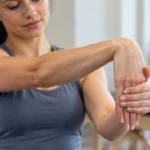
Delayed onset muscle soreness, commonly known as DOMS, is the aching or stiffness that can appear after unfamiliar or demanding exercise. It often develops after strength training, running, hiking, sports, or any activity that challenges muscles more than usual. Although DOMS can feel uncomfortable, it is a common response to exercise and does not automatically mean something is wrong.
Understanding why DOMS happens can make post-workout soreness less confusing. Knowing what symptoms are typical, how long they usually last, and how to manage recovery can also help you train more consistently. The goal is not to eliminate every trace of soreness but to support recovery while recognizing signs that may require more attention.
What Is DOMS?
DOMS stands for delayed onset muscle soreness, a temporary type of muscle discomfort that usually appears several hours after exercise rather than immediately during a workout. It commonly occurs when muscles are exposed to movements, resistance, or training volumes they are not accustomed to. The soreness may feel like tenderness, stiffness, aching, or mild weakness in the muscles that were trained.
The delayed nature of DOMS is one of its defining features. You may finish a workout feeling completely normal, then notice soreness later that evening or the following morning. Symptoms often become more noticeable during movements that stretch, contract, or place pressure on the affected muscles, such as walking downstairs after a demanding leg workout.
DOMS is particularly common when starting a new fitness routine, returning after a long break, or increasing training intensity. New exercises can also trigger soreness even in people who exercise regularly. As your body becomes more familiar with a particular type of training, the same workout often produces less soreness over time.
What Causes DOMS?
DOMS is associated with microscopic changes and stress within muscle tissue after unfamiliar or challenging exercise. These changes are part of the body’s normal response to physical loading and can contribute to temporary inflammation and sensitivity. The process is more complex than simply having too much lactic acid, which is an outdated explanation for delayed muscle soreness.
Eccentric muscle contractions are especially known for producing DOMS. An eccentric contraction happens when a muscle lengthens while under tension, such as lowering a dumbbell during a biceps curl or descending stairs. Running downhill, lowering weights slowly, and controlling the downward phase of squats can therefore create more soreness when your muscles are not accustomed to those movements.
Training volume and intensity can also influence how sore you feel afterward. Performing significantly more repetitions, using heavier resistance, or introducing several new exercises at once may increase muscle soreness. However, individual responses vary, so two people completing the same workout may experience very different levels of DOMS.
When Does DOMS Start and How Long Does It Last?
DOMS typically begins several hours after exercise and may become more noticeable within the next day or two. Many people experience the greatest discomfort around 24 to 72 hours after a challenging workout. The exact timing depends on factors such as training experience, exercise type, intensity, muscle group, and personal recovery.
For most people, normal exercise-related soreness gradually improves within several days. The affected muscles may initially feel stiff and tender, but movement often becomes easier as recovery progresses. Mild soreness may disappear relatively quickly, while stronger DOMS after an unusually demanding session can remain noticeable for several days.
If pain becomes progressively worse rather than gradually improving, it may be worth paying closer attention. Severe pain, major swelling, significant weakness, or difficulty using the affected area normally is not something to simply label as ordinary DOMS. Symptoms following a sudden injury also deserve a different approach from routine post-workout soreness.
What Does DOMS Feel Like?
DOMS usually causes a dull, aching sensation within the muscles that were recently exercised. You may notice tenderness when touching the area, stiffness when beginning to move, or discomfort when the muscle stretches. The soreness often affects both sides when an exercise trained both limbs, although differences in technique or strength can make one side feel more uncomfortable.
Another common feature is temporary reduction in comfortable movement. For example, sore quadriceps can make stairs feel more difficult, while sore chest muscles may make reaching behind you uncomfortable. Muscles can also feel weaker or less coordinated for a short period, particularly when DOMS is more pronounced.
DOMS generally feels different from sharp, sudden, or highly localized pain that begins during exercise. A popping sensation, immediate severe pain, significant bruising, or obvious swelling may suggest an injury rather than routine soreness. Paying attention to how and when symptoms started can help distinguish ordinary post-exercise discomfort from something requiring assessment.
Which Exercises Commonly Cause DOMS?
Strength training frequently produces DOMS, particularly when you begin lifting weights or increase resistance significantly. Squats, lunges, deadlifts, push-ups, pull-ups, and other compound exercises challenge several muscle groups at once. Slow lowering phases can make these movements especially demanding because they increase eccentric loading on the muscles.
Running can also create delayed soreness, especially after hills, longer distances, or faster sessions. Downhill running is particularly associated with DOMS because the leg muscles repeatedly control the body’s descent. Hiking, stair climbing, cycling, and high-intensity interval training may also create soreness when the workload exceeds what your muscles regularly experience.
Even activities that do not feel like formal workouts can cause DOMS. Gardening, moving furniture, recreational sports, long walks, or physical work may challenge muscles in unfamiliar ways. This is why soreness can sometimes appear after an active weekend even when you did not complete a traditional gym session.
How to Manage DOMS
Light movement can often make sore muscles feel temporarily more comfortable. Gentle walking, easy cycling, relaxed mobility exercises, or low-intensity activity may increase circulation and reduce stiffness. The goal is not to complete another demanding workout but to keep the body moving without placing excessive stress on muscles that are still recovering.
Heat, warm showers, or gentle self-massage may also feel soothing for some people. Foam rolling can provide temporary relief from tightness, although it should not be aggressively painful. Recovery strategies are usually most helpful when they improve comfort rather than when they are treated as ways to force the body to recover immediately.
Sleep, nutrition, hydration, and overall training balance are equally important. Muscles need time and adequate resources to recover after challenging exercise. Instead of searching for one quick remedy, focus on consistent recovery habits that support your ability to train regularly without repeatedly pushing the body beyond what it can comfortably tolerate.
Should You Stretch When You Have DOMS?
Gentle stretching may feel comfortable when muscles are mildly sore, but it should not be forced. Move slowly into a position that creates a mild stretch and stop before you feel sharp or intense pain. Stretching does not need to be aggressive to be useful, and deeper stretching is not necessarily better during recovery.
Stretching before exercise is also different from using stretching as a treatment for soreness. A proper warm-up should gradually prepare muscles and joints for the movements ahead. Simple mobility drills, light activity, and appropriate pre-workout stretches can help prepare your body without relying on long, intense stretches before demanding exercise.
If a sore muscle feels worse when stretched, reduce the intensity or skip the stretch temporarily. Comfortable movement is generally more useful than forcing a limited range while the tissue is sensitive. As soreness decreases, normal flexibility and mobility work can gradually return to your usual routine.
Can You Work Out With DOMS?
Whether you should train with DOMS depends largely on how severe the soreness is and what type of workout you planned. Mild soreness may not prevent exercise, particularly when you train a different muscle group. For example, someone with mildly sore legs may still be comfortable completing an upper-body workout.
When soreness is moderate or significantly affects your movement, reducing intensity can be a better choice. Heavy lifting, sprinting, or demanding exercises performed with altered technique may place unnecessary stress on muscles and joints. Choosing light activity or additional recovery time can allow you to return to normal training with better movement quality.
Severe soreness that changes how you walk, lift, or perform basic movements is a signal to avoid pushing through a hard session. Exercise quality matters more than maintaining a rigid schedule. Adjusting a workout occasionally can support long-term consistency better than forcing a demanding session when your body has not recovered sufficiently.
How to Reduce the Risk of Severe DOMS
The most effective approach is usually gradual progression. When starting a new exercise program, use manageable weights, repetitions, and training volumes rather than immediately doing the maximum amount possible. This gives muscles and connective tissues time to adapt to the new demands while reducing the likelihood of extreme soreness.
Introduce new exercises gradually as well. Adding several unfamiliar movements in one session can make it difficult to judge how much stress your body is receiving. Keeping the first few sessions relatively moderate allows you to observe your response before increasing sets, resistance, distance, or intensity.
Consistency can also reduce repeated episodes of intense DOMS. When exercise is performed regularly, the body becomes better adapted to familiar movement patterns. Long gaps followed by very hard workouts often produce more soreness than steady, progressive training, so sustainable routines tend to be more comfortable over the long term.
DOMS vs Muscle Injury
DOMS usually develops gradually after exercise and affects the muscles that were challenged during the workout. The discomfort is often diffuse rather than focused on one exact point. It commonly improves over several days and may feel better after gentle movement, although the area can remain tender when pressed or stretched.
A muscle injury can feel different, particularly when pain starts suddenly during a specific movement. Sharp pain, a tearing sensation, bruising, significant swelling, or immediate loss of strength may suggest a strain or another injury. Continuing to load the area heavily without understanding the problem could make symptoms worse.
Not every uncomfortable sensation after exercise can be identified based on feeling alone. If symptoms are severe, persistent, or associated with trauma, professional evaluation may be appropriate. A qualified healthcare professional can assess movement, strength, swelling, tenderness, and other factors to help determine whether you are experiencing routine soreness or an injury.
Recovery Habits That Support Muscle Health
Adequate sleep is one of the most practical recovery tools available. Your body performs many repair and adaptation processes during rest, and consistently poor sleep can make training feel harder. Aim for a regular sleep schedule and give yourself enough recovery time when your training volume increases.
Nutrition also contributes to muscle recovery. Eating enough overall calories and including appropriate protein, carbohydrates, healthy fats, vitamins, and minerals supports the demands created by exercise. You do not need a complicated post-workout meal, but regularly eating balanced meals can help your body recover and prepare for future training sessions.
Hydration supports normal physical performance and general recovery as well. Drink fluids throughout the day and adjust intake based on factors such as exercise duration, temperature, and sweating. Recovery works best as part of a complete routine that combines sensible training, nutritious food, adequate sleep, hydration, and appropriate rest between demanding sessions.
When Should DOMS Be a Concern?
Normal DOMS can be uncomfortable, but it should generally improve with time. Pain that becomes increasingly severe, lasts much longer than expected, or prevents normal movement deserves more attention. The same is true when symptoms are significantly different from what you usually experience after exercise.
Seek medical attention promptly if muscle symptoms are accompanied by severe swelling, profound weakness, unusual dark-colored urine, or feeling seriously unwell. These symptoms are not typical of ordinary DOMS and can occasionally be associated with more serious exercise-related problems. Do not assume that extreme pain after a very intense workout is simply a sign of effective training.
You should also consider professional assessment after a fall, collision, sudden pulling injury, or other clear trauma. Persistent numbness, tingling, joint instability, or significant loss of movement may indicate something other than delayed muscle soreness. When symptoms do not fit the usual pattern of DOMS, getting appropriate advice is safer than repeatedly training through them.
Conclusion
DOMS is a common form of delayed muscle soreness that can appear after unfamiliar, intense, or high-volume exercise. It often develops hours after training, becomes most noticeable over the next day or two, and gradually improves. Strength training, downhill running, eccentric movements, and sudden increases in activity are common triggers.
Recovery does not require completely avoiding movement in every case. Gentle activity, comfortable mobility, good sleep, balanced nutrition, hydration, and sensible training adjustments can all support recovery. Progressing exercise gradually is one of the simplest ways to reduce repeated episodes of excessive post-workout soreness.
Most DOMS is temporary and manageable, but not every painful sensation after exercise should be ignored. Sudden sharp pain, severe swelling, major weakness, dark urine, or symptoms that continue worsening may require medical attention. Learning the difference between normal training soreness and unusual symptoms can help you exercise more confidently and consistently.
FAQs
What does DOMS stand for?
DOMS stands for delayed onset muscle soreness. It describes muscle aching, stiffness, and tenderness that typically develops several hours after unfamiliar or demanding physical activity.
How long does DOMS usually last?
DOMS commonly becomes noticeable within a day after exercise and may peak over the next 24 to 72 hours. Most normal soreness gradually improves within several days.
Is DOMS a sign of a good workout?
Not necessarily. You can have an effective workout without becoming sore afterward. DOMS mainly reflects exposure to unfamiliar or demanding exercise rather than directly measuring muscle growth or workout quality.
Should I exercise when I have DOMS?
Mild soreness may allow light or modified exercise, especially for different muscle groups. If soreness significantly affects movement or technique, reducing training intensity or taking additional recovery time may be more appropriate.
Can stretching prevent DOMS?
Stretching alone cannot reliably prevent DOMS. Gradual training progression, consistent exercise, sensible workload increases, adequate recovery, and appropriate warm-ups are generally more useful for reducing severe post-workout soreness.