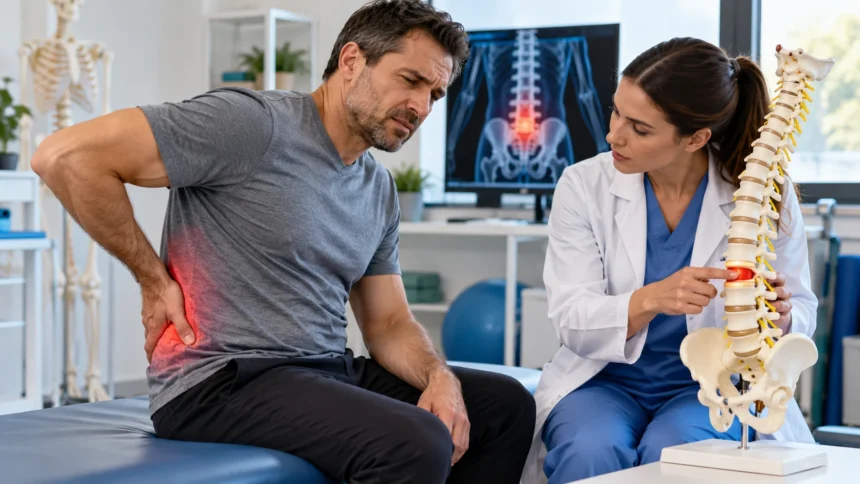
What Is a Herniated Disc?
A herniated disc occurs when the soft inner material of a spinal disc pushes through a weakened or damaged section of its outer layer. Spinal discs sit between the vertebrae and act as cushions that absorb pressure during movement. When a disc becomes herniated, the displaced material may irritate nearby nerves and cause discomfort or neurological symptoms.
The spine contains multiple discs that help maintain flexibility and support everyday activities such as walking, bending, and lifting. Each disc consists of a soft center called the nucleus pulposus and a tougher outer layer known as the annulus fibrosus. Damage to the outer layer can allow the inner material to move beyond its normal boundaries.
Herniated discs commonly develop in the lumbar spine, which supports much of the body’s weight. They can also occur in the cervical spine, affecting the neck and nearby nerves. Some people experience significant pain, while others have no noticeable symptoms despite having a herniated disc visible on medical imaging.
What Causes a Herniated Disc?
One of the most common causes of a herniated disc is age-related degeneration of the spinal discs. Over time, discs gradually lose water content and become less flexible, making their outer layers more vulnerable to damage. This natural process can increase the likelihood of disc herniation during ordinary movements or physical activities.
Repetitive physical stress may also contribute to disc problems, particularly when the spine experiences frequent bending, twisting, or heavy loading. Activities involving repeated lifting can place additional demands on the spinal structures. However, herniated discs often develop through a combination of age-related changes, individual susceptibility, and physical stress rather than one specific movement.
In some cases, a sudden injury can trigger disc herniation. Falls, accidents, or unexpected movements may place substantial force on spinal tissues, especially when a disc is already weakened. However, many people cannot identify an exact event that caused their condition because disc changes may develop gradually before symptoms appear.
Age-Related Disc Degeneration
Age-related disc degeneration is a major factor associated with herniated discs. As people grow older, spinal discs naturally undergo changes in their structure, hydration, and ability to distribute mechanical pressure. These changes may reduce flexibility and make certain discs more susceptible to developing small tears or structural weaknesses.
The outer disc layer can gradually become less resilient, particularly after years of regular movement and physical loading. Small changes may accumulate without producing noticeable symptoms. Eventually, disc material may move through an area of weakness, although degeneration does not automatically mean a person will develop a painful herniated disc.
Disc degeneration is a common part of aging and does not always require medical treatment. Many individuals have visible degenerative changes without experiencing persistent back pain or reduced mobility. Maintaining general fitness, appropriate muscular strength, and regular physical activity can support spinal function even when age-related changes are present.
Heavy Lifting and Repetitive Physical Stress
Heavy lifting can contribute to disc-related problems when spinal tissues experience loads that exceed their current capacity. The risk may increase during demanding tasks involving repeated bending, lifting, or twisting, especially when fatigue reduces movement control. However, lifting itself is not inherently harmful, and the body can adapt to appropriately progressed physical demands.
Repeated activities may create additional stress on spinal structures when adequate recovery is limited. Occupations involving frequent manual handling can expose individuals to varying levels of physical loading throughout the day. These demands may interact with age, existing disc changes, and individual health factors to influence the likelihood of developing symptoms.
Learning controlled lifting techniques and gradually building physical strength may help improve movement tolerance. Keeping objects close to the body and avoiding sudden, uncontrolled twisting can make demanding tasks easier to manage. Regular exercise and appropriate recovery are also useful, although no single lifting technique can completely prevent a herniated disc.
Sudden Injuries and Accidents
Sudden injuries can sometimes cause disc material to move beyond its normal position. Events such as falls, vehicle accidents, or forceful impacts may expose the spine to substantial mechanical stress. The likelihood of disc injury depends on the direction of force, existing spinal conditions, and the circumstances surrounding the event.
Some individuals notice back or neck pain immediately after an injury, while others develop symptoms later. Pain may arise from muscles, ligaments, joints, discs, or several structures simultaneously. Therefore, discomfort after an accident does not necessarily mean a disc has herniated, and an appropriate medical assessment may be needed.
Significant trauma should receive medical evaluation, particularly when symptoms include weakness, numbness, difficulty walking, or severe spinal pain. Healthcare professionals can assess potential injuries and determine whether imaging or additional treatment is necessary. Early identification of serious problems helps guide safe recovery and avoid inappropriate activity during the initial healing period.
Genetic Factors and Family History
Genetic factors may influence a person’s susceptibility to spinal disc degeneration and herniation. Research suggests that inherited characteristics can affect disc structure, connective tissue properties, and how spinal tissues respond to aging. These factors help explain why some individuals develop disc problems despite having relatively similar activity levels to others.
A family history of disc-related conditions may indicate an increased likelihood of experiencing similar changes. However, genetics do not determine that someone will necessarily develop a symptomatic herniated disc. Environmental factors, general health, physical activity, and natural age-related changes can also influence how spinal structures function over time.
People with a family history of back problems can still benefit from maintaining an active lifestyle. Strength training, regular walking, and appropriate movement habits support overall physical conditioning. Rather than avoiding normal activity because of genetic concerns, individuals can focus on improving physical capacity and seeking medical advice when persistent symptoms develop.
Lifestyle Factors That May Increase Herniated Disc Risk
Smoking is associated with an increased risk of spinal disc degeneration and certain back-related conditions. Tobacco exposure may affect blood circulation and the biological processes involved in maintaining healthy connective tissues. Quitting smoking supports overall health and may help reduce some long-term risks associated with spinal deterioration.
Excess body weight may increase physical demands on the lower back and is associated with some spinal conditions. However, body weight alone does not determine whether a person develops a herniated disc. Disc health depends on multiple interacting factors, including age, inherited characteristics, physical loading, and other aspects of general health.
Limited physical activity may contribute to reduced muscular strength and endurance, making everyday tasks feel more demanding. Regular movement helps maintain the muscles that support the spine and promotes general physical well-being. Building consistent activity habits can improve function and movement confidence without requiring intense workouts or unnecessarily restrictive routines.
Common Symptoms of a Herniated Disc
Herniated disc symptoms vary according to the location of the affected disc and whether nearby nerves become irritated. Some individuals experience localized back or neck pain, while others notice discomfort spreading into an arm or leg. Symptoms can range from mild and occasional to persistent enough to interfere with everyday activities.
Nerve-related symptoms may include tingling, numbness, burning sensations, or weakness in specific muscle groups. These changes often follow the distribution of a nerve affected by the herniated disc. For example, irritation involving nerves in the lower spine may cause discomfort traveling through the buttock and down part of the leg.
Not every herniated disc produces noticeable symptoms, and pain intensity does not always match the size of the disc abnormality. Some people experience significant discomfort from relatively small changes, while others have larger herniations without major symptoms. Clinical evaluation helps determine whether a disc is responsible for the symptoms being experienced.
Lower Back Herniated Disc Symptoms
A lumbar herniated disc affects the lower section of the spine and may cause discomfort in the lower back, buttocks, or legs. Because nerves supplying the lower body pass through this region, irritation can produce symptoms beyond the location of the disc itself. The exact pattern depends on which nerve root is affected.
Sciatica is a common description for pain that travels along the course of the sciatic nerve or related nerve roots. People may experience shooting pain, tingling, or numbness extending from the lower back or buttock into the leg. Symptoms sometimes become more noticeable during sitting, coughing, sneezing, or certain movements.
Some individuals also experience reduced muscle strength or difficulty performing specific movements involving the foot or leg. These neurological symptoms deserve professional assessment, particularly when weakness is new or worsening. Sudden bladder or bowel control problems or numbness around the groin require emergency medical attention because they can indicate serious nerve compression.
Neck Herniated Disc Symptoms
A cervical herniated disc occurs in the neck region and may irritate nerves supplying the shoulders, arms, or hands. Symptoms can include neck discomfort, shoulder pain, and sensations traveling along the affected arm. The location of pain or numbness often depends on which cervical nerve root becomes irritated.
Some people experience tingling in the fingers or difficulty with movements requiring arm or hand strength. Neck positions may influence symptoms, particularly when turning or tilting the head. However, similar sensations can arise from other conditions, including peripheral nerve problems, making proper assessment important before assuming the cause is a herniated disc.
Severe or progressive weakness requires prompt medical evaluation. Problems with balance, walking, or hand coordination may suggest involvement of the spinal cord rather than only an individual nerve root. These symptoms should not be managed solely through home exercises because they may indicate a more serious cervical spine condition.
How Is a Herniated Disc Diagnosed?
Diagnosing a herniated disc usually begins with a review of symptoms, medical history, and physical activity. A healthcare professional may ask when pain started, where it travels, and which activities affect discomfort. This information helps determine whether symptoms suggest nerve irritation, muscular problems, or another spinal condition requiring further evaluation.
A physical examination may include checking muscle strength, reflexes, sensation, and movement tolerance. The clinician may also perform specific tests to assess whether certain movements reproduce nerve-related symptoms. These findings help identify potentially affected nerve roots and determine whether further investigation is necessary to establish an accurate diagnosis.
Imaging tests such as MRI scans may be recommended when symptoms persist, neurological deficits develop, or serious conditions are suspected. MRI provides detailed images of spinal discs, nerves, and surrounding soft tissues. However, imaging is not always needed initially because many herniated discs improve with conservative treatment and appropriate activity modifications.
Treatment Options for a Herniated Disc
Most people with symptomatic herniated discs begin with conservative treatment rather than surgery. Treatment may involve maintaining comfortable activity, adjusting movements that aggravate symptoms, and using appropriate pain-management strategies. Healthcare professionals may recommend medications depending on individual health needs, medical history, and the severity of discomfort.
Physical therapy is another common treatment option for improving movement and restoring function. A therapist may recommend gentle walking, selected strengthening exercises, and gradual mobility activities based on symptom response. Exercise programs should be individualized because movements that help one person may increase nerve-related symptoms in another individual.
Some patients with persistent nerve pain may benefit from additional medical interventions, including selected spinal injections. Surgery may be considered when symptoms remain disabling despite appropriate treatment or when significant neurological problems develop. The decision depends on clinical findings, symptom severity, personal circumstances, and a discussion of potential benefits and risks.
Recovery Time and Long-Term Prevention
Recovery from a herniated disc varies according to the location of the injury, severity of nerve irritation, and individual health factors. Many people experience meaningful improvement within several weeks, although symptoms can sometimes persist for months. A gradual return to normal activities is often possible without requiring surgical treatment or prolonged bed rest.
Maintaining regular physical activity can support recovery by improving muscular endurance and movement tolerance. Walking, appropriate core strengthening, and progressive resistance exercises may help restore confidence in everyday movement. Activities should be adjusted when symptoms worsen, particularly if pain travels farther into an arm or leg or new weakness develops.
Long-term management focuses on maintaining physical fitness and reducing unnecessary barriers to movement. Regular exercise, sensible lifting habits, and adequate recovery between demanding activities can help support spinal health. Although no strategy guarantees that another herniated disc will never occur, appropriate conditioning can improve physical resilience and everyday function.
Conclusion
Understanding what causes a herniated disc can help individuals recognize potential risk factors and make informed decisions about spinal health. Age-related disc degeneration, inherited characteristics, repetitive physical loading, and sudden injuries may contribute to disc herniation. However, the condition often develops through several interacting factors rather than one identifiable cause.
Symptoms depend on the affected spinal region and whether nearby nerves become irritated. Common problems include back or neck pain, radiating discomfort, tingling, numbness, and muscle weakness. Many cases improve with conservative management, including appropriate physical activity, medical guidance, and personalized rehabilitation exercises that support comfortable movement.
Prevention and recovery involve maintaining general fitness, developing appropriate strength, and responding to symptoms without unnecessary fear of movement. Persistent or worsening discomfort should receive professional medical assessment. With appropriate treatment and gradual activity progression, many people can return to normal routines while improving their confidence and long-term spinal function.
Frequently Asked Questions
1. What Is the Main Cause of a Herniated Disc?
Age-related disc degeneration is one of the most common contributing factors. Spinal discs gradually lose flexibility over time, making them more susceptible to damage during everyday movements, repetitive physical loading, or sudden injuries.
2. Can a Herniated Disc Heal on Its Own?
Yes, many herniated discs improve without surgery. Symptoms may decrease as inflammation settles and the body gradually absorbs some displaced disc material. Recovery time varies according to the condition and individual circumstances.
3. What Are the First Signs of a Herniated Disc?
Early symptoms may include back or neck pain, stiffness, and discomfort traveling into an arm or leg. Some individuals also experience tingling, numbness, or muscle weakness when nearby nerves become irritated.
4. Is Walking Good for a Herniated Disc?
Walking is often beneficial because it maintains gentle movement and supports general physical conditioning. Start with comfortable distances and increase gradually, avoiding activity that causes worsening radiating pain or neurological symptoms.
5. When Does a Herniated Disc Require Surgery?
Surgery may be considered when persistent symptoms remain disabling despite appropriate treatment or when significant neurological problems develop. Rapidly worsening weakness or new bladder or bowel control problems require urgent medical evaluation.