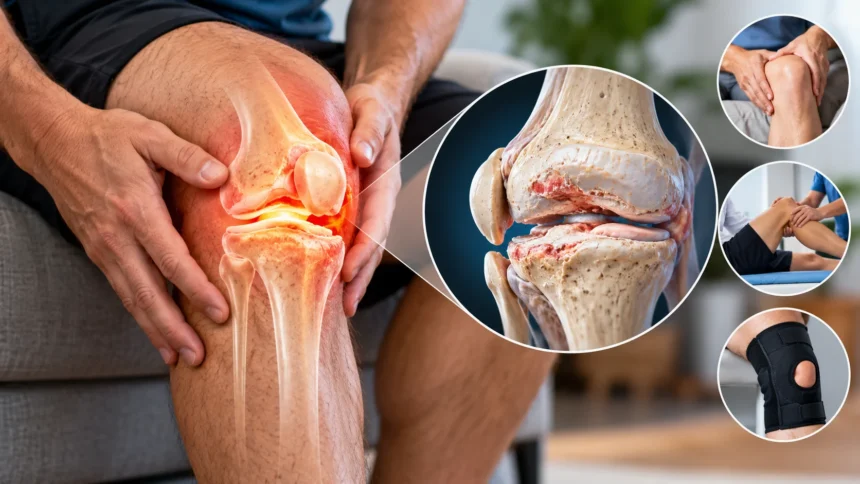
Knee crepitus is a common condition that causes popping, cracking, grinding, or clicking sounds when you move your knee. You might notice these noises while walking, climbing stairs, squatting, or standing after sitting for a long time. Although the sounds can feel concerning, they do not always indicate a serious joint problem.
Understanding the causes of knee crepitus can help you recognize normal joint sounds and identify symptoms that need medical attention. Several factors, including natural joint movement, cartilage changes, injuries, and arthritis, can contribute to these sensations. Fortunately, appropriate exercises, physical therapy, and lifestyle adjustments can help many people manage associated discomfort.
What Is Knee Crepitus?
Knee crepitus refers to cracking, popping, clicking, or grinding sensations that occur during knee movement. These sensations can develop when structures inside or around the joint move against one another. Some people hear noticeable sounds, while others experience a grinding feeling beneath the kneecap. Crepitus can occur in one knee or affect both knees simultaneously.
The knee is a complex joint involving bones, cartilage, ligaments, tendons, and synovial fluid. These structures work together to support movement and distribute pressure during everyday activities. When joint surfaces or surrounding tissues move, they may produce sounds that are noticeable during bending or straightening. However, sound alone does not necessarily indicate tissue damage.
Many individuals experience occasional knee popping without pain, swelling, or difficulty moving. This type of painless crepitus is often harmless and may not require treatment. When the noises accompany persistent pain, stiffness, swelling, or joint instability, an underlying condition may be responsible. Understanding these differences helps determine when further evaluation is appropriate.
What Causes Knee Crepitus?
Knee crepitus can develop for several reasons, ranging from normal joint movement to underlying orthopedic conditions. Small changes in pressure within synovial fluid may create popping sounds as the knee bends or straightens. These sounds can occur in otherwise healthy joints and typically do not cause discomfort. Occasional painless popping is therefore not automatically a sign of arthritis.
Cartilage changes are another possible cause of grinding sensations inside the knee. Articular cartilage normally provides a smooth, protective surface that allows bones to move with minimal friction. When this cartilage becomes damaged or gradually wears down, joint movement may feel rougher. These changes sometimes produce crepitus alongside stiffness, tenderness, or reduced mobility.
Tendons and ligaments may also produce clicking sensations as they move over nearby bones or other structures. Previous injuries, altered kneecap tracking, and inflammation can contribute to unusual joint sensations. In some cases, crepitus develops after prolonged inactivity or changes in physical activity. Identifying the underlying cause becomes particularly important when symptoms interfere with daily movement.
Common Symptoms of Knee Crepitus
The most recognizable symptom of knee crepitus is a cracking, clicking, popping, or grinding sound during movement. These sensations often become noticeable when bending the knee, climbing stairs, kneeling, or performing squats. Some people experience sounds without discomfort, while others notice pain around or behind the kneecap. The severity of associated symptoms varies depending on the cause.
Knee stiffness may accompany crepitus, especially after sitting for extended periods or waking up in the morning. Individuals with underlying joint conditions sometimes experience swelling, tenderness, or difficulty fully bending and straightening the knee. Walking longer distances or standing repeatedly may worsen discomfort. These symptoms can affect mobility and make everyday activities more challenging.
Additional warning signs include persistent joint swelling, painful catching, locking, or sensations that the knee might give way. Sudden symptoms following an injury deserve particular attention, especially when walking becomes difficult. Redness, warmth, or fever may indicate a condition requiring prompt medical assessment. Recognizing these symptoms can help distinguish harmless joint noises from potentially significant problems.
Knee Crepitus and Osteoarthritis
Knee osteoarthritis is a common joint condition associated with cartilage deterioration and changes in surrounding bone. As the protective cartilage becomes damaged, the joint may gradually lose some of its smooth movement. This can contribute to grinding sensations, stiffness, and discomfort during physical activity. However, crepitus alone cannot confirm that someone has osteoarthritis.
People with knee osteoarthritis may experience pain while walking, climbing stairs, or standing after resting. Morning stiffness often improves with movement, although symptoms can return after prolonged activity. Some individuals develop swelling or reduced flexibility as the condition progresses. The severity of symptoms does not always match the amount of joint damage visible on imaging.
Managing osteoarthritis-related crepitus generally focuses on maintaining mobility, improving muscle strength, and reducing painful joint stress. Physical therapy and suitable low-impact exercise can help support everyday function. Healthcare professionals may also recommend appropriate pain management or additional treatment depending on individual symptoms. Early assessment can help create a practical plan for preserving joint health.
Can Patellofemoral Pain Cause Knee Crepitus?
Patellofemoral pain syndrome involves discomfort around or behind the kneecap, also called the patella. The condition is commonly associated with activities that place additional demands on the knee, including running, squatting, and climbing stairs. Some individuals notice clicking or grinding sensations during these movements. However, crepitus is not required for a diagnosis of patellofemoral pain.
The kneecap normally glides along a groove at the end of the thighbone as the knee bends. Muscle weakness, movement patterns, training changes, and increased joint loading can contribute to patellofemoral discomfort. These factors may affect how forces are distributed around the kneecap. Pain can develop even when imaging reveals no significant structural damage.
Treatment often involves strengthening muscles around the hips and knees while adjusting activities that aggravate symptoms. A physical therapist may recommend gradual exercise progression and movement modifications based on individual needs. Appropriate footwear and temporary changes in training intensity may also be helpful. A personalized approach is usually more effective than simply avoiding all knee movement.
Knee Crepitus After an Injury
Knee injuries can sometimes lead to new clicking, popping, or grinding sensations during movement. Damage involving cartilage, ligaments, or the meniscus may change how the joint functions under pressure. Swelling and altered movement patterns can also contribute to unusual sensations after an injury. Persistent symptoms should be evaluated rather than automatically attributed to harmless joint noise.
A meniscus injury may cause knee pain, swelling, catching, or difficulty fully straightening the joint. Some people also experience a sensation that something is temporarily blocking normal movement. Ligament injuries can produce instability, especially during turning or changing direction. However, these symptoms overlap with other conditions and cannot establish a diagnosis without appropriate assessment.
If crepitus begins after a fall, sports injury, or sudden twisting movement, medical evaluation may be necessary. A clinician can assess joint stability, movement, swelling, and the circumstances surrounding the injury. Some injuries benefit from rehabilitation, while others require additional imaging or specialist care. Avoid forcing painful movement or returning immediately to demanding activities before the injury is assessed.
Why Does My Knee Crack When I Squat?
Squatting requires coordinated movement between the thighbone, shinbone, kneecap, and surrounding muscles. During this movement, pressure changes and tissue movement can create noticeable cracking or popping sounds. Many people experience knee crepitus while squatting without having any underlying joint disease. If the movement remains comfortable and controlled, the noise itself is usually not concerning.
Grinding sensations during squats may become more noticeable when the knee is placed under greater load. Individuals with patellofemoral pain or cartilage-related conditions sometimes experience discomfort during deeper knee bending. Limited mobility or difficulty controlling movement may also contribute to symptoms. The important distinction is whether cracking occurs alone or alongside pain and functional limitations.
If squatting causes discomfort, temporarily reducing the depth or resistance may make the exercise more manageable. Gradually strengthening the quadriceps, glutes, and supporting muscles can improve movement confidence and tolerance. A physical therapist can help identify suitable exercise modifications. Persistent pain, swelling, or instability should be assessed before increasing training intensity.
How Is Knee Crepitus Diagnosed?
Diagnosing the cause of knee crepitus usually begins with a discussion of symptoms and medical history. A healthcare professional may ask when the sounds started, whether pain is present, and which movements trigger them. Previous injuries, activity levels, and changes in mobility can provide useful information. These details help determine whether further investigation is needed.
During a physical examination, a clinician may assess knee alignment, joint movement, tenderness, swelling, and muscle strength. They may also observe walking, bending, or other movements that reproduce symptoms. Specific examination techniques can help identify possible ligament, meniscus, or patellofemoral problems. Physical findings are considered alongside the patient’s overall symptoms rather than in isolation.
Imaging tests are not always necessary for painless knee crepitus. When persistent pain, significant swelling, trauma, or suspected structural damage is present, X-rays or MRI scans may be appropriate. X-rays can reveal certain bone and joint changes, while MRI provides more detailed images of soft tissues. The choice depends on the suspected condition and clinical assessment.
Knee Crepitus Treatment Options
Treatment for knee crepitus depends on whether the noises are associated with pain or an underlying joint disorder. Painless cracking without other concerning symptoms often requires no specific intervention. When discomfort is present, treatment generally aims to improve movement, manage symptoms, and address contributing factors. The best approach varies according to the individual diagnosis.
Physical therapy is a commonly recommended option for painful knee crepitus associated with certain musculoskeletal conditions. A structured rehabilitation program can improve strength, flexibility, balance, and tolerance for daily activities. Exercises targeting the quadriceps and hip muscles may help distribute forces more effectively across the knee. Progression should follow symptoms and individual physical capabilities.
For painful flare-ups, temporary activity modification and cold packs may offer relief. Healthcare professionals may recommend suitable pain-relieving medicines or anti-inflammatory treatments when appropriate, considering medical history and potential side effects. Injections or surgery are reserved for selected underlying conditions rather than knee sounds alone. Persistent symptoms should guide treatment decisions through proper clinical evaluation.
Exercises That May Help Knee Crepitus
Gentle strengthening exercises may benefit people experiencing knee crepitus with mild discomfort, particularly when muscle weakness contributes to symptoms. Quadriceps exercises help support knee function during walking, standing, and climbing stairs. Seated knee extensions or controlled sit-to-stand movements can be useful starting points. Exercises should remain comfortable and be adjusted according to individual limitations.
Hip-strengthening exercises can also support knee movement by improving control of the lower limbs. Side-lying leg raises, gentle bridges, and suitable resistance exercises may improve hip muscle strength. The goal is not to eliminate every clicking sound but to improve function and movement tolerance. Gradual progression is generally preferable to performing demanding exercises too quickly.
Low-impact activities such as comfortable walking, cycling, and swimming can help maintain mobility and general fitness. Gentle stretching may be useful when muscle tightness limits normal movement, although stretching alone cannot repair damaged cartilage. Stop exercises that produce sharp pain, increasing swelling, or instability. A physical therapist can recommend appropriate activities based on the cause of symptoms.
Lifestyle Changes for Better Knee Health
Everyday habits can influence knee comfort, flexibility, and long-term joint function. Regular physical activity helps maintain muscle strength and supports healthy movement around the knee. Alternating prolonged sitting with brief periods of comfortable movement may reduce stiffness. Choosing activities that match your current abilities can help prevent unnecessary flare-ups while maintaining an active lifestyle.
Supportive footwear may improve comfort during walking and other weight-bearing activities, particularly when existing shoes are worn or unsuitable. Gradually increasing exercise duration and intensity gives muscles and joints time to adapt. Adequate sleep, balanced nutrition, and recovery between demanding activities also support general musculoskeletal health. These habits contribute to overall well-being rather than directly eliminating joint sounds.
People with ongoing knee discomfort may benefit from reviewing how daily routines affect their symptoms. Activities such as repeated kneeling, heavy lifting, or frequent stair climbing may require temporary modification during painful periods. Rather than avoiding movement completely, the goal is to find manageable ways to remain active. Small, consistent adjustments can help protect function over time.
When Should You See a Doctor for Knee Crepitus?
Occasional painless knee popping generally does not require urgent medical attention. However, persistent pain, recurrent swelling, stiffness, or reduced movement should be assessed by a healthcare professional. Symptoms that interfere with walking, exercise, sleep, or normal daily activities also deserve evaluation. Identifying the cause can help prevent unnecessary restrictions and guide appropriate treatment.
Seek prompt medical assessment if knee symptoms develop after a significant injury or the joint becomes unstable. Inability to bear weight, obvious deformity, or a knee that cannot move normally may require urgent care. A hot, swollen joint accompanied by fever is another warning sign that needs urgent evaluation. These situations should not be managed through home exercises alone.
Early evaluation can be especially helpful when knee discomfort continues despite reasonable activity adjustments. A clinician can recommend physical therapy, imaging, or specialist assessment when clinically appropriate. Treatment decisions should focus on symptoms, physical function, and the underlying condition rather than noise alone. Getting an accurate diagnosis can make managing knee crepitus less stressful.
Conclusion
Knee crepitus is a common experience that may cause cracking, popping, clicking, or grinding sensations during movement. Although these sounds can be surprising, they are not always signs of joint damage or disease. Normal pressure changes and tissue movement can produce harmless noises. The presence of pain, swelling, stiffness, or instability provides more useful information about potential problems.
Several conditions, including osteoarthritis, patellofemoral pain, and previous knee injuries, can contribute to symptomatic crepitus. Appropriate strengthening exercises, physical therapy, activity modification, and symptom management may improve comfort and mobility. Treatment should address the underlying cause rather than attempting to eliminate every sound. Maintaining comfortable movement is often an important part of recovery.
If your knee makes noises without discomfort, specific treatment may not be necessary. However, persistent symptoms or changes in joint function deserve professional assessment. Understanding when knee crepitus is harmless and when it signals a possible problem can support informed healthcare decisions. With suitable guidance, many people can maintain healthy, active movement.
Frequently Asked Questions
Is Knee Crepitus Dangerous?
Knee crepitus is usually not dangerous when it occurs without pain, swelling, or restricted movement. However, persistent discomfort, instability, or other symptoms may indicate an underlying condition that requires medical assessment.
Can Knee Crepitus Go Away on Its Own?
Occasional knee cracking may become less noticeable over time, particularly when related to temporary movement changes. Crepitus associated with cartilage damage or arthritis may persist even when discomfort improves with treatment.
Does Knee Crepitus Mean I Have Arthritis?
No, knee crepitus does not automatically mean you have arthritis. Healthy knees can make cracking or popping sounds, and arthritis is diagnosed by considering symptoms, examination findings, and sometimes imaging.
What Exercises Are Good for Knee Crepitus?
Gentle quadriceps strengthening, controlled sit-to-stand exercises, hip strengthening, and comfortable low-impact activities may help. The most suitable exercises depend on whether crepitus is painful and what is causing the symptoms.
Should I Stop Exercising if My Knee Cracks?
Painless knee cracking usually does not require stopping exercise. However, reduce or modify movements that cause pain, swelling, or instability, and seek professional advice if symptoms persist or worsen.