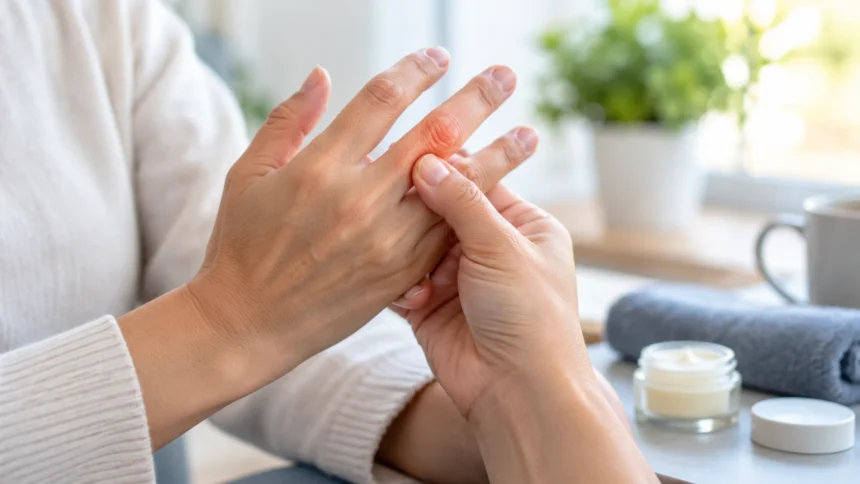
Finger joint pain can make simple daily activities surprisingly difficult. Typing, opening a jar, gripping a steering wheel, or even buttoning a shirt may become uncomfortable when the small joints of your fingers feel stiff, swollen, or tender. The discomfort may appear suddenly after an injury or develop gradually because of arthritis, repetitive use, or another underlying condition.
Pain in finger joints can affect one finger or several fingers at the same time. Some people notice aching in the knuckles, while others experience burning, swelling, stiffness, clicking, or reduced movement near the fingertips. Understanding what may be causing your symptoms can help you choose sensible relief strategies and recognize when professional medical evaluation is needed.
What Does Finger Joint Pain Feel Like?
Finger joint pain can feel different depending on the cause and which joint is affected. You may experience a dull ache, sharp pain, throbbing sensation, burning discomfort, or tenderness when pressing around the joint. Some conditions cause constant discomfort, while others mainly hurt when you bend, straighten, grip, pinch, or place pressure on the affected finger.
Stiffness is another common symptom, particularly first thing in the morning or after your hands have remained still for a long period. The joints may initially feel difficult to move but become more flexible after gentle activity. Swelling can make rings feel tight and may make the affected finger appear larger or slightly different from the same finger on your opposite hand.
Other symptoms can include warmth, redness, clicking, locking, weakness, or reduced grip strength. Certain finger problems may also cause visible bumps around the joints or make a finger look slightly crooked over time. Paying attention to when pain occurs and what movements make it worse can provide useful clues about the underlying source of your discomfort.
Osteoarthritis and Finger Joint Pain
Osteoarthritis is a common cause of persistent finger joint pain, especially as people get older. It develops when the protective cartilage covering the ends of bones gradually wears down, allowing the joint to become irritated and less smooth during movement. The joints near the fingertips and middle of the fingers are commonly affected, as is the joint at the base of the thumb.
Symptoms of finger osteoarthritis may include aching, stiffness, swelling, reduced flexibility, and tenderness. Some people develop firm bony enlargements around the finger joints that become more noticeable over time. Pain may worsen after repeated hand use, such as gardening, writing, using tools, or gripping objects, although symptoms can vary significantly from one person to another.
Managing osteoarthritis often involves balancing activity with appropriate rest rather than completely avoiding hand movement. Gentle exercises, heat, supportive splints, and adjustments to daily tasks may make uncomfortable activities easier. If pain is persistent or limiting your ability to use your hands, a healthcare professional can assess your joints and recommend treatment based on symptom severity.
Rheumatoid Arthritis and Other Inflammatory Conditions
Rheumatoid arthritis is an inflammatory autoimmune condition that can cause pain, swelling, warmth, and stiffness in finger joints. Unlike typical wear-and-tear arthritis, rheumatoid arthritis develops when the immune system mistakenly attacks tissues lining the joints. Symptoms often affect several joints and may appear on both hands in a relatively symmetrical pattern.
Morning stiffness associated with inflammatory arthritis can last longer than the brief stiffness some people experience with osteoarthritis. Fingers may feel swollen, tender, and difficult to bend, particularly during a flare. Some people also experience fatigue, reduced appetite, or discomfort in other joints, such as the wrists, feet, knees, or ankles.
Other inflammatory conditions, including psoriatic arthritis and gout, can also affect the fingers. Because early treatment may help protect joints from long-term damage, ongoing swelling and morning stiffness should not simply be ignored. A clinician may use your symptom pattern, physical examination, blood tests, and imaging to determine whether an inflammatory joint condition is present.
Finger Joint Pain From Overuse and Repetitive Activities
Repeated hand movements can irritate the tendons, muscles, and joints surrounding your fingers. Long periods of typing, gaming, texting, crafting, playing musical instruments, or using hand tools can place repeated stress on the same structures. Pain caused by overuse often begins gradually and may become more noticeable toward the end of a busy workday.
Your symptoms may improve when you rest your hands but return once you resume the activity. You might also notice stiffness, mild swelling, tenderness, or weakness when gripping objects. Poor wrist positioning, excessive gripping force, and working without regular breaks can increase strain on the fingers and surrounding tissues over time.
Reducing repetitive strain does not necessarily mean stopping every activity that uses your hands. Adjusting your workstation, changing grip techniques, taking short breaks, and alternating demanding tasks can decrease repeated stress. Gentle stretching may also help, although exercises that increase pain should be stopped until the source of the discomfort has been properly evaluated.
Injuries That Can Cause Painful Finger Joints
Finger injuries can happen during sports, falls, household tasks, or everyday accidents. A finger may be jammed, twisted, bent backward, or struck directly, causing damage to ligaments, tendons, bones, or the joint itself. Pain often starts immediately after the injury and may be accompanied by swelling, bruising, reduced movement, or tenderness.
Minor sprains can sometimes improve with rest and simple home care, but fractures and significant ligament injuries may look surprisingly similar at first. A finger that appears crooked, becomes very swollen, or cannot be moved normally should be assessed promptly. Continuing to use a severely injured finger may interfere with proper healing and contribute to long-term stiffness or instability.
After an injury, avoid repeatedly testing the painful joint to see whether it still hurts. Protecting it from unnecessary strain can help prevent additional irritation while you determine how serious the injury may be. If pain is severe, numbness develops, or the finger changes color, seek medical attention rather than relying only on home treatment.
Trigger Finger and Tendon Problems
Not all finger joint pain actually begins inside the joint. Trigger finger occurs when a tendon responsible for bending the finger becomes irritated and has difficulty moving smoothly through its surrounding sheath. This can create soreness near the base of the finger along with clicking, catching, or a sensation that the finger temporarily locks in position.
Symptoms are often worse after periods of inactivity, particularly in the morning. You may need to straighten the finger manually when it becomes stuck, or you may feel a small tender bump near the palm. Repetitive gripping and certain health conditions can increase the likelihood of developing tendon-related problems, although trigger finger can occur without an obvious cause.
Resting aggravating activities may help mild symptoms, but persistent locking or pain deserves professional assessment. Depending on severity, treatment may include activity modification, splinting, exercises, medication, injections, or other interventions. Early attention can be useful because repeated catching may become increasingly uncomfortable and interfere with normal hand function.
Hormonal and Postpartum Changes That May Affect Joints
Hormonal changes can sometimes influence how joints and surrounding tissues feel. During pregnancy and after childbirth, shifts in hormones, fluid levels, sleep patterns, and physical workload can contribute to hand stiffness or discomfort. Caring for a baby also involves frequent lifting, feeding positions, and repetitive gripping that may place additional strain on the fingers, thumbs, and wrists.
Postpartum recovery affects the whole body rather than only the area involved in delivery. Someone recovering from surgery may simultaneously experience musculoskeletal aches while adjusting to newborn care and hormonal changes. If you are navigating recovery after childbirth, understanding broader topics such as sex after C-section can also help provide context about the physical and hormonal changes that may occur during this period.
Finger pain that develops after pregnancy should still be evaluated if it becomes severe, persistent, swollen, or limits everyday activities. Not every postpartum ache is caused by hormones, and conditions such as tendon irritation or inflammatory arthritis can sometimes emerge around this period. A healthcare professional can help determine whether symptoms are temporary or require targeted treatment.
Home Relief Tips for Finger Joint Pain
Resting painful joints from activities that clearly worsen symptoms can be helpful, particularly when discomfort is related to overuse. Short periods of rest are generally more practical than completely avoiding hand movement for days. Keeping the fingers gently mobile may help prevent excessive stiffness while allowing irritated tissues some time to settle.
Cold packs can help reduce swelling after a minor injury or during periods of inflammation. Heat may feel better when stiffness is the primary complaint because warmth can relax tissues and make gentle movement easier. Protect your skin by placing a cloth between your hand and the temperature source, and avoid prolonged exposure to extreme heat or cold.
Over-the-counter pain relievers may help some people, but they are not appropriate for everyone. Medical conditions, allergies, pregnancy, breastfeeding, and other medications can influence what is safe to use. If you need pain medicine frequently or symptoms keep returning, seek medical advice rather than relying on repeated self-treatment without understanding the underlying cause.
Gentle Exercises for Stiff Finger Joints
Gentle movement can help maintain flexibility when stiffness is caused by certain joint conditions. One simple option is slowly making a loose fist and then opening your hand until your fingers are comfortably straight. Perform movements within a pain-free range rather than forcing the fingers into positions that create sharp or increasing discomfort.
You can also place your hand flat on a comfortable surface and gently lift one finger at a time before lowering it again. Another option is carefully touching the tip of your thumb to each fingertip. These controlled movements may support mobility and coordination, particularly when performed consistently without excessive resistance or strain.
Exercises are not appropriate for every type of finger pain, especially immediately after a significant injury. If a movement increases swelling, sharp pain, locking, or instability, stop doing it until the problem has been assessed. A physical or occupational therapist can recommend specific exercises when arthritis, tendon conditions, surgery, or significant stiffness requires a more individualized program.
Daily Habits That Can Protect Your Finger Joints
Small changes in how you use your hands can reduce unnecessary pressure on painful finger joints. Instead of carrying heavy bags with your fingers, use larger joints or distribute the weight across both hands when possible. Choose kitchen tools, pens, and household items with thicker handles so you do not need to maintain an excessively tight grip.
Take frequent breaks during activities that involve prolonged typing, scrolling, crafting, or repetitive hand movements. Keep your wrists in a neutral position and avoid holding your phone tightly for long periods. Voice typing, ergonomic keyboards, supportive equipment, and alternative grip techniques can make repetitive tasks easier when finger joints are already sensitive.
Pay attention to overall health as well. Regular movement, adequate sleep, balanced nutrition, and managing chronic conditions can support general joint health even though they cannot prevent every cause of finger pain. Maintaining sustainable habits is usually more useful than suddenly making extreme changes only when symptoms become uncomfortable.
When Finger Joint Pain Needs Medical Attention
Finger joint pain should be evaluated when it persists for several weeks, repeatedly returns, or begins interfering with normal daily activities. Ongoing swelling, significant morning stiffness, reduced grip strength, or pain affecting several joints may indicate something beyond temporary overuse. Early assessment can be particularly important when inflammatory arthritis or another progressive condition is suspected.
Seek more urgent medical care after an injury if the finger appears deformed, becomes numb, turns unusually pale or blue, or cannot be moved normally. Severe swelling, intense pain, an open wound, or concern about a fracture should also be evaluated promptly. These symptoms may require imaging or treatment that cannot be provided through simple home care.
Redness, warmth, rapid swelling, fever, or severe tenderness around a finger joint may occasionally indicate an infection or acute inflammatory problem. These symptoms should not be ignored, especially when they develop quickly. A healthcare professional can identify the cause and recommend appropriate treatment before complications or long-term joint problems develop.
Can Finger Joint Pain Be Prevented?
Not every form of finger joint pain can be prevented, particularly when symptoms result from genetics, autoimmune disease, aging, or an unexpected injury. However, reducing unnecessary repetitive stress may lower your chances of developing certain overuse problems. Using good technique while working, exercising, or handling tools can reduce excessive strain on small joints.
Strength and flexibility also matter for healthy hand function. Regular gentle hand movement may help keep joints mobile, particularly if your work involves long periods of typing or gripping. Avoid suddenly increasing demanding hand activities without allowing your muscles and tendons to adapt, especially when starting a new job, sport, hobby, or exercise routine.
Protect your hands during activities where injury is more likely by using suitable equipment and following safe techniques. Most importantly, respond to recurring symptoms rather than repeatedly working through significant pain. Identifying the reason for finger joint discomfort early can make it easier to modify aggravating activities and seek appropriate treatment when necessary.
Conclusion
Finger joint pain can result from many different problems, including osteoarthritis, inflammatory arthritis, repetitive strain, tendon irritation, injuries, and hormonal changes. The way your symptoms appear can provide useful clues, such as whether pain occurs after activity, whether your joints are swollen, or how long stiffness lasts after waking.
Simple measures such as reducing aggravating activities, using heat or cold appropriately, making ergonomic changes, and performing gentle movements may help mild symptoms. However, relief strategies work best when they match the actual cause of your pain. Continuing to push through severe or persistent discomfort can sometimes allow an underlying condition to worsen.
Seek medical advice if finger pain continues, repeatedly returns, causes significant swelling, or limits normal hand function. Sudden deformity, numbness, color changes, severe injury, or signs of infection require more urgent attention. Understanding the cause of your symptoms is the most reliable way to protect your joints and find appropriate long-term relief.
FAQs
Why do my finger joints hurt for no reason?
Finger joints can hurt because of unnoticed overuse, early arthritis, tendon irritation, minor injuries, or inflammation. Persistent pain without an obvious cause should be evaluated, especially if swelling or stiffness is present.
What helps finger joint pain naturally?
Gentle movement, activity modification, heat for stiffness, and cold for swelling may provide relief. Avoid exercises or home treatments that worsen the pain, particularly after an injury.
Can finger joint pain be caused by arthritis?
Yes. Osteoarthritis, rheumatoid arthritis, psoriatic arthritis, and other inflammatory conditions can affect finger joints. The pattern of swelling, stiffness, and affected joints can help distinguish different forms of arthritis.
Why are my finger joints stiff in the morning?
Morning stiffness can occur with osteoarthritis or inflammatory arthritis. Brief stiffness may improve with gentle movement, while prolonged morning stiffness accompanied by swelling deserves medical evaluation.
When should I worry about finger joint pain?
Seek medical advice for persistent pain, significant swelling, prolonged stiffness, weakness, or reduced movement. Get prompt care for severe injury, deformity, numbness, color changes, fever, or rapidly worsening redness.