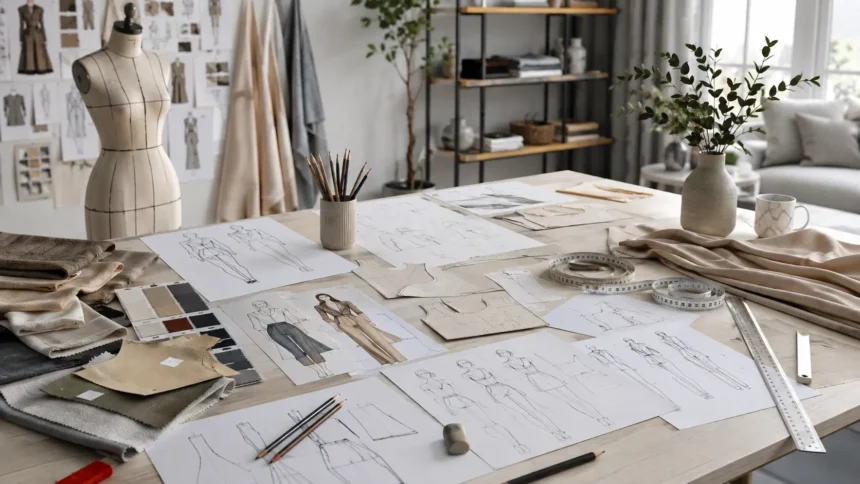
Fashion Design Templates: A Complete Guide for Designers
Fashion design begins with an idea, but turning that idea into something other people can understand often requires structure. Fashion design templates give designers that structure by providing ready-made outlines, garment shapes, body figures, technical flats, or presentation layouts that can be customized. They save time while helping designers communicate their concepts clearly throughout the design and production process.
For students and beginners, templates make fashion drawing less intimidating because they remove the pressure of starting with a completely blank page. Instead of spending hours drawing body proportions or recreating basic garment shapes, designers can focus on silhouettes, fabrics, details, colors, and styling. This makes fashion templates especially useful for practicing new ideas and developing confidence.
Professional designers also use templates, although often in more technical ways. A fashion designer may work with croquis templates when developing a collection, flat sketches when communicating garment construction, and tech pack templates when sending specifications to manufacturers. Each format serves a different purpose, so choosing the correct template is just as important as knowing how to draw.
The growing use of digital design tools has made fashion templates even more flexible. Designers can now work with printable sheets, editable vector files, drawing apps, presentation layouts, and digital garment templates. Whether you design by hand or on a screen, understanding how fashion design templates work can make your creative process faster, clearer, and more professional.
What Are Fashion Design Templates?
Fashion design templates are pre-drawn outlines or structured layouts that designers use as a starting point when creating clothing concepts. They may show a human figure, an individual garment, technical construction views, measurement sections, or complete collection boards. Instead of rebuilding these elements every time, designers customize the existing framework to match their own creative ideas.
One of the most common examples is the fashion croquis template, which is a simplified human figure used for drawing clothing. Designers sketch garments directly over the body outline to explore shape, proportion, length, volume, and styling. Because the figure is already prepared, attention can remain on the clothes rather than on repeatedly drawing anatomy.
Another common format is the fashion flat template. Unlike expressive fashion illustrations, flat sketches show garments as if they were laid out on a flat surface. They focus on construction details such as seams, pockets, collars, closures, cuffs, stitching, and panels. These drawings help communicate how a garment should actually be assembled.
Templates can also include fashion mood boards, textile layouts, specification sheets, collection plans, technical packs, line sheets, and portfolio pages. The best template depends on what stage of the fashion design process you are working on. Creative templates help generate ideas, while technical templates help turn those ideas into garments that can be produced.
Why Fashion Designers Use Templates
The biggest advantage of using fashion design templates is speed. Drawing the same basic figure, shirt outline, trouser shape, or technical layout repeatedly can consume time that could otherwise be spent developing stronger concepts. Templates provide a reusable foundation, allowing designers to create multiple variations of an idea quickly without losing consistency between sketches.
Templates also improve presentation quality. When garments are shown on figures with consistent proportions or displayed through matching flat sketches, a collection looks more organized and easier to understand. This can be especially valuable for fashion students preparing assignments, designers building portfolios, or professionals presenting collection concepts to clients and creative teams.
Another benefit is clearer communication. Fashion design involves collaboration between designers, pattern makers, manufacturers, merchandisers, buyers, and production teams. Artistic sketches can communicate mood and style, but technical templates help show the exact construction details required to make the product. Using structured formats reduces confusion and makes feedback easier.
Templates are also useful for experimentation. A designer can test several sleeve shapes, necklines, hem lengths, prints, or color combinations without redrawing the entire garment each time. This makes the design process more flexible because ideas can be compared side by side before a final direction is selected for further development.
Different Types of Fashion Design Templates
Fashion croquis templates are among the most familiar tools used by designers. These templates feature stylized body figures in different poses, proportions, genders, ages, and body types. Designers draw clothing directly over the figures to visualize how garments might look when worn. Croquis templates are especially useful during early concept development and fashion illustration.
Clothing design templates focus more directly on garment shapes. These may include T-shirts, jackets, dresses, trousers, skirts, hoodies, coats, swimwear, lingerie, or activewear. Designers can modify the outlines by changing seams, cuts, pockets, lengths, panels, prints, and other details while maintaining a consistent garment structure.
Technical flat templates are designed for production-oriented work. They typically show front and back views of clothing without dramatic poses or artistic shading. A designer uses these templates to mark construction details accurately, including stitch lines, buttons, zippers, pleats, pockets, darts, ribbing, fasteners, and finishing techniques.
There are also fashion presentation templates used for portfolios, line sheets, range plans, mood boards, lookbooks, and collection boards. These organize sketches, color palettes, fabric swatches, product information, inspiration images, and descriptions into professional layouts. Such templates help designers present their work clearly to schools, clients, buyers, manufacturers, or employers.
What Is a Fashion Croquis Template?
A fashion croquis is a simplified figure drawing used as a base for illustrating clothing. Traditional fashion croquis often use elongated proportions because the purpose is not to create a realistic anatomical drawing but to emphasize the movement, silhouette, and visual impact of garments. Designers can place tracing paper over a croquis or work directly on a digital version.
Croquis templates can appear in front, side, back, walking, seated, or dynamic poses. Different poses allow designers to explore how clothing might behave when the body moves. A structured coat may be easier to evaluate on a standing figure, while a flowing dress might benefit from a pose that suggests movement and fabric drape.
Modern fashion illustration increasingly includes a wider variety of body shapes and proportions. Designers can use petite, plus-size, masculine, feminine, gender-neutral, children’s, or adaptive fashion croquis depending on the intended customer. Choosing a body template that reflects the target audience can make a design concept more practical and representative.
Beginners often benefit from working with simple front-facing croquis before experimenting with more dramatic poses. Once they understand how garments sit on the body, they can add folds, volume, texture, shadows, accessories, and movement. The croquis should support the clothing rather than become the main focus of the finished fashion illustration.
Fashion Flat Templates and Technical Sketches
Fashion flats are simplified technical drawings that show exactly how a garment is constructed. They are called “flats” because the clothing is generally illustrated as if it were lying flat rather than being worn by a model. This removes the distraction of body movement and allows construction details to become much easier to see.
A good flat sketch usually includes front and back views. Depending on the complexity of the garment, designers may also include side views or enlarged drawings of specific components. Collars, cuffs, pockets, waistbands, fasteners, seams, topstitching, panels, pleats, and trims should be represented clearly enough for another professional to interpret.
Flat sketch templates are especially useful when building fashion tech packs. A manufacturer cannot rely only on an expressive runway-style illustration because artistic drawings may exaggerate proportions or hide technical details. Technical clothing templates give production teams a much more accurate visual reference when developing samples and patterns.
Many designers create reusable libraries of basic flats for products they work with regularly. A sportswear designer might keep templates for leggings, T-shirts, hoodies, and jackets, while a denim designer may maintain basic jeans and jacket shapes. These templates can then be modified efficiently for each new collection or season.
Fashion Design Templates for Tech Packs
A fashion tech pack template organizes the information required to turn a design concept into a production-ready garment. While formats vary between companies, tech packs often include technical sketches, measurement specifications, materials, construction details, color information, labels, trims, artwork placements, and comments for manufacturers.
Templates make tech packs more consistent across different styles. Instead of creating a new document structure for every garment, designers fill in standard sections using information specific to each product. This helps factories locate essential details quickly and makes it easier for teams to compare versions when samples are reviewed and corrected.
Technical drawings are usually one of the most important components. Front and back flats show the overall garment, while callouts explain unusual features or construction methods. Designers may use arrows and notes to identify pocket placement, stitching, closures, trims, logo locations, fabric changes, or other details that would otherwise be difficult to communicate.
A well-organized tech pack template can reduce unnecessary questions during product development. It does not replace communication with pattern makers or factories, but it gives everyone a stronger shared reference point. For designers moving from creative sketching into commercial clothing production, learning how to use tech pack templates is an important professional skill.
Printable vs Digital Fashion Design Templates
Printable fashion templates remain useful because many designers prefer the speed and physical feel of sketching by hand. A designer can print several copies of the same croquis, experiment with different ideas using pencils or markers, and compare variations immediately. Tracing paper can also be layered over templates to make quick changes without damaging the original drawing.
Digital templates provide greater editing flexibility. Designers can duplicate garments, resize elements, change colors, experiment with prints, undo mistakes, and create multiple variations much faster than they could manually. Digital files are also easier to share with colleagues, clients, manufacturers, or instructors without scanning or photographing physical drawings.
Vector-based fashion templates are particularly useful for technical flats because lines can be edited without losing quality. Designers can adjust curves, move seams, duplicate components, and create consistent technical drawings across an entire collection. Raster drawing tools can be better suited to expressive fashion illustrations involving shading, brushwork, texture, and painterly effects.
Many professionals combine both approaches rather than choosing one exclusively. An idea may begin as a quick pencil sketch on a printed croquis, move into a digital fashion illustration, and eventually become a vector technical flat inside a tech pack. The best workflow is usually the one that helps the designer develop and communicate ideas efficiently.
How to Use Fashion Design Templates Step by Step
Begin by choosing a template suited to the task. If you are developing overall silhouette and styling, start with a fashion croquis. If you need to communicate construction, use a flat sketch template. For manufacturing, choose a tech pack structure. Selecting the right format prevents unnecessary work and keeps the design process focused.
Next, establish the major shape before adding small details. On a croquis, sketch the garment silhouette lightly and consider how the fabric might sit around the shoulders, waist, hips, or legs. On a flat template, define the neckline, sleeve shape, overall length, and basic proportions before drawing individual seams, pockets, buttons, or trims.
Once the structure works, add details that communicate your design identity. These may include color combinations, textile patterns, embroidery, graphics, decorative stitching, fasteners, pleats, ruffles, trims, or accessories. Keep the intended customer and garment function in mind so that decorative elements support the design rather than making it unnecessarily complicated.
Finally, review the template from both a creative and practical perspective. Ask whether the design communicates the idea clearly, whether proportions feel balanced, and whether another person could understand the garment. If the piece is intended for production, make sure technical information is shown separately rather than relying entirely on the artistic illustration.
How to Create Your Own Fashion Design Template
Creating your own template can be useful when standard fashion figures or garment shapes do not match your design style. Start by identifying what you repeatedly draw. If you regularly design dresses for the same customer profile, for example, developing a reusable body figure with appropriate proportions can make future sketching faster and more consistent.
For a croquis, begin with basic body proportions before refining the pose. Keep the outline simple because the purpose is to provide a foundation for clothing rather than create a finished portrait. Once the figure works well, save or trace a clean version without clothing so you can reuse it for multiple designs and collections.
For clothing templates, create basic garment blocks such as shirts, jackets, trousers, skirts, or dresses. Keep these base drawings relatively neutral and add design details only when developing specific styles. Digital designers can create editable layers for collars, sleeves, pockets, closures, and other components, making future variations much faster.
It is also helpful to create templates for your broader workflow. Standard pages for mood boards, collection plans, color palettes, fabric swatches, technical flats, and tech packs can make your work look more consistent. A personalized template library becomes increasingly valuable as you complete more projects because you spend less time rebuilding repetitive elements.
Fashion Design Templates for Beginners
Beginners should start with templates that simplify the design process rather than overwhelm them with professional production details. A simple front-facing croquis, basic garment shapes, and a few flat sketch examples provide enough structure to practice fashion ideas. More advanced technical templates can be introduced gradually as design knowledge improves.
When working with a croquis, avoid simply tracing existing fashion illustrations. Use the body outline as a starting point and create your own garments over it. Try changing one element at a time, such as the sleeve, collar, length, waistline, or silhouette. This helps develop an understanding of how individual design decisions change the overall look.
Beginners should also practice drawing the same design in two different formats. First create an expressive illustration showing the garment on a figure, then redraw the clothing as a technical flat. This exercise helps separate creative presentation from construction communication, which is an important distinction in professional fashion design.
Do not worry about producing perfect drawings immediately. Fashion templates exist to support ideas, and sketching becomes more confident through repetition. Focus first on proportion, silhouette, garment details, and clear communication. Artistic style, rendering techniques, and sophisticated presentation can develop naturally as your technical and creative skills improve.
Fashion Design Templates for Clothing Collections
Designing one garment is different from developing an entire fashion collection. Collection templates help designers see multiple pieces together so they can evaluate whether the range feels connected. Instead of judging every outfit individually, designers can compare silhouettes, colors, materials, product categories, and styling across the complete assortment.
A strong collection template may include a lineup of several croquis placed side by side. Designers can sketch different looks on each figure while maintaining consistent proportions. Seeing the garments together makes it easier to recognize whether one design feels disconnected or whether the collection relies too heavily on the same silhouette.
Range planning templates provide another useful perspective. These layouts can organize garments by category, such as tops, bottoms, dresses, outerwear, or accessories. Designers can then evaluate whether the collection includes enough variety while maintaining a clear theme. Color and fabric usage can also be tracked across individual products.
Fashion collection templates are particularly useful before moving into detailed development. Changing a sketch on a lineup is much cheaper and faster than changing a garment after sampling has started. Designers can therefore use templates as decision-making tools, narrowing dozens of early ideas into a smaller group of products worth developing further.
How Templates Help Build a Fashion Portfolio
A fashion portfolio should communicate more than your ability to create attractive drawings. Employers, universities, and clients often want to understand how you think, where ideas come from, and how concepts develop into finished garments. Portfolio templates help organize that process so viewers can move logically from inspiration and research to design development.
A typical project may begin with a mood board or concept page, followed by color and fabric exploration. Sketch development can show how silhouettes evolved, while final illustrations communicate the finished collection. Technical flat sketches can then demonstrate that you understand garment construction rather than focusing exclusively on artistic presentation.
Consistency matters, but every page should not look identical. A good fashion portfolio template creates visual structure through similar margins, typography, spacing, headings, and image placement while still allowing individual projects to feel distinctive. The layout should support the designs rather than drawing attention away from them.
Designers should also avoid filling every available space simply because a template provides it. White space can make sketches, fabrics, and technical work easier to examine. A smaller number of carefully selected projects often communicates skill more effectively than pages overloaded with every drawing created during the design process.
Common Mistakes When Using Fashion Design Templates
One common mistake is depending so heavily on templates that every design begins to look similar. A template should provide structure, not determine the creative outcome. Designers should adjust proportions, silhouettes, poses, garment features, and styling when necessary rather than forcing every concept into the same pre-existing shape.
Another mistake is choosing highly stylized body templates that do not suit the intended garment. Extreme poses can look dramatic, but they may hide details or distort how clothing should fit. Use expressive poses for presentation when appropriate, but choose clear, controlled figures when evaluating proportions or communicating design information.
Beginners sometimes confuse fashion illustrations with technical drawings. A beautiful sketch may communicate color, mood, and movement but still fail to explain how a garment is constructed. When a design moves toward production, create separate flats that accurately show seams, panels, closures, stitching, pockets, and other important features.
Finally, avoid copying a template without checking its proportions or accuracy. Not every downloadable fashion design template is professionally created. Review garment shapes, body proportions, symmetry, and technical details before relying on a template for important work. If necessary, modify the base until it reflects your own standards and design needs.
How to Choose the Best Fashion Design Templates
Start with the purpose. A beginner practicing clothing ideas needs something different from a designer preparing technical information for a factory. Identify whether you need fashion croquis, clothing outlines, flat sketches, tech packs, mood boards, portfolio layouts, or collection planning templates before searching for individual files.
Next, consider editability. Printable templates can be excellent for hand drawing, while editable digital files are more useful when designs need frequent revisions. If you work with technical flats, scalable vector templates can provide greater flexibility. For fashion illustration, layered digital drawing files may offer more creative control over color and texture.
Look at how accurately the template represents your target product and customer. Templates designed for womenswear will not always suit menswear, childrenswear, plus-size fashion, sportswear, footwear, accessories, or adaptive clothing. A template that closely matches your intended category reduces the number of structural changes required before you can begin designing.
Most importantly, choose templates that make your workflow easier without limiting your creativity. The best template may not be the most detailed or visually impressive one. It is the format that helps you generate ideas quickly, communicate them clearly, and move efficiently from initial concept through development, presentation, and production.
Are Free Fashion Design Templates Good Enough?
Free fashion design templates can be extremely useful, particularly for students, beginners, hobbyists, and designers testing a new workflow. Simple croquis, garment outlines, flat sketch bases, and mood board layouts can provide everything needed for early creative development without requiring a significant financial investment.
Quality varies considerably, however. Some free templates are created carefully, while others may contain awkward proportions, inaccurate garment construction, or files that are difficult to edit. Designers should assess whether a template meets professional standards rather than assuming that every downloadable resource is equally reliable.
Paid templates may become worthwhile when they provide specialized garment categories, extensive flat sketch libraries, editable vector files, professional tech pack structures, or consistent collections of design assets. Saving several hours of repetitive drawing can justify the cost for professionals who frequently work within the same fashion category.
Ultimately, both free and paid fashion design templates can produce excellent results. The template itself does not determine the quality of the final design. Strong concepts, garment knowledge, creativity, technical understanding, and clear communication remain far more important than how much the designer paid for the starting file.
The Future of Fashion Design Templates
Fashion design templates are becoming more digital, flexible, and integrated with wider design workflows. Designers increasingly move between hand sketches, illustration apps, vector drawings, three-dimensional garment visualization, technical documentation, and digital presentations. Templates help connect these stages by providing consistent starting points that can be reused across different tools.
Three-dimensional fashion design is also expanding what a template can represent. Instead of working only with flat body figures, designers can use digital avatars and garment blocks to explore proportion, fit, fabric behavior, and styling in virtual environments. These tools do not eliminate traditional drawing but create additional ways to test ideas before physical samples are produced.
Artificial intelligence is also beginning to influence fashion ideation and presentation, but structured design knowledge remains important. Generative tools may help visualize concepts quickly, yet designers still need to understand construction, proportion, materials, fit, specifications, and production. Templates can provide a useful bridge between imaginative visual concepts and the precise information required to create actual clothing.
The most useful fashion design templates will continue evolving alongside the industry. Whether designers work on paper, tablets, computers, or three-dimensional platforms, the underlying goal remains the same: communicate an idea clearly. A good template removes repetitive work so designers can spend more time solving creative problems and developing stronger garments.
Final Thoughts on Fashion Design Templates
Fashion design templates are valuable because they simplify the journey from inspiration to finished concept. They provide designers with reusable foundations for fashion illustration, garment development, technical flats, tech packs, portfolios, and collection planning. Instead of starting from zero every time, designers can focus their energy on the decisions that make each garment distinctive.
For beginners, templates create an accessible way to practice fashion drawing and understand clothing proportions. For professionals, they improve speed, consistency, and communication with other members of the fashion production process. The same basic principle applies at every level: templates handle repetitive structure while the designer provides the creative direction.
The best approach is to build a flexible library rather than depend on one type of template. Keep croquis for creative sketching, flats for technical communication, layouts for presentations, and tech pack structures for production. Over time, adjust each template to match your design style, product category, customer, and professional workflow.
Fashion templates should never replace creativity. Their purpose is to give creativity a clearer foundation. When used effectively, fashion design templates can help transform rough ideas into organized concepts that are easier to develop, present, communicate, and eventually turn into real clothing.
What are fashion design templates used for?
Fashion design templates help designers create clothing sketches, technical flats, collection boards, portfolios, and tech packs more efficiently. They provide reusable structures that can be customized for different garments.
What is a fashion croquis template?
A fashion croquis template is a pre-drawn body figure used as a base for sketching clothing. Designers draw garments over the figure to explore silhouette, proportion, movement, and styling.
Can beginners use fashion design templates?
Yes. Fashion templates are especially useful for beginners because they reduce the need to repeatedly draw body proportions or basic garment shapes and allow more focus on clothing design.
What is the difference between a croquis and a fashion flat?
A croquis shows clothing on a human figure and is mainly used for visual presentation. A fashion flat shows the garment by itself and focuses on construction details such as seams, pockets, and closures.
Can fashion design templates be used digitally?
Yes. Digital fashion templates can be edited in drawing, illustration, vector, and fashion design software. Designers can easily change colors, garment details, proportions, prints, and layouts without redrawing everything.