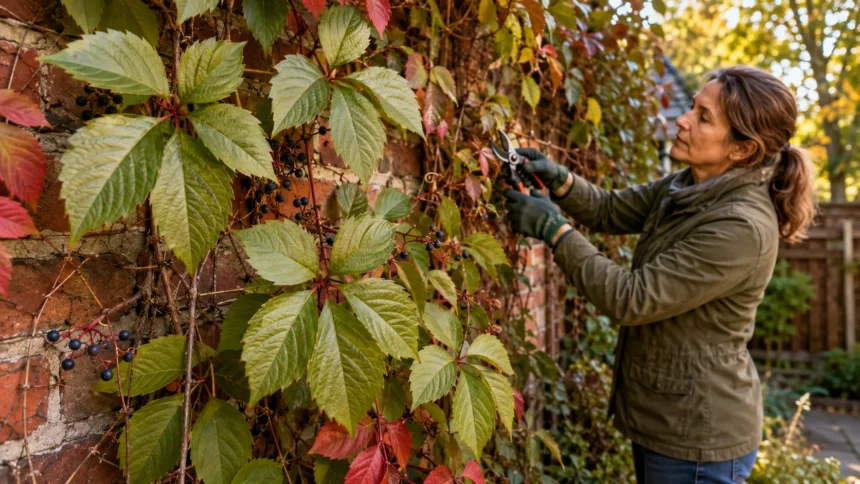
How to Identify Virginia Creeper With Confidence
Virginia creeper, scientifically known as Parthenocissus quinquefolia, is a fast-growing deciduous vine native to much of eastern and central North America. It is often valued for its dense green summer foliage and vivid red, orange, or burgundy fall color. The plant can grow along the ground, scramble over fences, or climb trees, stone, brick, and other sturdy structures. Because it grows so vigorously, people may notice it in gardens, woodland edges, roadsides, and older landscapes. Its common names include five-leaved ivy, American woodbine, and false grape. Learning its visual features helps you decide whether to keep, manage, or remove it safely.
The clearest Virginia creeper identification clue is its leaf structure. Most mature leaves are palmately compound, meaning five separate leaflets spread from one central point like fingers on a hand. Each leaflet is usually pointed with toothed or serrated edges, and the leaves may emerge reddish before changing to deep green. In autumn, the foliage often becomes intensely colorful before dropping for winter. Although five leaflets are typical, young or damaged growth may occasionally show only three leaflets. For that reason, look at several leaves and other plant features instead of relying on one leaf alone.
Virginia creeper also has distinctive climbing tendrils with adhesive pads at the tips. These small, branched tendrils allow the vine to grip surfaces such as bark, stone, brick, fences, and trellises without needing to twine around them. The attachment disks can look like tiny dark dots when the vine is removed from a wall or tree. This feature helps distinguish it from many other climbing plants, including some look-alike vines. The stems gradually become woody as the plant matures and can create a thick, tangled cover if left unmanaged. Mature vines may reach impressive lengths, especially in sun and fertile soil.
Small greenish flowers appear in late spring or early summer, but they are easy to miss because they are not showy. Later in the season, Virginia creeper may produce clusters of round, dark blue to purplish-black berries. These berries can attract birds, which helps explain why the plant may spread into new areas over time. However, the fruit is not edible for people or pets and should never be mistaken for wild grapes. The berries are generally darker than poison ivy berries, which are usually pale or whitish. When identifying an unfamiliar vine, avoid touching or tasting any berries as a test.
Virginia creeper is frequently confused with poison ivy because both can climb, trail along the ground, and turn red in fall. Poison ivy usually has three leaflets, while Virginia creeper typically has five, giving gardeners the useful reminder: “Leaves of three, let it be; leaves of five, let it thrive.” Poison ivy leaf edges are often smooth or irregularly lobed, whereas Virginia creeper leaflets are commonly toothed. Virginia creeper does not contain poison ivy’s urushiol oil, but its sap can still irritate sensitive skin. If you are unsure which vine you have, wear gloves, avoid bare-skin contact, and compare several features before handling it. Penn State Extension offers a reliable comparison of the two plants.
Virginia Creeper Care: Planting, Pruning, and Controlling Growth
Virginia creeper is a hardy landscape vine that tolerates a wide range of growing conditions. It can grow in full sun, partial shade, and many soil types, although its fall color is often strongest with more sunlight. The plant generally establishes easily once its roots are settled, making it a low-maintenance choice for large spaces. It can be useful as a ground cover on slopes, where its spreading growth may help reduce erosion. It also provides seasonal cover and berries for wildlife, especially birds. Still, its vigorous growth means it needs space and occasional attention rather than a completely hands-off approach.
Choose the planting site carefully before adding Virginia creeper to your garden. It works best on large fences, strong arbors, sturdy trellises, or open slopes where it can spread without covering desirable plants. Avoid planting it close to wood siding, painted surfaces, gutters, shutters, rooflines, or delicate structures. Its adhesive holdfasts can be difficult to remove and may worsen existing cracks or damage finishes during removal. Brick and sound masonry are usually more resilient, but old mortar and damaged surfaces deserve extra caution. A dedicated support structure gives you more control and makes routine pruning far easier.
Newly planted Virginia creeper benefits from regular watering during its first growing season. Water deeply when the soil begins to dry rather than keeping the ground constantly soggy. Once established, the vine is generally adaptable and can tolerate average garden conditions with little supplemental care. A layer of mulch around the root zone can help conserve moisture and reduce competition from weeds. Heavy fertilizing is rarely necessary and may encourage even more aggressive growth. In most gardens, good soil, adequate water during establishment, and annual pruning are enough to keep the plant healthy.
Pruning is the most important part of Virginia creeper care. Trim the vine in late winter or early spring to remove dead, tangled, or unwanted stems before rapid new growth begins. You can also cut back wandering shoots during the growing season when they approach roofs, windows, utility lines, shrubs, or neighboring property. Use clean, sharp pruning tools and wear gloves, long sleeves, and eye protection if you are working with a dense vine. Do not pull established vines forcefully from painted wood or fragile masonry because the adhesive pads may take material with them. Instead, cut the vine at the base, allow it to die back, and remove dried growth gradually.
If Virginia creeper is growing where you do not want it, repeated cutting and digging can reduce smaller plants. Remove roots and underground portions as thoroughly as possible, then monitor the area for regrowth because new shoots may emerge from missed root sections. For mature vines climbing a tree or structure, cut the main stems near ground level rather than ripping the plant down all at once. The upper portion will eventually dry out, making it safer to remove in sections. Herbicide may be appropriate for persistent infestations, but use only labeled products and follow local guidance carefully. The University of Maine Cooperative Extension advises targeted control and careful label-following when chemical treatment is considered.
Virginia Creeper Safety: Skin Contact, Berries, Children, and Pets
Virginia creeper is not poison ivy, but it is not a plant to treat casually. Its leaves and stems contain tiny calcium oxalate crystals, also called raphides, that may irritate the skin of sensitive people. Most people will not develop the severe urushiol reaction associated with poison ivy, yet redness, itching, or blister-like irritation can still occur after contact. Reactions vary from person to person and may be more likely when the sap contacts broken skin. Wear gloves and cover exposed skin when pruning, pulling, or clearing large amounts of the vine. Washing hands and tools afterward is a sensible precaution, especially before touching your face.
The berries are the biggest safety concern because they can be tempting to children due to their small, grape-like appearance. Virginia creeper berries should not be eaten by people, and they may also be harmful to dogs and other pets. Chewing leaves or berries can irritate the mouth, lips, tongue, and throat because of the plant’s oxalate crystals. Larger exposures may lead to stomach upset, including nausea, vomiting, abdominal discomfort, or diarrhea. Birds can eat the berries without the same concern, but that does not make the fruit safe for humans or household animals. Teach children the simple rule that berries from an unidentified yard plant are never snacks.
If skin irritation occurs after handling Virginia creeper, wash the affected area gently with soap and cool water. Avoid aggressive scrubbing, which can further irritate already sensitive skin. A cool compress may ease minor discomfort, while a pharmacist or healthcare professional can advise on appropriate over-the-counter options for itching. Seek medical advice if a rash is widespread, painful, blistering, involves the eyes or face, or does not improve. Anyone who has trouble breathing, facial swelling, severe mouth swelling, or signs of a serious allergic reaction needs urgent medical help. It is always better to err on the side of caution when plant exposure causes escalating symptoms.
If a child, adult, or pet has eaten Virginia creeper berries or leaves, remove any remaining plant material from the mouth if it is safe to do so. Rinse the mouth gently with water, but do not induce vomiting unless a poison professional or clinician specifically tells you to. Save a photo or a sample of the plant only if doing so does not create additional exposure. Contact your local poison center, veterinary professional, or emergency service for advice based on the person’s age, symptoms, and amount consumed. In the United States, Poison Control can be reached at 1-800-222-1222 or through its online guidance. The National Capital Poison Center specifically advises covering skin while handling the plant and keeping children from eating its berries.
Virginia creeper can be a beautiful native vine when it is used thoughtfully, but safety and placement should come before appearance. Keep it away from play areas, pet-accessible berry zones, and fragile exterior surfaces that could be difficult to maintain. Prune it regularly so it does not cover windows, climb into gutters, overwhelm small trees, or hide structural problems. If you are adding it to a wildlife-friendly landscape, give it a defined space with a sturdy support and clear boundaries. If you already have it growing wild, accurate identification is the first step toward managing it responsibly. A little caution lets you appreciate its dramatic fall display without overlooking its practical risks.
FAQs About Virginia Creeper
Is Virginia creeper the same as poison ivy?
No. Virginia creeper usually has five toothed leaflets, while poison ivy typically has three leaflets. Virginia creeper can still irritate sensitive skin, so avoid handling either plant with bare hands.
Are Virginia creeper berries poisonous?
Yes, Virginia creeper berries should not be eaten. They can irritate the mouth and stomach and may be especially dangerous for children and pets.
Does Virginia creeper damage brick walls?
On sound masonry, it is less likely to cause direct damage than on wood or painted surfaces. However, it can worsen existing cracks and may be difficult to remove without leaving adhesive pads behind.
How fast does Virginia creeper grow?
Virginia creeper is a vigorous vine that can grow rapidly in favorable conditions. Regular pruning is essential to keep it from covering structures, trees, gutters, or nearby plants.
Should I remove Virginia creeper from my yard?
Not necessarily. Keep it if you have enough space, want fall color or wildlife value, and can prune it consistently. Remove or control it when it threatens structures, crowds out plants, or creates a safety concern.