How to Plant Marigold Seeds for Bright, Healthy Blooms
Growing marigolds from seed is one of the easiest and most rewarding gardening projects for beginners. These cheerful annual flowers germinate quickly, tolerate warm weather, and produce colorful blooms from early summer until frost. With basic soil, sunlight, and watering, a small packet of seeds can fill beds, borders, pots, and vegetable gardens.
Marigolds belong mainly to the Tagetes genus and are available in shades of yellow, orange, gold, red, cream, and mixed colors. Popular options include compact French marigolds, tall African marigolds, and delicate signet marigolds. Each type has slightly different spacing and growing habits, but the basic seed-starting process remains similar.
You can start marigold seeds indoors before the last spring frost or sow them directly into warm garden soil. Indoor sowing produces earlier flowers, while direct sowing requires less equipment and transplanting. The best method depends on your local climate, available space, and how soon you want the plants to bloom.
This guide explains how to plant marigold seeds step by step, including timing, planting depth, germination temperature, watering, thinning, and transplanting. You will also learn how to grow marigolds in containers, care for seedlings, manage common problems, and collect seeds for the following growing season.
Why Grow Marigolds from Seed?
Growing marigolds from seed is much less expensive than purchasing several mature plants from a garden center. A single seed packet can produce enough flowers for window boxes, garden paths, vegetable beds, and decorative containers. This makes marigolds an affordable choice when you want plenty of summer color without spending heavily.
Seeds also give you access to a wider selection of marigold varieties. Local nurseries may carry only a few common colors, while seed suppliers offer tall, dwarf, double-flowered, striped, and unusual cream-colored cultivars. Starting from seed allows you to select the exact height, shape, and color needed for your planting design.
Marigolds are especially suitable for new gardeners because they usually germinate quickly under warm conditions. The seedlings are easy to recognize, grow rapidly, and recover well from careful transplanting. Their fast development gives beginners visible progress without requiring complicated equipment or advanced gardening knowledge.
Starting your own flowers also helps you understand the complete plant life cycle. You can watch each seed germinate, form true leaves, develop buds, and eventually produce more seeds. This simple process can be enjoyable for adults, children, school projects, and anyone learning how plants grow.
Choose the Right Type of Marigold
French marigolds, known botanically as Tagetes patula, are compact plants that commonly grow between 6 and 18 inches tall. They produce single, double, or crested flowers in yellow, orange, red, and mixed shades. Their manageable size makes them ideal for edging, containers, pathways, and spaces near vegetable plants.
African marigolds, or Tagetes erecta, are taller and produce large, rounded flower heads. Depending on the variety, they may grow from approximately 18 inches to more than 3 feet tall. These marigolds work well at the back of flower borders, in cutting gardens, or wherever you want bold vertical color.
Signet marigolds, scientifically called Tagetes tenuifolia, develop fine foliage and many small, simple flowers. Their light appearance works well in herb gardens, containers, and informal borders. Some signet varieties have edible petals, but only use flowers specifically grown and identified for culinary purposes without unsuitable chemical treatments.
Read the seed packet before planting because height, bloom size, spacing, and maturity time vary between cultivars. Tall African marigolds generally need more room and may take longer to flower than compact French types. Choosing a variety that matches your available space will make later care and spacing much easier.
When Is the Best Time to Plant Marigold Seeds?
Marigolds are warm-season annuals that do not tolerate frost. Plant them outdoors only after the danger of frost has passed and the soil has begun to warm. Cold, wet soil can delay germination, damage young seedlings, and increase the risk of seeds rotting before they begin growing.
For earlier flowers, start marigold seeds indoors approximately four to six weeks before your area’s average last spring frost date. This gives seedlings time to develop several true leaves before outdoor conditions become suitable. Avoid starting them too early because overgrown seedlings may become crowded, weak, or difficult to transplant.
Direct sowing works well once daytime conditions are consistently mild and nighttime temperatures are no longer near freezing. In many regions, marigold seeds can be planted from mid-spring through early summer. Later sowings may still flower successfully because many marigold varieties grow and mature relatively quickly.
Gardeners in warm climates may have a longer planting window, but extreme summer heat can stress new seedlings. In very hot regions, sowing in spring or again during late summer may produce better results. Always consider local frost dates and seasonal temperatures instead of relying on one universal planting month.
What You Need to Plant Marigold Seeds
For indoor seed starting, you need marigold seeds, clean containers, a light seed-starting mix, water, and a bright growing location. Cell trays, small nursery pots, or recycled containers can work as long as they have drainage holes. Clean equipment reduces the chance of fungal diseases affecting young seedlings.
A commercial seed-starting mix is usually better than heavy garden soil for indoor sowing. It remains light, holds moisture evenly, and allows delicate new roots to spread easily. Garden soil may become compacted in small containers and can contain weed seeds, insects, or organisms that harm developing seedlings.
When sowing outdoors, prepare a hand trowel, watering can or gentle hose nozzle, labels, and suitable garden soil. A thin layer of compost may improve poor soil, but marigolds do not usually need heavily enriched ground. Good drainage and sufficient sunlight are more important than excessive fertility.
Plant labels are useful when growing several marigold varieties because seedlings often look similar. Write the variety name and sowing date before watering, since wet hands and soil can make labelling inconvenient later. Keeping simple notes also helps you compare germination speed and flowering performance between varieties.
How to Plant Marigold Seeds Indoors
Fill clean seed trays or small pots with lightly moistened seed-starting mix. The mixture should feel damp but should not release water when squeezed. Gently level the surface without pressing it firmly, since compacted soil can reduce airflow and make it more difficult for roots to develop.
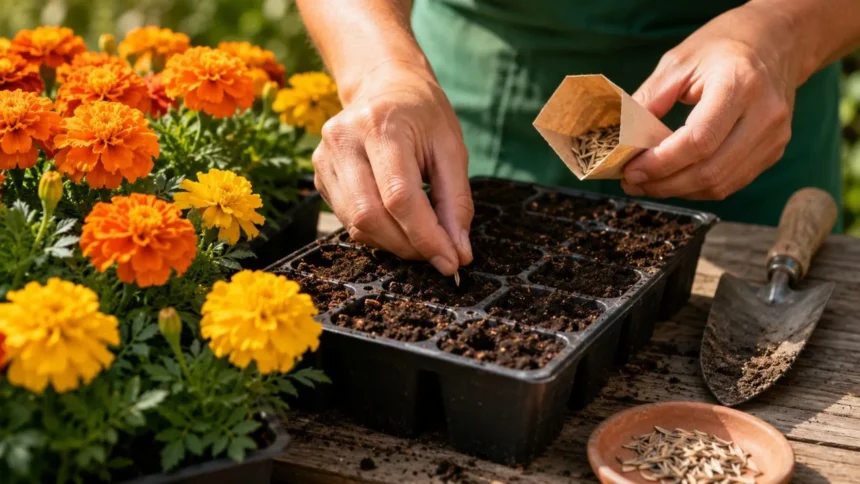
Place one or two marigold seeds in each cell or small container. Cover them with approximately one-quarter inch of seed-starting mix, following any different instructions printed on the seed packet. Marigold seeds need light coverage rather than being buried deeply, because excessive soil can prevent seedlings from reaching the surface.
Water carefully with a spray bottle, fine watering rose, or bottom-watering tray. Strong streams of water may move the seeds or expose them. Allow extra moisture to drain away, then cover the tray loosely with a clear lid or plastic covering to maintain humidity during germination.
Place the containers in a warm location where temperatures remain around 70 to 75°F, or 21 to 24°C. Marigold seeds commonly germinate within four to seven days, although cooler conditions may slow them. Check the trays daily so you can remove the humidity cover as soon as seedlings begin appearing.
How to Plant Marigold Seeds Directly Outdoors
Choose a garden location that receives at least six hours of direct sunlight each day. Remove weeds, stones, roots, and large pieces of debris from the planting area. Loosen the top few inches of soil and break apart compacted clumps to create a fine, even surface for sowing.
Plant marigold seeds approximately one-quarter inch deep and space them according to the expected mature size. You can initially sow seeds more closely and thin the seedlings later, but avoid placing them in dense piles. Even spacing helps reduce competition and makes young plants easier to identify among emerging weeds.
Water the area gently after sowing, taking care not to wash the lightweight seeds away. Keep the upper layer of soil consistently moist until germination occurs. The soil should not become waterlogged, because excessive moisture can reduce oxygen and cause seeds or young roots to rot.
Mark the row or planting area clearly so it is not accidentally disturbed. Outdoor germination may take approximately five to fourteen days depending on temperature, moisture, and soil conditions. Once seedlings develop true leaves, remove weaker or crowded plants to provide the recommended final spacing.
How Deep Should You Plant Marigold Seeds?
Marigold seeds should generally be covered with about one-quarter inch of soil or seed-starting mix. This shallow depth protects them from drying while allowing emerging shoots to reach the surface easily. The exact recommendation may vary slightly by cultivar, so always check the instructions included with the seeds.
Planting too deeply is a common reason marigold seeds fail to emerge. A small seed contains limited stored energy, and the seedling may use that energy before reaching the soil surface. Deep, compacted, or constantly wet soil can make germination even more difficult.
Seeds planted too close to the surface may dry out, move during watering, or be eaten by birds and insects. A light covering creates a more stable moisture level around the seed. Gently firm the surface after sowing, but avoid compressing it into a hard layer.
If you accidentally expose a seed while watering, carefully cover it with a small amount of loose soil. Avoid repeatedly disturbing the area to check for germination, because this can damage delicate roots. Give the seeds warmth, moisture, and enough time before deciding they have failed.
Light and Temperature for Marigold Germination
Warm soil is one of the most important conditions for successful marigold germination. Temperatures near 70 to 75°F encourage quick, even sprouting. Seeds may still germinate in cooler conditions, but the process can take longer and the risk of moisture-related problems may increase.
Marigold seeds do not require intense light before germination, but the seedlings need strong light immediately after emerging. Move indoor trays beneath a grow light or into the brightest suitable window. Insufficient light causes seedlings to become tall, thin, pale, and unable to support healthy growth.
When using a grow light, position it a few inches above the seedlings and adjust the height as they grow. Provide approximately 14 to 16 hours of light daily, followed by a period of darkness. A timer can make the lighting schedule consistent without requiring daily manual adjustments.
Rotate trays near windows regularly because seedlings naturally lean toward the strongest light. South-facing windows may work in some homes, although spring sunlight can still be weaker than seedlings need. A basic grow light usually produces straighter, more compact plants than relying on window light alone.
How to Water Marigold Seeds and Seedlings
During germination, the growing mixture should remain evenly moist but never saturated. Check the surface daily and water when it begins to look or feel slightly dry. Small containers lose moisture quickly, especially when placed near heating systems, sunny windows, or moving air.
Bottom watering can help prevent soil disturbance and reduce the amount of water sitting on seedling leaves. Place the tray in shallow water and allow moisture to move upward through the drainage holes. Remove the tray after the soil has absorbed enough water so the containers do not remain constantly soaked.
Once seedlings become established, allow the upper surface of the soil to dry slightly between waterings. This encourages healthier roots and reduces fungal problems. Water thoroughly enough to moisten the entire root area rather than giving frequent, tiny amounts that support only shallow growth.
Outdoor marigolds usually need more frequent watering during their first few weeks. Established plants can tolerate brief dry periods, but regular moisture supports continuous flowering. Water near the base of the plants when possible, since constantly wet foliage can encourage leaf spots and other disease problems.
Caring for Marigold Seedlings Indoors
Remove the humidity cover once most seeds have germinated. High humidity is useful before sprouting, but keeping seedlings covered for too long can encourage weak growth and fungal disease. Provide good airflow without placing delicate plants directly in a strong, cold draft.
When two seeds germinate in one cell, keep the stronger seedling and remove the weaker one. Cutting the extra seedling at soil level is often safer than pulling it, which may disturb the remaining roots. Crowded seedlings compete for light, water, nutrients, and growing space.
Marigold seedlings do not need strong fertilizer immediately after germination. Once they develop several true leaves, you may use a diluted balanced liquid fertilizer if the seed-starting mix contains little nutrition. Avoid excessive feeding because too much nitrogen creates leafy growth and may reduce future flowering.
Check seedlings regularly for discoloration, stretching, wilting, or damaged stems. These signs may indicate poor lighting, excessive watering, cold temperatures, or disease. Correcting conditions early is easier than attempting to save severely weakened seedlings immediately before transplanting.
How to Harden Off Marigold Seedlings
Indoor-grown marigold seedlings must gradually adjust to outdoor sunlight, wind, and temperature changes. Moving them directly from a protected room into full sun can cause leaf scorch, wilting, or serious stress. This adjustment process is known as hardening off and usually takes about seven to ten days.
Begin by placing seedlings outside in a sheltered, shaded location for one or two hours. Bring them indoors before conditions become cold, windy, or excessively sunny. Increase their outdoor exposure gradually each day while monitoring the leaves and soil moisture.
After several days, introduce the seedlings to gentle morning sun before exposing them to stronger midday light. Outdoor containers may dry faster than they did inside, so check them regularly. Avoid hardening off during storms, strong winds, unusually cold nights, or sudden heat waves.
By the end of the process, the seedlings should tolerate most of a normal day outdoors. Transplant them after frost danger has passed, preferably during a cloudy day or in the late afternoon. Mild conditions give the roots time to settle before the plants face intense sunlight.
How to Transplant Marigold Seedlings
Prepare the planting area before removing seedlings from their containers. Loosen the soil, remove weeds, and water it lightly if it is extremely dry. Dig holes slightly wider than each root ball and space them according to the mature size listed on the seed packet.
Handle seedlings by their leaves or root balls rather than squeezing the delicate stems. Tip each container carefully and support the soil as the plant slides out. If roots circle tightly around the outside, loosen them very gently without tearing apart the entire root system.
Set each marigold at approximately the same depth at which it grew in its container. Backfill with loose soil and press gently around the root area to remove large air pockets. Avoid burying a large portion of the stem, as this may encourage decay in wet conditions.
Water thoroughly after transplanting to settle the soil around the roots. Keep the area consistently moist for the first week while the plants establish. Temporary wilting may occur after transplanting, but healthy seedlings should recover when protected from severe heat and given appropriate moisture.
How Far Apart Should Marigolds Be Planted?
Compact French marigolds can often be spaced approximately 6 to 10 inches apart. This provides enough room for their foliage to develop while creating a full border or container display. Dwarf cultivars may tolerate slightly closer spacing, particularly when grown as temporary annual bedding plants.
Larger French marigolds and medium-sized hybrids may need approximately 10 to 12 inches between plants. Tall African marigolds usually require around 12 to 18 inches or more, depending on the cultivar. Always use the mature width on the seed packet as the main spacing guide.
Proper spacing improves air circulation and allows sunlight to reach more of the plant. Crowded marigolds may become tall, weak, and more vulnerable to fungal diseases. Dense planting also makes watering, deadheading, and inspecting the foliage more difficult.
In containers, spacing can be somewhat closer because the display lasts only one growing season. However, every plant still needs enough root space, water, and airflow. Overfilled pots dry quickly, require frequent feeding, and may produce fewer flowers as plants compete with one another.
Best Soil and Sunlight for Marigolds
Marigolds flower best in full sun, ideally receiving six to eight hours of direct sunlight daily. They can survive in partial shade, but they may grow taller, produce fewer buds, and become more vulnerable to damp conditions. Strong sunlight supports compact growth and brighter flowering.
The best soil is reasonably fertile, loose, and well drained. Marigolds adapt to many garden soils and do not require extremely rich ground. Heavy clay that remains wet can damage the roots, while very sandy soil may need compost to improve moisture retention.
Before planting, mix a modest layer of finished compost into poor soil. Avoid adding large amounts of high-nitrogen fertilizer or manure, as this can encourage foliage instead of flowers. Marigolds generally perform better with moderate fertility than with excessive feeding.
A soil pH ranging from mildly acidic to neutral is suitable for most marigold varieties. Exact testing is rarely necessary unless other plants also struggle in the area. Improving drainage, sunlight, and watering habits will usually create a greater benefit than making minor pH adjustments.
How to Grow Marigolds in Pots
Select a container with drainage holes so excess water can leave the root area. Small French marigolds can grow in window boxes and medium pots, while tall African marigolds need larger, heavier containers. Adequate container size reduces rapid drying and prevents taller plants from tipping in wind.
Fill the container with a quality all-purpose potting mix rather than ordinary garden soil. Potting mix is lighter and drains more reliably in enclosed spaces. Leave a small gap below the rim so you can water deeply without soil and water immediately spilling over the sides.
Sow seeds directly in the container or transplant hardened seedlings after frost danger has passed. Thin crowded seedlings so each plant has enough room to develop. Position the pot in full sun and rotate it occasionally if one side receives significantly more light.
Container-grown marigolds usually need more frequent watering than plants growing in garden beds. Feed them lightly with a balanced fertilizer when growth or flowering begins to slow. Remove faded flowers regularly and check drainage holes to make sure they have not become blocked by roots or compacted soil.
How Long Do Marigold Seeds Take to Germinate?
Under warm, evenly moist conditions, marigold seeds commonly germinate within four to seven days. Some may emerge slightly earlier, while others can take up to two weeks. Germination speed depends on soil temperature, seed age, planting depth, moisture, and the specific marigold variety.
Cold soil is one of the main reasons germination takes longer. Seeds sown outdoors too early may remain inactive until conditions improve or may rot in wet soil. Waiting until the ground warms usually produces faster and more uniform seedlings.
Old seeds may still germinate, but the percentage can decrease over time. When using seeds stored for several years, sow a few extra or test them between damp paper towels before planting. Store unused seeds in a cool, dark, and dry location to preserve viability.
Avoid digging into the soil after only a few days to check the seeds. Disturbance can damage developing roots just before seedlings emerge. Maintain suitable conditions for at least two weeks before resowing, unless heavy rain, animals, or another clear problem has disrupted the planting area.
How Long Until Marigolds Bloom?
Many French marigolds begin flowering approximately eight weeks after sowing under suitable conditions. Some fast-growing cultivars may bloom slightly sooner, especially when started indoors. Cool temperatures, shade, crowding, and transplant stress can delay the first flowers.
African marigolds may need more time to reach their mature height and produce large blooms. Starting them indoors several weeks before the final frost can extend their flowering season. Check the “days to maturity” information on the seed packet for a more accurate estimate.
Marigolds continue producing buds throughout warm weather when faded flowers are removed and plants remain healthy. A temporary reduction in flowering may occur during extreme heat or drought. Consistent watering and light feeding can help plants recover when conditions become less stressful.
Do not overfertilize plants that have healthy leaves but few flowers. Excessive nitrogen often encourages foliage at the expense of buds. Provide full sun, remove faded blooms, and allow the plants time to mature before adding more fertilizer.
How to Care for Marigolds After Planting
Water newly planted marigolds regularly until their roots become established. Afterward, water deeply when the upper inch of soil becomes dry. Avoid keeping the ground constantly wet, since marigolds generally prefer slightly drier conditions over waterlogged roots.
Remove faded blooms by pinching or cutting the flower stem above a healthy set of leaves. This process, known as deadheading, prevents the plant from directing all its energy into seed production. Regular deadheading usually keeps marigolds tidy and encourages additional buds.
Tall varieties may need support in windy or exposed locations. Small stakes or nearby plants can prevent heavy flower heads from bending the stems. Position supports early so you do not damage a mature root system while trying to secure a fallen plant.
Apply fertilizer only when necessary. Plants growing in average garden soil may flower well without additional feeding, while container marigolds benefit from light, occasional fertilizer. Too much fertilizer can produce large green plants with surprisingly few flowers.
Common Problems When Growing Marigolds from Seed
Seeds that fail to germinate may have been planted too deeply, allowed to dry out, or exposed to cold and waterlogged soil. Old or poorly stored seed can also have a lower germination rate. Review temperature, moisture, and planting depth before sowing a replacement batch.
Seedlings that become tall and thin usually need stronger light. Move them beneath a grow light and reduce overcrowding as soon as possible. Severely stretched seedlings may remain weak, so reseeding can sometimes produce stronger plants more quickly than attempting to correct advanced legginess.
Sudden seedling collapse near the soil line may indicate damping off, a fungal problem favored by excessive moisture and poor airflow. Use clean containers, fresh seed-starting mix, and careful watering. Remove affected seedlings promptly because collapsed plants rarely recover.
Yellow leaves may result from overwatering, poor drainage, nutrient stress, or damaged roots. Check the soil before adding fertilizer, since feeding a waterlogged plant will not solve the underlying problem. Adjust one condition at a time and observe the plant’s response over several days.
Marigold Pests and Diseases
Aphids may gather on tender stems, buds, and the undersides of leaves. Small populations can often be removed with a gentle spray of water. Regular inspection allows you to manage them before sticky residue, distorted growth, or large colonies develop.
Spider mites may become troublesome during hot, dry weather, particularly on stressed plants. Their feeding can cause pale speckling, webbing, and weakened foliage. Improve watering consistency and examine the undersides of leaves when plants lose color without an obvious reason.
Slugs and snails may chew young seedlings near ground level during damp conditions. Remove hiding places, inspect the garden in the evening, and protect newly planted seedlings when damage is severe. Mature marigolds are usually better able to tolerate limited chewing.
Leaf spots and root diseases are more likely when plants remain wet or crowded. Space marigolds properly, water near the soil, and remove severely affected material. Do not allow diseased leaves to collect around the plants, especially when humid or rainy weather continues.
Can Marigolds Be Used for Companion Planting?
Marigolds are commonly planted near vegetables because their bright flowers add color and attract various insects. They may support a diverse garden by providing nectar and habitat. However, they should not be treated as a complete replacement for crop rotation, pest monitoring, and other practical controls.
Certain Tagetes species can help suppress some soil nematodes when grown as a dedicated crop under suitable conditions. Simply placing one marigold beside a vegetable does not guarantee protection from every nematode or insect. The effect depends on the marigold species, pest, planting density, and growing method.
Marigolds can be grown near tomatoes, peppers, beans, herbs, and many other garden plants when their light and water needs are compatible. Leave enough spacing so they do not block airflow or compete with small vegetables. Tall African marigolds should be positioned where they will not shade sun-loving crops.
Their strong scent is often claimed to repel many pests, but results can be inconsistent in ordinary gardens. Use marigolds as one part of a varied planting strategy rather than expecting them to solve every pest problem. Healthy soil, observation, barriers, and targeted treatment remain important.
Common Mistakes to Avoid
Planting marigold seeds outdoors before frost danger has passed is a common mistake. Cold conditions can prevent germination or kill tender seedlings overnight. Wait for reliably warm weather or start seeds indoors when you want earlier growth.
Overwatering is another frequent problem. Marigold seeds need consistent moisture, but the soil should not remain soaked. After plants become established, allowing the surface to dry slightly between waterings supports stronger roots and reduces disease risk.
Using too much fertilizer can create lush plants with limited flowering. Marigolds are not heavy feeders and generally perform well in average soil. Apply nutrients modestly and focus first on sunlight, drainage, spacing, and appropriate watering.
Crowding seedlings may create an immediate full appearance, but it produces weaker plants later. Thin or transplant extras while they are still young. Correct spacing gives each marigold enough light, airflow, water, and root space to develop properly.
How to Save Marigold Seeds
Allow several healthy flowers to remain on the plant after their petals fade. Instead of deadheading them, wait until the flower heads become dry, brown, and papery. Collect them during dry weather before rain or wind causes the mature seeds to scatter.
Remove the dried flower head and gently pull it apart. Marigold seeds are long, narrow, and usually dark at one end with a lighter tip. Separate the seeds from dried petals and other plant material, then spread them in a dry location for several more days.
Store completely dry seeds in a labelled paper envelope or small container. Include the variety name and collection year, then keep the package in a cool, dark, and dry place. Moisture during storage can lead to mold and reduce future germination.
Seeds collected from open-pollinated marigolds are more likely to resemble their parent plants. Hybrid varieties may produce different heights, colors, or flower shapes in the next generation. This variation can still be enjoyable when exact uniformity is not important.
Final Thoughts on Planting Marigold Seeds
Learning how to plant marigold seeds is a simple way to add reliable color to a garden. Start seeds indoors four to six weeks before the last frost or sow them directly after the weather becomes warm. Plant them shallowly, maintain gentle moisture, and provide strong light after germination.
Choose the marigold type according to your space and purpose. French marigolds suit borders and containers, African marigolds create tall statement flowers, and signet marigolds offer delicate foliage and many small blooms. Checking the mature size prevents crowding and makes garden planning easier.
Successful marigold care depends more on good growing conditions than complicated treatments. Full sun, well-drained soil, appropriate spacing, and moderate watering support strong plants. Deadheading can encourage continuous blooms, while excessive fertilizer should be avoided.
With basic attention, marigolds can flower for months and produce enough seeds for future planting. Their fast germination and forgiving nature make them excellent for beginners. Whether grown in a pot, flower bed, or vegetable garden, marigolds provide a bright result from a small amount of effort.
Frequently Asked Questions
What month should you plant marigold seeds?
Plant marigold seeds outdoors after the final spring frost when the soil has warmed. Start them indoors four to six weeks earlier when you want flowers sooner.
Should marigold seeds be soaked before planting?
Marigold seeds do not usually need soaking because they germinate quickly in warm, moist soil. Planting them directly into damp seed-starting mix is normally sufficient.
How many marigold seeds should I plant in one hole?
Plant one or two seeds in each hole or seed tray cell. When both germinate, keep the stronger seedling and cut the weaker one at soil level.
Do marigolds need full sun?
Marigolds grow and flower best with at least six hours of direct sunlight daily. They can tolerate some shade, but flowering may decrease and stems may become weaker.
Why are my marigold seeds not growing?
The seeds may be too cold, deeply planted, dry, waterlogged, or no longer viable. Maintain warm conditions, use loose soil, and keep the planting area evenly moist rather than soaked.