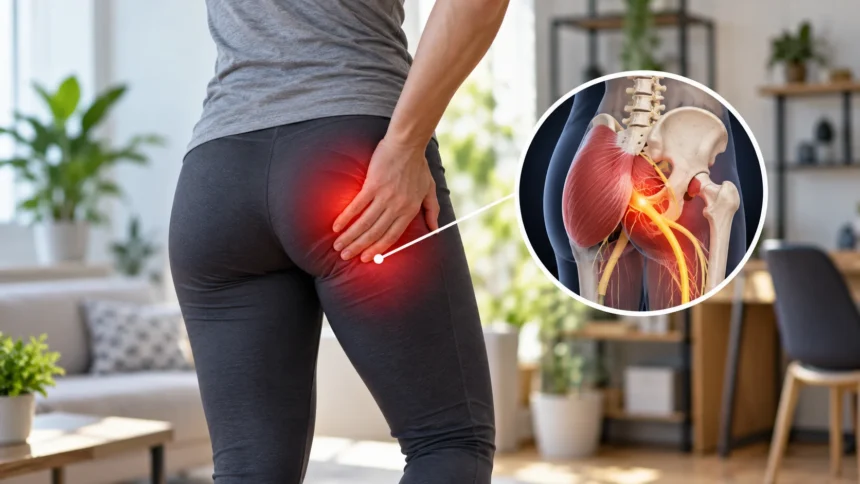
Pain in the left butt cheek can range from a mild ache after sitting too long to sharp discomfort that spreads into the hip, thigh, or lower leg. The cause may involve muscles, joints, nerves, or surrounding tissues. Understanding how the pain started and what movements make it better or worse can provide useful clues.
Many cases improve with temporary activity changes, gentle movement, and time, especially when the discomfort is related to muscle strain or prolonged sitting. However, persistent pain, increasing weakness, numbness, fever, major trauma, or bladder and bowel changes should not be ignored. Recognizing warning signs helps you know when home care may be reasonable and when professional assessment is more appropriate.
Why Does My Left Butt Cheek Hurt?
The buttock contains several large muscles, including the gluteus maximus, medius, and minimus, along with smaller muscles that help stabilize the hip. Nerves also travel through this region on their way toward the leg. Irritation involving any of these structures can produce localized aching, tenderness, burning, or pain during movement.
Sometimes the pain does not begin in the buttock itself. Problems involving the lower back, sacroiliac joint, hip, or nearby nerves can create referred pain that is felt more strongly in one butt cheek. This is why the location of discomfort alone does not always reveal the exact source.
Pay attention to whether the pain appears while sitting, walking, bending, climbing stairs, or lying on one side. Also notice whether symptoms remain localized or travel down the leg. These patterns can help a healthcare professional distinguish between muscular irritation, joint-related pain, nerve symptoms, and other possible causes.
Muscle Strain in the Glutes
A gluteal muscle strain can occur after lifting, sprinting, squatting, climbing, slipping, or suddenly increasing exercise intensity. The pain is often localized to one side and may feel sore, tight, or tender when touched. Activities that require pushing through the affected leg can make the discomfort more noticeable.
Minor strains usually improve gradually when aggravating activities are reduced for a short period. Gentle walking and comfortable movement may be better than complete inactivity because prolonged rest can increase stiffness. Avoid forcing deep stretches or heavy strengthening exercises while the muscle remains acutely painful.
As symptoms improve, gradual strengthening can help restore tolerance to normal activities. Bridges, controlled hip exercises, and progressive lower-body movement may be useful when performed without sharp pain. If symptoms worsen, bruising is extensive, or walking becomes difficult after an injury, professional evaluation may be necessary.
Sciatica and Nerve Irritation
Sciatica can cause pain that begins in the lower back or buttock and travels into the back or side of the leg. Some people describe the sensation as burning, electric, shooting, or unusually intense. Tingling, numbness, or weakness may also occur when a nerve root is irritated.
Walking, sitting, coughing, bending, or certain spinal positions may change sciatica symptoms depending on the underlying cause. The pain may remain mostly in the left butt cheek or extend toward the thigh, calf, or foot. Because several conditions can produce similar symptoms, persistent nerve pain deserves proper assessment rather than self-diagnosis.
If buttock discomfort occurs together with back symptoms, this guide to lower back pain when walking explains common causes, movement patterns, and warning signs in more detail. Seek urgent care for new bladder or bowel problems, groin numbness, or rapidly worsening leg weakness.
Piriformis-Related Buttock Pain
The piriformis is a small muscle located deep in the buttock near the sciatic nerve. Irritation or tightness in this region may contribute to deep buttock pain and sometimes symptoms extending into the leg. However, piriformis syndrome can be difficult to distinguish from other causes of sciatica without an examination.
Symptoms may become more noticeable after prolonged sitting, running, climbing stairs, or repeated hip movement. Some people experience tenderness deep in one buttock, while others notice pain when rotating the hip. Because similar symptoms can come from the spine or sacroiliac region, location alone is not enough for diagnosis.
Gentle movement, temporary reduction of aggravating activities, and appropriate hip mobility exercises may help mild muscular irritation. Avoid aggressive stretching that creates sharp or radiating pain. Persistent symptoms should be evaluated by a healthcare professional or physiotherapist who can assess the hip, spine, strength, and neurological function.
Sacroiliac Joint Pain
The sacroiliac joints connect the lower spine to the pelvis and sit near the upper buttock region. Irritation around one of these joints can cause pain that is felt predominantly on one side. The discomfort may remain near the left butt cheek or spread toward the hip, groin, or upper thigh.
Sacroiliac-related pain may become noticeable during walking, stair climbing, standing from a chair, turning in bed, or standing on one leg. Pregnancy, previous injury, repetitive loading, or altered movement patterns can sometimes contribute. However, these symptoms overlap with many other lower-back and hip conditions.
Treatment depends on the underlying cause and may include activity modification, strengthening, mobility work, or physical therapy. Avoid assuming that every one-sided buttock pain comes from the sacroiliac joint. A proper examination can help determine whether symptoms are more likely related to the joint, muscles, spine, or nearby nerves.
Pain From Prolonged Sitting
Sitting for long periods can increase pressure around the buttocks and contribute to muscle stiffness. Office work, long drives, gaming, studying, or sitting on a hard surface may make one side feel sore or compressed. Crossing the legs or consistently leaning toward one side can also create uneven pressure.
Taking short movement breaks can reduce prolonged loading on the same tissues. Stand, walk briefly, or change positions every so often instead of waiting until the area becomes extremely uncomfortable. Adjusting chair height and keeping both feet supported may also make sitting more comfortable during longer work sessions.
A cushion may help when a hard chair is clearly aggravating symptoms, but it should not be treated as a cure for unexplained persistent pain. If sitting triggers numbness, tingling, or pain traveling down the leg, nerve irritation may be involved. Recurrent symptoms deserve assessment when simple positioning changes do not help.
Hip Problems That Can Cause Buttock Pain
Not all hip problems cause pain at the front or side of the hip. Some conditions can produce discomfort around the back of the hip or buttock, especially during walking, bending, or weight-bearing activities. Limited hip movement can also cause surrounding muscles to work harder and create secondary soreness.
Pain related to the hip may become noticeable during stairs, getting in and out of a car, standing from a low chair, or lying on the affected side. Stiffness can also be present after periods of inactivity. The exact pattern depends on the specific joint, tendon, or soft tissue involved.
Maintaining comfortable movement is often helpful, but repeatedly forcing painful hip ranges can aggravate symptoms. If buttock pain is accompanied by significant hip stiffness, locking, inability to bear weight, or persistent night pain, medical evaluation is appropriate. A clinician can examine both the hip and lower back before deciding whether imaging is necessary.
How to Relieve Mild Left Butt Cheek Pain
For mild pain that appears muscular, temporarily reduce activities that clearly make symptoms worse. This does not usually mean complete bed rest. Short walks, comfortable daily movement, and changing positions frequently may help prevent excessive stiffness while irritated tissues gradually settle.
Heat can feel soothing when muscles are tight, while a cold pack may be comfortable after a recent strain or activity-related flare. Protect the skin and limit applications to a comfortable duration. Neither heat nor cold should be used to delay medical assessment when the pain is severe or accompanied by concerning symptoms.
Over-the-counter pain relief may be suitable for some adults, but personal medical conditions and other medications matter. Follow product directions and ask a pharmacist or healthcare professional when unsure. People who are pregnant, have kidney disease, stomach problems, or take certain medications should seek individualized advice before using pain medicines.
Gentle Stretches and Exercises
Gentle hip and glute movements can sometimes reduce stiffness associated with prolonged sitting or mild muscular irritation. Begin slowly and stay within a comfortable range rather than pushing into strong pain. A stretch should usually feel like mild tension rather than a sharp, burning, electric, or radiating sensation.
Strengthening may also help when weak hip muscles contribute to repeated discomfort. Simple bridges, controlled sit-to-stands, and gradual hip exercises can improve lower-body endurance over time. Start with a small amount and increase slowly so the exercises do not trigger a significant flare lasting into the next day.
Stop exercising if you develop worsening numbness, tingling, leg weakness, or sharp pain traveling below the knee. Exercises that help one type of buttock pain may aggravate another. When symptoms keep returning, a physiotherapist can tailor mobility and strengthening work to the likely cause rather than relying on generic routines.
When Left Butt Cheek Pain May Be Serious
Seek urgent medical attention if buttock pain appears with new difficulty controlling the bladder or bowel, numbness around the groin, or rapidly increasing leg weakness. These neurological symptoms can indicate significant nerve compression and should not be managed with stretches or home remedies alone. Prompt assessment is important.
Severe pain after a fall, accident, or other major injury also deserves medical evaluation, particularly when you cannot comfortably bear weight. Fever, unexplained swelling, redness, or a hot painful area may suggest infection or another problem requiring treatment. Unexplained weight loss or persistent severe nighttime pain should also be discussed with a clinician.
Pain that lasts for several weeks, repeatedly returns, or steadily limits your walking and daily activities is another reason to seek professional advice. The cause is often treatable, but persistent symptoms deserve a proper examination. A clinician can assess your spine, hip, muscles, nerves, and movement before recommending the most appropriate next steps.
Conclusion
Left butt cheek pain can come from muscle strain, prolonged sitting, sciatica, deep hip muscles, the sacroiliac joint, or problems involving the hip and lower back. The location of pain can provide clues, but different conditions often produce similar symptoms. How the discomfort behaves during movement is usually just as important as where it hurts.
Mild muscular pain may improve with comfortable movement, activity modification, heat or cold, and gradual strengthening. Avoid forcing deep stretches or repeatedly exercising through sharp pain, especially when symptoms travel down the leg. Improvement should generally be gradual, with everyday activities becoming easier rather than progressively more difficult.
Medical assessment becomes important when pain persists, worsens, follows significant trauma, or includes neurological symptoms. Bladder or bowel changes, groin numbness, rapidly worsening weakness, fever, or inability to bear weight require more urgent attention. Identifying the underlying cause allows treatment to focus on the actual problem rather than simply masking discomfort.
FAQs
Why does only my left butt cheek hurt?
One-sided buttock pain may come from muscle strain, sciatica, prolonged sitting, the sacroiliac joint, or the hip. Persistent or worsening pain should be evaluated if the cause is unclear.
Can sciatica cause pain in just one butt cheek?
Yes. Sciatica often affects one side and may begin as buttock pain before traveling into the thigh, calf, or foot. Tingling, numbness, burning, or weakness may also occur.
Is walking good for buttock pain?
Gentle walking can be helpful for mild muscular discomfort if it does not significantly worsen symptoms. Start with shorter distances and stop if pain becomes sharp, radiates, or causes increasing weakness.
How long does muscular buttock pain take to improve?
Mild muscle irritation often begins improving within days, although recovery time varies with severity and activity level. Pain that continues for several weeks or becomes progressively worse deserves medical assessment.
When should I worry about left butt cheek pain?
Seek urgent care for buttock pain with bladder or bowel changes, groin numbness, severe weakness, fever, or major trauma. Persistent, worsening, or significantly limiting pain should also be evaluated.