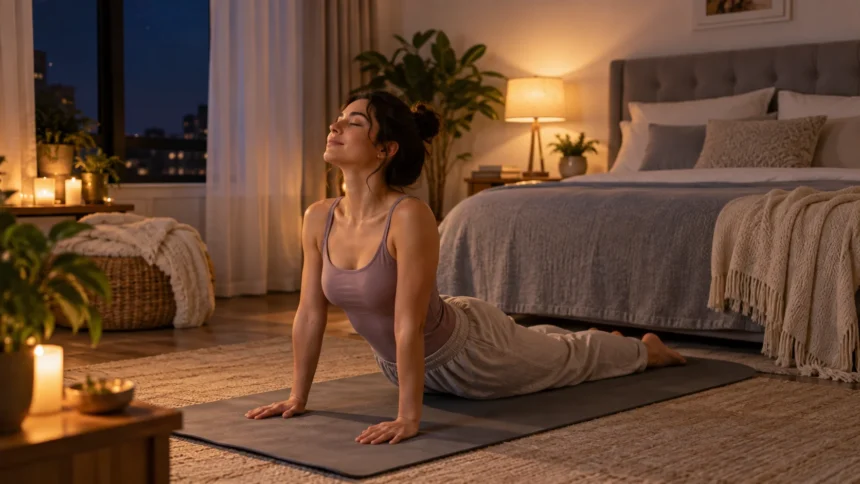
Bedtime yoga is a gentle way to help your body slow down after a long, demanding day. Instead of intense stretches or challenging flows, it focuses on calm movements, comfortable poses, steady breathing, and relaxation. A short evening practice can create a useful transition between daytime responsibilities and the quieter state needed for restful sleep.
Many people carry physical tension into bed without realizing it, especially around the neck, shoulders, lower back, hips, and jaw. Gentle yoga before sleep encourages those areas to relax while shifting attention away from work, screens, and racing thoughts. You do not need advanced flexibility or previous yoga experience to build an effective nighttime routine.
The key is choosing movements that feel soothing rather than stimulating. Bedtime yoga should never feel like another workout you need to complete perfectly. When practiced with comfortable form, slow breathing, and realistic expectations, it can become a relaxing evening ritual that supports both physical comfort and a more peaceful bedtime experience.
What Is Bedtime Yoga?
Bedtime yoga is a low-intensity yoga practice designed specifically for the end of the day. It normally combines gentle stretching, restorative yoga poses, mindful breathing, and relaxation techniques instead of fast flows or demanding strength work. The goal is to reduce unnecessary physical effort while giving your nervous system an opportunity to gradually shift toward rest.
Unlike energetic styles such as power yoga or vigorous vinyasa, nighttime yoga usually keeps movements slow and controlled. Many poses are performed seated, lying down, or supported by pillows and blankets, making the practice accessible even when you feel tired. A typical session may last anywhere from five minutes to half an hour.
You can practice bedtime yoga on a yoga mat, carpet, or even directly on your bed when the poses are stable enough. Comfortable clothing and a quiet environment can make the routine feel more relaxing. Rather than measuring progress through deeper stretches, focus on how comfortably you can breathe, release tension, and stay present.
Benefits of Bedtime Yoga for Sleep and Relaxation
One of the main bedtime yoga benefits is its ability to encourage physical relaxation before sleep. Slow stretches may help release muscle tension that builds during prolonged sitting, standing, exercising, or everyday stress. When the body feels less tight and restless, settling into a comfortable sleeping position may become easier and more natural.
A nighttime yoga routine can also provide a structured way to mentally separate your day from your bedtime. Paying attention to breathing and gentle movement gives your mind something calm to focus on instead of unfinished tasks or tomorrow’s schedule. This mindful transition can make your pre-sleep routine feel less rushed and overstimulating.
Regular yoga may also support body awareness, flexibility, mobility, and stress management over time. However, bedtime yoga should be viewed as one part of healthy sleep habits rather than a guaranteed treatment for insomnia. A consistent sleep schedule, comfortable environment, reduced evening stimulation, and appropriate medical care when needed remain important for overall sleep quality.
Best Bedtime Yoga Poses to Try
Child’s Pose is one of the simplest poses to include in an evening yoga routine. Kneel comfortably, bring your hips toward your heels, and allow your upper body to move forward while your arms rest ahead or beside you. Keep the position comfortable, and place a pillow beneath your chest or forehead if reaching the floor creates unnecessary strain.
A gentle Supine Spinal Twist can help your back and hips relax after a day of sitting or standing. Lie on your back, bring your knees toward your chest, and slowly allow them to move toward one side while keeping the movement pain-free. Avoid forcing your knees toward the floor, and use cushions for support when needed.
Legs-Up-the-Wall is another popular restorative pose because it requires very little muscular effort. Lie near a wall and comfortably extend your legs upward while allowing your arms and shoulders to relax. If this position feels awkward, move farther away from the wall or place your legs on a chair instead for a similar supported resting position.
How to Maintain Proper Form During Bedtime Yoga
Good yoga form does not mean pushing your body into the deepest possible version of every pose. Proper form means maintaining control, breathing comfortably, and avoiding positions that cause sharp pain, pinching, numbness, or excessive strain. Your range of motion may vary from day to day, so allow your body to determine how far each stretch should go.
Move into every position slowly rather than dropping quickly into a stretch. Gentle movement gives you enough time to notice discomfort and adjust your posture before unnecessary pressure develops. When stretching the spine, hips, shoulders, or hamstrings, think about creating comfortable space instead of aggressively pulling your muscles into a deeper range.
Props can significantly improve both comfort and alignment during restorative yoga. Pillows, folded blankets, yoga blocks, bolsters, or even a stable chair can reduce the effort required to maintain a pose. Supporting your body allows muscles to relax more fully, which is especially useful when your goal is preparing for sleep rather than improving athletic performance.
A Simple 15-Minute Bedtime Yoga Routine
Begin with two or three minutes of comfortable seated breathing to mark the start of your nighttime routine. Sit cross-legged or on a cushion, relax your shoulders, and allow your breathing to become slower without forcing it. Then gently move your neck, shoulders, and upper back to release tension accumulated from working, driving, studying, or looking at screens.
Spend the next seven or eight minutes moving through comfortable poses such as Child’s Pose, Cat-Cow, a gentle seated forward fold, and a supported spinal twist. Hold each position long enough to relax instead of moving rapidly between poses. Keep transitions slow and controlled so that the routine becomes progressively calmer rather than increasing your heart rate.
Finish with several minutes in Legs-Up-the-Wall, Reclined Butterfly, or Savasana. Allow your arms, face, jaw, and shoulders to soften while you breathe naturally and notice areas still holding tension. When you finish, avoid immediately returning to bright screens or demanding activities, as doing so may work against the calming atmosphere you just created.
How Breathing Improves a Nighttime Yoga Practice
Breathing is an important part of bedtime yoga because it helps set the pace of your movements. Slow, comfortable breaths encourage you to stop rushing from one pose to another and pay closer attention to physical sensations. There is no need to force extremely deep breaths, particularly if doing so makes you dizzy, uncomfortable, or more focused on technique than relaxation.
A simple approach is to inhale naturally through your nose and allow your exhalation to become slightly slower. For example, you might breathe in comfortably and then let the breath out gradually without straining. Longer, relaxed exhalations can create a calming rhythm while giving your mind a repetitive focus that is easier to follow than stressful thoughts.
Try coordinating movement with your breath whenever it feels natural. You may inhale as you lengthen your spine and exhale as you gently relax into a comfortable stretch. If counting breaths becomes distracting, stop counting and simply notice each inhale and exhale, remembering that nighttime yoga should feel calming rather than becoming another task to perform perfectly.
Best Practices for Doing Yoga Before Bed
Practice bedtime yoga in a quiet, comfortable space whenever possible. Dim lighting, comfortable room temperature, loose clothing, and fewer electronic distractions can make it easier to establish a relaxing environment. You do not need candles, special music, or expensive equipment, although simple details that genuinely help you unwind can make your routine more enjoyable and sustainable.
Timing also matters when creating an evening yoga habit. Many people prefer practicing shortly before their regular bedtime, while others feel better completing yoga earlier and leaving time for showering, reading, or other nightly activities afterward. Experiment with your schedule and choose a routine that fits naturally into your evening rather than creating additional pressure.
Consistency matters more than completing a long session every night. Five or ten minutes of gentle stretching performed regularly can be more realistic than planning a complicated 45-minute routine that you frequently skip. Keep your practice flexible enough to accommodate busy evenings, travel, fatigue, and changing energy levels while still maintaining a recognizable bedtime ritual.
Common Bedtime Yoga Mistakes to Avoid
Turning your bedtime routine into a demanding workout is one of the most common mistakes. Intense flows, challenging balances, repeated strength poses, or highly stimulating movements may leave some people feeling more alert instead of relaxed. Save demanding yoga sessions for another part of your day and keep evening movements slow, comfortable, and appropriate for your current ability.
Another mistake is forcing stretches because you believe greater flexibility automatically means better results. Pain is not a sign that a bedtime yoga pose is working more effectively. If your muscles start shaking, your breathing becomes restricted, or you feel sharp discomfort, reduce the intensity, adjust your position, use supportive props, or choose a different pose.
Avoid becoming overly concerned about completing every pose in a specific order. Your body may need hip stretches one evening and shoulder or lower-back relaxation on another. Treat your sequence as a flexible framework rather than a strict checklist, allowing yourself to shorten, modify, or skip movements depending on how your body feels that night.
Bedtime Yoga Safety and When to Modify Your Routine
Gentle yoga is suitable for many people, but individual health conditions, injuries, mobility limitations, and recent procedures can affect which movements are appropriate. Stop a pose if you experience sharp pain, dizziness, tingling, numbness, unusual shortness of breath, or worsening symptoms. When you are unsure whether particular movements are appropriate, individualized guidance from a qualified healthcare professional can be helpful.
Pregnancy can also change balance, joint comfort, mobility, and which positions feel appropriate as pregnancy progresses. Modifications may be needed, particularly for prolonged positions that become uncomfortable later in pregnancy. People reviewing broader pregnancy lifestyle considerations may also find this guide about sex while pregnant useful for understanding common questions and what to expect.
People recovering from surgery or dealing with persistent back, neck, hip, or joint problems should be especially cautious with new stretches. A pose that feels relaxing for one person may aggravate symptoms for another. Bedtime yoga should support comfort rather than replace professional assessment when pain, sleep difficulties, or other symptoms are persistent, severe, or unexplained.
How to Make Bedtime Yoga a Consistent Habit
Start with a routine small enough that you can realistically repeat it. Committing to five minutes every evening may be more sustainable than starting with an ambitious session that feels difficult after a busy day. Once the habit feels automatic, you can gradually add poses or extend your relaxation time whenever doing so genuinely improves the experience.
Pairing yoga with an existing nighttime habit can also make consistency easier. For example, you might practice immediately after brushing your teeth, changing into sleepwear, or putting your phone away for the evening. Repeating the same sequence of activities can create a predictable signal that your active day is ending and your bedtime routine has begun.
Most importantly, avoid judging individual sessions as successes or failures based on how quickly you fall asleep afterward. Some evenings will feel deeply relaxing, while others may not produce an obvious change. Focus instead on creating a calm, repeatable practice that helps you slow your movements, release unnecessary tension, and approach bedtime with greater awareness.
Conclusion
Bedtime yoga can be a simple and accessible addition to an evening routine. Gentle poses, controlled movement, supportive props, and relaxed breathing may help release physical tension while encouraging a calmer transition from daytime activity to rest. You do not need advanced flexibility, expensive equipment, or lengthy sessions to begin experiencing the relaxing qualities of nighttime yoga.
The most effective routine is usually one that matches your body, schedule, and comfort level. Choose restorative poses instead of demanding exercises, maintain pain-free form, breathe naturally, and modify movements whenever necessary. Keeping your practice simple also makes it easier to repeat consistently without turning relaxation into another performance goal.
Start with just a few comfortable poses and observe how your body responds over several evenings. You can gradually adjust the duration, sequence, and level of support until the routine feels natural. When combined with healthy sleep habits and appropriate professional care for persistent problems, bedtime yoga can become a valuable part of a balanced nighttime routine.
FAQs
Is bedtime yoga good for sleep?
Bedtime yoga may help you relax, release muscle tension, and create a calmer transition into sleep. Results vary between individuals, so it works best alongside consistent sleep habits and a comfortable nighttime environment.
How long should I do yoga before bed?
A bedtime yoga session can last around 5 to 20 minutes, depending on your schedule and comfort. Beginners can start with a few gentle poses and gradually extend the routine if they enjoy it.
What is the best yoga pose to do before sleeping?
There is no single best pose for everyone, but Child’s Pose, Legs-Up-the-Wall, gentle spinal twists, Reclined Butterfly, and Savasana are commonly used because they can be performed slowly with minimal physical effort.
Can beginners do bedtime yoga every night?
Most beginners can practice gentle bedtime yoga regularly when the movements are comfortable and appropriate for their health. Start slowly, avoid forcing stretches, and modify or stop any pose that causes pain or unusual symptoms.
Should I do bedtime yoga on my bed or on the floor?
Either can work depending on the pose. A firm floor or yoga mat provides better stability for movements requiring balance, while supported relaxation poses can often be performed comfortably on a bed.