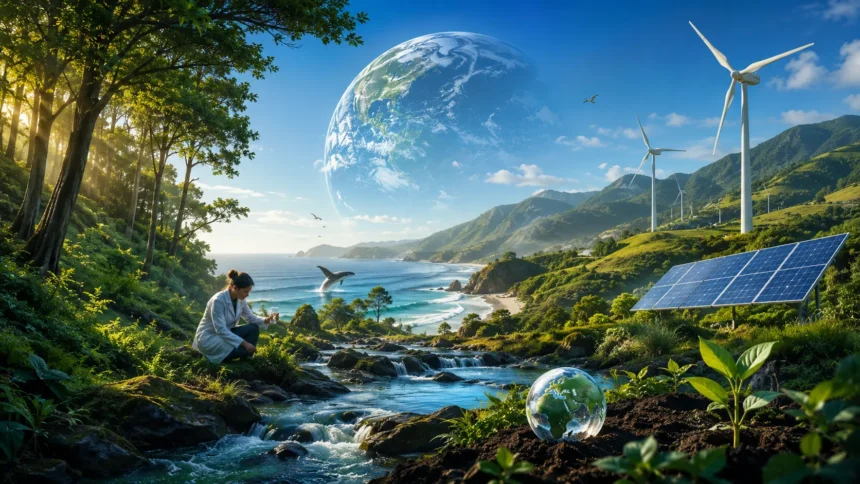
Environmental Science: Understanding & Protecting Our Planet
Environmental science helps us understand how the natural world works and how human activities affect it. It brings together biology, chemistry, geology, atmospheric science, ecology, and other disciplines to study relationships between people and the environment. From the air we breathe to the water we drink, environmental systems influence almost every part of daily life.
The subject has become increasingly important as communities face climate change, biodiversity loss, pollution, deforestation, water scarcity, and growing pressure on natural resources. These challenges are interconnected, which means solving one environmental problem often requires understanding several others at the same time. Environmental science provides the evidence needed to make better decisions.
Protecting the planet does not simply mean preserving distant forests or endangered animals. Healthy ecosystems support food production, clean water, breathable air, fertile soil, medicine, economies, and human health. Environmental protection is therefore closely connected to the quality of life experienced by people around the world.
Understanding environmental science can also make complex environmental discussions easier to evaluate. Instead of seeing climate, energy, conservation, and pollution as separate topics, we can recognize how they influence one another. This broader perspective helps individuals, businesses, scientists, and governments work toward a healthier and more sustainable future.
What Is Environmental Science?
Environmental science is the study of natural systems and the ways humans interact with them. Scientists examine ecosystems, climate, water, soil, wildlife, energy use, pollution, and natural resources to understand how environmental changes occur and what their consequences may be.
Unlike a single scientific discipline, environmental science is highly interdisciplinary. An environmental researcher may use biology to study species, chemistry to analyze pollutants, geology to understand groundwater, and atmospheric science to investigate changes in air quality or climate.
Human behavior is also an important part of environmental research. Economics, public health, urban planning, agriculture, technology, and environmental policy all influence how societies use natural resources and respond to environmental challenges.
The goal is not simply to identify environmental problems. Environmental science also helps researchers evaluate possible solutions, measure whether interventions are working, and understand the trade-offs involved in decisions about land, energy, transportation, conservation, and development.
Why Environmental Science Matters Today
Modern societies depend heavily on natural systems even when those connections are easy to overlook. Agriculture depends on healthy soils, water, pollinators, and stable climate conditions, while cities rely on freshwater supplies, energy resources, and functioning waste-management systems.
Environmental disruption can therefore create economic and social consequences. Drought can affect food prices, extreme heat can threaten health, damaged ecosystems can reduce fisheries, and poor air quality can increase respiratory problems. Environmental science helps reveal these relationships before problems become more difficult to manage.
Population growth, urbanization, industrial development, and rising consumption have also increased pressure on natural resources. Meeting human needs while reducing environmental damage requires efficient technologies, sustainable resource management, and policies based on reliable scientific evidence.
Environmental knowledge is particularly valuable because many decisions made today will influence conditions for decades. Energy infrastructure, urban design, forest management, and agricultural practices can create long-lasting effects, making informed planning essential for future generations.
How Ecosystems Keep the Planet Functioning
An ecosystem includes living organisms and the physical environment with which they interact. Forests, wetlands, grasslands, deserts, coral reefs, rivers, and even urban parks can all function as ecosystems containing networks of plants, animals, microorganisms, water, soil, and nutrients.
Energy typically enters ecosystems through sunlight. Plants and other photosynthetic organisms capture solar energy and convert it into chemical energy, which then moves through food chains as organisms consume plants or other animals.
Nutrients move through ecosystems differently from energy because materials such as carbon, nitrogen, and phosphorus are repeatedly recycled. Decomposers, including fungi and bacteria, break down dead organic matter and return nutrients to soil and water.
Healthy ecosystems provide valuable services to people. They can store carbon, filter water, reduce flooding, support pollination, create fertile soil, provide food, and offer habitats for wildlife. Protecting these systems often benefits both biodiversity and human communities.
Biodiversity and Why It Is Important
Biodiversity refers to the variety of life found at genetic, species, and ecosystem levels. A healthy environment may contain many different organisms, each participating in ecological relationships that contribute to how the overall system functions.
Species can play very different roles. Pollinators help plants reproduce, predators regulate prey populations, decomposers recycle nutrients, and plants provide food and habitat. Removing key species can sometimes change entire ecological communities.
Genetic diversity is important as well because it provides populations with a wider range of characteristics. Greater variation may improve the ability of some populations to respond to disease, changing temperatures, or other environmental pressures.
Protecting biodiversity is therefore more than saving individual species. Conservation efforts also aim to maintain habitats, ecological processes, migration routes, and genetic variation so that natural systems remain resilient over time.
What Causes Biodiversity Loss?
Habitat destruction is one of the major drivers of biodiversity decline. Forest clearing, agricultural expansion, mining, roads, urban development, and other land-use changes can remove or fragment the environments species need to survive.
Pollution can create additional pressure. Chemicals, plastics, excess nutrients, oil spills, and contaminated water may harm organisms directly or disrupt food webs, reproduction, and habitat quality.
Climate change is increasingly affecting where species can live. As temperatures and rainfall patterns shift, some organisms move toward cooler areas or higher elevations, while others may struggle if suitable habitat is unavailable.
Overexploitation and invasive species can also contribute to biodiversity loss. Unsustainable hunting, fishing, logging, or wildlife trade can reduce populations, while introduced species may compete with, prey upon, or spread disease among native organisms.
Understanding Climate Change
Climate change refers to long-term shifts in Earth’s climate, including changes in temperature, rainfall, extreme weather patterns, and other atmospheric conditions. Earth’s climate has changed naturally throughout history, but current warming is strongly linked to human greenhouse gas emissions.
Carbon dioxide, methane, nitrous oxide, and other greenhouse gases trap heat within Earth’s atmosphere. This natural greenhouse effect makes the planet habitable, but adding larger quantities of these gases increases the amount of heat retained.
Burning fossil fuels such as coal, oil, and natural gas is a major source of carbon dioxide emissions. Deforestation, agriculture, industry, transportation, and land-use changes also contribute to greenhouse gas concentrations.
Climate change affects more than temperature. It can influence rainfall, drought, sea levels, glaciers, ecosystems, agriculture, wildfire conditions, ocean chemistry, and the frequency or intensity of some extreme weather events.
The Difference Between Weather and Climate
Weather describes short-term atmospheric conditions such as rain, temperature, wind, humidity, or storms at a particular place and time. Climate refers to longer-term patterns measured over many years or decades.
A single cold day does not disprove global warming, just as one unusually hot afternoon cannot prove a long-term climate trend. Scientists examine large datasets collected over extended periods to identify meaningful changes.
Climate patterns also vary naturally from year to year. Ocean cycles, volcanic activity, solar influences, and atmospheric circulation can create temporary changes that occur alongside longer-term human-caused warming.
Understanding this difference helps people interpret environmental information more accurately. Climate science focuses on long-term trends and probabilities rather than predicting the exact weather that will occur on every individual day.
How Air Pollution Affects People and Nature
Air pollution includes harmful gases and particles released into the atmosphere from transportation, industry, power generation, fires, household fuels, and natural sources. Different pollutants behave differently and can create local, regional, or global effects.
Fine particulate matter is especially concerning because tiny particles can travel deep into the respiratory system. Other important air pollutants include nitrogen oxides, sulfur dioxide, carbon monoxide, and ground-level ozone.
Air pollution also affects ecosystems. Pollutants can damage plants, acidify soils and water, alter nutrient cycles, and reduce agricultural productivity. Some airborne contaminants travel long distances before eventually being deposited.
Improving air quality can therefore provide multiple benefits at once. Cleaner transportation, efficient energy systems, emissions controls, renewable power, and better urban design can reduce pollution while supporting public health and environmental protection.
Water Pollution and the Importance of Clean Water
Freshwater is essential for drinking, agriculture, sanitation, industry, and ecosystems. However, rivers, lakes, groundwater, and coastal areas can become contaminated by sewage, agricultural runoff, industrial chemicals, plastics, and other pollutants.
Nutrients such as nitrogen and phosphorus are necessary for life, but excessive amounts entering waterways can create serious problems. Nutrient pollution may cause rapid algae growth, which can reduce oxygen levels when the algae eventually die and decompose.
Chemical contamination can also threaten wildlife and human health. Some pollutants persist in the environment, accumulate in organisms, or move through food chains, making prevention and careful waste management particularly important.
Protecting water resources requires action throughout entire watersheds. Wastewater treatment, responsible farming, wetland conservation, industrial regulation, and reduced plastic waste can all contribute to cleaner and more reliable freshwater supplies.
Why Oceans Matter to Environmental Science
Oceans cover most of Earth’s surface and play a major role in regulating climate. They absorb heat, move energy around the planet through currents, support enormous ecosystems, and exchange carbon dioxide with the atmosphere.
Marine ecosystems provide food and livelihoods for millions of people. Coral reefs, mangroves, seagrass beds, and coastal wetlands also support wildlife while helping protect shorelines from waves and storms.
Human pressures include overfishing, plastic pollution, coastal development, warming water, and ocean acidification. These pressures can interact, making marine conservation more challenging than addressing each threat separately.
Protecting oceans therefore requires sustainable fisheries, pollution reduction, habitat conservation, responsible coastal development, and lower greenhouse gas emissions. Healthy oceans are essential to both ecological stability and human well-being.
Plastic Pollution and Its Environmental Impact
Plastic has become widely used because it is durable, lightweight, and inexpensive. Those same qualities can create environmental problems when plastic products are discarded and remain in ecosystems for long periods.
Large pieces of plastic can entangle wildlife or be mistaken for food. Over time, plastic materials may break into smaller pieces known as microplastics, which have been detected in oceans, rivers, soil, air, and living organisms.
The environmental impact of plastic begins before disposal. Extracting raw materials, manufacturing products, transporting goods, and managing waste all require energy and resources, meaning reducing unnecessary consumption can have broader benefits.
Solutions include improving waste collection, designing reusable products, reducing avoidable single-use plastics, expanding recycling where effective, and preventing plastic waste from entering rivers and oceans in the first place.
Deforestation and Forest Conservation
Forests support biodiversity, regulate water cycles, protect soil, store carbon, and provide resources used by communities around the world. They also contain some of the planet’s most diverse terrestrial ecosystems.
Deforestation occurs when forests are permanently cleared or converted to other land uses. Agriculture, cattle production, infrastructure, mining, timber extraction, and expanding settlements can all contribute depending on the region.
Removing forests can release stored carbon while reducing future carbon absorption. Habitat destruction can also threaten wildlife, alter rainfall patterns, increase erosion, and affect communities that depend directly on forest resources.
Forest conservation involves more than planting trees. Protecting existing natural forests, restoring degraded ecosystems, improving land management, reducing illegal clearing, and supporting sustainable agriculture can often provide stronger long-term environmental benefits.
Soil Health and Sustainable Agriculture
Healthy soil is a living system containing minerals, organic matter, water, air, fungi, bacteria, and other organisms. It supports plant growth while storing nutrients and water needed for agriculture and natural ecosystems.
Poor land management can cause erosion, nutrient loss, compaction, salinization, or declining organic matter. When soil degrades, farmers may face lower productivity and greater dependence on additional inputs.
Sustainable agriculture aims to produce food while protecting natural resources. Practices can include crop rotation, cover crops, reduced soil disturbance, efficient irrigation, integrated pest management, and improved nutrient management.
There is no single farming method suitable for every landscape. Climate, soil type, crops, economics, and local knowledge all matter, so environmental science helps farmers evaluate which practices are most effective in specific conditions.
Renewable Energy and the Transition Away From Fossil Fuels
Renewable energy comes from sources that are naturally replenished, including sunlight, wind, flowing water, geothermal heat, and sustainably managed biological resources. These sources can provide electricity while reducing reliance on fossil fuels.
Solar and wind technologies have expanded rapidly because they can generate electricity without producing direct carbon dioxide emissions during normal operation. However, all energy systems still have environmental footprints related to manufacturing, materials, land use, and infrastructure.
Energy storage, modern electricity grids, transmission systems, and demand management are increasingly important as renewable generation grows. These technologies help balance changes in electricity production when sunlight or wind conditions vary.
A successful energy transition involves more than replacing one power source with another. Efficiency, cleaner transportation, building design, industrial innovation, and responsible resource extraction all influence the environmental impact of future energy systems.
Energy Efficiency: An Often-Overlooked Solution
Energy efficiency means obtaining the same useful service while using less energy. Better insulation, efficient appliances, improved industrial equipment, LED lighting, and smart building systems can reduce unnecessary energy consumption.
Efficiency can lower greenhouse gas emissions when it reduces demand for fossil-fuel-based electricity or heating. It can also reduce household and business energy costs, making environmental improvements financially attractive.
Transportation efficiency matters as well. More fuel-efficient vehicles, public transportation, cycling infrastructure, walkable communities, and improved logistics can reduce energy use associated with moving people and goods.
Energy efficiency is particularly valuable because it can complement renewable energy. Reducing total demand makes it easier for cleaner electricity sources to supply a larger share of society’s energy needs.
Waste Management and the Circular Economy
Traditional consumption often follows a linear pattern: resources are extracted, products are manufactured, goods are used, and waste is discarded. This system can create pollution while continuously increasing demand for raw materials.
A circular economy aims to keep materials and products useful for longer. Repair, reuse, refurbishment, remanufacturing, and recycling can reduce waste and decrease the need for additional resource extraction.
Product design plays an important role. Items that are durable, repairable, and made from recoverable materials are generally easier to keep within a circular system than disposable products composed of difficult-to-separate materials.
Consumers, businesses, and governments all influence waste generation. Better collection systems, product standards, manufacturer responsibility, recycling infrastructure, and thoughtful purchasing decisions can help reduce the environmental impact of discarded materials.
Conservation and Habitat Restoration
Conservation focuses on protecting species, habitats, and ecological processes. Strategies may include national parks, wildlife reserves, marine protected areas, sustainable resource management, and legal protections for threatened species.
Protected areas are valuable but cannot solve every problem by themselves. Many animals move between habitats, while rivers, pollution, invasive species, and climate change cross political boundaries.
Ecological restoration attempts to repair environments that have been damaged. Projects may restore wetlands, replant native forests, remove invasive species, reconnect rivers, or rebuild habitats needed by declining wildlife populations.
Successful conservation often includes local communities. Long-term environmental protection is more likely to succeed when conservation goals support livelihoods, respect local knowledge, and provide meaningful benefits to the people living near protected ecosystems.
Environmental Science and Human Health
Environmental conditions can have a direct impact on human health. Air pollution, unsafe drinking water, extreme heat, toxic chemicals, contaminated food, and poor sanitation can all contribute to illness.
Climate change can influence health through several pathways. Heatwaves can increase heat-related illness, changing rainfall can affect water availability, and shifting ecological conditions may alter the geographic distribution of certain disease vectors.
Healthy environments can also provide benefits. Green spaces may support recreation and mental well-being, while clean water, stable food systems, and reduced pollution contribute to healthier communities.
Environmental health demonstrates why protecting nature and protecting people should not be treated as competing goals. In many situations, reducing environmental damage simultaneously improves public health and quality of life.
Sustainable Cities and Urban Environmental Solutions
More people now live in urban areas, making cities central to environmental sustainability. Transportation systems, buildings, waste management, electricity use, green spaces, and water infrastructure all influence the environmental footprint of urban communities.
Compact neighborhoods with convenient public transportation, walking routes, and cycling infrastructure can reduce dependence on private vehicles. Efficient buildings can lower energy demand while improving indoor comfort.
Urban trees, parks, wetlands, and green roofs can provide additional benefits. Vegetation can create shade, manage stormwater, support biodiversity, and reduce some of the extreme heat associated with heavily developed areas.
Sustainable cities are not simply cities with more technology. Good urban planning should also create safe, accessible, affordable communities where environmental improvements benefit people across different neighborhoods and income levels.
Environmental Justice and Fairness
Environmental problems do not affect everyone equally. Some communities face higher exposure to pollution, flooding, heat, unsafe water, industrial facilities, or other environmental risks because of historical, economic, and political factors.
Environmental justice focuses on fairness in how environmental benefits and burdens are distributed. It also emphasizes meaningful participation when decisions are made about projects or policies that affect local communities.
A cleaner environment should not become available only to people who can afford to move to less polluted neighborhoods. Effective environmental policy considers public health, affordability, access to resources, and social inequality alongside ecological outcomes.
Including different communities in environmental decision-making can also produce better solutions. People who live with environmental problems often possess practical knowledge about local conditions that may not be visible in scientific datasets alone.
How Technology Helps Protect the Environment
Modern technology gives environmental scientists powerful tools for understanding the planet. Satellites can monitor forests, glaciers, oceans, fires, air pollution, urban growth, and changes in vegetation across huge geographic areas.
Sensors can continuously measure air quality, water conditions, weather, and soil characteristics. These systems allow researchers to detect changes faster and gather data that would be difficult to collect through traditional fieldwork alone.
Artificial intelligence and advanced computer models can help analyze large environmental datasets. Researchers use these tools to identify patterns, improve climate models, monitor wildlife, optimize energy systems, and predict potential environmental risks.
Technology is not automatically sustainable, however. Digital systems require electricity, minerals, manufacturing, and infrastructure. Environmental benefits therefore depend on how technologies are designed, powered, produced, and ultimately disposed of.
What Individuals Can Do to Protect the Planet
Individual actions cannot replace large-scale environmental policy, but personal choices still influence resource demand, waste, and social expectations. Small changes become more meaningful when they are practical enough to maintain over time.
Reducing unnecessary consumption is a useful starting point. Keeping products longer, repairing items, reducing food waste, using reusable alternatives, and choosing durable goods can reduce demand for raw materials and manufacturing.
Transportation and household energy are also important. Walking, cycling, public transportation, efficient appliances, sensible heating and cooling, and cleaner electricity options can reduce environmental impacts when these choices are available.
Individuals can also influence larger systems by voting, supporting environmental initiatives, participating in local projects, discussing environmental issues, and encouraging businesses or institutions to adopt more sustainable practices.
How Businesses Can Become More Sustainable
Businesses influence the environment through energy use, transportation, supply chains, packaging, materials, water consumption, and waste generation. Measuring these impacts is often the first step toward reducing them.
Companies can improve efficiency, switch to cleaner energy, reduce waste, redesign packaging, improve logistics, and source materials more responsibly. Changes should be based on measurable environmental outcomes rather than vague sustainability claims.
Supply chains deserve particular attention because much of a company’s environmental footprint can occur outside its own facilities. Understanding where products and materials originate can reveal risks involving deforestation, pollution, emissions, or excessive resource use.
Transparency is also important. Businesses should clearly explain sustainability goals, progress, and limitations instead of relying on misleading environmental marketing. Credible environmental responsibility requires evidence, accountability, and continuous improvement.
The Role of Governments and Environmental Policy
Many environmental challenges operate on scales that individuals or companies cannot solve alone. Governments can create regulations, infrastructure, incentives, standards, and research programs that influence entire economies.
Environmental policies may address air pollution, water quality, waste management, protected habitats, energy efficiency, transportation, agriculture, and greenhouse gas emissions. Effective rules generally work best when they are supported by reliable monitoring and enforcement.
International cooperation is also important because environmental systems cross national borders. Climate change, ocean pollution, migratory wildlife, air pollution, and shared rivers cannot always be managed effectively by one country acting independently.
Good environmental policy also considers economic and social effects. Transitions may create costs as well as benefits, so planning can help workers, industries, and communities adapt while environmental goals are pursued.
The Future of Environmental Science
Environmental science will become increasingly important as societies respond to climate change, biodiversity decline, resource pressures, and expanding urban populations. Researchers will need to understand not only individual problems but also how environmental systems interact.
New tools will improve monitoring and prediction. Satellite observations, advanced sensors, artificial intelligence, genomic techniques, and increasingly detailed computer models can help scientists detect environmental changes earlier and study them with greater precision.
At the same time, technology alone will not determine the future of the planet. Policies, economics, culture, consumption patterns, education, and public participation will strongly influence whether scientific knowledge becomes meaningful action.
The encouraging part is that environmental problems are not entirely beyond human influence. Cleaner energy, ecosystem restoration, conservation, efficient cities, sustainable agriculture, and pollution controls demonstrate that societies can reduce damage when knowledge and coordinated action come together.
Final Thoughts on Understanding and Protecting Our Planet
Environmental science shows that people are deeply connected to the natural world. Clean water, healthy soil, stable ecosystems, breathable air, and a functioning climate are not optional environmental luxuries; they are foundations of human society.
The challenges facing the planet are complex because climate change, biodiversity loss, pollution, resource use, and economic development frequently overlap. Effective solutions therefore require cooperation among scientists, communities, governments, businesses, and individuals.
Protecting the environment does not require choosing between people and nature. Many of the strongest environmental solutions improve human health, create more efficient economies, strengthen communities, and preserve ecosystems at the same time.
Understanding how environmental systems work is an important first step. When scientific knowledge is combined with responsible decisions and practical action, societies have a better chance of protecting natural resources and creating a healthier planet for future generations.
Frequently Asked Questions
What is environmental science in simple terms?
Environmental science studies how nature works and how humans affect the environment. It covers topics such as ecosystems, climate change, pollution, biodiversity, water, energy, and natural resources.
Why is environmental science important?
Environmental science helps us understand problems that affect human health, wildlife, food, water, and climate. It also provides evidence that can guide conservation and sustainable development.
What are the biggest environmental problems today?
Major environmental challenges include climate change, biodiversity loss, air and water pollution, deforestation, plastic waste, habitat destruction, and unsustainable use of natural resources.
How can we protect the environment?
We can reduce waste, conserve energy and water, support renewable energy, protect habitats, improve transportation, consume resources responsibly, and support effective environmental policies.
What careers are available in environmental science?
Environmental science careers include conservation, ecology, climate research, environmental consulting, sustainability, renewable energy, environmental policy, water management, and pollution control.