What Is Knee Bursitis?
Knee bursitis happens when one of the small fluid-filled sacs around the knee becomes irritated or inflamed. These sacs, called bursae, help reduce friction between bones, tendons, muscles, and skin during movement. When a bursa becomes swollen, everyday activities such as walking, kneeling, climbing stairs, or bending the knee may become uncomfortable.
Several bursae surround the knee, but some are more likely to become irritated than others. Prepatellar bursitis affects the bursa over the kneecap, while pes anserine bursitis usually causes discomfort along the inner side of the knee. The location of swelling and tenderness often provides clues about which bursa may be involved.
Knee bursitis treatment depends on the cause, severity, and whether an infection is present. Many mild cases improve with activity modification, cold therapy, and gradual rehabilitation. However, persistent swelling, severe pain, fever, or redness may require professional assessment to rule out infection, injury, arthritis, or another knee condition.
Common Symptoms of Knee Bursitis
One of the most noticeable symptoms of knee bursitis is localized swelling around the affected area. The knee may look puffy or feel softer than usual, particularly over the kneecap or along the inner joint. Tenderness may increase when you press the swollen area, kneel, squat, or repeatedly bend the knee.
Pain can range from mild aching to sharper discomfort depending on the amount of inflammation. Some people feel stiffness after sitting for long periods or first getting up in the morning. Knee movement may remain possible, but activities that place pressure on the irritated bursa can make symptoms noticeably worse.
Warmth and redness may also appear around the affected bursa. These signs deserve extra attention because they can occasionally indicate an infected bursa rather than simple mechanical irritation. If swelling develops rapidly or is accompanied by fever, chills, drainage, or significant redness, medical evaluation should not be delayed.
What Causes Knee Bursitis?
Repeated pressure on the knee is one of the most common causes of bursitis. People who frequently kneel for work, gardening, cleaning, construction, or certain sports may place continuous stress on the prepatellar bursa. Over time, this repeated compression can irritate the tissue and lead to inflammation, swelling, and tenderness.
Overuse can also contribute to bursitis even without direct kneeling. Repetitive running, climbing, squatting, or sudden increases in physical activity may overload structures around the knee. Tight muscles, poor movement mechanics, weak supporting muscles, or changes in training volume can further increase stress around certain bursae.
A direct blow to the knee can trigger sudden bursitis as well. Less commonly, bacteria can enter a bursa through a cut, scrape, or puncture and cause septic bursitis. Certain inflammatory conditions may also increase susceptibility, making it important to consider the underlying cause before choosing the most appropriate knee bursitis treatment.
How Knee Bursitis Is Diagnosed
A healthcare professional will usually begin by asking when the symptoms started and which activities make them better or worse. They may also ask about recent falls, repetitive kneeling, exercise changes, previous knee injuries, or skin wounds. Examining the exact location of tenderness and swelling can help distinguish bursitis from other causes of knee pain.
During the physical examination, the clinician may gently press around the knee and assess movement, warmth, redness, and stability. Knee bursitis can sometimes resemble arthritis, tendon irritation, ligament injuries, or joint swelling. For that reason, diagnosis is based on the overall pattern of symptoms rather than swelling alone.
Imaging is not always required for straightforward cases, but it may be used when another condition is suspected. In cases with significant swelling or possible infection, fluid may occasionally be removed from the bursa for testing. Identifying whether irritation, injury, inflammation, or infection is responsible helps guide treatment and recovery.
First-Line Knee Bursitis Treatment at Home
Reducing activities that directly irritate the bursa is usually an important first step. This does not necessarily mean complete bed rest, but repeated kneeling, deep squatting, or painful exercise should temporarily be limited. Giving irritated tissue time to settle can reduce repeated friction and make gradual recovery easier.
Cold therapy may help control pain and swelling during the early stage of irritation. Apply a wrapped cold pack for short periods rather than placing ice directly against the skin. Elevating the leg when resting may also be comfortable, particularly if noticeable swelling develops after standing or physical activity.
Gentle compression may be helpful for some people, provided it does not increase pain, numbness, or circulation problems. Supportive footwear and avoiding hard surfaces can also reduce unnecessary stress around the knee. As symptoms improve, normal activity should usually be restored gradually rather than immediately returning to demanding exercise or prolonged kneeling.
Medical Treatment for Knee Bursitis
Pain-relieving or anti-inflammatory medicines are sometimes used when appropriate, but they are not suitable for everyone. Medical history, allergies, stomach problems, kidney issues, blood-thinning medication, and other factors may affect which medicines are safe. A pharmacist or healthcare professional can help determine whether a particular option is appropriate.
If a swollen bursa contains excessive fluid, a clinician may occasionally recommend aspiration to remove some of it. Other treatments may be considered for persistent noninfectious bursitis that does not improve with conservative management. These options are generally chosen after the cause of swelling has been assessed rather than used automatically for every case.
Treatment is different when infection is suspected. Septic bursitis may require antibiotics and sometimes drainage because resting the knee alone will not address a bacterial infection. Increasing redness, warmth, fever, rapidly worsening swelling, or feeling generally unwell should therefore be treated as reasons to seek medical evaluation promptly.
Exercises and Movement During Recovery
Gentle movement can help prevent unnecessary stiffness while knee bursitis settles. The goal is to maintain comfortable mobility without repeatedly compressing or irritating the affected bursa. Easy knee bending and straightening within a pain-free range may be appropriate, but movements that noticeably increase swelling afterward should usually be reduced.
As symptoms improve, strengthening the muscles that support the knee can help with a gradual return to activity. Exercises may target the quadriceps, hamstrings, hips, and gluteal muscles depending on individual needs. Progress slowly, because increasing resistance or training volume too quickly can irritate tissues that have not fully adapted yet.
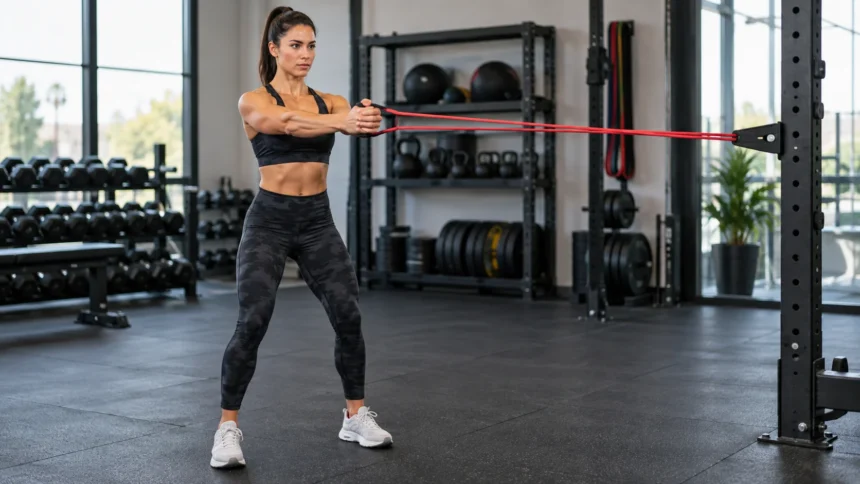
You can also maintain strength in areas that do not directly stress the irritated knee. When comfortable standing is possible, a controlled banded Pallof press can help train core stability without requiring repetitive knee bending. However, stop or modify any exercise that increases knee pain, pressure, or swelling during recovery.
Activities to Avoid With Knee Bursitis
Repeated kneeling should usually be limited while an irritated prepatellar bursa is recovering. Continuing to place body weight directly over the swollen area can keep the tissue irritated and delay improvement. If kneeling is unavoidable for work or daily tasks, protective knee pads and frequent position changes may help reduce direct pressure.
Deep squats, high-impact workouts, running, jumping, or repeated stair climbing may also worsen symptoms in some cases. The activities that need modification depend on the location of the bursitis and what triggers discomfort. An activity that feels comfortable for one person may provoke swelling in someone with a different type of knee bursitis.
Avoid repeatedly testing the knee with painful movements just to see whether it has healed. Symptoms often settle gradually, and constantly provoking the irritated area can interfere with that process. Instead, increase activity in small steps and monitor how the knee feels both during exercise and over the following several hours.
How Long Does Knee Bursitis Take to Heal?
Recovery time varies considerably because knee bursitis can range from mild irritation to severe inflammation or infection. A minor episode caused by temporary overuse may begin improving within several days when the aggravating activity is removed. More persistent bursitis can take several weeks, especially when repetitive kneeling or demanding physical activity continues.
Returning to normal activity should be based more on symptoms and function than on a fixed calendar date. Swelling should be clearly improving, everyday movement should feel comfortable, and the knee should tolerate increasing activity without a significant flare afterward. Trying to rush the process may prolong irritation and cause symptoms to return.
Long-lasting or recurring bursitis may require assessment of contributing factors such as work positions, training habits, muscle weakness, footwear, or movement technique. Recovery may take longer when an underlying inflammatory condition or infection is involved. A healthcare professional can provide more individualized guidance when symptoms are not following an expected improvement pattern.
How to Prevent Knee Bursitis From Returning
Protecting the knee from repeated direct pressure can make a major difference for people prone to prepatellar bursitis. Use cushioned knee pads when gardening, cleaning, installing flooring, or performing work that involves frequent kneeling. Whenever possible, alternate positions instead of remaining on the knees for prolonged periods.
Gradual changes in exercise volume can also reduce unnecessary irritation. Sudden increases in running distance, hill training, squats, lunges, or other repetitive activities may challenge tissues faster than they can adapt. Increasing duration and intensity progressively gives the muscles and joints more time to tolerate additional workload.
Strength, mobility, and movement control are also useful parts of long-term knee care. Maintaining strong hip, thigh, and core muscles can support efficient lower-body movement during everyday tasks and exercise. Prevention is not about avoiding movement entirely; it is about managing pressure, workload, recovery, and technique more effectively.
When Should You See a Doctor?
Seek medical advice if knee swelling is severe, continues getting worse, or does not improve despite reducing aggravating activities. Persistent pain may have another cause that requires assessment, especially if the knee feels unstable, repeatedly locks, or movement becomes significantly restricted. A recent serious fall or direct injury may also warrant professional evaluation.
Redness, increasing warmth, fever, chills, drainage, or rapidly worsening tenderness can suggest infection and should be taken seriously. An infected bursa needs different treatment from ordinary overuse-related bursitis. People with conditions or medications that affect immunity may also need earlier medical assessment when signs of infection appear.
You should also consider professional guidance if knee bursitis repeatedly returns whenever you resume normal activity. A clinician or physical therapist can help identify movement patterns, workload issues, muscle weakness, or occupational habits that may be contributing. Addressing those factors can be more effective than repeatedly treating swelling without correcting its trigger.
Conclusion
Knee bursitis is often manageable when the irritated bursa is protected from repeated pressure and given enough time to recover. Activity modification, cold therapy, gradual movement, and appropriate strengthening can support recovery in many uncomplicated cases. The most effective knee bursitis treatment depends on what caused the inflammation and how severe the symptoms are.
Returning to exercise or demanding activities should happen progressively rather than as soon as pain begins to decrease. Pay attention to swelling and discomfort later in the day because these reactions can indicate that the knee was overloaded. Gradual increases in movement usually make it easier to rebuild tolerance without repeatedly triggering symptoms.
Persistent swelling, significant redness, fever, or rapidly worsening pain should not simply be treated as ordinary exercise soreness. These symptoms may require medical assessment, particularly when infection or another knee condition is possible. Understanding the cause and adjusting the activities that triggered bursitis can support both recovery and long-term prevention.
FAQs
Can knee bursitis heal on its own?
Mild knee bursitis caused by temporary pressure or overuse may improve with activity modification, cold therapy, and gradual return to movement. Persistent, recurring, or worsening symptoms should be medically assessed.
Is walking good for knee bursitis?
Gentle walking may be acceptable when it does not significantly increase pain or swelling. Reduce distance, pace, or frequency if symptoms worsen during the walk or several hours afterward.
Should I massage knee bursitis?
Aggressive massage directly over a swollen bursa may increase irritation and discomfort. Gentle work around surrounding muscles may sometimes feel helpful, but direct pressure over severe swelling should generally be avoided.
Can I exercise with knee bursitis?
You may be able to continue exercises that do not compress the irritated area or worsen symptoms. Low-impact movement and carefully selected strengthening exercises are usually preferable to painful, repetitive knee loading.
What happens if knee bursitis is left untreated?
Minor bursitis may settle naturally, but continued irritation can make symptoms persistent or recurrent. Suspected infected bursitis requires medical treatment because untreated infection can become more serious.