Plantain Weed: Benefits, Uses, Safety and Removal
Plantain weed is one of those plants people often recognize without knowing its name. It grows close to the ground in lawns, gardens, paths, fields, and compacted areas, producing ribbed leaves and upright seed spikes that can survive regular mowing and foot traffic.
Despite its ordinary appearance, plantain weed has a long history as an edible plant and traditional herb. Young leaves have been eaten as greens, while different cultures have used plantain leaf preparations for minor skin complaints, insect bites, coughs, and digestive discomfort.
However, traditional use does not automatically prove that plantain can treat a medical condition. Laboratory research has identified several interesting plant compounds, but strong human evidence remains limited for many of the health benefits commonly promoted online.
This guide explains what plantain weed is, how to identify it, whether it is edible, and what its possible benefits and risks may be. It also covers practical methods for removing broadleaf plantain from a lawn and preventing it from returning.
What Is Plantain Weed?
Plantain weed is a common name for several low-growing plants belonging to the Plantago genus. The two types most frequently found in lawns are broadleaf plantain, known as Plantago major, and buckhorn or narrowleaf plantain, known as Plantago lanceolata.
These plants are herbaceous perennials, meaning they can survive for more than one growing season. Their leaves develop from a central crown at soil level, creating a compact rosette that remains below the usual cutting height of many lawn mowers.
Plantain weed grows particularly well in disturbed and compacted ground. It can appear beside paths, between paving stones, in heavily used lawns, around playgrounds, and in garden beds where the soil has been pressed down by people, vehicles, or equipment.
The plant spreads mainly through seeds produced on its upright flower spikes. A mature plant may release thousands of seeds, allowing a small patch to become a larger lawn problem when the seed heads are allowed to mature repeatedly.
Plantain Weed Is Not the Plantain Fruit
Plantain weed is not related to the large, starchy fruit commonly cooked in African, Caribbean, Latin American, and Asian cuisines. The fruit belongs to the banana group, while the lawn weed belongs to the botanical genus Plantago.
The shared name can create confusion when people search for plantain benefits, plantain recipes, or plantain nutrition. Articles about fried plantains, green plantains, and plantain chips are discussing the banana-like fruit rather than the small leafy plant growing in lawns.
Plantain weed produces no banana-shaped fruit. Instead, it forms a low cluster of green leaves and narrow flowering stalks. Depending on the species, its leaves may be broad and oval or long and narrow.
Using the terms broadleaf plantain, buckhorn plantain, plantain herb, or Plantago can make online searches more accurate. These names help separate information about the edible lawn weed from information about the tropical cooking fruit.
How to Identify Plantain Weed Correctly
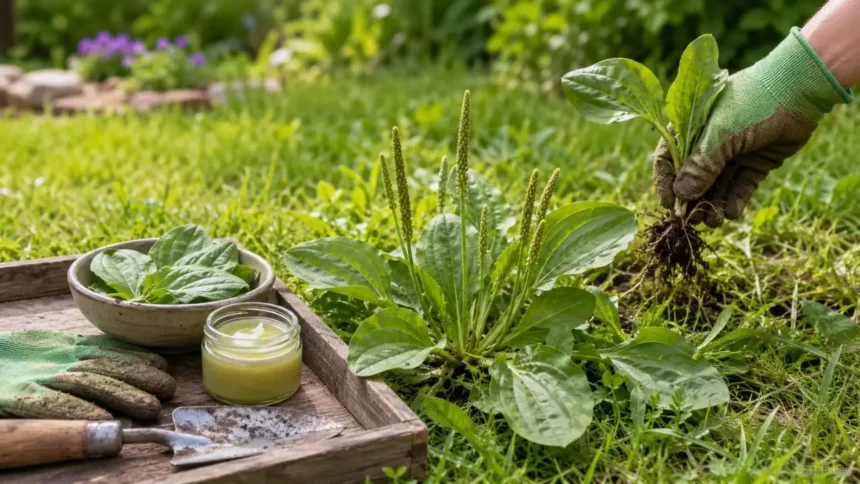
Broadleaf plantain usually forms a flat rosette of wide, oval, or egg-shaped leaves. Each leaf narrows into a stalk near the crown, and several prominent veins run from the base toward the tip in an almost parallel pattern.
One useful identification feature is the string-like structure inside the veins. When a mature leaf is carefully pulled apart, the strong veins may stretch between the separated sections instead of breaking immediately.
The flowers are small and easy to overlook. They grow along upright, leafless stalks emerging from the center of the rosette. As the plant matures, the flower heads develop into brown or greenish seed spikes.
Correct identification matters before eating, applying, or preparing any wild plant. Leaf shape alone is not enough, especially when a plant is young, damaged, or growing among several other weeds. Consult a local plant expert when identification remains uncertain.
Broadleaf Plantain vs. Buckhorn Plantain
Broadleaf plantain has wide, rounded leaves that often lie close to the soil. The leaves usually have several deeply visible veins and may develop wavy or slightly uneven edges as the plant matures.
Buckhorn plantain has longer, narrower leaves shaped more like a lance or strap. Its leaves also contain strong parallel ribs, but the overall plant looks more upright and grass-like than broadleaf plantain.
Their seed heads are different as well. Broadleaf plantain generally produces long spikes with flowers or seeds extending along much of the stalk, while buckhorn plantain develops a shorter, denser flower head near the top.
Both species tolerate mowing, foot traffic, and challenging soil conditions. The same basic lawn-care methods can discourage them, although homeowners should identify the weed correctly before choosing a herbicide or targeted management product.
Why Plantain Weed Grows in Lawns
Plantain often appears where grass is thin and the soil is compacted. Its strong crown and fibrous root system help it survive conditions that prevent turfgrass roots from developing deeply or accessing enough air and water.
Repeated foot traffic can create ideal conditions for this lawn weed. Paths made by children, pets, vehicles, or garden equipment compress the soil and weaken the surrounding grass, leaving space where plantain seeds can germinate.
Poor drainage may also contribute to broadleaf plantain growth. Although the plant can tolerate different environments, it is commonly associated with moist, disturbed ground and may become noticeable where water remains after rain or irrigation.
The weed is therefore more than an unwanted plant; it may also signal an underlying lawn problem. Removing plantain without correcting compaction, drainage, mowing, or grass density often leads to another patch developing later.
Is Plantain Weed Edible?
Properly identified plantain weed is generally described as an edible wild plant. Young leaves are the most tender and may be added in small amounts to salads, soups, stir-fries, or other cooked dishes.
Older plantain leaves often become tough, fibrous, and bitter. Cooking can soften them, but the thick veins may remain stringy. Removing the strongest ribs and choosing younger growth can create a more pleasant texture.
The seeds are also considered edible, although they are small and time-consuming to collect. They should not be confused with commercial psyllium products, which usually come from specific cultivated Plantago species and are processed under controlled conditions.
Never eat plantain weed collected from roadsides, sprayed lawns, dog-walking areas, industrial ground, or places contaminated by herbicides, pesticides, heavy metals, or waste. Edibility does not protect the plant from environmental contamination.
Potential Nutritional Benefits of Plantain Leaf
Plantain leaves contain fiber and a range of naturally occurring plant compounds. Like many leafy greens, they can contribute small amounts of vitamins, minerals, and antioxidant compounds when included as part of a varied diet.
The nutritional content can change according to species, soil, plant age, climate, and preparation method. Young leaves may be easier to eat, while cooking can reduce some heat-sensitive nutrients and improve the texture of mature leaves.
Eating a small serving of plantain leaf should not be treated as a replacement for commonly available vegetables. Spinach, kale, cabbage, broccoli, and other cultivated greens are easier to identify, clean, measure, and include consistently in meals.
The strongest reason to try plantain as food is variety rather than a promise of extraordinary nutrition. It can introduce people to responsible foraging, but it is not a miracle superfood or a proven treatment for nutritional deficiencies.
Traditional Plantain Weed Benefits
Plantain has been used traditionally on minor cuts, scrapes, insect bites, stings, and irritated skin. Fresh leaves were sometimes crushed into a simple poultice, while dried leaves were prepared in washes, infused oils, or salves.
Ribwort plantain has also been used in traditional herbal preparations for throat irritation and dry cough. Its leaves contain mucilage-like substances that may create a soothing sensation when included in properly prepared teas, syrups, or lozenges.
Other traditional plantain herb uses include supporting digestion and soothing irritated tissues. These uses are based largely on historical practice, laboratory findings, and limited clinical information rather than strong evidence proving that the plant treats disease.
It is more accurate to describe these as traditional applications instead of confirmed cures. Plantain weed should not replace antibiotics, asthma medicine, wound treatment, allergy care, or professional evaluation of persistent symptoms.
What Research Says About Plantain Weed
Researchers have identified compounds in plantain leaves, including flavonoids, iridoid glycosides, tannins, polysaccharides, and phenolic substances. Some have demonstrated antioxidant, antimicrobial, or anti-inflammatory activity in laboratory settings.
Laboratory activity does not guarantee the same effect in the human body. A substance may behave differently after digestion, processing, dilution, or application to skin, and the amount used in an experiment may not match a typical herbal preparation.
Human studies on Plantago major and Plantago lanceolata remain limited for many commonly promoted benefits. There is not enough high-quality evidence to say that plantain weed cures infections, heals serious wounds, controls diabetes, or prevents chronic disease.
The most responsible approach is to appreciate the plant’s traditional history while recognizing the limits of current evidence. Claims that plantain can cure cancer, remove toxins, reverse disease, or replace prescribed treatment should be viewed with particular caution.
Plantain Weed for Bites and Skin Irritation
Plantain leaf is often promoted as a natural remedy for mosquito bites, bee stings, rashes, and itchy skin. A cool, clean leaf preparation may feel soothing, but this does not prove that it neutralizes venom or treats an allergic reaction.
Applying a freshly picked leaf directly to broken skin can introduce dirt, bacteria, pesticides, or other contaminants. Washing the plant reduces visible dirt but does not make a homemade preparation sterile or medically approved.
Do not use plantain weed on deep cuts, puncture wounds, serious burns, infected skin, animal bites, or injuries that will not stop bleeding. These conditions require proper cleaning and, in some cases, urgent medical treatment.
Difficulty breathing, facial swelling, dizziness, or rapidly spreading hives after an insect sting may indicate a severe allergic reaction. Emergency care is more important than attempting to use plantain leaf or another home remedy.
Plantain Tea, Salves and Supplements
Plantain tea is usually made from commercially dried broadleaf or ribwort plantain leaves. People drink it for its mild herbal flavor or traditional soothing use, but homemade tea does not provide a standardized medical dose.
Plantain salves and creams combine the herb with oils, waxes, or other ingredients. Their quality can vary significantly, and additional fragrances, preservatives, or essential oils may cause irritation even when the plantain itself is tolerated.
Capsules, extracts, tinctures, cough syrups, and concentrated powders may deliver larger quantities than food or tea. Higher concentration does not necessarily produce a better result and can increase the possibility of side effects or medication interactions.
Choose products from manufacturers that provide clear ingredient labels and independent quality testing. Speak with a healthcare professional before using concentrated plantain products regularly, particularly when managing a medical condition.
Plantain Weed Side Effects and Safety
Some people may experience an allergic reaction to plantain weed, especially if they are sensitive to pollen or related plants. Possible symptoms include itching, rash, swelling, sneezing, wheezing, or digestive discomfort.
Eating unfamiliar wild greens can cause nausea, stomach pain, or diarrhea, particularly when a large amount is consumed suddenly. Try only a small serving after confident identification and discontinue use if an uncomfortable reaction develops.
Reliable safety information is limited for medicinal amounts during pregnancy and breastfeeding. Children, older adults, and people with chronic medical conditions may also respond differently to concentrated herbal products.
Plantain supplements may interact with medicines or affect how the body handles them. People taking blood pressure drugs, diabetes medication, blood thinners, diuretics, or several prescriptions should obtain professional guidance before regular medicinal use.
How to Harvest Plantain Weed Safely
Harvest only from an area you know has not been treated with lawn chemicals, weed killers, pesticides, or contaminated water. Avoid roadsides because plants may be exposed to vehicle pollution, road salt, animal waste, and other contaminants.
Choose healthy young leaves without discoloration, disease, visible insect damage, or mold. Collecting a few leaves from several plants is more sustainable than stripping one plant completely.
Wash harvested leaves carefully under clean running water and inspect both surfaces. Dry them with a clean towel before cooking, storing, or using them in any food preparation.
Do not forage from public parks, protected land, or private property without permission. Local rules may restrict plant collection, and some sites use herbicides without placing notices beside every treated patch.
How to Remove Plantain Weed From a Lawn
Small patches can often be removed by hand when the soil is moist. Use a narrow weeding tool to loosen the ground around the crown and lift the plant with as much of its root system as possible.
Removing only the leaves is rarely effective because the crown can produce new growth. Mowing alone also provides limited control, as the low rosette remains below the mower blade and continues gathering energy.
After removing the plant, repair the empty area with suitable soil and grass seed. Leaving bare ground creates an opening where plantain seeds or other weeds can germinate.
For widespread infestations, a lawn-safe broadleaf herbicide may be considered. Follow the label exactly, confirm that the product targets plantain, protect nearby desirable plants, and comply with local pesticide regulations.
How to Prevent Plantain From Returning
Reducing soil compaction is one of the most useful preventive steps. Core aeration can create openings for air, water, and nutrients while helping grass roots grow more deeply in heavily used areas.
Improve drainage where water regularly collects. Depending on the cause, this may involve adjusting irrigation, redirecting runoff, improving soil structure, or obtaining professional help for a serious grading problem.
Maintain a dense lawn by selecting grass suited to the local climate and available sunlight. Use an appropriate mowing height, reseed thin areas, and avoid removing too much grass in a single mowing session.
A soil test can identify pH or nutrient problems that weaken turf. Fertilizing without testing may waste money, encourage excessive growth, or damage the lawn, whereas targeted amendments can create conditions that favor grass over weeds.
Should You Keep or Remove Plantain Weed?
Whether plantain should remain depends on how the area is used. In a highly maintained lawn, its broad rosettes may interrupt the uniform appearance and compete with weakened turf for space.
In a less formal garden, a small amount may be tolerated as part of a diverse ground layer. The plant can cover disturbed soil, and its seeds may provide food for some birds and other wildlife.
Gardeners interested in plantain as an edible or traditional herb may grow it intentionally in a controlled, chemical-free bed. This makes harvesting safer and prevents accidental collection from treated lawn areas.
Even when you decide to keep some plants, remove unwanted seed spikes before they mature. Controlling seed production helps prevent plantain from spreading into paths, flower beds, neighboring lawns, and other areas where it may become difficult to manage.
Common Mistakes to Avoid
Do not identify plantain weed from one online photograph alone. Leaf size and color can change with shade, moisture, mowing, disease, and plant age, making several unrelated species look similar at first glance.
Avoid assuming that natural remedies are automatically harmless. Fresh plant material can trigger allergies, carry contamination, interact with medications, or delay proper treatment when it is used for a serious medical problem.
Do not remove plantain while ignoring the condition of the lawn. When compacted soil, poor drainage, low mowing, or thin turf remains unchanged, the weed or another opportunistic species is likely to return.
Avoid allowing seed heads to mature when control is the goal. One overlooked plant may produce a large number of seeds, and those seeds can be transported through soil, footwear, equipment, animals, and water.
Final Thoughts
Plantain weed is a resilient perennial plant commonly found in lawns, paths, fields, and disturbed soil. Its ribbed leaves, basal rosette, and upright flower spikes make it recognizable once you know what to look for.
The young leaves are edible when correctly identified and gathered from a clean location. Plantain also has a long history in traditional herbal practices, particularly for minor skin irritation, throat discomfort, and cough preparations.
Scientific interest in the plant is growing, but many popular health claims remain insufficiently proven in humans. It should be treated as a food or traditional herb rather than a cure for infections, wounds, or chronic disease.
Homeowners who want to remove plantain should pull out the complete crown and improve the conditions that weakened the lawn. Relieving compaction, repairing bare areas, improving drainage, and maintaining dense turf provide more lasting control than mowing alone.
Frequently Asked Questions
What is plantain weed good for?
Young leaves can be eaten as wild greens, while plantain has traditionally been used in preparations for minor skin irritation and dry cough. Evidence does not support treating it as a cure for disease.
How can I identify plantain weed?
Look for a low rosette of strongly ribbed leaves and upright, leafless seed spikes. Broadleaf plantain has oval leaves, while buckhorn plantain has narrow, lance-shaped leaves.
Is plantain weed safe to eat?
Properly identified young leaves are generally considered edible. Only collect them from clean, chemical-free areas, wash them well, and begin with a small amount.
Why is plantain weed growing in my lawn?
Plantain commonly appears in compacted, moist, heavily used, or thin areas of turf. Its presence may indicate that the soil and lawn conditions need improvement.
How do I permanently remove plantain weed?
Remove the complete crown and root, repair the bare patch, relieve soil compaction, and encourage dense grass growth. Repeated monitoring may be necessary because seeds can remain in the area.