Pumpkin Seed Oil Benefits, Uses and Side Effects
What Is Pumpkin Seed Oil and Why Is It Popular?
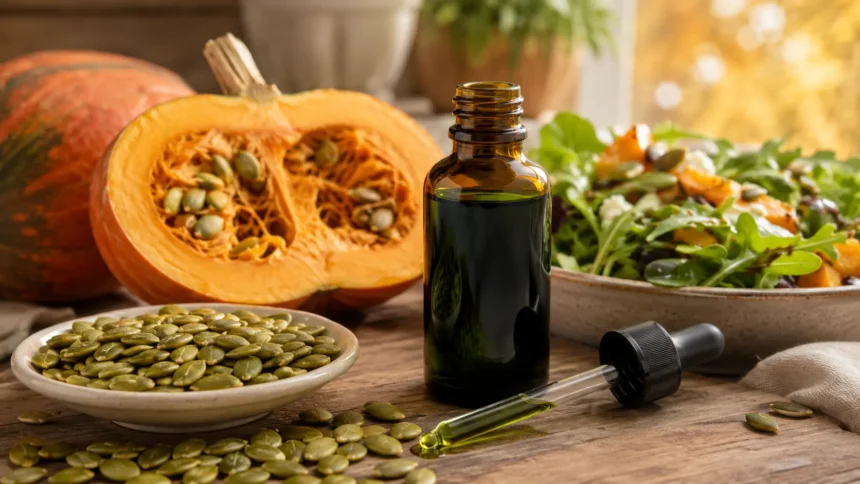
Pumpkin seed oil is a dark green to reddish-brown oil pressed from the edible seeds of pumpkins and certain winter squash varieties. It has a nutty, rich flavor and is commonly used as a finishing oil for salads, soups, roasted vegetables, dips, and grain dishes. In supplement form, it is often marketed for prostate health, bladder support, hair growth, heart health, and menopause symptoms. Its popularity comes from a mix of culinary appeal and interest in its fatty acids, phytosterols, vitamin E compounds, and other plant-based nutrients. Like many food-based supplements, however, the scientific evidence varies widely depending on the claimed benefit. It is best viewed as a nutritious oil with some promising research, not a cure-all.
Cold-pressed pumpkin seed oil is often associated with Styrian pumpkins, which are traditionally grown in parts of Austria and Central Europe. These seeds may have thin hulls or hull-free varieties that make oil extraction easier. The finished oil is valued for its distinctive color, flavor, and concentration of unsaturated fats. Because it is less refined than many standard cooking oils, it may retain more naturally occurring plant compounds. However, it can also be more sensitive to heat, light, and air exposure. Proper storage matters if you want to protect its flavor and reduce the risk of rancidity.
Pumpkin seed oil is different from pumpkin purée, pumpkin flesh, and whole pumpkin seeds. Pumpkin flesh provides fiber, carotenoids, potassium, and vitamins, while whole seeds also provide protein, magnesium, zinc, and fiber. Oil contains mostly fat and fat-soluble compounds, but it does not provide the same amount of protein or fiber as whole seeds. This distinction matters when evaluating health claims. A tablespoon of oil can fit into a balanced diet, but it cannot replace nutrient-dense whole foods. Understanding the form you are using helps prevent unrealistic expectations.
The oil’s main fats are generally unsaturated, including linoleic acid and oleic acid. It also contains phytosterols, tocopherols, and small amounts of other bioactive compounds that researchers are studying. These components may help explain why pumpkin seed oil is being investigated for cholesterol, urinary symptoms, inflammation, and hair loss. Still, a compound found in a food does not automatically produce a major health effect in every person. The dose, product quality, overall diet, existing health conditions, and study design all influence real-world results. Good research interpretation means separating possible benefits from proven outcomes.
Pumpkin seed oil is especially popular among people looking for gentler, food-based approaches to wellness. Some use it in meals for flavor, while others take capsules for targeted concerns such as benign prostatic hyperplasia, overactive bladder, or androgenetic hair loss. It can be a reasonable addition to a healthy routine when used carefully, but it should not replace prescribed treatment or delay a medical evaluation. New urinary symptoms, rapid hair loss, severe fatigue, or persistent pain deserve professional assessment. The most useful approach is to treat pumpkin seed oil as one supportive tool rather than the entire plan. That perspective keeps expectations realistic and safety centered.
Pumpkin Seed Oil Nutrition and Key Plant Compounds
Pumpkin seed oil is calorie-dense because it is primarily fat. Like other oils, one tablespoon can provide roughly 120 calories, although exact nutrition varies by brand and serving size. Most of those calories come from unsaturated fatty acids, which can be part of a heart-healthy dietary pattern when used instead of saturated fats. It contains little to no protein, fiber, vitamin C, or carbohydrate because those nutrients remain mostly in the whole seed rather than the extracted oil. This does not make the oil unhealthy, but it means portion size matters. Drizzling a small amount over food is usually more practical than treating it as a large daily beverage.
Linoleic acid is one of the main fatty acids in pumpkin seed oil. It is an omega-6 polyunsaturated fat that the body needs from food because it cannot make enough on its own. Omega-6 fats are sometimes misunderstood, but they can fit comfortably into a balanced diet when they replace excess saturated fat and are eaten alongside other nutritious foods. Pumpkin seed oil also contains oleic acid, a monounsaturated fat found in foods such as olive oil, avocados, and some nuts. These fats support the oil’s smooth texture and may contribute to its potential cardiometabolic benefits. The overall dietary pattern still matters far more than one oil alone.
Phytosterols are another reason pumpkin seed oil has attracted research attention. These plant compounds have a structure similar to cholesterol and may reduce the amount of dietary cholesterol absorbed in the intestine. That does not mean pumpkin seed oil acts like a prescription cholesterol medicine, but it may be one small supportive food choice. The amount of phytosterols can differ depending on the pumpkin variety, extraction method, processing, and serving size. Products marketed as supplements may use standardized extracts or different formulations than culinary oils. Always read the label carefully so you know whether you are buying oil, seed extract, or a blend.
Tocopherols, including forms of vitamin E, contribute antioxidant activity to pumpkin seed oil. Antioxidants help protect fats and cells from oxidative damage, although supplement marketing often exaggerates what this means in everyday health. Eating a variety of plant foods remains a more reliable way to obtain many protective nutrients. Pumpkin seed oil can complement vegetables, beans, fruit, whole grains, and other nutrient-dense foods, but it should not be viewed as a shortcut. Its nutty flavor may make it easier to enjoy salads and cooked vegetables, which can indirectly support better eating habits. In that sense, the culinary benefit can be just as valuable as any isolated nutrient claim.
Because pumpkin seed oil is rich in unsaturated fats, it is best stored in a cool, dark place in a tightly sealed container. Refrigeration may be helpful after opening, particularly for cold-pressed products that are not highly refined. If the oil smells sharp, paint-like, bitter, or unpleasantly stale, it may be rancid and should be discarded. Avoid exposing it to repeated high heat, as this can affect flavor and degrade delicate compounds. Use it as a finishing oil, in dressings, or in low-heat recipes rather than relying on it for deep frying. The USDA has documented meaningful polyunsaturated fat content in cold-pressed pumpkin seed oil, although profiles vary among products. See the USDA research summary.
Potential Heart Health Benefits of Pumpkin Seed Oil
Pumpkin seed oil may support heart health because it contains unsaturated fats and plant sterols. Replacing some saturated fat from butter, processed meats, or heavily fried foods with unsaturated plant oils can support healthier cholesterol levels as part of an overall dietary pattern. Pumpkin seed oil is not unique in this respect, but it offers a flavorful alternative to more familiar oils. Its deep color and robust taste can make small portions satisfying in salad dressings or vegetable dishes. This may help people use less added fat while still enjoying their meals. The benefit comes from how the oil fits into the diet, not from a single dramatic effect.
Small studies have explored whether pumpkin seed oil supplements may influence blood pressure, cholesterol, or blood lipids. Some findings suggest possible improvements in LDL cholesterol, HDL cholesterol, triglycerides, or diastolic blood pressure in certain groups. These results are interesting, but they are not strong enough to recommend pumpkin seed oil as a treatment for high cholesterol or hypertension. Studies often use different doses, populations, and supplement formulations, making direct comparison difficult. People with heart disease risk should continue evidence-based care, including prescribed medication, activity, sleep, and dietary changes. Stopping medication in favor of a supplement can be dangerous.
Phytosterols may be one possible explanation for pumpkin seed oil’s potential cholesterol effects. Plant sterols can compete with cholesterol absorption in the digestive system, which may modestly lower LDL cholesterol when consumed in meaningful amounts. However, the amount obtained from a typical drizzle of culinary oil may be much smaller than the amount used in studies of phytosterol-enriched foods. This is why it is important to distinguish between a delicious food ingredient and a therapeutic-dose product. Both can have a place, but they should not be discussed as if they work identically. Marketing language often blurs that line.
Pumpkin seed oil may also appeal to people who want to increase plant-based fats without relying on the same oil every day. Variety can make a healthy eating pattern more enjoyable and may provide a broader mix of flavor and nutrients. You might use olive oil for everyday cooking, pumpkin seed oil for finishing, and nuts, seeds, avocado, or fish for additional healthy fats. This approach avoids giving one food an unrealistic role. It also keeps total calorie intake in perspective, since all oils are energy-dense. A small amount can be useful, but more is not necessarily better.
If you are managing high cholesterol, high blood pressure, diabetes, or cardiovascular disease, speak with a clinician before starting pumpkin seed oil capsules. Supplements can interact with medications or create a false sense that professional monitoring is no longer needed. Keep using the eating plan and treatments recommended for your condition. If you want to add culinary pumpkin seed oil, start with a teaspoon or tablespoon in meals and watch how it fits your overall intake. It can be a flavorful addition to a heart-conscious diet, but it is not a replacement for medical care. Sustainable food habits remain more important than any single “superfood” oil.
Pumpkin Seed Oil for Prostate and Bladder Health
Pumpkin seed oil is commonly promoted for urinary symptoms linked to an enlarged prostate, also called benign prostatic hyperplasia or BPH. BPH is a noncancerous enlargement of the prostate gland that becomes more common with age. It can cause a weak urine stream, trouble starting urination, frequent nighttime urination, urgency, or the feeling that the bladder does not empty fully. These symptoms can significantly affect sleep, travel, work, and quality of life. Because pumpkin seed oil contains phytosterols and other plant compounds, researchers have explored whether it may help support urinary function. The early evidence is promising but not strong enough to replace standard medical evaluation and treatment.
Some studies suggest pumpkin seed oil may improve lower urinary tract symptoms in people with BPH. In one comparison study, pumpkin seed oil improved symptoms but was not as effective as tamsulosin, a commonly prescribed medication used to relax muscles around the prostate and bladder neck. This is an important finding because it supports a balanced view. Pumpkin seed oil may offer modest support for some people, but it should not be presented as equal to prescription therapy. People with severe symptoms may need medication, testing, or procedures to prevent complications. A supplement cannot rule out prostate cancer, infection, stones, or urinary retention.
Pumpkin seed oil is also sometimes marketed for overactive bladder symptoms. These may include urgency, frequent urination, urge leakage, and waking many times at night to urinate. Such symptoms can have many causes, including infection, diabetes, medication effects, pelvic floor dysfunction, neurological conditions, and bladder irritation. If you have new urgency, burning, blood in urine, fever, pelvic pain, or trouble passing urine, seek medical advice rather than self-treating with supplements. A clinician can determine whether an underlying condition needs prompt care. Once serious causes are excluded, lifestyle changes and treatment options can be discussed.
The potential prostate benefits of pumpkin seed oil may relate to plant sterols, fatty acids, and anti-inflammatory activity, but the exact mechanism in humans is not fully established. Some theories focus on effects involving 5-alpha-reductase, an enzyme connected to hormone metabolism. However, laboratory mechanisms do not guarantee clinically meaningful results. Many supplement claims become overstated when they move from test tubes or animal studies to social media marketing. The most honest conclusion is that pumpkin seed oil may help some urinary symptoms, but response varies. It should be considered supportive, not curative.
If you choose to try a pumpkin seed oil supplement for mild urinary symptoms, tell your doctor or pharmacist first. Ask about product quality, dose, interactions, and how long to try it before reassessing. Keep track of nighttime urination, urgency, urine flow, and any side effects so you can judge whether it is helping. Do not delay care if symptoms worsen, you cannot urinate, you see blood in your urine, or you develop fever or severe pain. Research comparing pumpkin seed oil with tamsulosin found symptom relief with pumpkin seed oil but stronger results with the medication. Read the clinical study for more context.
Can Pumpkin Seed Oil Help With Hair Growth?
Pumpkin seed oil has become a popular natural remedy for hair loss, especially male pattern hair loss, also known as androgenetic alopecia. This condition is influenced by genetics and hormones and often causes gradual thinning around the temples, crown, or hairline. Pumpkin seed oil is thought to have possible antiandrogenic effects because of its phytosterol content. Some people hope it may influence pathways involving dihydrotestosterone, or DHT, a hormone associated with follicle miniaturization in androgenetic alopecia. That theory is biologically interesting, but it does not prove that every pumpkin seed oil product will regrow hair. Hair loss has many causes, so correct diagnosis comes first.
A frequently discussed 2014 trial involved men with androgenetic alopecia who received a pumpkin seed oil-containing intervention or placebo for 24 weeks. The intervention group showed greater hair-count improvement than the placebo group, which helped bring attention to pumpkin seed oil for hair growth. However, the study was relatively small and does not settle the question for all people with hair thinning. It also does not mean pumpkin seed oil has been shown to outperform established hair-loss treatments. More large, high-quality studies are needed, especially in women and in people with different forms of hair loss. Promising research should be interpreted with caution rather than turned into a guarantee.
It is also important to distinguish oral supplements from topical pumpkin seed oil. Most human discussion centers on oral products, while topical use is supported mainly by limited research and anecdotal reports. Applying oil directly to the scalp may moisturize hair and reduce the feeling of dryness, but it can also leave residue or cause irritation in some people. It has not been proven to regrow hair as reliably as medically approved treatments. If you have dandruff, psoriasis, eczema, seborrheic dermatitis, or a sensitive scalp, topical oil may make symptoms worse. Patch test first and stop if you develop itching, burning, bumps, or increased flaking.
Hair shedding can also be caused by iron deficiency, thyroid disorders, illness, rapid weight loss, postpartum changes, autoimmune disease, medications, tight hairstyles, and nutritional deficiencies. A person who assumes all hair loss is hormonal may miss an underlying condition that needs treatment. See a dermatologist or healthcare professional if your hair loss is sudden, patchy, accompanied by scalp pain, or associated with fatigue, weight change, or other symptoms. Early evaluation can improve outcomes, particularly for conditions such as alopecia areata or scarring alopecia. Pumpkin seed oil should never delay diagnosis of sudden or severe hair loss. A realistic plan may include testing, prescription treatment, and gentle hair care.
If you want to try pumpkin seed oil for mild hair thinning, discuss it with a dermatologist and use it as an adjunct rather than your only treatment. Take baseline photos in consistent lighting and reassess gradually because hair growth changes slowly. Avoid comparing your progress with edited online images or expecting results within days. Ask about evidence-based options such as minoxidil or other treatments that may fit your diagnosis and medical history. The published trial found greater hair-count increases in the intervention group over 24 weeks, but it remains limited evidence. Review the study record before treating its results as conclusive.
Pumpkin Seed Oil for Skin, Menopause, and Other Claims
Pumpkin seed oil is often included in skin-care products because its fatty acids can give formulas a rich, moisturizing feel. When used topically, it may help reduce the sensation of dryness by supporting the skin’s outer barrier. This is a cosmetic benefit, not a treatment for serious skin disease. People with sensitive skin, acne-prone skin, eczema, rosacea, or allergies should patch test before applying it widely. Oils can be helpful for some dry areas but may feel heavy or irritating for others. Fragrance-free moisturizers with established barrier-supporting ingredients are often a more predictable choice for chronic dry-skin conditions.
Some people use pumpkin seed oil for menopause symptoms because small studies have explored its possible effects on hot flashes, headaches, blood pressure, and mood. The evidence is still limited, and menopause symptoms can have many overlapping causes. A supplement that helps one person may not help another, especially when doses and formulations differ. Hormone therapy, nonhormonal medications, sleep changes, and lifestyle support may be more appropriate depending on your symptoms and health history. Talk with a clinician if hot flashes, night sweats, mood changes, or vaginal symptoms are affecting daily life. Self-treating without guidance may delay more effective care.
Pumpkin seed oil is sometimes discussed for inflammation, liver health, blood sugar, memory, or sexual health. These claims often come from laboratory research, animal studies, traditional use, or small human trials. They are not necessarily false, but they are often too preliminary to support strong health promises. A compound that changes a marker in a small study may not produce a meaningful clinical benefit in the general population. Be cautious with labels that claim the oil “detoxes,” “balances hormones,” or “heals inflammation.” Reliable health guidance should explain the limits of evidence, not only the most exciting result.
Topical pumpkin seed oil may be used in hair masks, massage oils, or DIY skin products, but pure oils are not always suitable for every body area. Avoid placing oil near the eyes, on broken skin, or on a scalp that is already inflamed. If you use it as a hair treatment, apply a small amount, avoid leaving it on for long periods initially, and wash it out if it causes irritation. Keep in mind that oil does not repair split ends or reverse heat damage to hair shafts. It can improve softness and reduce friction, but cosmetic shine is not the same as medical hair growth. Honest expectations make product use safer and more satisfying.
The best way to think about pumpkin seed oil is as a versatile food and personal-care ingredient with some early research behind select health uses. It can add flavor, healthy fats, and variety to meals. It may also be worth discussing with a clinician for mild urinary symptoms or early hair thinning, particularly if you understand its limits. But it is not a replacement for hormone therapy, medication, psychotherapy, dermatology care, or treatment for chronic disease. If a claim sounds too broad or promises results for many unrelated conditions, it is probably overselling the evidence. Focus on the benefit that matters most to you and evaluate it carefully.
How to Use Pumpkin Seed Oil in Food and Supplements
Culinary pumpkin seed oil works best as a finishing oil because of its distinct flavor and relatively low tolerance for repeated high-heat cooking. Try drizzling it over roasted squash, carrots, potatoes, lentils, soups, grain bowls, or steamed greens. It also pairs well with vinegar, lemon juice, mustard, herbs, and yogurt in salad dressings. A small amount can add depth to hummus, bean dips, sauces, or even desserts. Start with one teaspoon if you are new to its flavor because it is more intense than neutral vegetable oils. Using it in food is often the simplest and lowest-risk way to enjoy it.
Pumpkin seed oil can also be used in homemade dressings. Combine it with olive oil, lemon juice, vinegar, garlic, salt, pepper, and fresh herbs for a balanced flavor. Mixing it with another oil may make the taste more approachable and stretch a more expensive bottle. Use the dressing on salads, grains, roasted vegetables, or grilled proteins. Keep homemade dressings refrigerated and use them within a reasonable period, particularly when they contain fresh ingredients. This approach supports portion awareness because you are using the oil as one component of a meal rather than taking it by the spoonful.
Supplement forms include softgels, capsules, liquid oils, seed extracts, and blends combined with ingredients such as saw palmetto or other herbs. These products are not interchangeable, even when their labels use similar wording. A study using pumpkin seed extract or a multi-ingredient formula does not automatically prove that a culinary oil or capsule will have the same effect. Check the amount per serving, the exact ingredient, third-party testing information, and whether the label lists a proprietary blend without amounts. Avoid products that make disease-treatment claims or promise dramatic hair regrowth. If you are unsure, ask a pharmacist or clinician to review the label with you.
There is no universally agreed supplement dose for every purpose. Research studies have used varying amounts, and the most appropriate dose depends on whether the product is oil, seed extract, or a combined formula. Do not assume that a higher dose will improve results. More supplement is not always safer, particularly if you take blood pressure medicine, diabetes medication, blood thinners, or other long-term treatments. If you are trying a supplement, choose one goal, start conservatively, and monitor how you feel. Taking several new supplements at once makes side effects and benefits harder to identify.
Quality matters when choosing pumpkin seed oil. Look for products packaged in dark glass or opaque containers to reduce light exposure. Choose brands that provide a harvest date, lot number, storage instructions, or credible third-party testing when possible. Cold-pressed oil may be appealing for flavor and less processing, but it still needs careful storage and does not guarantee therapeutic effects. Avoid buying oils that smell rancid, appear poorly sealed, or have unclear ingredient labels. Whether you use it in food or capsules, a reputable product and realistic expectations are more valuable than flashy marketing.
Pumpkin Seed Oil Side Effects and Safety Concerns
Pumpkin seed oil is generally well tolerated when used in normal food amounts. Most people can enjoy it as part of meals without experiencing noticeable side effects. Because it is an oil, consuming a large amount may cause digestive discomfort, loose stools, nausea, or stomach upset in some people. Start with a small serving if you have not used it before. People with sensitive digestion may prefer to use it with food rather than on an empty stomach. If symptoms continue, stop using it and speak with a healthcare professional.
Allergic reactions are possible, although they are not common. Avoid pumpkin seed oil if you know you are allergic to pumpkin, squash, pumpkin seeds, or related foods. Signs of an allergic reaction can include hives, swelling, itching, wheezing, vomiting, dizziness, or trouble breathing. Seek emergency medical care for breathing problems, facial swelling, or signs of a severe allergic reaction. A mild rash after topical use should also be taken seriously, especially if it spreads or becomes painful. Patch testing a small amount on the inner arm can help identify irritation before using a new product more widely.
People taking prescription medications should be cautious with regular supplement use. Pumpkin seed oil may have mild effects on blood pressure, blood sugar, or urinary symptoms, which could matter if you already use medication for these conditions. The evidence on specific interactions is limited, but limited evidence does not equal no risk. A pharmacist can check your medication list and help you avoid unnecessary combinations. This is especially important if you use diuretics, alpha-blockers, diabetes medications, blood-pressure drugs, anticoagulants, or hormone-related treatments. Do not adjust prescribed medication doses based on how you feel after starting a supplement.
Pregnant and breastfeeding people should talk with a healthcare professional before taking pumpkin seed oil supplements. Culinary use in normal food portions is generally different from taking concentrated capsules or extracts every day. Supplements are not always studied well in pregnancy, and ingredient quality can vary. The same caution applies to children, especially when products are marketed for urinary symptoms, hormones, or hair growth. Children with hair loss, urinary problems, or unexplained rashes should be evaluated rather than treated with adult supplements. Food-first choices are usually the safest starting point unless a clinician recommends otherwise.
Pumpkin seed oil should not be used as a substitute for medical care. See a doctor for trouble urinating, blood in urine, severe pelvic pain, sudden hair loss, scalp pain, persistent fatigue, chest pain, or symptoms that are getting worse. These issues can have causes that require diagnosis and treatment beyond a supplement. If you decide to use pumpkin seed oil, keep your clinician informed and report any new symptoms. The oil may be a helpful addition to a healthy routine, but its greatest value comes from informed use. Safety is not about avoiding every supplement; it is about using them with appropriate caution.
Who May Benefit Most From Pumpkin Seed Oil?
People who enjoy nutty, specialty oils may benefit most from culinary pumpkin seed oil. It can add flavor and variety to vegetables, salads, soups, and grain dishes without requiring a complicated wellness routine. Using it in modest amounts can help make nutrient-dense foods more appealing. It is also a practical choice for people who want to explore different unsaturated plant oils beyond olive, canola, or avocado oil. The key is to use it as part of balanced meals rather than relying on it as a health treatment. Flavor and enjoyment are valid benefits on their own.
Adults with mild urinary symptoms may be interested in pumpkin seed oil, but they should first rule out more serious causes. It may be most reasonable for people who have already discussed symptoms with a clinician and want to explore a complementary approach. Even then, they should monitor symptoms and remain open to standard treatment if needed. Pumpkin seed oil is not appropriate for self-managing urinary retention, severe pain, fever, or blood in urine. Those signs require prompt medical assessment. A supplement should support an informed plan, not replace it.
People with early, gradual pattern hair thinning may also be curious about pumpkin seed oil. It may be most useful as an adjunct for someone who understands that evidence is still limited and who is willing to track results patiently. It is not ideal for sudden patchy hair loss, scarring scalp changes, or rapidly worsening thinning. These situations need medical evaluation because the cause may not be androgenetic alopecia. A dermatologist can help determine whether pumpkin seed oil fits alongside proven treatments. The earlier a correct diagnosis is made, the more options are usually available.
People with high cholesterol or blood-pressure concerns may enjoy using pumpkin seed oil as part of a heart-conscious eating pattern. It can replace some saturated fat in dressings or finishing applications and may encourage greater vegetable intake. However, it is not a standalone cholesterol-lowering strategy. The biggest benefits come from overall dietary quality, activity, sleep, tobacco avoidance, and appropriate medical care. Consider it one flavorful choice among many, not a treatment plan in a bottle. This mindset protects you from expensive supplement routines that offer little value.
Pumpkin seed oil may not be the best fit for someone with a known squash allergy, recurrent digestive upset with oils, a history of food-triggered skin reactions, or complex medication use without professional review. It may also be unnecessary if you dislike the flavor and would rather get healthy fats from foods you enjoy more. There is no need to force one trendy oil into your diet. Olive oil, nuts, seeds, avocado, legumes, and fatty fish can all contribute to a nutritious eating pattern. The best wellness habits are the ones you can maintain comfortably. Choose pumpkin seed oil because it suits your goals and tastes, not because you feel pressured by a health trend.
FAQs
What is pumpkin seed oil good for?
Pumpkin seed oil is mainly used in food for its nutty flavor and unsaturated fats. Early research also suggests possible benefits for mild urinary symptoms, hair thinning, and some heart-health markers.
Can pumpkin seed oil help hair grow?
It may help some people with androgenetic hair loss, but evidence is limited and it has not been proven to outperform standard hair-loss treatments. See a dermatologist for sudden, patchy, or rapidly worsening hair loss.
Is pumpkin seed oil good for an enlarged prostate?
Some studies suggest it may modestly improve urinary symptoms linked to BPH. It is not as effective as standard medication in available research and should not replace a medical evaluation.
What are the side effects of pumpkin seed oil?
Possible side effects include stomach upset, nausea, loose stools, or allergic reactions. Stop using it and seek medical advice if you develop rash, swelling, breathing trouble, or worsening symptoms.
Can I cook with pumpkin seed oil?
Yes, but it is best used as a finishing oil, in dressings, or in low-heat recipes. Its flavor is rich and nutty, and high heat can reduce its quality.