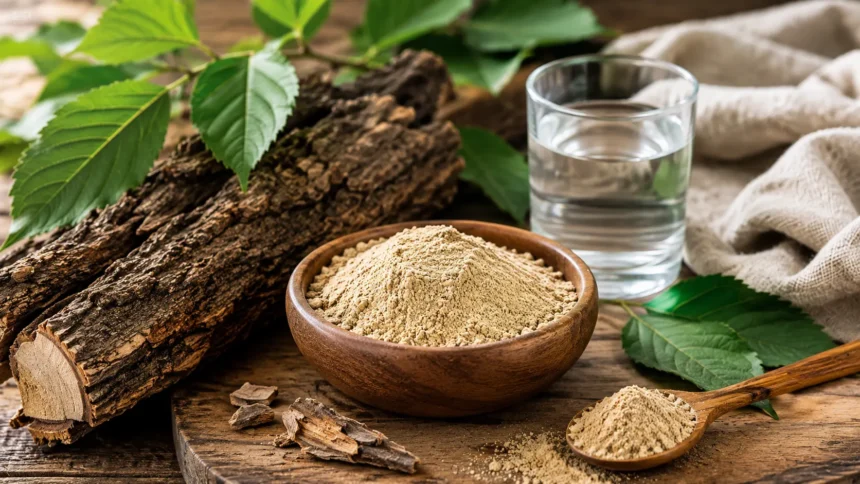
Slippery Elm Benefits, Uses and Possible Side Effects
Slippery elm has been used in traditional herbal medicine for generations, particularly for soothing the throat and supporting digestive comfort. Also known scientifically as Ulmus rubra, slippery elm is a tree native to North America whose inner bark contains a distinctive substance called mucilage. When mucilage comes into contact with water, it forms a thick, gel-like material that helps explain why slippery elm is commonly found in teas, powders, lozenges, capsules, and other herbal products.
Many of the supposed slippery elm benefits relate to this soothing mucilage. Traditionally, the herb has been used for sore throats, coughs, gastrointestinal discomfort, diarrhea, constipation, and irritated skin. However, traditional use and scientific proof are not the same thing. Modern human research on slippery elm remains limited, and many popular health claims have not been established through large, high-quality clinical trials.
That distinction is important because herbal products are frequently promoted as natural solutions for everything from acid reflux and irritable bowel syndrome to inflammation and skin problems. Slippery elm may provide temporary soothing effects in certain situations, but it should not automatically be considered a treatment for an underlying medical condition. Persistent digestive symptoms, severe throat pain, unexplained bowel changes, or other ongoing problems deserve appropriate medical evaluation.
If you are considering adding slippery elm tea, powder, capsules, or lozenges to your routine, understanding both its potential advantages and limitations can help you make a better decision. This guide explores slippery elm uses, possible digestive benefits, effects on the throat, potential side effects, supplement forms, safety considerations, and what current evidence actually tells us about this traditional herbal remedy.
What Is Slippery Elm and How Does It Work?
Slippery elm is a deciduous tree native to parts of North America and is sometimes called red elm, gray elm, or Indian elm. The part traditionally used in herbal preparations is primarily the inner bark. When mixed with liquid, compounds in that bark produce a slippery, thick consistency, which is where the plant gets its familiar name and many of its traditional medicinal applications.
The key component responsible for this texture is mucilage, a mixture of complex carbohydrates that absorbs water and forms a viscous material. This gel-like substance is considered a demulcent, meaning it can temporarily coat and soothe irritated tissues. The mucilage content is the main reason slippery elm has traditionally been used for problems involving the mouth, throat, gastrointestinal tract, and sometimes the skin.
Once mixed with water, slippery elm powder can form something resembling a thick drink or porridge. In herbal medicine, this preparation has historically been consumed when people want a gentle substance that feels soothing as it passes through the mouth and digestive tract. Slippery elm is also incorporated into throat lozenges because mucilage can help coat dry or irritated tissues.
However, understanding how mucilage behaves does not prove every health claim associated with the herb. Laboratory findings, historical use, and biological mechanisms can generate interesting possibilities, but clinical effectiveness needs to be demonstrated in human studies. Research into slippery elm remains relatively limited, so it is useful to approach dramatic claims with appropriate caution rather than viewing the herb as a proven treatment for multiple diseases.
Slippery Elm Benefits for Digestive Health
Digestive support is one of the most common reasons people use slippery elm. When its inner bark is mixed with liquid, the resulting mucilage forms a soft, gel-like substance that may temporarily coat tissues within the gastrointestinal tract. For this reason, slippery elm is often included in products marketed for digestive health, stomach comfort, bowel regularity, and gastrointestinal irritation.
Some people use slippery elm when experiencing general digestive discomfort because they find the coating sensation soothing. The herb’s fiber and mucilage content have also contributed to its traditional reputation as a digestive aid. However, feeling temporary relief does not necessarily mean slippery elm is correcting the underlying cause of symptoms, particularly when symptoms are associated with a medical gastrointestinal condition.
One small human study involving a multi-ingredient herbal formulation that contained slippery elm reported improvements in bowel habits and symptoms among people with constipation-predominant irritable bowel syndrome. Importantly, because the preparation contained multiple ingredients, the results cannot establish that slippery elm alone produced the improvement. Overall human evidence for treating IBS with slippery elm remains limited.
People experiencing persistent stomach pain, frequent diarrhea, ongoing constipation, blood in the stool, unexplained weight loss, recurring vomiting, or major changes in bowel habits should not depend solely on an herbal supplement. These symptoms can have many possible causes. Slippery elm may be used by some people as a complementary product, but persistent digestive problems require attention to the underlying condition rather than only temporary symptom soothing.
Can Slippery Elm Help With Acid Reflux and Heartburn?
Slippery elm is frequently promoted online as a natural remedy for acid reflux, heartburn, and gastroesophageal reflux disease (GERD). The theory is straightforward: because mucilage becomes gel-like after absorbing water, it may provide a temporary soothing coating over irritated tissues. This mechanism sounds reasonable, particularly when reflux has irritated the throat, but clinical evidence for slippery elm as a GERD treatment remains inadequate.
Someone who experiences occasional throat irritation after reflux may notice that a slippery elm tea or lozenge feels soothing. That experience is different from reducing stomach acid, preventing reflux episodes, or healing damage caused by chronic GERD. Slippery elm should therefore not be presented as a substitute for treatments that have been specifically studied for persistent acid reflux.
Recurring heartburn can sometimes be influenced by meal size, certain foods, alcohol, body position after eating, weight, medications, pregnancy, or other individual factors. Lifestyle adjustments may help some people, while others require medical evaluation or treatment. Simply covering throat discomfort without addressing frequent reflux may allow the underlying problem to continue unnoticed.
If heartburn occurs regularly, wakes you during the night, interferes with swallowing, or is accompanied by chest pain, vomiting, unexplained weight loss, or gastrointestinal bleeding, professional medical advice is particularly important. Slippery elm can be viewed as a traditional soothing herb rather than a proven cure for acid reflux. That distinction helps keep expectations realistic and encourages appropriate treatment when symptoms become persistent.
Slippery Elm for Sore Throat and Cough
One of the better-known traditional slippery elm uses is soothing a dry, scratchy, or irritated throat. Mucilage can form a coating over the tissues of the mouth and throat, which may temporarily reduce the sensation of dryness or irritation. This is why slippery elm appears in some herbal teas and throat lozenges marketed for coughs and minor throat discomfort.
The soothing sensation can make slippery elm particularly appealing when speaking frequently, breathing dry air, or recovering from mild throat irritation. Memorial Sloan Kettering notes that slippery elm may help relieve minor cough or sore throat, but human data supporting its use remain limited. Its role is primarily associated with soothing irritated tissue rather than eliminating the cause of an infection.
It is therefore important not to confuse symptom relief with treatment. A lozenge may temporarily make a sore throat feel more comfortable, but slippery elm has not been shown to cure bacterial or viral infections. Someone with strep throat, influenza, COVID-19, or another infection may require different care depending on the symptoms and underlying cause.
A sore throat that is severe, persists for an extended period, repeatedly returns, or occurs alongside difficulty breathing, difficulty swallowing, significant swelling, dehydration, or a high fever should be assessed medically. Slippery elm can be considered one possible comfort measure for minor throat irritation, but it should not delay evaluation of symptoms that could indicate something more serious.
Does Slippery Elm Help With Constipation or IBS?
Because slippery elm contains mucilage and fiber-like components, it is sometimes used by people hoping to improve constipation and bowel regularity. When mucilage absorbs water, it increases in volume and creates a softer consistency. This property has led to suggestions that slippery elm may have a gentle bulk-forming effect within the digestive tract, although it should not be assumed to work identically to established fiber supplements.
People with mild constipation may be attracted to slippery elm because it is marketed as a natural digestive aid. Yet bowel regularity depends on numerous factors, including dietary fiber, fluid intake, physical activity, medications, stress, medical conditions, and individual digestive patterns. Adding slippery elm without considering these other factors may not address the actual reason constipation is occurring.
Research on slippery elm for IBS is also preliminary. A small clinical study found that a herbal formulation containing slippery elm improved some bowel symptoms in people with constipation-predominant IBS. Because several herbs were combined in the formula and the study was small, researchers cannot conclude from those findings that slippery elm alone effectively treats irritable bowel syndrome.
Anyone dealing with ongoing IBS symptoms should consider the full pattern of abdominal pain, bloating, diarrhea, constipation, food triggers, stress, and other factors rather than relying on a single supplement. Evidence-based IBS management may involve dietary strategies, medications, lifestyle changes, and individualized medical guidance. Slippery elm may complement someone’s routine, but its effectiveness should not be exaggerated beyond the evidence available.
Can Slippery Elm Help With Diarrhea?
Slippery elm also has a long history of traditional use for diarrhea, which might initially seem contradictory given its association with constipation relief. This illustrates how traditional herbal products can sometimes be promoted for opposite digestive problems. The mucilage may provide a soothing texture within the digestive tract, but strong clinical evidence showing that slippery elm successfully treats diarrhea is lacking.
Diarrhea can occur for many reasons, including viral infections, foodborne illness, medication effects, dietary changes, intolerances, stress, and chronic gastrointestinal disorders. Because the underlying causes differ considerably, one herbal remedy cannot reasonably be expected to address every case. Maintaining appropriate hydration is often particularly important during episodes of diarrhea.
People sometimes assume that because a product is natural, trying it cannot cause harm. However, using supplements while delaying necessary treatment can become a problem when diarrhea is severe or persistent. Young children, older adults, and people with certain medical conditions may also become dehydrated more quickly and therefore need closer attention.
Medical assessment may be necessary when diarrhea is prolonged, contains blood, occurs alongside severe abdominal pain or high fever, or produces signs of significant dehydration. Slippery elm should therefore be viewed as a traditional digestive product rather than an established antidiarrheal therapy. Current evidence does not support claiming that it reliably treats the underlying causes of diarrhea.
Slippery Elm Benefits for Skin and Irritation
Historically, slippery elm preparations have also been applied externally to irritated skin, minor sores, or inflamed areas. When the powdered inner bark is mixed with water, it creates a soft paste sometimes referred to as a poultice. The mucilage gives this mixture its characteristic soothing texture, making topical slippery elm another traditional application of the plant.
The potential appeal is similar to its oral use: mucilage can create a moist coating over the surface where it is applied. Slippery elm has consequently appeared in traditional remedies intended to soothe uncomfortable skin. However, there is limited human research demonstrating that topical slippery elm effectively treats wounds, infections, eczema, or other diagnosed skin conditions.
Memorial Sloan Kettering notes that the mucilage in slippery elm is thought to have a soothing effect when used topically, while also emphasizing that human evidence is lacking. This is an important distinction for consumers because traditional application should not be interpreted as proof that slippery elm accelerates wound healing or treats an underlying skin disease.
Applying herbal products to broken or highly irritated skin can occasionally cause additional irritation or an allergic reaction. Deep wounds, spreading redness, pus, severe pain, fever, burns, or signs of infection require appropriate medical care rather than a homemade herbal paste. For minor skin concerns, it is still sensible to test products cautiously and stop use if redness, itching, or discomfort develops.
Slippery Elm Tea, Powder, Capsules and Lozenges
Slippery elm is available in several forms, and the best choice largely depends on why someone wants to use it. Slippery elm powder is commonly mixed with warm water to create a thick drink. Because mucilage absorbs liquid, the mixture usually becomes noticeably thicker after preparation, which is part of the characteristic experience associated with traditional slippery elm remedies.
Slippery elm tea provides another convenient option, particularly for people interested in throat comfort. Commercial tea bags may contain slippery elm by itself or combine it with herbs such as licorice, marshmallow root, or other botanical ingredients. Combination products require additional attention because their safety, effects, and possible interactions depend on every ingredient rather than slippery elm alone.
Capsules are often preferred by people who dislike the texture or flavor of slippery elm drinks. However, swallowing the herb in capsule form does not necessarily provide exactly the same immediate coating sensation in the mouth and throat as drinking a mucilage-containing preparation. Supplement strength also varies considerably between products, making direct comparisons difficult.
Slippery elm lozenges are commonly marketed for dry or irritated throats because they allow the product to remain in contact with the mouth and throat while dissolving. Regardless of form, consumers should read product labels carefully instead of assuming that every tea, capsule, powder, and lozenge contains equivalent quantities or ingredients. Dietary supplement formulations can vary significantly between manufacturers.
How Much Slippery Elm Should You Take?
There is no universally established medical dose of slippery elm that has been proven effective for all of its promoted uses. Commercial products vary in concentration, preparation, and recommended serving size. Capsules may contain hundreds of milligrams per serving, while powders, teas, extracts, and lozenges use entirely different formulations, making one general dosage recommendation inappropriate.
Following the manufacturer’s labeled directions can provide basic product-specific guidance, but a label does not prove that the suggested amount will successfully treat a medical condition. Higher doses should not automatically be considered more effective. Herbal supplements can produce unwanted effects, and increasing intake without evidence of additional benefit may create unnecessary risk.
People who take prescription medications, manage chronic health conditions, or use several supplements should consider discussing slippery elm with a pharmacist or healthcare professional before using it regularly. Healthcare providers should be informed about herbal supplements because this information can help them evaluate treatment plans and potential safety concerns.
It is also useful to identify what outcome you are actually trying to achieve. Someone considering slippery elm for an occasional dry throat has a very different situation from someone hoping to treat persistent reflux, chronic constipation, inflammatory bowel disease, or another ongoing condition. The more significant the health problem, the more important it becomes to obtain a reliable diagnosis rather than increasing supplement use.
Possible Side Effects of Slippery Elm
Information about slippery elm side effects is limited partly because large clinical safety studies are lacking. Many people may tolerate small amounts of commercially prepared slippery elm without obvious problems, but the absence of extensive reports should not be interpreted as proof that the supplement is completely risk-free for every person.
Digestive changes may be possible when introducing a mucilage-rich herbal product, particularly if someone takes larger amounts than they normally consume. Individual sensitivity varies, so new bloating, nausea, bowel changes, or abdominal discomfort following supplementation should be taken seriously. Reducing or discontinuing the product may be appropriate if symptoms consistently appear after use.
Allergic reactions are another potential concern with botanical products. Someone who develops itching, rash, swelling, wheezing, throat tightness, or difficulty breathing after using slippery elm should discontinue the product. Severe allergic symptoms require urgent medical attention. People with a history of significant plant allergies may wish to be particularly cautious when experimenting with unfamiliar herbal supplements.
Product quality also matters. Herbal supplements may contain additional ingredients, and combination products can create side effects unrelated to slippery elm itself. Reading the ingredient list and choosing products from reputable manufacturers can reduce avoidable uncertainty. If a reaction occurs, having the exact product packaging available can also help a healthcare professional determine which ingredients may have contributed.
Can Slippery Elm Interact With Medications?
People taking medication should avoid assuming that an herbal supplement cannot affect their treatment simply because it is plant-based. Slippery elm produces a thick mucilage after contact with liquid, which has led to concerns about whether taking it around the same time as oral medications could potentially influence how medicines move through or are absorbed from the digestive tract.
Clinical evidence defining the size or importance of this potential interaction is limited. For that reason, someone taking prescription medicines should discuss regular slippery elm use with a pharmacist or healthcare professional rather than trying to predict interactions independently. This is particularly worthwhile when medications require careful dosing or consistent absorption.
The issue becomes even more important when a slippery elm product contains several herbs. For example, teas and digestive formulas may combine slippery elm with other botanical ingredients, and those additional substances can have their own interactions and contraindications. Checking only the words “slippery elm” on the front label may therefore provide an incomplete picture of the product.
Bring a full list of supplements to medical appointments whenever possible, including herbal teas, powders, vitamins, extracts, and capsules. Healthcare professionals can evaluate the ingredients alongside prescription and over-the-counter medications. Taking this simple step can make supplement use safer without automatically assuming that all herbal products must be avoided.
Is Slippery Elm Safe During Pregnancy or Breastfeeding?
Safety during pregnancy and breastfeeding deserves additional caution because good clinical information about slippery elm use in these populations is limited. Herbal remedies are sometimes perceived as gentler alternatives to medication, but pregnancy changes how healthcare decisions need to be evaluated, and “natural” does not automatically mean proven safe for a developing baby.
Pregnant people may encounter slippery elm in products promoted for heartburn, constipation, sore throat, or digestive discomfort—all issues that can occur during pregnancy. However, those symptoms also have established management options with better-characterized safety information. Choosing an herbal supplement without discussing it with an obstetric healthcare professional may add uncertainty unnecessarily.
The same principle applies during breastfeeding. Limited evidence means it can be difficult to determine whether particular components or contaminants from a supplement could reach breast milk or affect a nursing infant. Product quality and combination ingredients add further variables, particularly with herbal blends containing several botanicals.
Anyone who is pregnant, planning pregnancy, or breastfeeding should therefore discuss slippery elm with an appropriate healthcare professional before using concentrated supplements regularly. The advice can be individualized according to the reason for taking the herb, other medications, existing medical conditions, and the exact product being considered rather than relying on generalized internet recommendations.
Is Slippery Elm Safe for Everyday Use?
Slippery elm’s long history of traditional use can make daily supplementation seem automatically reasonable. Yet long-term historical use is not the same as modern long-term safety testing. There is relatively little high-quality research examining what happens when healthy individuals consume concentrated slippery elm supplements every day for months or years.
Occasional use of a commercial throat lozenge is also very different from consuming large quantities of slippery elm powder every day. Frequency, dose, supplement quality, additional ingredients, medical history, and concurrent medication all influence the overall risk-benefit picture. For this reason, there is no single answer that applies to every person considering daily slippery elm.
It can be particularly useful to reconsider daily supplementation when someone is using slippery elm continuously to control persistent symptoms. Needing a product every day for recurring heartburn, constipation, abdominal discomfort, coughing, or throat irritation may be a reason to investigate what is causing the problem instead of simply continuing symptom management indefinitely.
If you feel noticeably better while using slippery elm and want to continue it regularly, mentioning this to your healthcare provider is reasonable. A clinician can consider the supplement in the context of your broader health rather than evaluating it in isolation. That approach provides a more useful balance between respecting personal preferences and avoiding unsupported assumptions about long-term safety.
What Does Research Really Say About Slippery Elm Benefits?
Slippery elm has a stronger history of traditional use than it has a body of modern clinical research. The biological properties of mucilage provide a reasonable explanation for why preparations can feel soothing when they contact irritated tissues. Laboratory research has also explored antioxidant properties, but laboratory findings cannot automatically be translated into proven health benefits in humans.
Human research remains limited. One frequently mentioned study examined a multi-herb formulation that included slippery elm and reported improvements among people with constipation-predominant IBS. Because slippery elm was only one component of the formulation, the study cannot establish how much benefit came from slippery elm itself. Larger controlled studies using slippery elm alone would be needed to answer that question more confidently.
Evidence is also lacking for many more ambitious claims associated with slippery elm. It has not been established as a treatment for serious infections or cancer, and evidence supporting its traditional uses for diarrhea and several other conditions remains inadequate. Claims that one herbal supplement can “heal the gut,” “detox the body,” or cure multiple unrelated diseases should therefore be viewed critically.
This does not mean slippery elm has no value whatsoever. A product can provide temporary soothing comfort without curing an illness, and that may still be useful to some people. The most balanced interpretation is that slippery elm is a traditional mucilage-rich herb with plausible soothing properties, while strong evidence supporting many specific therapeutic claims is currently limited.
How to Choose a Slippery Elm Supplement
Start by reading the ingredient list rather than choosing a product based solely on marketing statements. Look for products that clearly identify slippery elm or Ulmus rubra, specify which part of the plant is included, and provide an understandable serving amount. Avoid assuming that phrases such as “gut healing,” “detoxifying,” or “immune boosting” indicate scientifically established effects.
Combination formulas deserve extra scrutiny because they can contain many ingredients with different effects. A digestive tea labeled around slippery elm, for example, may also include licorice root, senna, marshmallow, peppermint, or other herbs. The safety profile of that product depends on the whole formulation rather than the headline ingredient.
Quality is particularly important with dietary supplements because manufacturing and formulation can vary. Third-party testing from a recognized independent organization can provide additional reassurance that a product has been checked for issues such as ingredient identity or contamination, although certification does not establish that the supplement will actually deliver its advertised medical benefits.
Finally, select a supplement according to your intended use rather than assuming the highest-strength product is best. Lozenges or tea may make more practical sense for occasional throat comfort, while other formats are marketed for digestive use. If you need a supplement continuously to manage symptoms, consider whether investigating the underlying health issue would provide more lasting value.
When Should You Talk to a Healthcare Professional?
Slippery elm may be reasonable for some people who want temporary soothing support, but it should not become a substitute for diagnosing persistent symptoms. Digestive problems that continue for weeks, repeatedly return, or progressively worsen should be discussed with a healthcare professional even if an herbal product temporarily makes them feel better.
Seek medical guidance for concerning gastrointestinal symptoms such as blood in the stool, persistent vomiting, unexplained weight loss, severe abdominal pain, difficulty swallowing, or major unexplained changes in bowel habits. These symptoms have numerous possible causes, and an herbal supplement cannot determine which condition is responsible.
Professional guidance is also useful before taking slippery elm if you use regular medications, have significant chronic health conditions, or are pregnant or breastfeeding. Providing your clinician or pharmacist with the exact supplement label can help them evaluate all ingredients rather than trying to make recommendations based solely on the product name.
Ultimately, choosing an herbal remedy does not have to mean choosing between conventional healthcare and natural products. People can make informed decisions that incorporate personal preferences while still using medical evaluation when appropriate. The most useful approach is to recognize what slippery elm may reasonably offer without expecting it to perform beyond the evidence supporting it.
The Bottom Line on Slippery Elm
Slippery elm is a traditional herbal remedy derived from the inner bark of the Ulmus rubra tree. Its defining feature is mucilage, which forms a thick substance when combined with water. This physical property helps explain its longstanding use for minor throat irritation, coughing, digestive discomfort, and certain topical applications.
The potential benefits are most realistically understood as soothing rather than curative. Slippery elm may make irritated tissues feel more comfortable, but strong clinical evidence proving that it treats acid reflux, IBS, diarrhea, skin disease, or other chronic medical conditions is currently limited. Research involving multi-herb products cannot reliably establish the effectiveness of slippery elm alone.
Possible slippery elm side effects and long-term safety have also not been studied as extensively as many consumers assume. People using prescription medicines, managing medical conditions, or considering supplementation during pregnancy or breastfeeding should seek individualized professional guidance before making slippery elm a regular part of their routine.
For most people, the key is maintaining realistic expectations. Slippery elm can be viewed as a traditional herbal option that may offer temporary soothing effects, particularly because of its mucilage content. It should not be promoted as a miracle treatment, replacement for necessary medication, or solution for persistent unexplained symptoms that require appropriate medical assessment.
Frequently Asked Questions
What is slippery elm mainly used for?
Slippery elm is traditionally used to soothe minor throat irritation, coughing, and digestive discomfort. Its mucilage forms a gel-like coating when mixed with liquid.
Does slippery elm help your stomach?
Its mucilage may provide a temporary soothing sensation in the digestive tract. However, evidence that slippery elm alone treats specific stomach or intestinal disorders remains limited.
Can you take slippery elm every day?
Long-term daily use has not been extensively studied. If you plan to use slippery elm regularly, particularly alongside medications, discuss it with a healthcare professional.
What are the side effects of slippery elm?
Safety data are limited, although digestive discomfort or allergic reactions may be possible in some people. Stop using it and seek help if you develop signs of a serious allergic reaction.
Is slippery elm good for acid reflux?
Slippery elm is sometimes used to soothe throat or digestive irritation associated with reflux, but strong evidence that it treats GERD or prevents acid reflux is lacking.