What Are Exoplanets and Could They Support Life?
Exoplanets are planets located beyond our solar system, usually orbiting stars other than the Sun. Some are enormous gas giants, while others are small rocky worlds that may resemble Earth in size. Scientists have already confirmed thousands of these distant planets, revealing that planetary systems are common throughout the Milky Way.
The most exciting question is whether any exoplanet could support life. A planet needs more than the correct distance from its star to be habitable. Its atmosphere, temperature, surface conditions, water supply, chemistry, geological activity and host star can all determine whether living organisms could survive there.
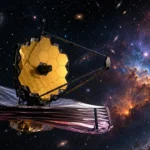
Astronomers cannot currently visit these distant worlds or examine their surfaces directly. Instead, they measure tiny changes in starlight to estimate a planet’s size, mass, orbit and atmospheric composition. Telescopes such as Kepler, TESS, Hubble and the James Webb Space Telescope have gradually turned faint signals into detailed scientific evidence.
No exoplanet has yet provided confirmed evidence of extraterrestrial life. However, researchers have found potentially habitable exoplanets, water-related molecules, carbon-bearing gases and planets orbiting within their stars’ habitable zones. These discoveries are helping scientists identify where life might exist and how it could eventually be detected.
What Exactly Is an Exoplanet?
An exoplanet, also known as an extrasolar planet, is any planet located outside our solar system. Most known exoplanets orbit another star, much as Earth orbits the Sun. Astronomers have also found possible rogue planets that travel through space without remaining gravitationally attached to a particular star.
Exoplanets are not simply distant versions of the eight planets in our solar system. They include worlds hotter than molten metal, planets with years lasting only a few hours and gas giants orbiting extremely close to their stars. Some systems contain several tightly packed planets with orbits smaller than Mercury’s path around the Sun.
The first confirmed exoplanets were found orbiting a rapidly rotating stellar remnant called a pulsar. Astronomers later confirmed a planet around a Sun-like star in the 1990s, proving that ordinary stars could host planetary systems. Since then, improved telescopes and detection methods have revealed thousands of dramatically different worlds.
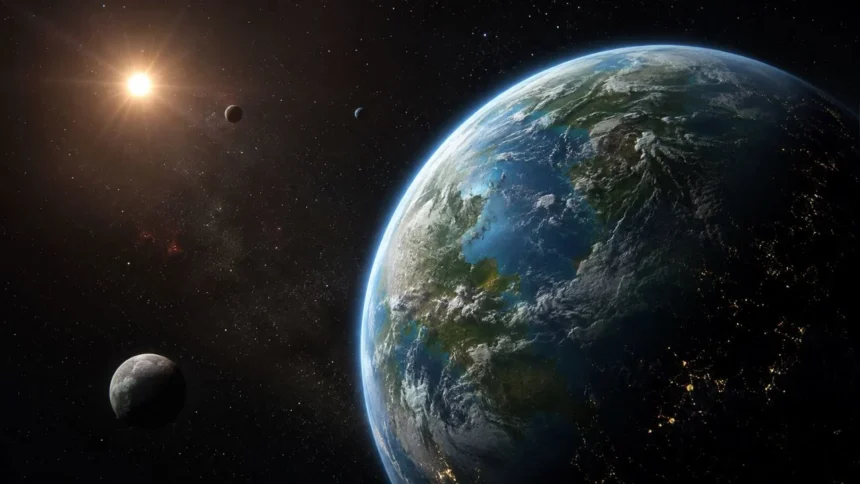
Most exoplanets are too distant and faint to be seen as ordinary pictures. Images commonly shared online are therefore artist’s concepts based on measured properties such as temperature, size and atmospheric chemistry. These illustrations help people imagine the planets, but they should not be mistaken for detailed photographs of their surfaces.
How Many Exoplanets Have Scientists Discovered?
Scientists have confirmed more than 6,300 exoplanets, while thousands of additional signals remain classified as planet candidates. A candidate becomes confirmed only after researchers gather enough evidence to rule out alternative explanations. Background stars, eclipsing stellar pairs and instrumental effects can sometimes imitate the signal of a planet.
The known exoplanet population changes regularly as research teams publish new discoveries and improve older measurements. Some planets are identified in fresh telescope observations, while others emerge from archived data collected years earlier. This means retired missions can continue contributing discoveries long after their final observations have ended.
The total number of detected exoplanets represents only a tiny sample of the planets believed to exist. Current evidence suggests that planets are common around stars and that many stars host more than one. The Milky Way may therefore contain billions of planets, including large numbers of rocky worlds.
Detection methods are naturally better at finding certain types of planets than others. Large planets close to their stars usually create stronger, more frequent signals, making them easier to identify. Small Earth-like planets with long orbits are much harder to confirm because their effects on starlight are weaker and occur less often.
How Do Exoplanets Form?
Planets generally begin inside rotating disks of gas and dust surrounding young stars. Small dust particles collide, stick together and gradually form larger bodies called planetesimals. Continued collisions and gravitational attraction can eventually build rocky planets, icy worlds and the solid cores of gas giants.
Temperature plays an important role in determining what kinds of planets form at different locations. Close to a young star, heat prevents many volatile materials from freezing, favouring rocky planets made from metal and minerals. Farther away, cooler conditions allow water and other compounds to become ice, providing more material for rapid growth.
Large planetary cores can attract thick envelopes of hydrogen and helium before the surrounding gas disk disappears. This process may create gas giants similar to Jupiter or smaller Neptune-like planets. Worlds that form with less gas may become super-Earths, mini-Neptunes or rocky planets with relatively thin atmospheres.
Planetary systems can change considerably after their planets form. Gravitational interactions may move worlds closer to or farther from their stars, while collisions can alter their size and composition. This migration helps explain why astronomers find giant planets in extremely tight orbits that seem unlike anything in our solar system.
How Do Scientists Find Exoplanets?
Finding an exoplanet is difficult because planets are much fainter than the stars they orbit. A nearby star can overwhelm the light reflected or emitted by its planets, much like a bright spotlight hiding a small object beside it. Astronomers therefore usually detect a planet through its effect on its host star.
The transit method identifies a slight reduction in starlight when a planet crosses in front of its star. If the dip repeats at predictable intervals, scientists can estimate the planet’s orbital period. The amount of light blocked also helps them calculate the planet’s size relative to the star.
The radial velocity method measures a star’s small movement caused by an orbiting planet’s gravity. As the star moves toward and away from Earth, its light shifts slightly in wavelength. This stellar wobble helps astronomers estimate the planet’s minimum mass and determine the shape of its orbit.
Other techniques include direct imaging, gravitational microlensing, astrometry and variations in the timing of astronomical events. Each method is useful for different planets and distances. Combining several techniques can provide a more complete understanding of a planet’s size, mass, orbit and physical composition.
How the Transit Method Reveals Distant Worlds
A planetary transit occurs when an exoplanet passes between its host star and the observer. The planet blocks a small fraction of the star’s light, creating a temporary dip in measured brightness. Regularly repeated dips strongly suggest that an orbiting object is crossing the same star.
The depth of a transit provides information about the planet’s diameter. A large planet blocks more starlight than a small one, producing a deeper dip. Scientists must already understand the star’s size accurately because an incorrect stellar measurement can also produce an incorrect estimate of the planet.
The interval between transits reveals how long the planet takes to complete one orbit. A world orbiting every few days produces many observable transits, while an Earth-like orbit may create only one event per year. Confirming long-period planets can therefore require several years of observations.
Transits also make it possible to investigate exoplanet atmospheres. When starlight passes through the edge of an atmosphere, gases absorb particular wavelengths and leave chemical fingerprints. Sensitive spectrographs can search these patterns for water vapour, carbon dioxide, methane and other atmospheric ingredients.
What Are the Main Types of Exoplanets?
Gas giants are large planets composed mainly of hydrogen and helium. Some resemble Jupiter or Saturn, but many orbit much closer to their stars. These hot Jupiters can reach extreme temperatures and often have expanded atmospheres that are especially useful for testing atmospheric measurement techniques.
Neptune-like planets are smaller than gas giants but may still possess thick atmospheres above icy or rocky interiors. Many known planets fall between Earth and Neptune in size, even though our solar system contains no planet in this range. Astronomers commonly describe them as sub-Neptunes or mini-Neptunes.
Super-Earths are generally larger or more massive than Earth but smaller than Neptune. The term describes size or mass rather than habitability, temperature or surface conditions. A super-Earth could be a rocky planet, an ocean-covered world or a smaller gas-rich planet without a solid accessible surface.
Terrestrial exoplanets are rocky worlds broadly comparable to Mercury, Venus, Earth or Mars. They are especially interesting in the search for life, but their small size makes them difficult to examine. A rocky composition alone does not make a world Earth-like because it could still be airless, frozen or covered in molten rock.
What Makes an Exoplanet Potentially Habitable?
A potentially habitable exoplanet must provide conditions in which some form of life could survive. Scientists often begin by considering whether liquid water could remain stable, since every known organism on Earth requires water. However, water alone does not guarantee that a planet is suitable for biology.
The planet may need a long-lasting atmosphere capable of regulating temperature and protecting its surface. An atmosphere that is too thin may allow water to freeze or escape into space. One that is too thick could create intense pressure or a runaway greenhouse effect similar to conditions on Venus.
Habitability also depends on chemical elements that can build complex molecules and support metabolism. Carbon, hydrogen, oxygen, nitrogen, phosphorus and sulfur are important for life on Earth. Scientists search for environments where energy and useful chemistry remain available over long periods rather than only during brief events.
A planet does not have to look exactly like modern Earth to support life. Microorganisms on our planet survive in acidic lakes, frozen deserts, deep rock and hydrothermal vents. These extremophiles show that biology can tolerate difficult environments, although every confirmed example still depends on conditions found somewhere on Earth.
What Is the Habitable Zone?
The habitable zone is the range of distances around a star where temperatures could allow liquid water on a planet’s surface. It is often called the Goldilocks zone because conditions may be neither excessively hot nor excessively cold. The location of this zone depends mainly on the star’s brightness and temperature.
A hot, luminous star has a habitable zone located relatively far away. A small red dwarf produces less energy, so its habitable zone lies much closer to the star. A planet can complete a habitable-zone orbit around a red dwarf in days or weeks instead of taking an Earth-like year.
Being inside the habitable zone does not prove that liquid water exists. The Moon receives nearly the same amount of sunlight as Earth but cannot maintain surface oceans because it lacks a substantial atmosphere. Venus lies near the Sun’s habitable region yet has a crushing atmosphere and extremely high surface temperatures.
The habitable zone is therefore a useful first filter rather than a guarantee of life. Scientists must also determine whether a planet is rocky, whether it has an atmosphere and whether that atmosphere creates suitable pressure and temperature. Clouds, surface reflectivity and greenhouse gases can shift the actual limits of habitability.
Why the Host Star Matters So Much
A planet depends on its host star for light and heat, making stellar behaviour central to habitability. A stable star may provide relatively consistent energy over billions of years. This long period could give biological processes enough time to begin, adapt and potentially become more complex.
Large, hot stars live much shorter lives than stars like the Sun. Their rapid evolution may limit the time available for life to develop on surrounding planets. Cooler red dwarfs can remain active for extraordinarily long periods, potentially offering much greater timescales for planetary evolution.
However, red dwarf stars often produce powerful flares and high-energy radiation. Planets in their close habitable zones may receive repeated bursts capable of damaging atmospheric molecules or stripping the atmosphere away. A planet’s magnetic environment, atmospheric thickness and rate of atmospheric replacement may influence whether it can survive.
Astronomers therefore study the planet and star as a connected system. They monitor stellar flares, starspots, ultraviolet radiation and the age of the host star. Understanding these effects is necessary because activity from the star can imitate atmospheric signals and change whether a nearby planet remains habitable.
Why an Exoplanet’s Atmosphere Is Essential
An atmosphere controls how energy enters, moves through and leaves a planet. Greenhouse gases can retain heat and prevent an otherwise cold world from freezing completely. Winds and circulation can also transport warmth from brightly heated regions toward darker, colder areas.
Atmospheres can protect surfaces from harmful radiation and small incoming objects. Earth’s atmosphere blocks much high-energy radiation and destroys many small meteoroids before they reach the ground. However, the amount of protection depends on the atmosphere’s composition, pressure and interaction with the host star.
A planet can also become uninhabitable because of its atmosphere. Venus demonstrates how a thick carbon dioxide atmosphere can create extreme greenhouse warming. A hydrogen-rich atmosphere may provide unsuitable pressure and chemistry for familiar surface life, even when the planet’s measured temperature initially appears promising.
Scientists use spectroscopy to identify gases within exoplanet atmospheres. Each molecule absorbs and emits light at particular wavelengths, producing a recognisable pattern. These measurements can reveal atmospheric water, carbon dioxide, methane, sulfur dioxide and clouds without requiring a spacecraft to travel to the planet.
Could Liquid Water Exist on Exoplanets?
Liquid water is one of the most important targets in the search for habitable worlds. Water acts as a solvent that allows complex chemical reactions to occur, transports materials and supports the biological processes found on Earth. Its presence would make a planet more interesting, although it would not prove that life exists.
Scientists sometimes detect water vapour in an atmosphere rather than liquid water on a surface. Water vapour may exist on extremely hot gas giants where no familiar life could survive. Researchers must therefore consider where the water is located, how much is present and whether surface pressure permits it to remain liquid.
Some planets may be ocean worlds with deep global seas rather than separate oceans and continents. Such environments could potentially support life, but an ocean thousands of kilometres deep might behave very differently from Earth’s waters. High-pressure ice could separate the ocean from the rocky interior and limit useful chemical exchange.
Frozen planets may also contain water below their surfaces. Heat from radioactive decay, tidal forces or geological activity could maintain hidden liquid reservoirs beneath layers of ice. Since similar subsurface oceans may exist on moons within our solar system, astronomers do not restrict habitability to warm Earth-like surfaces.
Why Planetary Size and Mass Are Important
A planet’s size and mass provide clues about its likely composition. A small, dense planet is more likely to contain large amounts of rock and metal, while a low-density world may possess a substantial gas envelope. Scientists calculate density when both the planet’s radius and mass can be measured.
Very small planets may struggle to retain atmospheres because their gravity is weak. Gas molecules can escape more easily, particularly when the planet receives intense radiation from its star. Mars once had wetter conditions, but its relatively low gravity contributed to the gradual loss of much of its atmosphere.
A more massive rocky planet might hold its atmosphere more effectively and remain geologically active for longer. However, additional mass could also create stronger gravity, greater atmospheric pressure and unfamiliar interior conditions. A planet slightly larger than Earth is not automatically a more comfortable or habitable version of Earth.
Researchers must distinguish rocky super-Earths from gas-rich sub-Neptunes. Two planets with similar radii can have very different atmospheres and surfaces. Precise measurements of mass, temperature and atmospheric composition are necessary before a potentially Earth-like planet can be separated from a small version of Neptune.
Do Geology and Plate Tectonics Support Habitability?
Geological activity can influence a planet’s atmosphere, surface chemistry and long-term climate. Volcanoes release gases from the interior, potentially rebuilding an atmosphere after some of it escapes. Volcanism may also provide energy and chemical nutrients that microorganisms could use in dark environments.
On Earth, plate tectonics helps recycle carbon between the atmosphere, oceans, crust and mantle. This carbon cycle contributes to climate stability over geological timescales. Scientists do not yet know whether plate tectonics is necessary for life or how common it might be on rocky exoplanets.
A planet without moving plates could still remain geologically active. Different forms of crustal recycling, volcanism or mantle movement might regulate its atmosphere. Venus, Mars and several icy moons show that worlds can have complex geology without operating exactly like modern Earth.
Exoplanet geology is extremely difficult to observe directly. Researchers infer internal activity from planetary mass, age, atmospheric gases and possible changes in surface heat. Future telescopes may detect volcanic gases or temperature variations that offer indirect evidence of active processes on distant rocky worlds.
Could a Magnetic Field Protect Life?
Earth’s magnetic field helps deflect charged particles from the Sun and reduces their direct effect on the atmosphere. This protection may contribute to long-term atmospheric retention and surface habitability. It also creates auroras when some particles interact with gases near the planet’s poles.
Scientists often consider magnetic fields when evaluating planets around active red dwarfs. Frequent stellar eruptions may expose nearby planets to intense streams of charged particles. A strong magnetic field could reduce some atmospheric damage, although its effectiveness would depend on the star, orbit and strength of the planetary field.
A magnetic field is not the only factor protecting an atmosphere. Venus lacks an Earth-like global magnetic field but still retains an extremely thick atmosphere. Mars has regions of magnetised crust yet lost much of its earlier atmosphere, showing that planetary evolution involves gravity, chemistry, geology and stellar activity together.
Detecting magnetic fields around small exoplanets remains challenging. Astronomers may eventually search for radio emissions, auroral signals or particular patterns in atmospheric escape. Until stronger measurements become possible, the role of magnetic fields in exoplanet habitability will remain important but uncertain.
What Kind of Life Could Exist on an Exoplanet?
The first extraterrestrial life scientists find, if it exists, is more likely to be microscopic than intelligent. Microorganisms dominated Earth for most of its history and can survive in environments unsuitable for plants and animals. Simple life may therefore be more common and easier to sustain than complex ecosystems.
Alien organisms would not necessarily use exactly the same chemistry as life on Earth. However, scientists begin with carbon and liquid water because they support an enormous variety of stable molecules and biological reactions. Searching for familiar chemistry gives researchers a practical strategy based on the only living world currently known.
Some planets may support life beneath an ocean or underground, where rock and water provide chemical energy. Such organisms could survive without direct sunlight, much as communities around Earth’s hydrothermal vents depend on chemical reactions. These hidden biospheres would be difficult to detect through atmospheric observations.
Complex or intelligent life may require stable conditions lasting billions of years. Large environmental changes, frequent impacts or extreme stellar activity could repeatedly interrupt biological development. Even when a planet is habitable for microorganisms, it may never develop oxygen-rich air, multicellular organisms or a technological civilisation.
What Are Biosignatures?
A biosignature is a substance, pattern or feature that could provide evidence of biological activity. Atmospheric gases are especially useful because telescopes can analyse them from great distances. Oxygen, ozone, methane, nitrous oxide and certain chemical imbalances are among the signals researchers may investigate.
No single molecule provides automatic proof of life. Oxygen can result from biological photosynthesis, but it can also accumulate through non-biological processes under certain planetary conditions. Methane is produced by living organisms on Earth, yet volcanoes and chemical reactions involving rock can also release it.
Scientists are particularly interested in combinations of gases that should react and disappear unless something continually replaces them. Earth’s atmosphere contains both oxygen and methane, creating a chemical imbalance partly maintained by life. A similar pattern on an exoplanet could become a strong biosignature candidate.
Context is essential when interpreting any possible signal. Researchers must understand the star, planetary temperature, atmospheric pressure, clouds and geological processes before connecting a gas to biology. A credible life-detection claim would require repeated observations, independent analysis and the elimination of convincing non-biological explanations.
What Are False Positives in the Search for Life?
A false positive occurs when a non-living process produces a signal that initially resembles evidence of life. For example, ultraviolet light can break water vapour into hydrogen and oxygen. The lighter hydrogen may escape to space, leaving oxygen behind even though no organisms produced it.
Volcanic activity can release methane, sulfur compounds and other gases associated with biological processes. Reactions between water and certain rocks can also generate hydrogen or methane. Without information about a planet’s geology, scientists could interpret these gases too confidently.
The host star can create additional confusion. Starspots and flares change the spectrum of starlight, potentially adding patterns that resemble signals from a planet’s atmosphere. Researchers may need to observe many transits and model the star carefully before identifying a weak atmospheric molecule.
Scientists reduce false positives by searching for several compatible lines of evidence. They compare atmospheric gases with planetary temperature, stellar radiation and expected chemical reactions. Extraordinary claims about extraterrestrial life will need exceptional evidence because an incorrect announcement could mislead the public and weaken trust in later discoveries.
Which Exoplanets Might Be Habitable?
TRAPPIST-1 e is one of the most frequently discussed potentially habitable exoplanets. It is approximately Earth-sized and orbits within the habitable zone of a cool red dwarf star. Researchers are still studying whether it possesses an atmosphere and whether stellar activity has allowed that atmosphere to survive.
Proxima Centauri b orbits the closest star to the Sun and has a minimum mass similar to Earth. Its proximity makes it scientifically important, but the planet receives radiation from an active red dwarf. It does not transit from Earth’s perspective, making its atmosphere and actual surface conditions difficult to measure.
TOI-700 d and TOI-700 e are approximately Earth-sized planets orbiting within or near the habitable region of a relatively quiet red dwarf. Their discovery gives scientists valuable opportunities to study compact planetary systems. Researchers still need far more information about their atmospheres, water and surface temperatures.
LHS 1140 b is a dense super-Earth within the habitable zone of a small star. Observations have made it an interesting target for atmospheric research and possible ocean-world models. None of these examples is confirmed to be habitable, and none has shown verified evidence of living organisms.
What Is Webb Learning About the TRAPPIST-1 System?
TRAPPIST-1 contains seven roughly Earth-sized planets orbiting an ultracool red dwarf about 40 light-years away. Several of these worlds lie within the system’s habitable zone. Because they frequently cross their small star, they are among the most accessible rocky planets for atmospheric research.
Webb observations suggest that the innermost planets, TRAPPIST-1 b and c, do not possess thick atmospheres. Planet b may be largely airless, while any atmosphere around planet c appears limited. Their proximity to the star exposes them to intense heating and stellar radiation.
Studies have also ruled out thick hydrogen-dominated atmospheres on TRAPPIST-1 d and e. That result does not prove that either planet is airless, because thinner atmospheres made from nitrogen, carbon dioxide or other gases may be more difficult to detect. Additional observations are needed to examine these possibilities.
The host star complicates every measurement because it produces powerful flares and has active surface regions. Changes in the star can contaminate the weak signals attributed to planetary atmospheres. Scientists may need to combine hundreds of transits gathered over several years before reaching reliable conclusions about the system.
Could K2-18 b Support Life?
K2-18 b is a planet located in the habitable zone of a cool red dwarf star more than 100 light-years away. It is substantially more massive than Earth and falls into a size range between Earth and Neptune. This makes its internal structure and surface conditions uncertain.
Webb has detected methane and carbon dioxide in the planet’s atmosphere. Researchers have proposed that K2-18 b could be a Hycean world with a hydrogen-rich atmosphere above a deep ocean. Other models suggest it may instead be a gas-rich planet with conditions unsuitable for a stable habitable ocean.
Possible signs of additional sulfur-containing molecules have attracted considerable attention. However, weak or debated molecular signals must be confirmed through repeated observations before scientists can determine whether the molecules are truly present. Even a confirmed molecule may have non-biological sources in an unfamiliar planetary environment.
K2-18 b should therefore not be described as a proven ocean planet or an inhabited world. Its importance lies in showing how Webb can analyse the atmosphere of a relatively small, temperate exoplanet. Continued observations may reveal whether this category of planet offers realistic conditions for life.
Is an Earth-Sized Planet the Same as an Earth-Like Planet?
Earth-sized means that a planet has a radius roughly comparable to Earth’s. It does not reveal whether the planet has oceans, breathable air, moderate temperatures or a rocky surface. Venus is almost the same size as Earth yet has profoundly different environmental conditions.
An Earth-mass planet is similarly defined by weight rather than habitability. A planet can have a familiar mass while orbiting extremely close to its star or retaining an atmosphere unlike anything on Earth. Size and mass are important starting points, but they do not provide a complete description.
The phrase Earth-like is often used loosely in headlines and popular discussions. Scientists usually need evidence about the orbit, density, atmosphere, surface temperature and host star before making a meaningful comparison. Even then, the planet may resemble only selected aspects of Earth rather than the entire environment.
A genuine Earth analogue would ideally be rocky, approximately Earth-sized and orbiting a Sun-like star at a distance that allows surface liquid water. It would also need an appropriate atmosphere and stable climate. No currently known exoplanet has been confirmed to match all these conditions.
Why Is Finding a Second Earth So Difficult?
Earth is small compared with the Sun and reflects only a tiny amount of the Sun’s light. A similar planet around another star would be extremely faint beside its brilliant host. Separating those two sources can require instruments capable of blocking starlight with extraordinary precision.
An Earth-like orbit also creates long delays between observable events. From a distant viewpoint, Earth would transit the Sun only once per year. Astronomers would need several years to record repeated transits, and the orbit may not be aligned in a way that produces a transit at all.
The atmospheric signal of a small rocky planet is extremely weak. Only a thin ring of gas around the planet interacts with starlight during a transit. Clouds, stellar activity and instrument noise can hide or imitate the chemical features scientists are trying to identify.
Distance creates another major limitation. Even the nearest star system is more than four light-years away, and most potentially interesting planets are much farther. Current spacecraft technology cannot carry people or probes to these systems within a practical human timescale.
How Is the James Webb Space Telescope Studying Exoplanets?
The James Webb Space Telescope observes infrared light, allowing it to examine exoplanet temperatures and atmospheric molecules. During a transit, Webb records how different wavelengths of starlight pass through the atmosphere. Missing wavelengths indicate gases that have absorbed particular parts of the spectrum.
Webb has measured carbon dioxide, water vapour, methane, sulfur dioxide and other molecules in different exoplanet atmospheres. Much of its strongest work involves large or warm planets because their atmospheric signals are easier to detect. These observations improve the methods later applied to smaller worlds.
The telescope can also observe a secondary eclipse, which occurs when a planet passes behind its star. Comparing the combined light before the eclipse with starlight alone reveals infrared energy from the planet. Researchers use this information to estimate temperature and evaluate atmospheric heat circulation.
Webb is not expected to deliver a simple answer about life on most rocky planets. Its measurements may identify atmospheres, rule out certain gases and highlight promising targets. Future observatories designed specifically for direct imaging will build on this groundwork and search more effectively for atmospheric biosignatures.
What Will Future Telescopes Look For?
NASA’s planned Habitable Worlds Observatory is intended to directly image potentially habitable planets around nearby stars. By suppressing overwhelming starlight, the observatory could separate the faint light reflected by an Earth-like world. Scientists would then analyse that light for atmospheric gases and surface-related clues.
The Nancy Grace Roman Space Telescope is designed to expand knowledge of planetary systems through microlensing and advanced coronagraph technology. It could discover planets at wider orbital distances and test methods for blocking starlight. Its surveys will complement the detailed atmospheric work performed by Webb.
Large ground-based observatories will collect far more light than existing telescopes and achieve extremely high resolution. Instruments on these telescopes may study oxygen, carbon dioxide and other atmospheric features on nearby rocky planets. Earth’s atmosphere will still create challenges that require advanced correction and careful analysis.
Future missions will not search only for a perfect duplicate of Earth. They will compare many types of planets to understand which conditions produce stable climates and useful chemistry. Finding lifeless planets will also matter because they provide the control cases needed to interpret any future biosignature correctly.
Could Humans Ever Live on an Exoplanet?
No known exoplanet is currently confirmed as a place where humans could live. Even potentially habitable worlds may lack breathable oxygen, suitable pressure, safe temperatures or protection from radiation. A planet capable of supporting microorganisms could still be immediately deadly to an unprotected human.
Distance is an even greater obstacle than the unknown environment. Proxima Centauri b is more than four light-years away, and current spacecraft would need thousands of years to travel that far. More distant candidates would require journeys lasting far longer without revolutionary propulsion technology.
Future robotic probes might eventually travel to nearby star systems using laser-powered sails or other advanced concepts. Such missions would still require enormous engineering progress and decades of travel. Communication would also be delayed because every message must move across interstellar space at the speed of light.
For the foreseeable future, exoplanets will be explored through telescopes rather than human settlement. Their greatest practical value is scientific: they show how planets form, how climates evolve and whether Earth’s conditions are common or rare. Learning about them may also deepen appreciation for the habitability of our own planet.
Have Scientists Found Life on an Exoplanet?
Scientists have not found confirmed life on an exoplanet. No atmospheric gas, radio signal or image has met the level of evidence required to establish an extraterrestrial organism. Claims suggesting otherwise usually exaggerate a tentative measurement or confuse potential habitability with actual biological detection.
Researchers have detected organic molecules and gases associated with life on Earth, but these compounds can form without biology. Methane, carbon dioxide and water are scientifically valuable discoveries, yet they are not proof of living activity. The complete planetary environment must be understood before biological explanations become persuasive.
A genuine detection would probably develop through stages rather than one dramatic observation. Scientists might first identify an unusual chemical imbalance, then repeat the measurement with different instruments. Independent teams would test geological and atmospheric explanations before describing the signal as evidence of life.
Public caution does not mean astronomers are pessimistic about the search. It reflects the importance of making a reliable conclusion about one of humanity’s greatest questions. A well-supported discovery of life beyond Earth would transform biology, astronomy, philosophy and our understanding of the universe.
Why Exoplanet Research Matters
Exoplanets reveal that our solar system is only one possible arrangement among an enormous variety of planetary systems. Hot Jupiters, super-Earths and tightly packed multiplanet systems have challenged earlier assumptions about planet formation. Each discovery helps scientists improve models of how worlds begin and evolve.
Studying exoplanet atmospheres also helps researchers understand planetary climates. Comparing hot, cold, cloudy and gas-rich worlds shows how radiation and chemistry influence temperature. These lessons provide a broader context for understanding Venus, Mars, Earth and climate processes within our own solar system.
The search for habitable planets addresses whether Earth is a common outcome or an extraordinary exception. Discovering many Earth-like worlds would suggest that suitable environments form regularly. Finding very few could show that the combination of conditions supporting our planet is unusually difficult to reproduce.
Exoplanet research also inspires new instruments, data-analysis methods and international cooperation. Scientists must detect incredibly weak signals hidden within enormous datasets. The technologies developed for this challenge can improve astronomy while encouraging people to engage with questions about origins, life and humanity’s place in the cosmos.
Final Thoughts: Could Exoplanets Support Life?
Exoplanets are worlds beyond our solar system, and they appear in a remarkable range of sizes, temperatures and compositions. Scientists have confirmed thousands, but the known population represents only a small part of the planets likely scattered throughout the Milky Way.
Some of these planets may contain conditions suitable for life. Rocky composition, liquid water, a stable atmosphere, useful chemistry and a relatively calm host star would strengthen a planet’s potential. No single property, including location in the habitable zone, can establish habitability by itself.
Current telescopes are beginning to measure atmospheres and rule out unsuitable conditions on nearby worlds. Webb has transformed atmospheric research, but identifying convincing biosignatures on an Earth-like planet will probably require future observatories and many repeated measurements.
Scientists have not yet discovered life beyond Earth, but the search is becoming more precise. Instead of merely asking whether planets exist, researchers can now investigate their climate and chemistry. Every new result brings astronomy closer to determining whether Earth is the universe’s only living world.
Frequently Asked Questions
What is an exoplanet in simple terms?
An exoplanet is a planet outside our solar system. Most exoplanets orbit other stars, although some may travel through space without orbiting any star.
How many exoplanets have been discovered?
More than 6,300 exoplanets have been confirmed as of August 2026. Thousands of additional candidates require more observations before scientists can verify that they are genuine planets.
Which exoplanet is most likely to support life?
No planet is confirmed as the most likely home for life. TRAPPIST-1 e, LHS 1140 b and several other worlds are promising research targets, but their atmospheres and surface conditions remain uncertain.
Has the James Webb Space Telescope found alien life?
No, Webb has not found alien life. It has detected important atmospheric molecules on some planets, but none currently provides confirmed evidence of biological activity.
Can humans travel to an exoplanet?
Humans cannot currently travel to an exoplanet because even the nearest examples are several light-years away. Existing spacecraft technology would require thousands of years to reach them.