Iron deficiency does not always begin with dramatic exhaustion or obvious pale skin. Sometimes, the earliest clues appear as unusual cravings, uncomfortable sensations at night, unexpected changes in your nails, or irritation inside your mouth. These symptoms may seem unrelated, which is why many people live with low iron levels without realizing what is happening.
Iron is essential for producing hemoglobin, the protein in red blood cells that transports oxygen from the lungs to tissues throughout the body. When iron stores become depleted, the body may struggle to produce enough healthy red blood cells. This can eventually cause iron deficiency anemia, although low iron can develop before anemia becomes clearly noticeable.
Common iron deficiency symptoms include tiredness, weakness, dizziness, shortness of breath, headaches, heart palpitations and skin that looks paler than usual. Less familiar symptoms may include pica, restless legs syndrome, tinnitus, spoon-shaped nails, a sore tongue, mouth ulcers, hair shedding and changes in taste.
Not everyone experiencing these symptoms has an iron deficiency. Many of these signs can result from other nutritional deficiencies, medical conditions, medications or lifestyle factors. A healthcare professional can confirm the cause using blood tests rather than symptoms alone, so unusual signs should be treated as clues instead of a diagnosis.
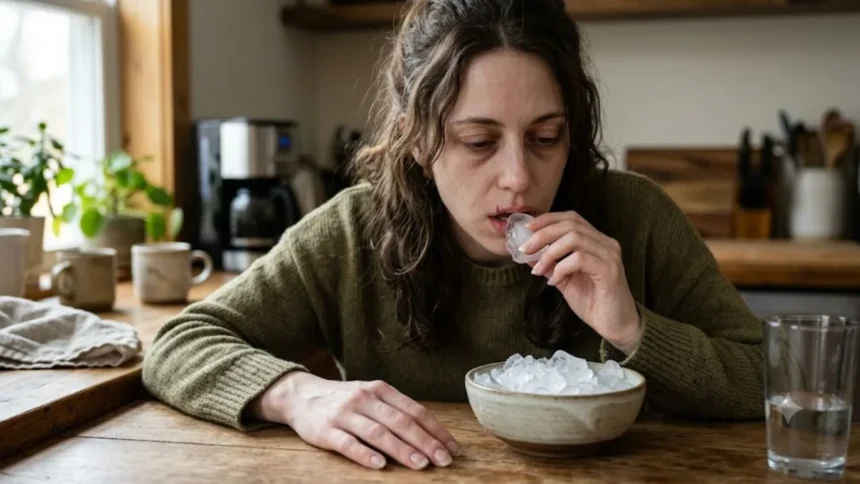
1. Craving Ice or Things That Are Not Food
One of the strangest signs of iron deficiency is an intense desire to chew ice. This specific craving is known as pagophagia, a form of pica. Pica describes persistent cravings for substances with little or no nutritional value, including ice, clay, dirt, paper, chalk, starch or, in some cases, unusual smells such as cleaning products.
Occasionally enjoying crushed ice does not automatically indicate low iron. The warning sign is a strong, frequent urge that feels difficult to control, especially when it develops suddenly. A person may begin filling cups with ice throughout the day, chewing ice after every drink or feeling unusually satisfied by its texture and coldness.
Researchers have not fully established why iron deficiency causes ice cravings. One theory suggests that chewing ice may briefly improve alertness in people whose concentration has been affected by anemia. Regardless of the mechanism, pica is sufficiently associated with iron deficiency that healthcare professionals often ask about unusual cravings during an anemia assessment.
Eating dirt, clay, paint or other non-food materials can expose a person to choking, intestinal blockage, infection, dental injury or toxic substances. Anyone experiencing pica should discuss it honestly with a doctor. There is no reason to feel embarrassed, and identifying the underlying deficiency may help the craving improve once appropriate treatment begins.
2. Restless or Uncomfortable Legs at Night
Another unusual low iron symptom is an almost irresistible urge to move the legs while sitting or lying down. People describe crawling, pulling, tingling, aching, buzzing or electric sensations beneath the skin. Movement may bring temporary relief, but the discomfort often returns when the person rests again, particularly during the evening or at night.
This pattern is known as restless legs syndrome. Iron deficiency is not its only cause, but it is a recognized association. The Merck Manual describes restless legs as an unpleasant urge to move during inactivity, while both the NHS and Mayo Clinic include it among the possible signs of iron deficiency anemia.
Restless legs can interfere with sleep because the symptoms become more noticeable when the body is still. Someone may repeatedly stretch, walk around the room or shake their legs instead of falling asleep. Over time, poor sleep can contribute to daytime fatigue, irritability and concentration problems, making an existing iron deficiency feel even more exhausting.
Do not assume that every nighttime leg sensation requires an iron supplement. Nerve conditions, pregnancy, kidney disease, certain medicines and other health problems can produce similar symptoms. A clinician may review the timing of the sensations, medical history and blood results, including ferritin, before deciding whether low iron is contributing to the problem.
3. Brittle, Flat or Spoon-Shaped Nails
Fingernails can sometimes reveal changes in the body’s nutritional status. With iron deficiency, nails may become unusually thin, fragile or easy to split. They might chip during ordinary activities, develop ridges or feel softer than before. These changes are not exclusive to iron deficiency, but they deserve attention when they occur alongside fatigue, dizziness or breathlessness.
A more distinctive change is koilonychia, commonly called spoon nails. Instead of curving gently outward, the middle of the nail becomes depressed while the edges turn upward. The nail may eventually look capable of holding a small drop of water. Concave, spoon-shaped nails are recognized as an uncommon sign of more significant iron deficiency.
Nail changes usually develop gradually, so they may be overlooked until several nails are affected. Frequent exposure to water, cleaning chemicals, nail treatments or physical trauma can also make nails brittle. Skin conditions, thyroid disorders and other nutrient deficiencies may create similar changes, which means appearance alone cannot confirm low ferritin or anemia.
Taking high-dose iron simply because the nails look weak is not recommended. Iron supplements can cause constipation, nausea, abdominal discomfort, vomiting and diarrhea, and excessive amounts may be harmful. A healthcare professional can determine whether the changes are connected to iron deficiency and recommend an appropriate treatment plan.
4. A Smooth, Sore Tongue or Cracks Around the Mouth
Iron deficiency may affect tissues inside and around the mouth. The tongue can become tender, swollen, unusually smooth or red, a condition called glossitis. Some people experience burning, difficulty eating spicy or acidic food, or an unexplained change in taste. These symptoms may appear even when there are no obvious dental problems.
Painful cracks or sores can also develop at the corners of the mouth. This condition is commonly called angular cheilitis or cheilosis. The corners may split when the person talks, smiles or eats, making the irritation difficult to heal. Both glossitis and cheilosis are recognized among the less common manifestations of significant iron deficiency.
These mouth changes can occur because rapidly renewing tissues require adequate nutrients and oxygen delivery. When iron stores and hemoglobin are low, the delicate lining of the tongue and mouth may become more vulnerable. Nevertheless, fungal infections, dehydration, allergies, poorly fitting dentures and deficiencies of vitamin B12 or folate can produce similar symptoms.
Persistent tongue soreness or recurring cracks should therefore be assessed rather than treated only with lip balm or mouthwash. A clinician may examine the area and order blood tests to distinguish iron deficiency anemia from other causes. Treating the underlying problem is generally more effective than repeatedly soothing the surface irritation without knowing why it keeps returning.
5. Ringing, Buzzing or Hissing in the Ears
Tinnitus is the perception of ringing, buzzing, humming, whooshing or hissing when no external sound is present. It is not usually the first symptom people associate with iron deficiency, yet the NHS lists tinnitus among the less common signs of iron deficiency anemia. It may be noticed in one ear, both ears or somewhere inside the head.
Iron deficiency anemia reduces the blood’s ability to carry oxygen effectively. It can also make the heart work harder, producing a faster or more noticeable heartbeat. In some people, changes in circulation may make internal sounds more noticeable, although tinnitus has many possible explanations and should never automatically be blamed on low iron.
Earwax buildup, loud-noise exposure, age-related hearing changes, ear infections, medication effects, jaw problems and circulatory conditions can also cause tinnitus. A rhythmic sound that appears to match the heartbeat requires particular medical attention because it may have a vascular cause. New tinnitus accompanied by sudden hearing loss, severe dizziness or neurological symptoms needs prompt assessment.
When tinnitus appears together with unusual tiredness, headaches, palpitations, pale skin, restless legs or heavy menstrual bleeding, asking about an iron evaluation may be reasonable. The goal is not to assume that iron is responsible but to give the healthcare provider a complete picture. That information can guide the selection of appropriate examinations and blood tests.
Other Common Symptoms That May Appear
Although the five signs above can be surprising, more familiar symptoms often develop at the same time. Extreme tiredness, weakness, headaches, dizziness, cold hands and feet, shortness of breath, reduced exercise tolerance and noticeable heartbeats are frequently associated with iron deficiency anemia. Symptoms may start mildly and become more noticeable as the deficiency worsens.
Some people also experience increased hair shedding. They may notice more strands in the shower, on a pillow or in a hairbrush. Hair loss has numerous possible causes, including stress, hormonal changes, thyroid disease, recent illness and genetics, so ferritin results should be interpreted alongside the person’s broader medical history.
Problems with concentration and memory may also occur. Iron helps support oxygen transport and normal cellular function, and the NIH notes that iron deficiency anemia can affect energy, concentration, memory, exercise capacity and temperature regulation. Children with untreated deficiency may experience difficulties involving attention, learning and development.
Symptoms do not always reflect the severity of a deficiency accurately. One person may feel exhausted with moderately low iron stores, while another may adapt gradually and notice little until anemia becomes advanced. This is why blood testing is more reliable than comparing your experience with someone else’s symptoms or an online checklist.
How Iron Deficiency Is Confirmed
Iron deficiency cannot be confirmed by checking the color of the skin, eyelids or fingernails at home. A healthcare professional normally begins by reviewing symptoms, diet, menstrual history, pregnancy status, digestive problems, medications and possible sources of blood loss. This discussion helps identify why iron might be low rather than merely confirming that it is low.
Blood testing commonly includes a complete blood count, also called a CBC or full blood count. This measures hemoglobin and characteristics of the red blood cells. A low hemoglobin level may indicate anemia, although anemia can have causes other than iron deficiency, including vitamin B12 deficiency, folate deficiency, chronic disease and inherited blood disorders.
Ferritin is another important measurement because it reflects stored iron. Clinicians may also assess serum iron, transferrin saturation and iron-binding capacity. Ferritin can be affected by inflammation, so healthcare professionals often interpret several results together instead of relying on one isolated number.
When the cause remains unclear, further investigation may be needed. The NHS notes that clinicians may test a stool sample for hidden blood or arrange specialist assessment. Finding the reason matters because replacing iron without addressing ongoing bleeding, poor absorption or another condition may produce only temporary improvement.
What Causes Low Iron Levels?
Blood loss is one of the most common reasons iron stores become depleted. Heavy or prolonged menstrual periods can gradually remove more iron than the body replaces. Pregnancy also increases iron requirements because blood volume expands and iron is needed to support both the pregnant person and the developing baby.
Slow bleeding inside the digestive system can also cause iron deficiency anemia. Possible sources include stomach ulcers, bowel inflammation, colon polyps, colorectal cancer or irritation linked to regular use of medicines such as aspirin, ibuprofen and naproxen. This is particularly important when iron deficiency develops in men or in women after menopause.
Low dietary intake may contribute when a person does not regularly consume enough iron-containing food. People following vegetarian or vegan diets can still obtain adequate iron, but they need varied plant sources and thoughtful meal planning. Infants, rapidly growing children, teenagers and frequent blood donors may also have increased needs or losses.
Absorption problems are another possibility. Celiac disease, inflammatory bowel disease, gastric bypass surgery and removal of part of the intestine may reduce the amount of iron entering the bloodstream. Some chronic inflammatory conditions can also interfere with how the body regulates and uses stored iron, even when dietary intake appears adequate.
Food, Supplements and Treatment
Iron-rich foods can support healthy iron levels and may form part of a treatment plan. Sources include meat, poultry, seafood, eggs, beans, peas, lentils, tofu, dark leafy vegetables, dried fruit and iron-fortified cereals or breads. Animal foods contain heme iron, while plant foods contain nonheme iron, which is generally absorbed less efficiently.
Vitamin C can improve the absorption of nonheme iron. Combining lentils with tomatoes, beans with peppers, fortified cereal with strawberries, or leafy vegetables with citrus fruit may therefore be helpful. Tea can reduce iron absorption when consumed with an iron-rich meal, so a clinician or dietitian may suggest changing its timing when low iron is a concern.
Food may not be enough to correct established iron deficiency anemia. Oral iron supplements are a common treatment, while intravenous iron may be used when the deficiency is serious, tablets are not tolerated or absorption is poor. Restoring iron stores can take several months, and follow-up testing may be needed to confirm that treatment is working.
Do not begin high-dose iron treatment without professional advice. Excess iron can cause gastrointestinal side effects, interact with medicines and become toxic in very large amounts. Iron products must also be kept away from children because accidental overdose can be fatal. The correct dose depends on laboratory results, age, health conditions and the reason for the deficiency.
When Should You See a Doctor?
Arrange a medical appointment when unusual cravings, restless legs, brittle nails, tongue soreness, tinnitus or unexplained hair shedding persist. Testing becomes especially important when these signs occur with ongoing exhaustion, dizziness, headaches, pale skin, reduced exercise tolerance, shortness of breath or a racing heartbeat.
People with very heavy periods should mention the amount and duration of bleeding rather than describing it simply as normal for them. Pregnant people, frequent blood donors and those with digestive conditions should also discuss symptoms early. These groups may have higher requirements, greater losses or difficulty absorbing iron from food.
Prompt medical attention is important for chest pain, fainting, severe breathlessness, a very rapid heartbeat or symptoms of significant bleeding. These problems should not be managed through diet changes or over-the-counter supplements alone. They may reflect advanced anemia or another condition requiring immediate assessment and treatment.
Most importantly, do not ignore recurrent iron deficiency after treatment. When iron levels improve and then fall again, there may be continued blood loss, poor absorption or an untreated underlying condition. A complete evaluation helps correct the deficiency safely while also addressing the reason it developed.
Final Thoughts on the 5 Weird Signs of Iron Deficiency
The five weird signs of iron deficiency—craving ice or non-food items, restless legs, spoon-shaped nails, a sore tongue or cracked mouth corners, and ringing in the ears—can easily be mistaken for unrelated problems. Recognizing the pattern may encourage earlier testing, especially when ordinary fatigue or breathlessness is also present.
These symptoms are warning signals rather than proof of iron deficiency anemia. Tinnitus, nail changes, mouth irritation and restless legs each have multiple possible causes. A complete blood count, ferritin test and other iron studies provide far more useful information than attempting to diagnose yourself from appearance or symptoms.
Iron deficiency is often treatable, but effective care involves more than taking a supplement. The underlying cause may be heavy menstrual bleeding, pregnancy, gastrointestinal blood loss, inadequate intake, frequent blood donation, poor absorption or chronic illness. Identifying that cause can prevent the deficiency from returning.
Paying attention to unusual changes in your body is not overreacting. A craving for ice or an uncomfortable urge to move your legs may seem insignificant, but these details can be medically useful. Share them with your healthcare provider and allow appropriate testing to determine whether low iron is truly responsible.
Frequently Asked Questions
Can you have iron deficiency without anemia?
Yes. The body’s stored iron can fall before hemoglobin becomes low enough to meet the definition of anemia. Ferritin and other iron studies may detect depleted stores earlier than a hemoglobin test alone.
Is craving ice always a sign of iron deficiency?
No. Some people chew ice out of habit or preference. A new, intense or persistent craving, particularly when combined with fatigue or pale skin, is worth discussing with a healthcare professional.
What do iron-deficiency nails look like?
They may become thin, brittle, soft or easily cracked. In more significant deficiency, the center can dip while the edges rise, creating concave nails known as spoon nails or koilonychia.
How quickly do iron deficiency symptoms improve?
The timeline varies according to the severity, cause and treatment. Some symptoms may improve within weeks, but restoring the body’s iron stores often takes several months and may require follow-up blood tests.
Should I take an iron supplement if I have these signs?
Not without medical guidance. Similar symptoms can have other causes, and excessive iron may be harmful. A doctor can check your blood levels, investigate the cause and recommend a suitable dose when treatment is needed.