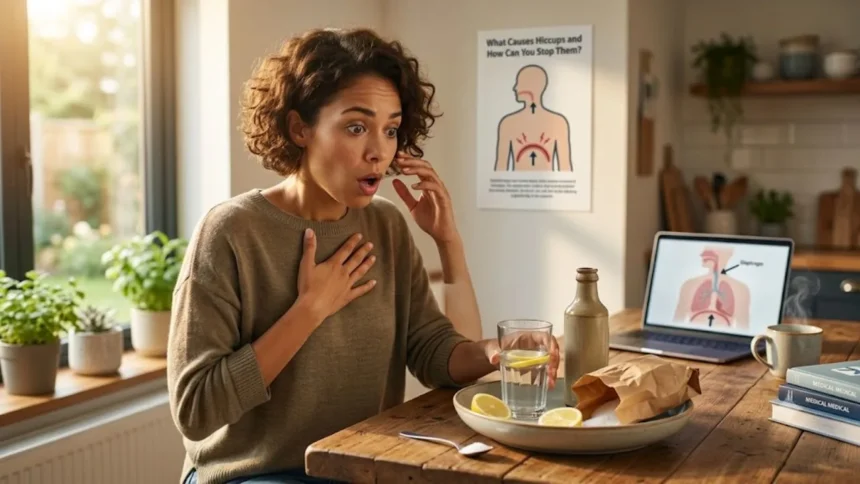
Hiccups can interrupt a meal, conversation, meeting or peaceful night without warning. One moment you are breathing normally, and the next you are producing a repeated “hic” sound that seems impossible to control. Most episodes are harmless and disappear within several minutes, but that does not make them any less frustrating while they are happening.
Eating too quickly, drinking a fizzy beverage, laughing suddenly or becoming excited may be enough to trigger an episode. In other cases, there is no obvious explanation. The good news is that everyday hiccups usually stop naturally and rarely require treatment. Several simple hiccup remedies may also help interrupt the reflex.
Hiccups lasting longer than 48 hours are different from the brief episodes most people experience. Persistent or chronic hiccups may interfere with eating, sleeping, speaking and recovering from illness. They can occasionally be associated with medication effects, nerve irritation, metabolic problems or a condition affecting the brain, chest or digestive system.
Understanding what causes hiccups can help you identify personal triggers and respond without trying unsafe internet tricks. This guide explains why hiccups happen, how to stop hiccups safely, what you can do to prevent them and when a stubborn episode deserves professional medical attention.
What Exactly Happens When You Hiccup?
A hiccup begins with an involuntary spasm of the diaphragm, the broad muscle located beneath the lungs. The diaphragm normally contracts smoothly when you breathe in and relaxes when you breathe out. During a hiccup, it contracts suddenly instead of following its regular breathing rhythm.
Immediately after the diaphragm contracts, the space between the vocal cords closes briefly. This sudden closure creates the familiar “hic” sound. The process happens automatically, which is why simply deciding to stop usually does not work, even when you try to concentrate on controlling your breathing.
The hiccup response involves a reflex pathway that includes the diaphragm, the brain and nerves carrying signals between the chest and nervous system. The phrenic nerve is particularly important because it controls movement of the diaphragm. Irritation along this pathway can sometimes produce repeated diaphragm spasms.
The medical name for hiccups is singultus. Ordinary acute hiccups last less than 48 hours, persistent hiccups continue for more than two days, and intractable hiccups last longer than one month. Most people experience only the brief, self-limiting form.
What Causes Hiccups in Everyday Life?
Eating a large meal is one of the most common hiccup triggers. A very full stomach can place pressure beneath the diaphragm or stimulate nearby nerves involved in the hiccup reflex. Eating quickly may increase the likelihood because it can cause you to swallow extra air along with your food.
Carbonated drinks are another familiar cause of hiccups after eating or drinking. The gas in soda, sparkling water and other fizzy beverages can expand the stomach. Drinking alcohol, particularly quickly or in larger quantities, may also irritate the digestive system and trigger a short episode.
Sudden temperature changes may contribute as well. Drinking something very hot immediately before an icy beverage, for example, may stimulate sensitive tissues and nerves in the throat or digestive tract. Highly seasoned foods may also trigger hiccups in people who are particularly sensitive to them.
Emotional reactions can activate the reflex even when food is not involved. Sudden excitement, nervousness, stress, surprise, laughter or fear may change breathing patterns and bring on hiccups. In many everyday cases, several small triggers occur together rather than one clear cause being responsible.
Why Do Hiccups Sometimes Start After Eating?
Hiccups after eating often develop because the stomach has expanded more quickly than usual. Large portions, rapid eating and swallowed air can all increase pressure around the stomach and diaphragm. The nearby nerves may then activate the involuntary reflex that produces the repeated contractions.
Talking while chewing, drinking through a straw or repeatedly gulping a beverage may increase how much air enters the stomach. The air can cause bloating or belching and may make hiccups more likely. Slowing down at meals can reduce both swallowed air and rapid stomach expansion.
Acid reflux may also be connected with recurring hiccups in some people. Reflux occurs when stomach contents travel upward into the esophagus, where they can irritate sensitive tissue. Hiccups can accompany heartburn and acid reflux, although occasional hiccups alone do not prove that someone has reflux disease.
Notice whether your episodes regularly follow a particular food, very large meal, alcoholic drink or fizzy beverage. A simple record of when the hiccups begin can reveal patterns that are difficult to recognize from memory. Repeated episodes accompanied by heartburn, difficulty swallowing or abdominal pain should be discussed with a healthcare professional.
How Can You Stop Hiccups Safely?
The first option is simply to wait. Most short episodes end naturally within several minutes and do not require medical treatment. Try relaxing your shoulders and breathing slowly rather than repeatedly gasping, talking or swallowing, since hurried breathing may make the experience more uncomfortable.
Holding your breath briefly is one of the most familiar hiccup remedies. Take a comfortable breath, hold it for a short period and then release it slowly. Never continue until you feel faint, and avoid prolonged breath-holding when you have a heart or lung condition unless a clinician says it is safe.
Sipping a glass of cold water may also interrupt the hiccup reflex. Take small, controlled sips instead of gulping, especially when you have swallowing difficulties. Gargling with cold water is another commonly suggested technique, although strong scientific evidence proving that either method reliably works is limited.
Pulling your knees gently toward your chest and leaning forward may place mild pressure on the diaphragm. Remain in the position briefly while breathing calmly, then sit upright if you become uncomfortable. These techniques are intended for temporary hiccups and should not delay medical care for a prolonged or severe episode.
Do Popular Home Remedies Really Work?
Many hiccup cures attempt to interrupt the reflex by changing breathing, stimulating the throat or shifting attention. This explains why people recommend holding the breath, sipping cold water, gargling or swallowing a small amount of granulated sugar. These remedies are widely used, but no single method is guaranteed to work.
A remedy may appear effective simply because an ordinary episode was about to end naturally. Hiccups often disappear within minutes, making it difficult to know whether the technique stopped them or the reflex resolved by itself. The limited evidence does not necessarily mean every home method is useless, only that results are unpredictable.
Some tricks are riskier than the hiccups themselves. Do not drink while hanging upside down, force large amounts of water into your mouth, swallow oversized bites of food or allow anyone to frighten you in a dangerous setting. Never place a plastic bag over your head or restrict your breathing.
Swallowing dry sugar may be unsuitable for babies, small children, people with swallowing problems or anyone at risk of choking. A safer approach is to choose a gentle technique appropriate for your health and stop immediately if it causes coughing, dizziness, chest discomfort or trouble breathing.
How Can You Prevent Hiccups?
Eating more slowly is one of the simplest preventive steps. Take smaller bites, chew thoroughly and pause between mouthfuls rather than rushing through the meal. This may reduce swallowed air and prevent the stomach from expanding as suddenly as it does after fast, heavy eating.
Smaller meals may be helpful when hiccups frequently begin after overeating. Instead of consuming one very large portion, divide the food into more comfortable amounts. This strategy may be particularly useful when episodes occur alongside bloating, belching, heartburn or a feeling of excessive fullness.
Consider reducing carbonated beverages when they repeatedly trigger your symptoms. Fizzy drinks release gas inside the stomach, while rapid alcohol consumption may irritate the digestive system and affect normal breathing patterns. Avoiding a known trigger is usually more reliable than searching for a cure after every episode.
Managing excitement and stress may help people whose hiccups begin during emotional moments. Slow breathing before public speaking, eating or entering a stressful situation may prevent sudden changes in breathing. Prevention will not eliminate every episode, because hiccups can sometimes develop without an identifiable trigger.
Why Can Hiccups Last for Days?
Hiccups that continue for more than 48 hours are classified as persistent. At that point, the episode may be more than an ordinary response to a large meal or fizzy drink. Medical evaluation is recommended because prolonged hiccups can be associated with an underlying health problem.
Persistent hiccups may result from irritation or damage involving the vagus or phrenic nerves. These nerves carry signals involved in breathing and the hiccup reflex. Throat irritation, a neck growth, problems close to the eardrum or a condition affecting the chest may occasionally stimulate them.
Disorders involving the central nervous system may also produce long-lasting hiccups. Possible causes include stroke, infection, inflammation, traumatic brain injury or a growth affecting certain areas of the brain. These conditions are uncommon explanations for hiccups, but they become more relevant when neurological symptoms are also present.
Metabolic imbalances, severe kidney problems, alcohol-related conditions and certain medications can contribute to persistent episodes. Surgery and anesthesia may sometimes be followed by hiccups as well. The range of possible causes is why chronic hiccups should be investigated rather than repeatedly treated with home remedies alone.
Can Medicines Cause Persistent Hiccups?
Certain medicines have been associated with long-lasting hiccups, although the reaction is uncommon. Drugs affecting the nervous system, anesthesia medicines, steroids and some cancer treatments may be involved. A medication becomes more suspicious when the hiccups begin soon after treatment starts or the dose changes.
Do not stop a prescribed medicine on your own because you suspect it is causing hiccups. Suddenly discontinuing some treatments can create serious complications. Contact the prescribing clinician, explain when the episode began and ask whether the medicine could reasonably be contributing.
The healthcare professional may review every prescription, over-the-counter product and supplement you take. They may adjust the dose, change the timing or recommend an alternative when appropriate. In other cases, the medicine may be essential and the clinician may treat the hiccups separately.
Providing an accurate medication list can prevent unnecessary tests and dangerous interactions. Include recent injections, anesthesia, steroids and short-term medicines, not only tablets used every day. The timing of each treatment may offer an important clue to the cause of persistent hiccups.
How Do Doctors Diagnose Chronic Hiccups?
A clinician will usually begin by asking when the hiccups started, how often they occur and whether they stop during sleep. Questions may cover meals, alcohol use, recent illnesses, surgery, medications, heartburn, swallowing problems, weight changes and symptoms affecting the chest or nervous system.
The physical examination may include the ears, throat, neck, chest, abdomen and nervous system. This helps the clinician look for irritation along the hiccup reflex pathway. Findings such as weakness, poor coordination, difficulty speaking or an abnormal breathing pattern may guide the next stage of testing.
Blood tests may be used to identify infection, kidney dysfunction, abnormal electrolytes or other metabolic problems. Depending on the symptoms, a clinician may request chest imaging, brain imaging, an electrocardiogram or tests examining the esophagus and stomach. Not every person requires all of these investigations.
The aim is to treat the reason for the hiccups instead of suppressing the sound temporarily. If reflux, infection, medication effects or another identifiable condition is responsible, managing that problem may stop the episodes. When no clear cause is found, treatment may focus on controlling the reflex itself.
How Are Persistent Hiccups Treated?
Treatment depends on how long the hiccups have lasted, how disruptive they are and what is causing them. A clinician may begin by treating a digestive disorder, changing a suspected medicine or correcting a metabolic imbalance. Resolving the underlying problem can allow the hiccup reflex to settle.
Medicines used for prolonged hiccups may include baclofen, chlorpromazine or metoclopramide. Gabapentin and acid-reducing medicines may be considered in selected cases. These are prescription treatments with potential side effects, so the most suitable choice depends on the person’s medical history and suspected cause.
Rarely, a specialist may consider a procedure targeting a nerve involved in the hiccup reflex. Nerve blocks and other interventions are generally reserved for severe cases that do not respond to medication. Evidence supporting treatments such as acupuncture or hypnosis remains limited and may vary according to the situation.
Persistent hiccups can make it difficult to eat, drink, sleep or speak comfortably. Treatment therefore focuses on quality of life as well as the sound itself. Severe cases may contribute to exhaustion, dehydration, poor nutrition and delayed recovery from another illness.
When Should You Seek Medical Help?
Contact a healthcare professional when hiccups last longer than 48 hours. Even when no other symptom is present, the duration is enough to justify an assessment. Persistent episodes may require prescription treatment or investigation for irritation, illness or medication effects.
Seek advice sooner when hiccups repeatedly prevent you from sleeping, eating, drinking or breathing comfortably. Medical attention is also appropriate when episodes keep returning without an obvious trigger. Recurrent hiccups may be less urgent than one continuous episode, but they can still indicate a problem that needs treatment.
Urgent help is important when hiccups occur with chest pain, severe shortness of breath, fainting, confusion or repeated vomiting. Sudden weakness, facial drooping, difficulty speaking, loss of coordination or a severe new headache may indicate a neurological emergency rather than harmless hiccups.
You should also seek prompt care when persistent hiccups begin after a serious head injury, major operation or new medication. Do not allow an internet remedy to delay an assessment of concerning symptoms. Brief hiccups are usually harmless, but the surrounding circumstances can change their significance.
Final Thoughts
Hiccups happen when the diaphragm contracts suddenly and the vocal cords close immediately afterward. Everyday triggers include large meals, rapid eating, carbonated beverages, alcohol, sudden temperature changes and emotional excitement. Most episodes are temporary and resolve without medical treatment.
To stop hiccups, try holding your breath briefly, sipping cold water, gargling or pulling your knees gently toward your chest. These methods may interrupt the reflex, but none is guaranteed. Avoid tricks that create a choking, falling or suffocation risk.
Prevention may be more useful when you experience hiccups regularly. Eat slowly, choose smaller portions, limit fizzy drinks and record any repeatable food or emotional triggers. Mention frequent heartburn, swallowing difficulties or unexplained digestive symptoms to a healthcare professional.
Hiccups lasting longer than two days should not be dismissed as a minor annoyance. Persistent or intractable hiccups can interfere with essential activities and occasionally signal another condition. Medical care can identify the cause and provide appropriate treatment when simple measures are not enough.
Frequently Asked Questions
What is the main cause of hiccups?
Hiccups are caused by a sudden, involuntary contraction of the diaphragm followed by rapid closure of the vocal cords. Eating quickly, overeating and drinking carbonated beverages are common triggers.
How do you stop hiccups immediately?
No technique works instantly for everyone. Briefly holding your breath, slowly sipping cold water or pulling your knees toward your chest may help interrupt the hiccup reflex.
Why do I get hiccups after eating?
Fast eating, a large meal and swallowed air can expand the stomach and irritate the area near the diaphragm. Fizzy drinks, alcohol, spicy foods and acid reflux may also contribute.
Are hiccups ever dangerous?
A brief episode is usually harmless. Hiccups lasting more than 48 hours, disrupting breathing or occurring with neurological symptoms may require prompt medical evaluation.
Can stress or anxiety cause hiccups?
Yes. Stress, nervousness, excitement, laughter and sudden surprise can change breathing patterns and trigger diaphragm spasms in some people.