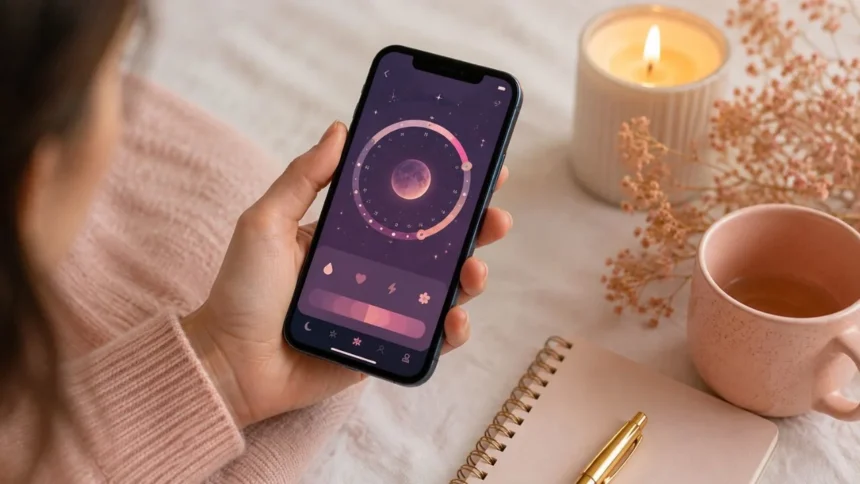
Stardust Period Tracker: Features, Privacy and How It Works
Stardust Period Tracker is a menstrual health app that combines period predictions, symptom logging and cycle education with a distinctive astrology-inspired design. Users can record bleeding, moods, cravings, pain, cervical mucus and other daily experiences to build a clearer record of how their symptoms change throughout the menstrual cycle.
The app also provides estimated ovulation dates, fertile-window forecasts and personalised daily insights. It supports people who are monitoring general menstrual health, trying to conceive or tracking a pregnancy. Optional integrations can bring in temperature, sleep, activity and energy information from Apple Health, Apple Watch and Oura.
Stardust differs from many clinical-looking period apps because it mixes health education with lunar cycles, horoscopes, tarot and folklore. These elements may make regular tracking more engaging, but they should be separated from the app’s health-related predictions and treated as optional lifestyle or entertainment content.
Privacy is particularly important because period apps can hold sensitive information about bleeding, pregnancy, fertility, sexual activity, medications and medical conditions. This article explains how Stardust Period Tracker works, what the free and paid versions offer, which data the company collects and what users should consider before relying on its predictions.
What Is Stardust Period Tracker?
Stardust is a period, hormone, ovulation and pregnancy-tracking application developed by Stardust App LLC. It is available on iOS and Android, although the company says new features may sometimes reach iOS before they become available on Android.
The app records menstrual dates and uses previous cycle information to estimate when the next period may begin. It can also display predicted cycle phases, including menstruation, the follicular phase, ovulation and the luteal phase. These dates become more personalised as the user continues entering accurate information.
Stardust also allows users to record physical symptoms, emotions, activities and reproductive-health information. The app can connect these entries with different cycle phases, helping users notice whether concerns such as headaches, cramps, fatigue, cravings or mood changes regularly appear at similar times.
Its design is intended to feel less clinical than a traditional health record. The service blends menstrual education with astronomy, moon phases, astrology and what the company describes as ancient wisdom. Users should remember that these creative features are separate from evidence-based medical evaluation.
How Stardust Works
During account setup, the app asks for information such as the user’s birthdate, recent period dates and usual cycle pattern. The person can then enter new bleeding dates as each period begins and ends. This history gives the prediction system information it can use to estimate future cycles.
Users can also transfer information from another period app by uploading screenshots during onboarding. Stardust says it extracts the relevant cycle information and permanently deletes those screenshots from its servers after completing the transfer.
Each day, the user can open the app to review the estimated cycle phase and log symptoms or experiences. Consistent entries create a more detailed personal record than period dates alone. The app can then highlight possible relationships between cycle phases, sleep, energy, activity and reported symptoms.
Predictions remain estimates rather than measurements of what the ovaries or hormones are doing at that exact moment. Menstrual cycles can change because of pregnancy, stress, illness, medication, travel, hormonal conditions, age and many other factors, so the calendar may not always match what happens.
Period and Cycle Tracking
The central Stardust Period Tracker feature is its menstrual calendar. Users enter the first and final days of bleeding, and the app estimates when the next period may arrive. It can also present a countdown and place predicted period dates on a calendar.
Tracking several cycles may reveal whether periods usually arrive at consistent intervals or vary substantially from month to month. This record can be useful when planning travel, preparing period products or explaining menstrual changes during an appointment with a healthcare professional.
The app’s calendar divides the cycle into commonly recognised phases. However, displaying a phase does not mean Stardust has directly tested hormone levels. Unless the user provides additional biological information, much of the display is based on cycle dates and the patterns calculated from previous entries.
Users should correct the calendar whenever a period begins earlier or later than predicted. Leaving an inaccurate estimated date in place can affect later forecasts. Recording light spotting separately from full menstrual bleeding may also provide a clearer history when the app offers those logging options.
Symptom and Mood Logging
Stardust lets users record daily symptoms, feelings, cravings, activities and bodily signals. Its feature page specifically mentions logging cervical mucus alongside other experiences. The system then attempts to connect recurring entries with particular phases of the menstrual cycle.
This feature can help someone notice that headaches frequently appear before menstruation or that energy changes around a similar point each month. The value comes from identifying repeated personal patterns rather than assuming that every user experiences the same symptoms during a given phase.
A symptom log may also support a medical conversation. A dated record can show when pain began, how often it returns and whether bleeding, sleep changes or mood symptoms occur at the same time. However, the app cannot determine whether the pattern is caused by PMS, endometriosis, PCOS, fibroids or another condition.
Daily logging should remain manageable. Recording every available option can become tiring or create unnecessary anxiety about ordinary changes. Focus on the symptoms that affect daily life, require treatment or would be useful to discuss with a qualified healthcare professional.
Ovulation and Fertility Forecasts
Stardust offers ovulation forecasts and an estimated fertile window for users who are trying to conceive. Its Google Play listing says the app can follow cycle changes, predict fertile days and help users understand possible hormone patterns throughout the month.
A user can activate a Trying to Conceive setting through the app’s profile and settings area. The app then presents fertility-focused information based on the available menstrual history and any additional signals the user records or imports.
Ovulation does not always occur on the same calendar day, even when cycle lengths appear regular. Research has found that applications relying mainly on cycle length cannot accurately identify the exact day of ovulation because ovulation timing can change between cycles.
Stardust may help users recognise trends when trying to conceive, but it should not be considered confirmation that ovulation has happened. Cervical mucus observations, basal body temperature and ovulation-predictor tests can provide additional information, while medical evaluation may be necessary when pregnancy does not occur as expected.
Basal Body Temperature Tracking
Basal body temperature, commonly shortened to BBT, is the body’s resting temperature measured immediately after waking. A small temperature rise can occur after ovulation because of hormonal changes, although illness, disrupted sleep, alcohol, travel and measurement timing may affect the reading.
Stardust allows users to enter temperature manually. People with a compatible Apple Watch or Oura Ring can also connect the wearable so temperature information is imported automatically into the app.
BBT is generally more useful for recognising that ovulation may already have occurred than for guaranteeing the exact fertile days before it happens. A single unusual reading should not be treated as proof of ovulation, pregnancy or a hormonal problem.
Take manual readings at approximately the same time each morning and before getting out of bed when using BBT for pattern tracking. Record factors such as fever or interrupted sleep that could change the temperature, and discuss unclear patterns with a reproductive-health professional.
Apple Health and Oura Integration
Stardust can connect with Apple Health and Oura through its settings. The user must approve the connection and choose the requested permissions. The app can then use information such as temperature, sleep, activity or step data to produce additional cycle-related insights.
The Signal Sync feature is intended to connect sleep, energy and activity patterns with different menstrual phases. The company also added cycle recaps that can summarise sleep and activity information recorded during the previous cycle.
Wearables can make tracking more convenient, but their measurements are not identical to laboratory testing or clinical evaluation. A consumer device may estimate sleep stages, temperature trends or activity using its own sensors and algorithms, and accuracy can vary with device placement and use.
Review every permission before connecting a health platform. Users who only want temperature information do not necessarily need to grant access to all available categories. Permissions can usually be changed later through the connected app and the phone’s health or privacy settings.
Pregnancy Mode
Stardust includes a pregnancy setting called Pregnancy Mode or Divine Creator Mode. Users can switch to it through the profile settings after becoming pregnant. The interface then changes from menstrual-cycle predictions to pregnancy-related tracking and weekly information.
Features include symptom logging, daily affirmations, weekly information about body changes and upcoming screenings, and three-dimensional or augmented-reality representations of fetal size. The app also includes moon-based hormone content and astrological comparisons between the parent and baby.
These tools may provide an engaging way to record experiences, but they cannot assess fetal development or confirm that a pregnancy is progressing normally. An augmented-reality image is a visual illustration rather than an ultrasound or personalised medical measurement.
Stardust’s terms state that its services are informational and must not be used for diagnosis, treatment or prevention of medical conditions. Pregnancy care should continue through a qualified clinician, including recommended appointments, laboratory testing, ultrasound examinations and urgent assessment of concerning symptoms.
Friend Sync and Partner Mode
Friend Sync allows users to connect with other Stardust members through cycle codes. Friends may use this feature to compare cycle timing or remain aware of one another’s experiences. A user can share a code through a message or enter another person’s code inside the app.
Partner Mode lets a significant other follow selected cycle information. The feature is intended to help partners understand when a period may arrive or when the user could need additional support. The user can remove or block a connected partner through the app settings.
Sharing can be useful, but cycle details may reveal sensitive information about fertility, pregnancy or sexual health. Users should understand which information becomes visible before connecting another account rather than assuming the person will see only the next period date.
A former partner or friend should be removed immediately when access is no longer appropriate. Anyone concerned about controlling behaviour, device monitoring or reproductive coercion should avoid shared tracking and review the security of the phone, email account and app login.
Moon and Astrology Features
Stardust connects menstrual cycles with lunar phases and provides content based on astrology, tarot, folklore and symbolic cycle archetypes. These features are a major part of the app’s branding and may appeal to users who enjoy spiritual or reflective wellness content.
The app can show which moon phase appears alongside a period and generate personalised horoscope or tarot material. Premium users receive daily readings that combine their birth information with the estimated phase of the menstrual cycle.
These features may encourage someone to open the app and maintain a regular tracking habit. They can also provide journaling prompts or a playful way to think about emotional experiences. Their value is therefore primarily personal and motivational.
Lunar alignment, tarot and zodiac content should not be treated as medical evidence of hormone levels, fertility or disease. Decisions about pregnancy, contraception, persistent pain or abnormal bleeding should be based on appropriate medical guidance rather than an astrological interpretation.
Free Features
Stardust provides a free version that includes cycle predictions, daily insights and symptom tracking. The company describes the free experience as a functional period tracker rather than a limited demonstration that requires immediate payment.
Free users can record periods and symptoms, review predicted phases and access some personalised information. Friend or partner connections, moon-related elements and selected reproductive-health tools may also be available, although features can change with app updates.
The app is free to download from both major mobile stores and contains optional in-app purchases. As of August 2026, the U.S. App Store lists the application as free with paid subscription choices, while Google Play also identifies it as offering in-app purchases.
Testing the free version before subscribing is sensible. Enter a few cycles, examine the prediction display and decide whether the style helps you track consistently. A subscription has limited value when the user only needs a straightforward calendar and rarely opens the premium content.
Stardust Super
The premium subscription is called Stardust Super. It includes Daily Decode content covering areas such as mind, body, movement, sex, work, beauty and gut health. Premium subscribers also receive cycle-related horoscopes, tarot readings and deeper archetype information.
Cyclepedia is another paid feature. Stardust describes it as a searchable library covering more than 150 symptoms, feelings and conditions. The subscription also includes Signal Sync, the Perks Portal and additional personalised content based on the user’s cycle entries.
Pricing can vary by country, platform, trial and promotion. The U.S. App Store currently displays examples including a $6.99 monthly plan and several annual offers between $24.99 and $39.99. Users should rely on the checkout screen shown in their own region before purchasing.
Subscriptions renew automatically until cancelled. Stardust’s terms state that fees are generally non-refundable and that a free or discounted trial can convert into a regular paid plan unless it is cancelled before the trial ends.
What Data Stardust Collects
Stardust’s privacy policy says it collects identifiers such as name and birthdate. It also collects an email address, phone number and login credentials but says this contact information is stored separately through a third-party authentication platform.
Health information may include menstrual activity, fertility, pregnancy, sexual activity, medical conditions, symptoms and medications. Connected health services may also provide temperature, sleep, step-count and other activity information when the user grants permission.
The app may collect financial information through external payment processors, communication with customer support, app usage and device information. The exact categories can depend on the platform, location, permissions, age and features used.
Users should enter only information that supports their reason for using the app. A person tracking period dates does not need to log every available sexual or medical detail. Limiting unnecessary entries can reduce the amount of sensitive information held in any digital account.
How Stardust Protects Health Data
Stardust says contact information and health information are not stored together. Health data is attached to a random account identifier, while a company called Rownd handles contact and authentication information separately. The company also says it encrypts and anonymises personal information.
Its health-data policy says the service does not directly connect stored health information with the user’s contact details. This separation is intended to reduce the likelihood that reproductive-health records can be immediately attributed to a real-world identity.
Stardust states that it does not sell health data and does not use health data to serve digital advertising. It may still provide health information to processors that perform functions such as hosting, storage or customer support, and it may share data when directed by the user.
Separating identifiers is a meaningful privacy measure, but no online system can promise that sensitive information will face zero risk. Account security, third-party providers, legal requests, corporate transactions and the user’s own sharing choices remain relevant.
Advertising and App Tracking
Stardust’s current policy distinguishes health data from internet activity. It says health information is not used or disclosed for digital advertising, but internet-activity information may be used for marketing and advertising with consent provided through iOS or Android settings.
The policy names AppsFlyer, Firebase and their integrated partners in connection with finding new users and measuring advertising performance. It also mentions aggregated advertising technologies associated with companies such as Meta and Google.
Apple’s privacy label says purchases, identifiers and usage data may be used to track users across apps and websites owned by other companies. It separately lists health information as data that may be collected but is not linked to identity. Apple notes that these statements are supplied by the developer and are not verified by Apple.
Google Play’s current data-safety section states that the app does not share data with third parties under Google’s disclosure definitions. It says Stardust may collect financial information, app activity and device identifiers, encrypts data in transit and supports deletion requests. Store labels should be read alongside the full privacy policy because their reporting categories differ.
Vendors and Legal Requests
Stardust may provide information to vendors that support hosting, payment processing, customer service, authentication, analytics, data storage, fraud prevention and advertising. These companies may receive only the information required to perform the service assigned to them.
The health-data policy separately states that processors working on Stardust’s behalf may access health information when necessary to provide hosting or customer-support functions. A user can also choose to share health information with Apple Health, friends or partners.
The privacy policy allows disclosure when required by applicable law or valid legal process. It also permits information to be disclosed during negotiations or completion of a merger, financing, acquisition, bankruptcy or sale involving the business or its assets.
A company’s promise not to sell health data does not mean information can never leave its systems. Users should consider service providers, voluntary sharing, lawful demands and corporate changes when deciding how much reproductive information to record.
Data Deletion and Control
Stardust says users can delete personal information through the app settings. Its health-data notice states that pressing the delete option within the profile can remove health data, while privacy requests can also be submitted to the company.
Deleting an account is different from cancelling a paid subscription. The terms say cancellation stops future billing at the next cycle, while account deletion removes account data except for information that must be kept under applicable law. A deleted account cannot be restored.
Users who subscribed through Apple or Google may need to cancel through the subscription controls provided by that store. Deleting the app icon from a phone does not automatically end a recurring payment or necessarily delete the associated account.
Before deleting data, save any cycle history needed for personal records or an upcoming medical appointment. After submitting the request, retain confirmation and check the subscription separately so an unwanted renewal does not continue.
Prediction Accuracy
A period-tracking app estimates future dates from information recorded in previous cycles. Predictions may become more personally relevant when the user enters consistent and accurate data, but no application can guarantee that the body will follow the expected schedule.
The start of a period can change because of normal variation, stress, illness, weight changes, medication, hormonal contraception, perimenopause, pregnancy or reproductive-health conditions. Irregular cycles give an algorithm less consistent information and may produce wider or less dependable forecasts.
Ovulation predictions require particular caution. Research shows that ovulation timing varies considerably, meaning calendar-based applications may misclassify fertile days. A recent observational analysis found regulated digital contraceptives produced lower predicted pregnancy risk than ordinary period trackers.
Use Stardust predictions as planning estimates rather than confirmed biological events. The app itself states that it should not be used as contraception and should not replace medical advice, diagnosis or treatment.
Can Stardust Prevent Pregnancy?
Stardust is not marketed as an authorised birth-control application. Its store listings specifically warn that it should not be used as contraception, even though it displays fertile-window and ovulation estimates.
A green or low-fertility day shown by a normal period tracker does not guarantee that pregnancy cannot occur. Ovulation can happen earlier or later than expected, and sperm may remain capable of fertilisation for several days within the reproductive tract.
Anyone avoiding pregnancy should use a recognised contraceptive method rather than relying only on a Stardust calendar. Fertility-awareness methods require careful education, consistent observation and protection or abstinence during identified fertile days.
Software authorised specifically for contraception is assessed differently from a general wellness tracker. Stardust can help record information, but its predictions should not be treated as an FDA-authorised contraceptive method.
Medical Limits
Stardust does not diagnose PCOS, endometriosis, PMDD, infertility, pregnancy complications or other medical conditions. It may show educational material or identify patterns, but those patterns must be evaluated alongside history, examination and appropriate medical testing.
The company’s terms say the service is provided for informational purposes. They state that it should not be used to diagnose, treat, cure, mitigate or prevent a disease or medical condition and advise users to seek guidance from a qualified health professional.
Contact a healthcare provider when periods change substantially, repeatedly last longer than eight days, become unusually heavy or cause severe pain. Medical advice is also important for persistent bleeding between periods or repeated missed periods when pregnancy is not the expected explanation.
A well-maintained app log can support that appointment. Bring information about bleeding dates, pain, medication, pregnancy possibility and other symptoms, but allow the clinician to decide which examinations or tests are necessary.
Who May Like Stardust?
Stardust may suit users who want a visually distinctive cycle tracker rather than a clinical calendar. Its design, humour, moon content and daily prompts may encourage people who previously found period tracking repetitive or difficult to maintain.
It may also be useful for users who want to record symptoms, temperature, sleep and activity within one cycle-focused interface. Friend Sync and Partner Mode can appeal to people who consciously choose to share cycle information with trusted individuals.
People who prefer strictly evidence-based health presentation may find the astrology, tarot and hormone-themed language distracting. They should determine whether the clear tracking functions remain easy to separate from the spiritual and entertainment content.
Privacy-conscious users should read the current policy, review advertising permissions and decide whether storing reproductive information in any cloud-connected service feels appropriate. The right period tracker depends on both functionality and personal risk tolerance.
How to Use Stardust Safely
Enter period dates and important symptoms consistently, but avoid treating each forecast as a medical fact. Correct predicted dates when actual bleeding begins, and note factors such as illness or medication changes that could explain an unusual cycle.
Review connected-app permissions regularly. Remove access to data categories that are not necessary, limit cross-app advertising permission and disconnect former friends or partners who should no longer see cycle information.
Protect the account with a secure email address, strong device passcode and available authentication controls. Avoid sharing screenshots that reveal cycle dates, pregnancy information or identifying account details unless the recipient genuinely needs them.
Use the app as a personal record and educational tool alongside appropriate healthcare. Seek professional advice for severe pain, very heavy bleeding, unexpected pregnancy concerns or major changes rather than waiting for the next prediction to explain the problem.
Frequently Asked Questions
Is Stardust Period Tracker free?
Yes. Stardust offers free cycle predictions, symptom logging and daily insights. Stardust Super adds premium features through monthly or annual in-app subscriptions.
Does Stardust sell period data?
Stardust states that it does not sell health data or use it for digital advertising. Its policy does allow processors to access data for services and allows certain non-health activity data to be used for advertising with consent.
Can Stardust accurately predict ovulation?
It can estimate ovulation using cycle information and additional logged signals, but the result is not confirmation that ovulation occurred. Cycle-based prediction alone cannot reliably identify the exact ovulation day.
Can I use Stardust as birth control?
No. Stardust’s app listings specifically state that it should not be used as contraception. Use a recognised contraceptive method and seek professional guidance when preventing pregnancy.
Can I delete my Stardust data?
Yes. Stardust says users can delete health information through the profile and can submit privacy requests directly. Account deletion is separate from cancelling an active app-store subscription.
Conclusion: Is Stardust Period Tracker Worth Using?
Stardust Period Tracker combines standard menstrual tracking with symptom records, fertile-window estimates, pregnancy tools and wearable integrations. Its visual design and daily content may make cycle logging more engaging for users who enjoy a less clinical experience.
Its strongest practical features are the menstrual calendar, detailed symptom logging, temperature support and the ability to compare cycle phases with sleep and activity patterns. Partner sharing and pregnancy mode add more options, although neither should replace appropriate healthcare.
Stardust publicly states that health data is separated from contact information, encrypted and not sold. However, the policy also describes vendors, advertising technologies for non-health activity data, legal disclosures and corporate transactions, so users should read the details rather than relying only on a simple privacy claim.
The app can help someone organise menstrual information and recognise patterns, but its predictions remain estimates. Treat lunar and horoscope content as optional entertainment, do not use the fertile calendar as contraception and seek medical advice when symptoms or cycle changes cause concern.