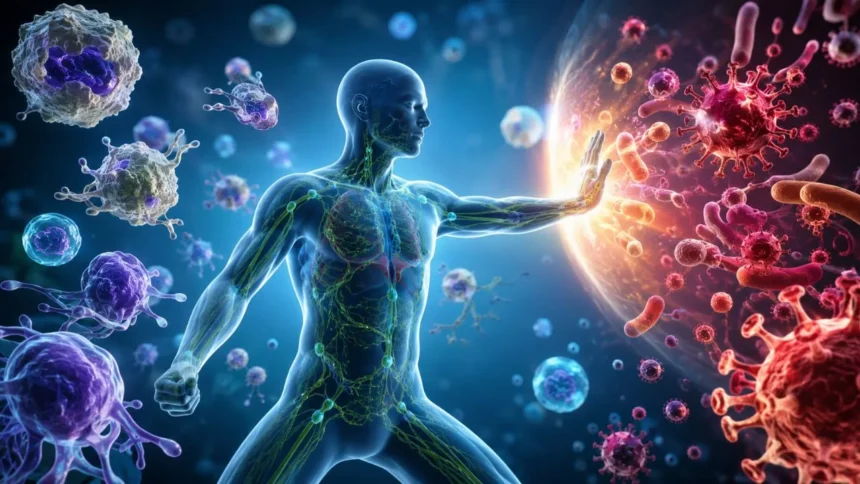
The human body comes into contact with bacteria, viruses, fungi, parasites, and other potentially harmful substances every day. Most of these threats never cause serious illness because the immune system constantly watches for danger. It identifies unfamiliar organisms, limits their spread, removes infected cells, and helps damaged tissues recover. This protection happens continuously, even when you feel completely healthy.
The immune system is not one organ or a simple switch that turns on when you become sick. It is a coordinated network of white blood cells, tissues, organs, proteins, chemical signals, and physical barriers. These components communicate with one another to recognize threats while protecting the body’s healthy cells. The National Institute of Allergy and Infectious Diseases describes immune protection as a partnership between rapid innate defenses and more targeted adaptive immunity.
Understanding how the immune system fights disease also explains why people develop symptoms such as fever, swelling, tiredness, and mucus during an infection. Some symptoms are caused directly by a pathogen, while others result from the body’s attempt to control it. Inflammation, for example, helps immune cells reach an affected area, but excessive or prolonged inflammation can also damage healthy tissue.
The immune response is therefore a careful balancing act. It must respond strongly enough to eliminate a harmful organism without causing unnecessary harm to the body. It must also recognize the difference between dangerous microbes, harmless substances, and the body’s own cells. When this system works properly, it provides immediate protection, targeted disease control, tissue repair, and long-term immune memory.
The Immune System Is a Network, Not a Single Organ
The immune system includes the bone marrow, thymus, spleen, lymph nodes, lymphatic vessels, skin, mucous membranes, and several types of white blood cells. Many immune cells begin developing in the bone marrow before moving through the bloodstream or lymphatic system. Others settle permanently in tissues, where they can detect infection near the place it first enters the body.
Bone marrow produces many of the cells involved in immune defense, including lymphocytes and phagocytes. The thymus helps certain T cells mature and learn how to respond appropriately. Lymph nodes filter lymphatic fluid and create meeting points where immune cells can exchange information. The spleen performs a similar filtering role for the blood while helping the body respond to blood-borne pathogens.
White blood cells are the active defenders within this network. Neutrophils can quickly move toward infected tissue and consume harmful organisms. Macrophages engulf microbes, remove damaged cells, and help coordinate inflammation. Natural killer cells can recognize and destroy some virus-infected or abnormal cells, while B cells and T cells create highly specific adaptive immune responses.
These organs and immune cells remain connected through chemical messengers called cytokines. Cytokines help immune cells communicate, travel to infected areas, increase inflammation, or slow the response when the danger has passed. This communication allows the immune system to act as one organized defense network instead of a collection of unrelated cells working independently.
Physical Barriers Stop Many Pathogens Before Infection Begins
The first stage of disease protection begins at the body’s surfaces. Skin creates a strong physical barrier that prevents many microorganisms from entering deeper tissues. Natural oils, dryness, and beneficial microorganisms living on the skin also make the surface less welcoming to certain pathogens. A cut, burn, or damaged skin barrier can make infection more likely because it creates an easier entry point.
Mucous membranes protect areas that must remain open to the outside world, including the nose, mouth, lungs, digestive system, and reproductive tract. These surfaces produce mucus that can trap dust, allergens, bacteria, and viruses. In the respiratory tract, tiny hair-like structures called cilia move mucus and trapped particles toward the throat, where they can be swallowed or expelled.
Tears and saliva provide another layer of immune protection. They wash surfaces and contain substances that can interfere with microbial growth. Stomach acid destroys many organisms that enter through food or drink, while digestive enzymes and normal gut bacteria create additional challenges for invading pathogens. These defenses reduce the number of germs that reach vulnerable tissues.
Coughing, sneezing, vomiting, and diarrhea may feel unpleasant, but they can also serve protective purposes. These reactions help remove irritants, toxins, or infectious organisms from the body. Physical and chemical barriers cannot stop every pathogen, but they reduce exposure and give deeper immune defenses a better chance of controlling an infection before it spreads.
Innate Immunity Provides the Body’s Rapid Response
When a pathogen crosses the body’s barriers, innate immunity responds almost immediately. This branch of the immune system does not need to identify the exact strain of a virus or species of bacteria before taking action. Instead, innate immune cells recognize general patterns commonly found on harmful microorganisms or signals released by injured cells.
Once danger is detected, immune cells release chemical signals that trigger inflammation. Blood vessels near the infected area widen and become more permeable, allowing fluid, proteins, and additional white blood cells to enter the tissue. This process may cause redness, warmth, swelling, or discomfort, but it also helps concentrate immune defenses where they are most urgently needed.
Neutrophils and macrophages often attack pathogens through a process called phagocytosis. The immune cell surrounds a microbe, pulls it inside, and breaks it down using destructive enzymes. Macrophages also clear dead cells and cellular debris, which supports healing after the immediate threat has been controlled. These cells can continue working while the more specialized adaptive immune response develops.
Natural killer cells play an especially important role when viruses hide inside human cells. Rather than attacking free-floating viral particles, natural killer cells look for unusual changes on the surfaces of infected or damaged cells. They can then trigger the destruction of those cells, helping limit viral replication. Innate immunity may not always eliminate an infection alone, but it slows the threat and prepares the body’s targeted defenses.
Adaptive Immunity Targets Specific Disease-Causing Organisms
Adaptive immunity develops more slowly than the innate response, especially during a person’s first encounter with a pathogen. However, it can identify specific antigens associated with a particular microorganism. Antigens are molecules that immune cells recognize as possible signs of danger. This precise recognition allows the body to build a response that closely matches the pathogen causing the infection.
Dendritic cells and other antigen-presenting cells connect innate immunity with adaptive immunity. After capturing parts of a pathogen, these cells travel to lymph nodes and display antigen fragments to T cells. A T cell with a matching receptor becomes activated, multiplies, and begins performing its specialized role. This selection process helps prevent unrelated immune cells from responding unnecessarily.
Helper T cells coordinate much of the adaptive immune response. They release signals that activate B cells, support macrophages, and guide other immune cells. Cytotoxic T cells search for cells displaying matching antigen fragments and destroy those infected cells. This function is particularly important against viruses and other organisms that reproduce inside the body’s cells.
Because adaptive immunity requires several stages of recognition and cell multiplication, a first-time response can take days to reach full strength. During that period, innate defenses continue slowing the infection. Once activated, however, adaptive immune cells can target the pathogen with remarkable precision and create memory cells that improve the body’s response during future encounters.
Antibodies Help Neutralize and Remove Pathogens
B cells are the immune cells responsible for producing antibodies. Each B cell carries receptors that recognize a limited range of antigens. When a matching B cell receives the correct activation signals, often with assistance from helper T cells, it multiplies and develops into antibody-producing plasma cells. These plasma cells can release large quantities of antibodies into the blood and other body fluids.
Antibodies do not usually kill pathogens directly. Instead, they attach to specific antigens and interfere with the organism’s ability to cause harm. Some antibodies neutralize viruses by blocking the structures they use to enter human cells. Others bind to bacterial toxins and prevent those toxins from interacting with healthy tissue.
Antibodies can also mark pathogens for destruction. Once an antibody coats a bacterium or viral particle, phagocytes can recognize and consume it more efficiently. Antibodies may also activate the complement system, a group of proteins that supports inflammation, damages certain microbes, and improves the removal of antibody-covered targets.
Different antibody classes operate in different parts of the body. Some are common in the bloodstream, while others protect mucosal surfaces or appear early during infection. Antibody levels can decrease after recovery, but this does not always mean that protection has disappeared. Memory B cells may remain ready to produce new antibodies when the same antigen is detected again.
Immune Memory Helps the Body Respond Faster Next Time
After an infection has been controlled, most activated immune cells are no longer needed and gradually disappear. However, some B cells and T cells become memory cells. These long-lived cells preserve information about the pathogen’s antigens. When the same or a closely related organism returns, memory cells can recognize it and begin responding more quickly than they did during the original infection.
A faster secondary response may destroy the pathogen before noticeable symptoms develop. In other situations, infection may still occur, but immune memory can reduce its severity or duration. Protection varies because pathogens behave differently, immune responses can weaken over time, and some viruses change their antigens enough to partially avoid earlier immunity.
Vaccines use this natural ability to create immune memory. They expose the immune system to a harmless form, weakened form, inactivated form, or specific component of a pathogen. The immune system practices recognizing the antigen and develops protective cells without requiring the person to experience the full disease and its possible complications.
Some vaccines require more than one dose because repeated exposure can strengthen or extend immune memory. Booster doses may restore protection that has declined or improve recognition of changing pathogens. Vaccination does not create an artificial defense separate from the immune system. It trains the same B cells, T cells, antibodies, and memory mechanisms that respond during natural infection.
Why Fever and Inflammation Appear During an Immune Response
Inflammation is one of the immune system’s most important tools. It increases blood flow and attracts immune cells to damaged or infected tissue. Acute inflammation usually begins quickly and decreases after the threat is removed. Without it, immune cells would have greater difficulty reaching pathogens, clearing damaged cells, and starting the tissue-repair process.
Fever is another coordinated response rather than simply a sign that the body is failing. Immune signals can temporarily raise the body’s temperature set point during certain infections. A higher temperature may create less favorable conditions for some pathogens and can influence immune activity. However, a high, persistent, or concerning fever still requires appropriate medical attention.
Fatigue, reduced appetite, muscle aches, and the desire to rest may also accompany an immune response. Chemical messengers released during infection can affect the brain, metabolism, sleep, and energy use. These changes may encourage the body to conserve energy for immune defense, although the pathogen itself can also contribute to weakness and discomfort.
Inflammation becomes harmful when it is excessive, poorly controlled, or continues after the original danger has disappeared. Chronic inflammation can damage tissues and is associated with several long-term diseases. A healthy immune response must therefore activate quickly, remove the threat, support repair, and then switch off at the appropriate time.
What Happens When the Immune System Does Not Work Correctly?
An underactive immune system may struggle to control infections that most people can resist. Immunodeficiency can be inherited, acquired through disease, or caused by treatments that suppress immune activity. Depending on the cause, a person may experience frequent, severe, unusual, or slow-to-clear infections. Medical evaluation is important because immune weakness cannot be diagnosed from tiredness or minor illnesses alone.
An overactive immune response can create a different set of problems. During an allergy, the immune system reacts strongly to a substance that is usually harmless, such as pollen, certain foods, or animal dander. The resulting chemicals can cause itching, swelling, sneezing, breathing difficulty, or other symptoms ranging from mild discomfort to a medical emergency.
Autoimmune disease occurs when immune cells mistakenly attack the body’s own tissues. The affected organ or system depends on the condition. Some autoimmune disorders mainly affect joints, while others involve the skin, digestive tract, nerves, or hormone-producing organs. These conditions show why the immune system’s ability to distinguish “self” from “non-self” is essential.
Immune responses can also become dysregulated during severe infections, producing widespread inflammation that harms healthy organs. This is one reason that a stronger immune reaction is not always a better one. Effective immunity depends on timing, accuracy, coordination, and control rather than constant activation or maximum inflammation.
Everyday Habits That Support Normal Immune Function
No single food, drink, supplement, or wellness product can make the immune system unbeatable. Immune cells require adequate energy, protein, vitamins, and minerals, but consuming extremely large amounts of one nutrient does not automatically create stronger immunity. A varied diet containing vegetables, fruits, whole grains, protein sources, and healthy fats helps provide the materials needed for normal immune function.
Regular sleep also supports immune regulation. During sleep, the body coordinates hormonal, metabolic, and immune processes that influence inflammation and infection defense. Consistently inadequate sleep may interfere with these processes. A stable sleeping routine is usually more valuable than relying on occasional long periods of sleep after several restless nights.
Physical activity supports cardiovascular health, circulation, metabolism, and general well-being. Moderate, consistent exercise may also help immune cells move through the body effectively. The goal is not to perform exhausting workouts while ill. Movement should match a person’s health, fitness level, age, and medical circumstances.
Vaccination, hand hygiene, safe food preparation, tobacco avoidance, stress management, and appropriate treatment of chronic conditions also help reduce disease risk. These actions support the immune system without promising unrealistic “boosts.” Anyone experiencing repeated serious infections, unexplained fever, breathing difficulty, severe weakness, or other concerning symptoms should seek advice from a qualified healthcare professional.
The Immune System Wins Through Teamwork
So, how does the immune system fight disease? It begins by blocking pathogens with the skin, mucus, stomach acid, and other physical or chemical barriers. When a threat enters the body, innate immunity responds quickly through inflammation, phagocytosis, natural killer cells, complement proteins, and chemical warning signals.
Adaptive immunity then creates a more precise response. B cells produce antibodies that neutralize or mark pathogens, while helper T cells coordinate immune activity. Cytotoxic T cells destroy infected cells before those cells can continue producing viruses or other intracellular organisms. Together, these defenses attack threats both outside and inside human cells.
After recovery, memory B cells and memory T cells may remain in the body. They improve the speed and strength of future responses to the same pathogen. Vaccines use this memory system to prepare the body for specific diseases while avoiding the risks associated with experiencing the full infection.
The immune system is most effective when its many parts communicate and remain properly regulated. Disease protection is not created by one “powerful” cell or miracle ingredient. It comes from layers of barriers, rapid defenses, targeted immune cells, antibodies, memory, healing mechanisms, and carefully controlled inflammation working as one coordinated system.
Frequently Asked Questions
What are the two main types of immunity?
The two main types are innate immunity and adaptive immunity. Innate immunity responds quickly to general signs of danger, while adaptive immunity targets specific antigens and creates immune memory.
How do white blood cells destroy germs?
Some white blood cells surround and digest germs through phagocytosis. Others produce antibodies, coordinate immune responses, or destroy infected cells that allow pathogens to reproduce.
Why does the immune system cause inflammation?
Inflammation increases blood flow and helps immune cells, proteins, and fluid reach infected or injured tissue. It supports pathogen removal and healing but may damage tissue when it becomes excessive or chronic.
How do vaccines help the immune system fight disease?
Vaccines introduce antigens that teach the immune system to recognize a disease-causing organism. This process creates antibodies and memory cells without exposing the person to the full risks of the disease.
Can a person naturally boost the immune system?
There is no instant method for dramatically boosting immunity. Balanced nutrition, adequate sleep, regular activity, vaccination, hygiene, tobacco avoidance, and proper management of health conditions support normal immune function.